Authorized Lutron dealer • Florida license EF20001874 • Call (561) 717-3280
Looking for Lutron lighting installation in Boca Raton or Palm Beach? Sentry Audio Video designs, supplies and programs HomeWorks and RadioRA 3 systems for new homes, renovations and existing properties. Coordinate lighting, keypads and motorized shades with one local team. For troubleshooting or a dealer change, visit Lutron service and repair.
Call Sentry about a Lutron project or request a Lutron consultation.
Lutron Lighting Installation & Upgrades in Boca Raton
Work with an authorized Lutron dealer and one team for design coordination, equipment supply, installation, programming and support. Sentry brings over 25 years of industry experience to South Florida homes, estates, condominiums and renovations. Florida low-voltage license EF20001874.
Whole-home lighting
Plan HomeWorks or RadioRA 3 around your rooms, lighting loads, keypad locations and daily routines. Coordinate Ketra lighting and compatible fixtures early in the design.
Upgrade or change dealers
Improve an existing system, add rooms or assess an older HomeWorks installation. Our Lutron service and takeover team reviews equipment, access and compatibility before proposing a repair or migration.
Motorized shades
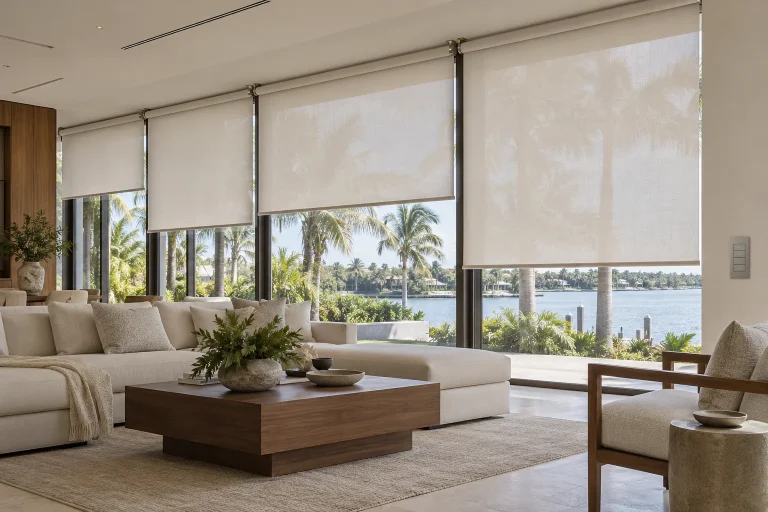
For glare control, nighttime privacy or bedroom blackout, start with the windows, fabrics, mounting and power. Use our Lutron shade consultation for a shade-focused project.
Discuss My Lutron Lighting ProjectCall (561) 717-3280
What happens next: We review your property location, project stage and priorities, then confirm a consultation or site assessment. Your proposed scope identifies equipment, fixture compatibility, installation, programming and any required electrical coordination.
New construction, renovation and existing-home projects across Boca Raton, Delray Beach, Palm Beach, Fort Lauderdale, Miami and Miami Beach. Scheduling depends on scope and location.
Explore our Manhasset estate case study with actual project videos to see Lutron lighting and shades coordinated with Control4, networking and audio/video.
Request a Lutron Lighting Consultation
Choose Lutron lighting below. Tell us your city, project stage and whether you need a new system, upgrade or takeover. Include the rooms involved, preferred timeline and any existing Lutron equipment you know about.
Upgrade Your Existing Lutron Lighting System
Choose the route that matches your installed equipment. For original RadioRA or RadioRA 2, see our RadioRA 3 upgrade assessment and replacement planning. For Interactive, Illumination or QS, explore legacy HomeWorks upgrades to QSX.
Each assessment reviews compatible equipment, required replacements, programming and connected systems before a written scope is proposed. We can also evaluate shade modernization and lighting changes during the same project.
Sentry office areas: Boca Raton (561) 717-3280; Fort Lauderdale (954) 859-6475; Miami Beach (305) 502-0003; Orlando (407) 377-5360; New York (516) 210-2120. Scheduling and assessment charges are confirmed for the property.
Lutron Systems We Design and Install
Lutron HomeWorks
HomeWorks is designed for larger custom residences and projects that need centralized lighting, refined keypads, flexible scenes, advanced integration and a long-term service plan. We coordinate with homeowners, builders, architects, interior designers and electricians before rough-in so the controls support the architecture instead of becoming an afterthought.
Lutron RadioRA 3
RadioRA 3 is a strong option for many existing homes, condominiums and focused renovations. It can deliver reliable lighting control, attractive wall controls, schedules, scenes and shade integration with less construction than a fully centralized system. We evaluate the property and recommend the platform that fits the scope rather than forcing every project into the same package.
Lutron Ketra and Architectural Lighting
For projects that require tunable white light, color control or exceptionally precise dimming, we plan Ketra and compatible fixtures as part of the complete lighting design. Fixture compatibility, load types, dimming range, color quality and scene programming are reviewed early to reduce flicker, poor low-end performance and costly field changes.
Before ordering fixtures for the whole home, use our LED fixture and dimming sample-test guide to define the exact fixture, driver and control combination to test and approve.
Lutron Motorized Shades
Lighting and daylight should be planned together. Sentry provides Lutron shade design, field measuring, fabric and openness guidance, privacy and blackout planning, wired or battery-powered options, recessed pockets and fascia coordination, ordering, installation, alignment, keypad and app control, and programming. For a shade-only project or window-treatment purchase, use our Lutron shade design, measuring and installation services to plan fabrics, privacy and power. Lighting-control design and installation remain the focus of this page.
What Sentry Handles From Design Through Support
- Site review and system selection: HomeWorks, RadioRA 3, lighting-only, shades-only or a coordinated lighting-and-shade system.
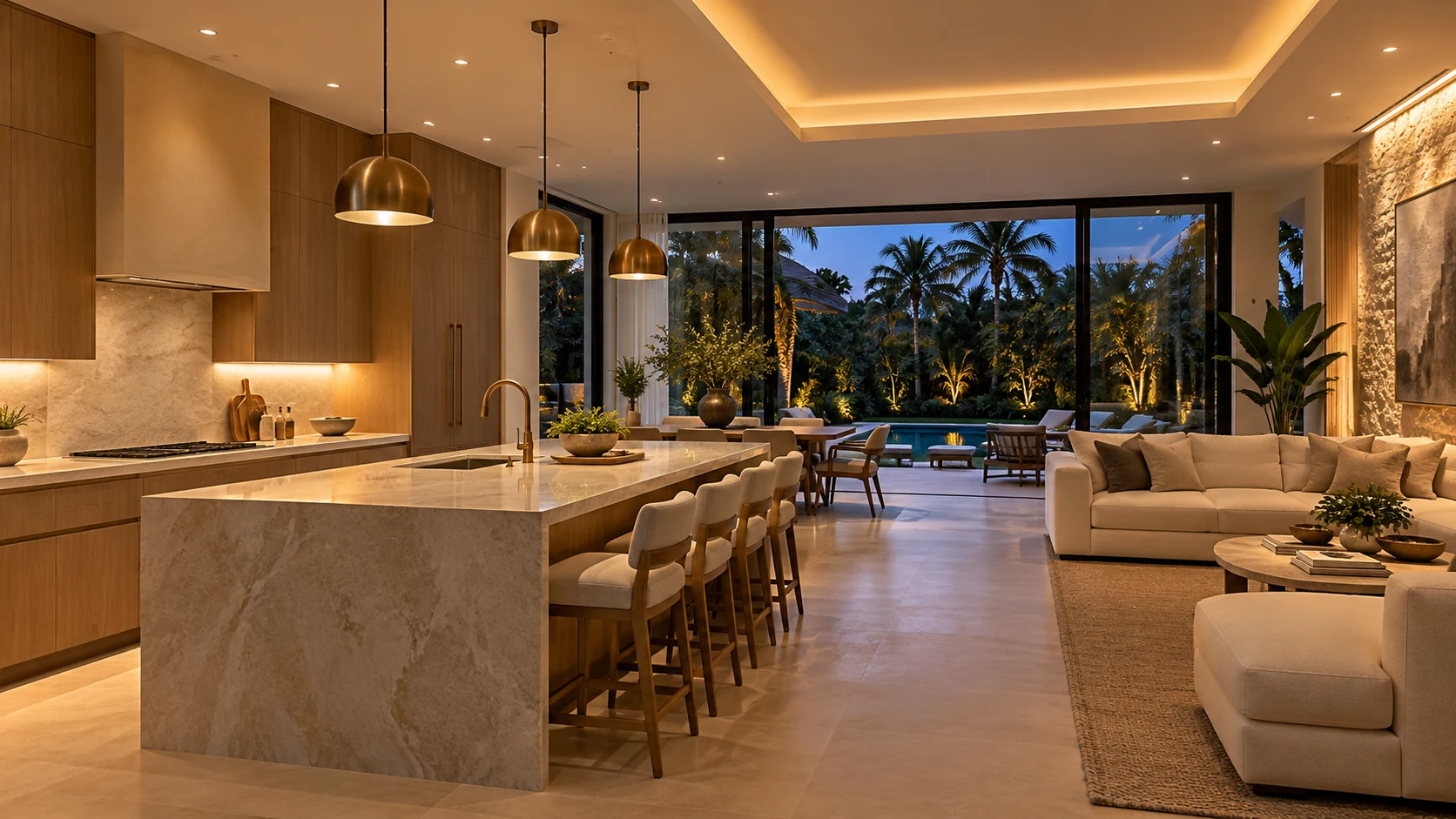
- Lighting design coordination: loads, fixture compatibility, dimming, keypads, scenes, pathways, landscape lighting and exterior areas.
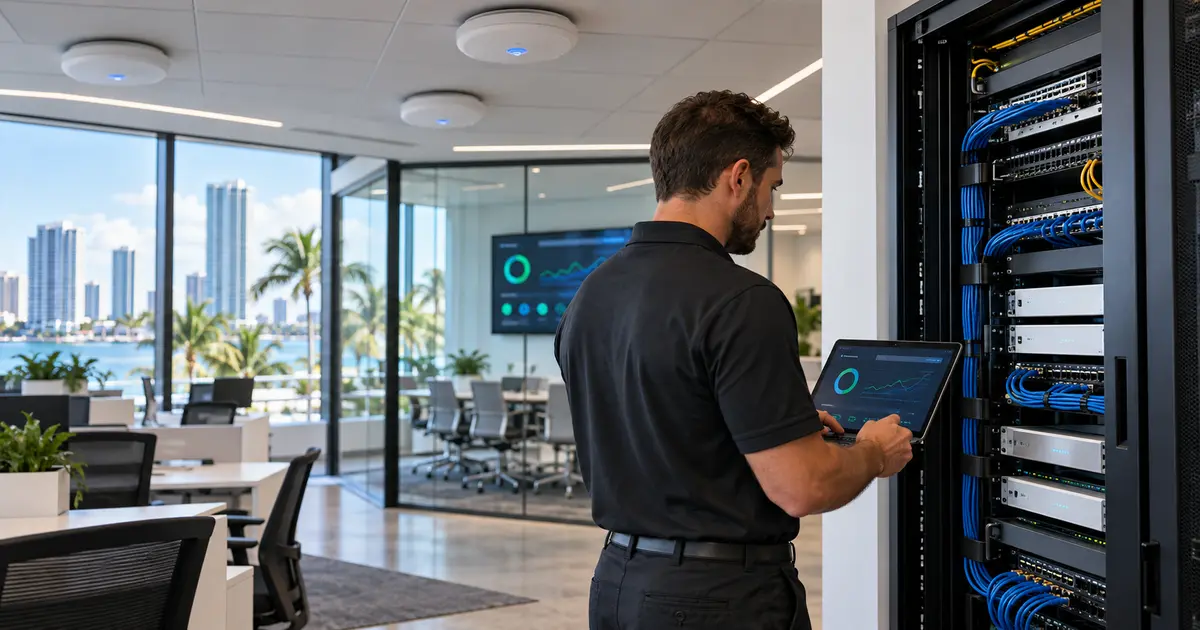
- Construction planning: panel locations, low-voltage wiring, shade power, pockets, millwork, electrical rough-in and network requirements.
- Supply and installation: Lutron equipment, controls, processors, keypads and shades supplied and installed as a complete system.
- Programming and integration: scenes, schedules, occupancy behavior, keypads, mobile control and compatible Control4, Savant and voice-control integration.
- Service and modernization: programming changes, expansions, troubleshooting, system takeovers and practical upgrade paths for aging Lutron systems.
Start Early for New Construction and Renovations
The best time to involve Sentry is before electrical rough-in, shade pockets, millwork and fixture selections are finalized. Early coordination gives the builder and design team a clear plan for wiring, loads, panels, keypad locations, shade power and ceiling details. It also protects the finished design from crowded switch banks, visible shade hardware and avoidable change orders.
Existing homes can also be upgraded. We assess current wiring, lighting loads, controls, windows and construction conditions, then recommend a realistic path using wired, wireless or mixed solutions.
Lighting Scenes Built Around the Way You Live
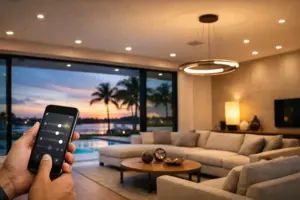
A professionally programmed Lutron system should make the property simpler. Arrival, Entertain, Dinner, Movie, Goodnight and Away scenes can coordinate multiple rooms with one action. Daylight and privacy scenes can move shades while adjusting electric light. Manual controls remain easy to understand, and the system can be refined after the homeowner has lived with it.
Lutron Lighting Installation in Palm Beach
Sentry provides Lutron lighting design, equipment sales, installation, programming and continuing support for Palm Beach homes, condominiums, estates, renovations and new construction. Projects can be scoped as lighting-only work or as a coordinated lighting-and-shade installation. Before equipment is ordered, we review lighting loads, fixture compatibility, keypad locations, panel and processor locations, networking, shade integration and the scenes the homeowner wants to use.
For new construction or a major renovation, involve Sentry before electrical rough-in and fixture selections are finalized. For an existing property, we assess the installed wiring and controls and recommend a practical HomeWorks, RadioRA 3 or mixed-system approach. Request a Palm Beach Lutron consultation or call (561) 717-3280.
Lutron Service Area
Sentry serves Boca Raton, Delray Beach, Palm Beach, Palm Beach Gardens, Jupiter, Wellington, Fort Lauderdale, Miami and surrounding South Florida communities. Orlando and New York projects are evaluated by location and scope.
Frequently Asked Questions
Does Sentry sell and install Lutron systems?
Yes. Sentry Audio Video is an authorized Lutron dealer that designs, supplies, installs, programs and supports Lutron lighting-control and motorized-shade systems.
Can you install Lutron in an existing finished home?
Yes. Depending on the wiring and construction, RadioRA 3, wireless controls, battery-powered shades and selective new wiring can provide a clean upgrade with limited disruption.
Can Lutron lighting and shades work as one system?
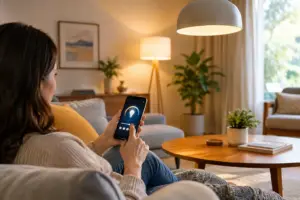
Yes. Lighting and shades can share keypads, scenes, schedules and app control so daylight, glare, privacy and electric light work together.
Do you repair or upgrade existing Lutron systems?
Yes. We evaluate existing HomeWorks and RadioRA systems for troubleshooting, programming changes, expansions, takeovers and modernization. Visit service and repair for urgent support.
Lutron Lighting Planning Guides
- Benefits of Lutron smart lighting at home
- Lighting planning for Woodfield Country Club homes
- Coordinating Control4 and Lutron in Woodfield Country Club
For an older system, start with our RadioRA and RadioRA 2 upgrade guide or legacy HomeWorks upgrade guide, then request an assessment of the installed equipment.
Plan Your Lutron Project
Call (561) 717-3280 to discuss Lutron lighting, HomeWorks, RadioRA 3, Ketra or motorized shades. You can also request a consultation online.
Boca Raton • Palm Beach County
Plan Your Lutron Lighting Installation
We handle Lutron HomeWorks, Ketra, Palladiom keypads and shades for Boca Raton new construction, renovations and occupied estates. We also diagnose, document and take over systems installed by another integrator.
- Family-owned • 25 years of experience
- Florida low-voltage license EF20001874
- New construction, retrofit, repair and takeover work