Voice control is most valuable when it removes small points of friction without replacing dependable keypads, remotes, touchscreens and apps. Sentry Audio Video designs and integrates voice control for luxury residences using Josh.ai and compatible Control4, Savant, Crestron, lighting, entertainment and climate systems.
A properly designed voice experience should understand the room, respond predictably and respect which functions are appropriate to control by speech.
Request a voice-control consultation
What Voice Control Can Do
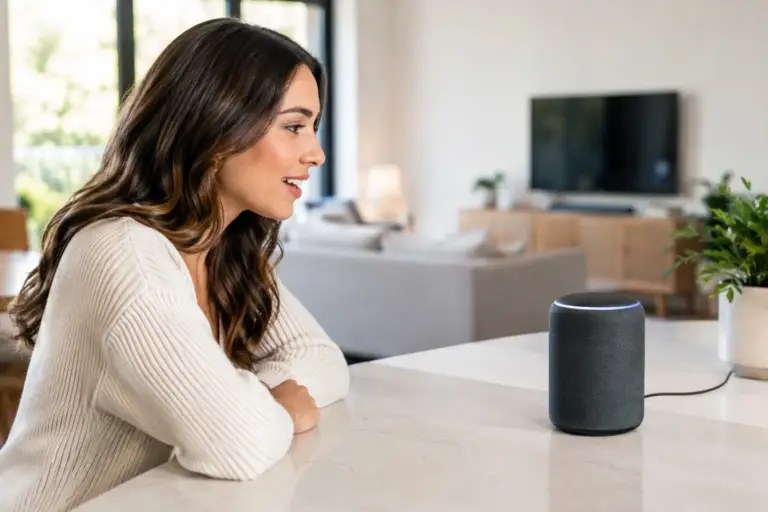
Voice can provide fast, hands-free operation for everyday functions while the underlying automation platform manages the actual devices and scenes.
- Turn lights on, off or to a selected level
- Activate Dinner, Entertain, Movie and Goodnight scenes
- Open or close compatible motorized shades
- Select music, group rooms and adjust volume
- Start television or media-room activities
- Adjust compatible climate zones
- Ask for the status of selected devices or rooms
Security-sensitive actions should be configured carefully. Not every door, gate, alarm or surveillance function belongs behind a spoken command.
Josh.ai for Natural Voice Control
Josh.ai is designed specifically for professionally integrated homes. It supports more natural language, room awareness and privacy-focused system architecture. Instead of memorizing rigid phrases, a client can make requests that reflect how people actually speak.
Josh.ai can coordinate compatible lighting, shades, audio, video, climate and scenes through the broader control system. Hardware options and supported features depend on the project and current Josh.ai platform requirements.
Explore our detailed Josh.ai installation, programming and service page.
Voice Control With Control4
Control4 can coordinate voice commands with room scenes, lighting, entertainment, shades and other integrated systems. Josh.ai is a premium option for natural-language control, while supported consumer assistants may be appropriate for simpler commands.
Sentry defines the commands, rooms and scenes so voice control reinforces the Control4 experience instead of exposing a confusing list of individual devices.
Learn more about Control4 design and service.
Voice Control With Savant
Savant scenes and compatible integrations can provide voice access to selected home functions while the Savant interface remains available for visual control. The best design combines voice convenience with Savant’s personalized room and scene experience.
Explore Savant installation and service.
Voice Control With Crestron
Crestron systems can expose selected functions and scenes to supported voice platforms. In larger estates, careful programming is especially important so similar room names, guest areas and repeated functions do not create ambiguous commands.
Explore Crestron Home and custom Crestron systems.
Lighting, Shades and Circadian Scenes
Voice is particularly useful for scene activation. A single request can coordinate lighting and shades for dinner, television viewing, entertaining or bedtime. Circadian-lighting schedules can continue automatically while voice provides temporary overrides when the homeowner wants a different setting.
Read our guide to smart and circadian lighting.
The Network and Room Design Matter
Voice microphones, processors, control systems and cloud services depend on reliable connectivity. Device placement must also account for room size, ambient noise, television volume, ceiling height and privacy expectations.
Sentry plans the network, room assignments, naming standards and fallback controls before programming voice commands.
Privacy and Appropriate Access
Clients should understand which voice services depend on cloud processing, what account permissions are required and which household members or guests can issue commands. Josh.ai is often selected in premium residences because privacy is treated as a central design consideration.
Frequently Asked Questions
Does voice control replace keypads and remotes?
No. Voice should complement dependable physical and visual controls, not eliminate them.
Can voice control understand which room I am in?
Compatible professionally designed systems can use room awareness, but performance depends on platform, microphone placement and programming.
Can I use Alexa, Siri or Google Assistant?
Possibly. Supported functions vary by control platform and connected equipment. We verify compatibility and explain any privacy or cloud dependencies before implementation.
Can Josh.ai work with Control4, Savant or Crestron?
Josh.ai supports professional integrations, but exact functions depend on current drivers, equipment and project design.
Make Voice a Useful Part of the Home
Sentry Audio Video provides voice-control design, installation, programming and continuing service throughout South Florida and New York. Request a consultation.