At 6:15 p.m., the right lighting can shift a home from a busy day to an inviting evening without anyone walking room to room or adjusting a wall full of switches. That is the real value of smart lighting: not novelty, but a properly designed environment that responds naturally to how you live, entertain, work, and protect your property.
For a luxury residence, lighting should complement the architecture, artwork, finishes, and outdoor spaces. For a business, it should help create a polished guest experience while giving the team clear, dependable control. The difference between a collection of connected fixtures and a professionally integrated lighting system is felt every day in the simplicity, consistency, and quality of the result.
What Smart Lighting Should Do for Your Property
A thoughtfully designed system puts light where it belongs and gives you control that feels effortless. Rather than treating every fixture as an isolated device, professional integration organizes lighting into meaningful areas, scenes, schedules, and controls.
In a residence, one button can set an evening scene that brings kitchen pendants, dining illumination, accent lighting, and outdoor landscape lighting to appropriate levels. A separate scene can prepare the home for entertaining, brighten pathways for arriving guests, or create a quiet late-night setting without flooding the room with light.
This is especially valuable in larger properties, where lighting control can otherwise become fragmented. A centralized interface, elegant keypads, and carefully placed controls reduce wall clutter while making the system easier for family members and guests to use. The goal is never to make you think about the technology. It is to make the home feel finished.
For commercial spaces, scenes can support the rhythm of the business. A restaurant may need warm, welcoming lighting before service, brighter illumination for setup, and a more refined atmosphere once guests arrive. An office, showroom, or professional space may benefit from consistent lighting zones that support presentations, meetings, and daily operations. The right design reflects the purpose of the room rather than applying one setting everywhere.
Smart Lighting Design Begins Before Fixtures Are Installed
The strongest projects begin with a conversation about the property and the people using it. How is each room used? Which architectural details deserve emphasis? Where do shadows create an issue? What should happen when the last person leaves, when guests arrive, or when the property is placed in an away mode?
Those questions inform more than control settings. They affect fixture placement, dimming strategy, keypad locations, wiring requirements, shade coordination, and the choice of lighting loads. Addressing these details during construction or renovation provides the cleanest path to a refined installation, but established homes and businesses can also be upgraded with a carefully planned approach.
Color temperature deserves particular attention. Warm light often creates a comfortable, residential feel in living spaces, dining areas, and bedrooms. Cooler white light can be appropriate in task-oriented environments or spaces that require a crisper appearance. The answer is not simply choosing one color throughout the property. It is coordinating the lighting so spaces look intentional, finishes remain true to their character, and transitions from room to room feel natural.
Dimming quality matters just as much. Premium lighting control is designed to fade smoothly and maintain stable performance at low levels. Poorly matched fixtures, lamps, and dimmers can produce flicker, humming, inconsistent color, or abrupt changes in brightness. These issues are often most noticeable in the evening, precisely when lighting should feel most comfortable.
What Circadian Lighting Means
Your circadian rhythm is the roughly 24-hour internal clock that helps organize sleep, wakefulness, alertness, appetite, and other daily patterns. Light is one of the strongest environmental signals that helps the body recognize the time of day. In practical terms, brighter and cooler-looking light is usually more appropriate during active morning and daytime hours, while warmer, lower-intensity light is more comfortable as evening approaches.
Circadian lighting—also called human-centric lighting—uses changes in brightness and color temperature to follow that natural daily progression. A properly designed system can introduce crisp, energizing white light during the day, transition gradually toward warmer tones in the late afternoon, and provide soft, low-level illumination at night. It should feel natural rather than theatrical, and it should still allow the homeowner to override the schedule whenever the room or occasion calls for something different.
This is not the same as simply dimming conventional bulbs. Dimming changes light output; tunable-white lighting can change both output and the appearance of white light, commonly described in Kelvin. Lower color temperatures look warmer, similar to candlelight or incandescent light. Higher color temperatures look cooler and more like daylight. Full-color fixtures add another layer for art, entertaining, architectural accents, and special scenes.
Circadian lighting is a comfort and lifestyle feature, not medical treatment. The most successful design combines appropriate fixtures, daylight, motorized shades, room finishes, programming, and the client’s actual routine rather than relying on a generic schedule.
How a Circadian Lighting Schedule Can Work
Morning
Shades can rise gradually while selected fixtures come on at a comfortable level. As the morning progresses, the system can move toward brighter, cooler white light in kitchens, bathrooms, offices, dressing areas, and other active spaces. The goal is a gentle transition into the day, not an abrupt blast of light.
Midday
Electric lighting and motorized shades can respond together. Rooms with sufficient daylight may need less artificial light, while deeper interior spaces can maintain a brighter, clearer appearance. In a South Florida home, automated shades can also manage glare and solar heat without leaving the interior dark.
Late Afternoon and Evening
Lighting can transition toward warmer color temperatures and lower intensities as the home moves from work and activity to dinner, entertainment, and relaxation. Accent lighting can take priority over overhead light, and a single scene can coordinate the kitchen, dining room, great room, landscape lighting, and shades.
Night
Low-level pathway lighting can provide safe movement through bedrooms, hallways, stairs, and bathrooms without turning the entire home bright. A Goodnight scene can shut down common areas, lower shades, arm compatible security functions, adjust temperature settings, and preserve only the lighting needed overnight.
Lutron, Crestron, Control4, and Savant Circadian Lighting Options
There is no single best platform for every property. The right choice depends on the lighting fixtures, wiring, renovation scope, automation system, desired keypad design, and how deeply lighting should integrate with shades, climate, entertainment, and security.
Lutron HomeWorks with Ketra or Rania
Lutron HomeWorks is a strong choice for luxury residences that place a high priority on refined lighting control, architectural keypads, motorized shades, reliability, and whole-home design. Ketra provides dynamic white and full-color light with precise dimming and Natural Light programming that can change color temperature and intensity throughout the day. Rania extends high-quality tunable white light to additional fixture and lamp formats. HomeWorks can coordinate those light sources with Lutron shades, keypads, occupancy logic, scenes, and schedules.
Lutron is especially compelling when the lighting and shading design is being developed as part of new construction or a major renovation, although carefully planned retrofit solutions are also possible. Fixture selection and control compatibility must be determined before the electrician orders loads, drivers, and dimmers.
Crestron Home and Crestron Tunable Lighting
Crestron Home supports tunable fixtures, color-temperature control, and configurable circadian settings. A Crestron system can coordinate lighting with shades, climate, audio, video, security, and other systems through one interface. This can be particularly valuable in a large estate where the client wants extensive customization and a single control experience across many subsystems.
Crestron offers both brightness-based circadian schedules for compatible conventional loads and deeper color-temperature control when the project includes supported tunable fixtures and gateways. The exact capabilities depend on the lighting hardware and the way it is engineered.
Control4 Daylight and Vibrant Lighting
Control4 can automate brightness, color temperature, scenes, schedules, keypads, shades, entertainment, climate, and security from a unified system. Control4 Daylight is designed to shift compatible tunable-white lighting through warmer and cooler tones and different intensity levels as the day progresses. Vibrant Lighting adds tunable-white and color-capable linear lighting for coves, cabinetry, architectural details, and other applications.
Control4 is often a practical fit when lighting is part of a broader smart-home project and the client wants easy everyday control without turning every room into a highly customized engineering exercise. The fixtures and drivers still need to be selected around the desired Daylight and dimming behavior.
Savant Daylight Mode
Savant offers Daylight Mode, which adjusts compatible lighting intensity and color temperature using the home’s location, time of day, and seasonal conditions. Savant scenes can combine that lighting behavior with shades, climate, entertainment, and energy functions while allowing the homeowner to personalize the experience from the Savant interface.
Savant can be particularly attractive for clients who value a polished, visual user experience and personalized scenes. As with the other platforms, the most advanced circadian experience requires compatible tunable fixtures rather than ordinary fixed-white lamps.
What Must Be Designed Correctly
A successful circadian-lighting project starts with the fixtures and electrical plan, not the app. We verify dimming type, driver protocol, color-temperature range, low-end performance, load compatibility, keypad locations, shade integration, network requirements, and what happens if the automation processor or internet connection is unavailable.
We also establish which rooms should follow an automatic daily curve and which should remain scene-based. Kitchens, primary suites, bathrooms, home offices, fitness rooms, and main living areas often benefit from time-based tuning. Art lighting, decorative fixtures, closets, garages, and utility areas may require a different approach. Exterior lighting should generally follow safety, architectural, and dark-sky considerations rather than copying the interior schedule.
For an existing home, Sentry Audio Video can evaluate the installed fixtures, dimmers, panels, wiring, keypads, and automation system before recommending how much of the property can be upgraded without opening walls. For new construction or a renovation, early coordination with the architect, interior designer, electrician, and lighting designer provides the greatest flexibility.
For a deeper look at the relationship between natural light, tunable fixtures, and daily routines, read our guide to human-centric circadian lighting.
Frequently Asked Questions About Circadian Lighting
Do circadian lights change automatically?
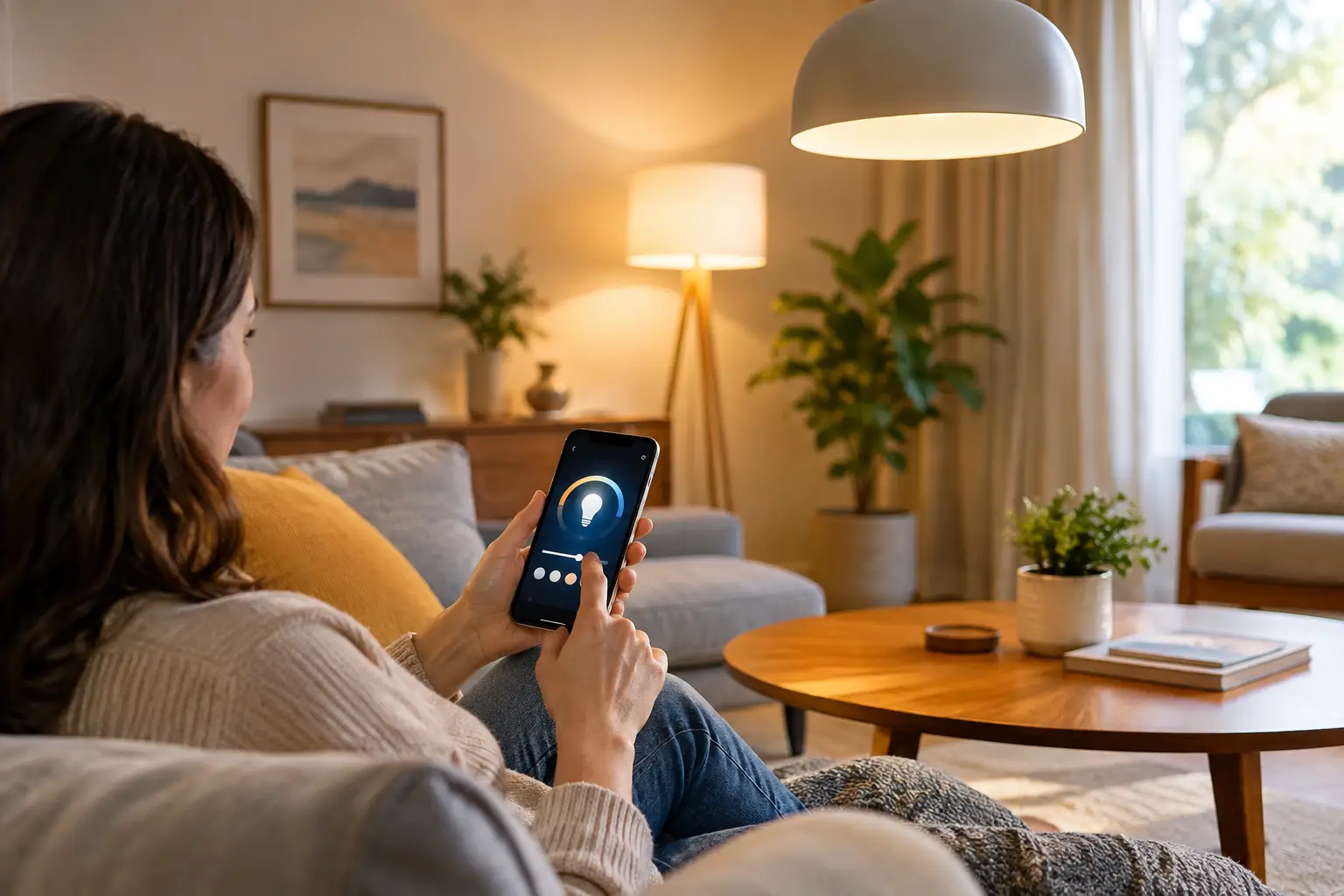
They can. A professionally programmed system can follow a schedule that changes brightness and color temperature gradually, while still providing keypad, touchscreen, voice, and app control for manual adjustments.
Can circadian lighting be added to an existing home?
Often, yes, but the available options depend on the existing wiring, dimmers, fixtures, drivers, control platform, and renovation tolerance. Some homes can begin with selected rooms; others are better suited to a broader lighting-control upgrade.
Do I need tunable-white fixtures?
Tunable-white fixtures are required if you want the system to change the appearance of white light throughout the day. Conventional dimmable fixtures can still follow brightness schedules and scenes, but they cannot change color temperature unless the light source supports it.
Which platform is best?
Lutron, Crestron, Control4, and Savant can all deliver excellent results when paired with the right equipment and design. The best platform is the one that matches the project’s lighting requirements, existing technology, control preferences, budget, and long-term service plan.
Planning a lighting-control or circadian-lighting project? Request a consultation with Sentry Audio Video for a new design, renovation, retrofit, system takeover, or upgrade in South Florida or New York.
Scenes Are More Useful Than Individual Controls
Individual control has its place, but scenes are what turn lighting into part of the property’s daily routine. A scene controls several lights at once, setting each to a selected level for a particular moment.
A “Welcome Home” scene might illuminate the foyer, kitchen, and key paths through the house. A “Dinner” scene can reduce general brightness while preserving light over the table and highlighting architectural features. A “Goodnight” command can turn off common areas, lower shades where appropriate, and leave only pathway lighting active.
The most successful scenes are simple, memorable, and tailored to the client. Too many options can make a system feel complicated. A professional programmer focuses on the settings that will be used regularly and organizes them in a way that makes sense at the keypad, touchscreen, or mobile interface.
Lighting, Shades, Security, and Entertainment Work Better Together
Smart lighting becomes even more capable when it is coordinated with the other systems already serving the property. Motorized shades can respond with lighting to manage glare, privacy, and ambiance in a media room, great room, or waterfront space. As daylight changes, shades and electric light can work together to keep a room comfortable and visually balanced.
Security integration adds practical value. When an alarm event occurs, designated interior and exterior lights can activate to increase visibility. Vacation or away settings can vary lighting patterns to make the property appear occupied, rather than simply turning the same lights on and off at the same time every evening. Exterior lighting can also support safer arrivals by illuminating gates, walkways, pools, and outdoor entertaining areas.
In a home theater or media space, lighting scenes should support the viewing experience without making guests search for controls in the dark. A movie scene can lower room lighting, preserve subtle step or aisle illumination, and close shades with a single command. When the viewing session ends, the room can return to a comfortable, usable level.
Integration does require thoughtful planning. Not every room needs every feature, and not every property benefits from aggressive automation. The right system respects personal preference. Some clients want scheduled lighting throughout the property; others prefer manual control with a few essential scenes. Both approaches can be excellent when the system is designed around the way the space is actually used.
The Details That Protect Long-Term Performance
Lighting systems are built into the daily operation of a home or business, so reliability should be treated as a primary requirement. The equipment, wiring, network infrastructure, fixture compatibility, load calculations, programming, and final testing all contribute to a result that performs consistently.
A clean installation also matters. Controls should be placed with care, equipment should be organized for serviceability, and the finished design should preserve the visual integrity of the property. In premium homes, a wall crowded with mismatched controls can undermine an otherwise beautiful interior. Consolidated keypads and discreet interfaces offer a more polished solution.
Ongoing support is another consideration. Properties change over time: rooms are renovated, furniture layouts evolve, outdoor areas expand, and operational needs shift. A system that has been properly documented and professionally installed is far easier to update than one assembled without a complete design plan. This is where a full-service integrator provides lasting value, taking responsibility from initial proposal through installation, programming, and future service.
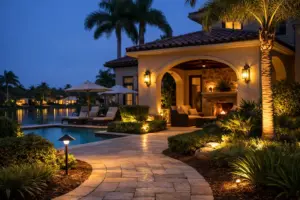
For South Florida properties, outdoor lighting deserves its own level of attention. Salt air, humidity, heat, and intense weather require appropriate equipment selection and installation practices. Landscape, pool, patio, dock, and entertainment-area lighting should be designed for the environment as well as the view. Reliable exterior illumination is part of both the lifestyle and protection of the property.
Choosing the Right Scope for Smart Lighting
A whole-property system is not the only path. Some projects begin with primary living areas, a master suite, key exterior spaces, or a new addition. Others make sense as comprehensive lighting control plans during major construction. The right scope depends on the architecture, the available infrastructure, the desired control experience, and which spaces carry the most value in everyday life.
Before moving forward, consider the routines you want the system to simplify. Think about arrival, departure, entertaining, nighttime movement, privacy, and how different areas should feel at different times of day. Then consider the systems lighting should coordinate with, including shades, security, audio/video, and outdoor amenities. Those answers create a clear foundation for a design that serves the property rather than adding technology for its own sake.
A well-designed lighting system should make every arrival more welcoming, every gathering more polished, and every ordinary evening easier to enjoy. When you are ready to plan that experience, start with the rooms and routines that matter most, then let a professional design carry that standard through the rest of the property.