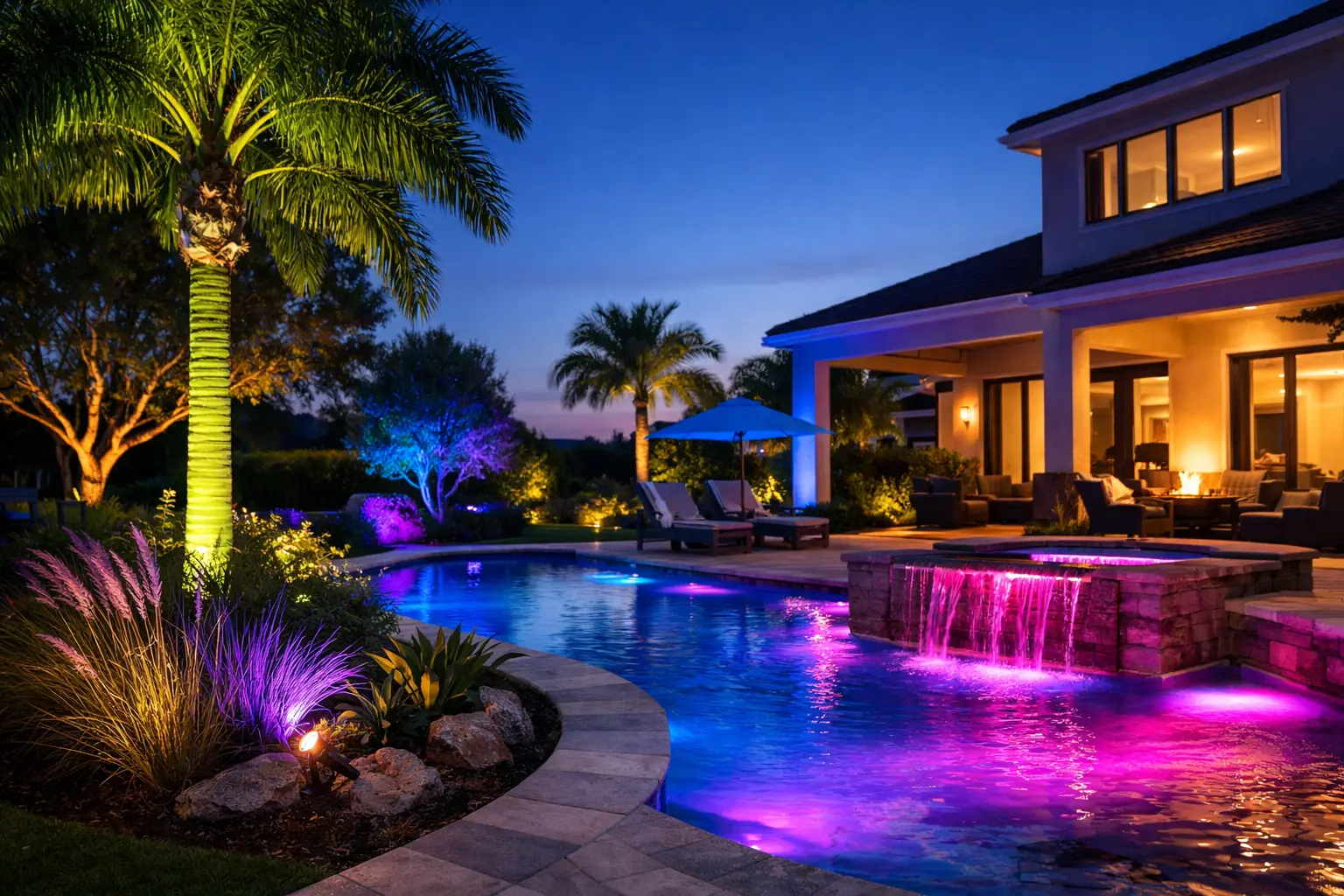
A beautifully designed outdoor space can disappear after sunset if its lighting is limited to a few bright fixtures and a porch light. RGB Outdoor Lighting Boca Raton homeowners choose changes that equation. It gives patios, pool decks, landscaping, and architectural details the presence they deserve while providing practical illumination for guests, pathways, and evening routines.
The difference is not simply color. A professionally designed system creates layers of light that fit the architecture, the way the property is used, and the mood of the moment. Warm white can make a terrace feel refined for dinner. A soft blue can enhance a poolside gathering. Custom colors can support holidays, celebrations, or a favorite team event without turning a luxury home into a light show.
For properties where outdoor living is part of everyday life, lighting deserves the same level of planning as indoor audio, video, shades, and smart control.
What RGB Outdoor Lighting Should Do for Your Property
RGB lighting uses red, green, and blue LEDs to produce a wide range of colors. Many premium fixtures also provide tunable white light, which matters more than most homeowners initially realize. Color is memorable, but high-quality white light is what makes stairs visible, outdoor kitchens usable, and landscaping look natural on an ordinary weeknight.
A well-executed design should make the property feel more inviting without placing bright points of light directly in guests’ eyes. It should define circulation paths, add depth to planting beds and palm trees, and highlight details such as stonework, water features, pergolas, columns, and rooflines. Around pools, the design must balance visual impact with comfortable, glare-controlled illumination.
The goal is control with restraint. One property may benefit from subtle uplighting and warm-white pathway fixtures as its default scene, with colors reserved for entertaining. Another may have a dramatic contemporary facade that can support bolder color washes. The right answer depends on the home, the landscape, neighboring sightlines, and how the family actually spends time outdoors.
RGB Outdoor Lighting in Boca Raton Requires a Coastal Mindset
South Florida conditions are demanding. Heat, humidity, salt air, frequent rain, irrigation overspray, and intense sun can expose weak fixtures and poorly protected connections quickly. A system that looks impressive at installation but fades, corrodes, flickers, or loses connectivity is not a premium investment.
Fixture selection and installation details make the difference. Outdoor-rated components, appropriate ingress protection, corrosion-resistant materials, protected wiring paths, properly located power supplies, and carefully sealed connections all contribute to long-term performance. Landscape changes also need consideration. Roots grow, plants are trimmed, pavers move, and pool areas are refreshed over time. Planning for access and service protects the investment later.
Color also behaves differently outdoors than it does in a showroom. Palm fronds, limestone, stucco, mature hedges, water, and textured walls reflect and absorb light in distinct ways. A professional lighting demonstration at the property can reveal whether a fixture needs a narrower beam, a lower output, a different mounting angle, or warmer white temperatures. That field-level adjustment is where polished results come from.
Design the System Around Zones and Scenes
The most useful outdoor lighting systems are organized by zones rather than treated as one large collection of fixtures. That allows a homeowner to illuminate only what is needed and gives each area its own personality.
The arrival zone often includes the driveway, entry walk, front landscaping, and architectural facade. It should provide confidence for visitors and make the home feel occupied without overpowering the street. The entertaining zone may include a lanai, outdoor kitchen, dining area, television wall, and seating areas. The pool and landscape zone can use color more expressively, but it still needs to preserve safe movement around water and steps.
Scenes bring those zones together under simple commands. For example, an “Evening” scene might activate warm architectural and pathway lighting at modest levels. “Dinner Outside” can create a warmer, more intimate setting around the table while reducing glare near seating. “Pool Party” may bring in selected color accents and coordinate music, outdoor video, and pool features. A “Goodnight” command can return the home to an elegant security-oriented lighting profile.
The greatest benefit is not having dozens of color options. It is having the right settings ready without asking anyone to open multiple apps, adjust individual fixtures, or remember which controls affect which part of the property.
White Light Still Carries the Everyday Load
Homeowners are often drawn to RGB capability for its visual impact, yet white light is usually the foundation of an effective installation. Tunable white allows the color temperature to support the occasion. Warmer tones tend to feel comfortable around dining, lounge spaces, and natural materials. Cleaner white may be preferred for food preparation or areas where better visibility is needed.
A quality design gives these white-light settings as much attention as the color scenes. It should make a property look exceptional on a Tuesday night, not only during a celebration.
Integrating Lighting With the Rest of the Outdoor Experience
RGB landscape and architectural lighting becomes far more valuable when it is part of an integrated property. Instead of adding another isolated control system, it can be incorporated into the platform already managing distributed audio, outdoor television, motorized shades, security, and pool-area conveniences.
That unified approach reduces friction. A wall keypad near the patio can activate an outdoor scene. A handheld remote can coordinate video, sound, and lighting from a seating area. Mobile control provides access when the homeowner is away, while scheduled scenes can support arrivals, departures, and seasonal routines.
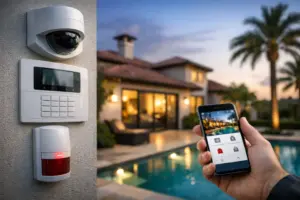
Integration should also respect practical security needs. Exterior lighting can be programmed to operate on a schedule, brighten selected areas as part of a property response, or provide a clear, well-lit environment for cameras after dark. The specifics should be designed carefully. Constantly flashing or overly bright lighting can be disruptive, while thoughtful activation improves awareness without sacrificing the atmosphere of the home.
For commercial properties, the same principles apply to patios, hospitality spaces, storefronts, outdoor dining, and event areas. Color can reinforce a brand or mark a special occasion, but reliable white light, intuitive control, and dependable scheduling remain the operational priorities.
Avoid the Common Design Mistakes
The most noticeable outdoor lighting errors often come from treating every fixture as a feature. Too much output can flatten landscaping, wash out textures, create glare around pools, and make a property feel less welcoming. More light is not automatically better light.
Another issue is installing color-capable fixtures without a defined scene strategy. If every zone can change independently but no one knows what settings look good together, the system becomes less likely to be used. Clear scene programming turns capability into a daily convenience.
Control reliability should be evaluated early as well. Outdoor equipment, network coverage, power distribution, and control processor placement need to be designed as a system. If a pool deck or detached entertaining area has inconsistent connectivity, that condition should be addressed before the final installation, not after guests begin noticing delayed responses.
Finally, do not overlook maintenance and service. Fixtures may need occasional aiming adjustments as landscaping matures. Lenses can require cleaning, scenes may need refinement, and property renovations can affect wiring routes or control requirements. A provider with broad AV, automation, network, and security expertise can manage those changes without forcing the homeowner to coordinate multiple specialists.
A Better Process for a Finished Result
The right project begins with a conversation about how the space is used after dark. That includes arrival patterns, entertaining habits, areas where guests gather, architectural features worth highlighting, and the systems already in place. Site conditions, fixture locations, wiring routes, and control preferences are then evaluated before equipment is selected.
From there, a tailored design can define zones, fixture types, white-light temperatures, color scenes, control interfaces, and integration opportunities. The installation should be clean, with wiring and equipment placed thoughtfully rather than left to compromise the look of the property. Final programming and nighttime aiming are essential steps, because the finished experience is judged after sunset.
Sentry Audio Video approaches outdoor lighting as part of a complete technology environment, not as an isolated accessory. For homeowners planning a renovation, new landscape design, pool upgrade, or backyard entertainment space, a professionally designed RGB lighting system can make every evening outside feel more intentional, secure, and memorable. Schedule a consultation to see what the right light can do for your property after dark.