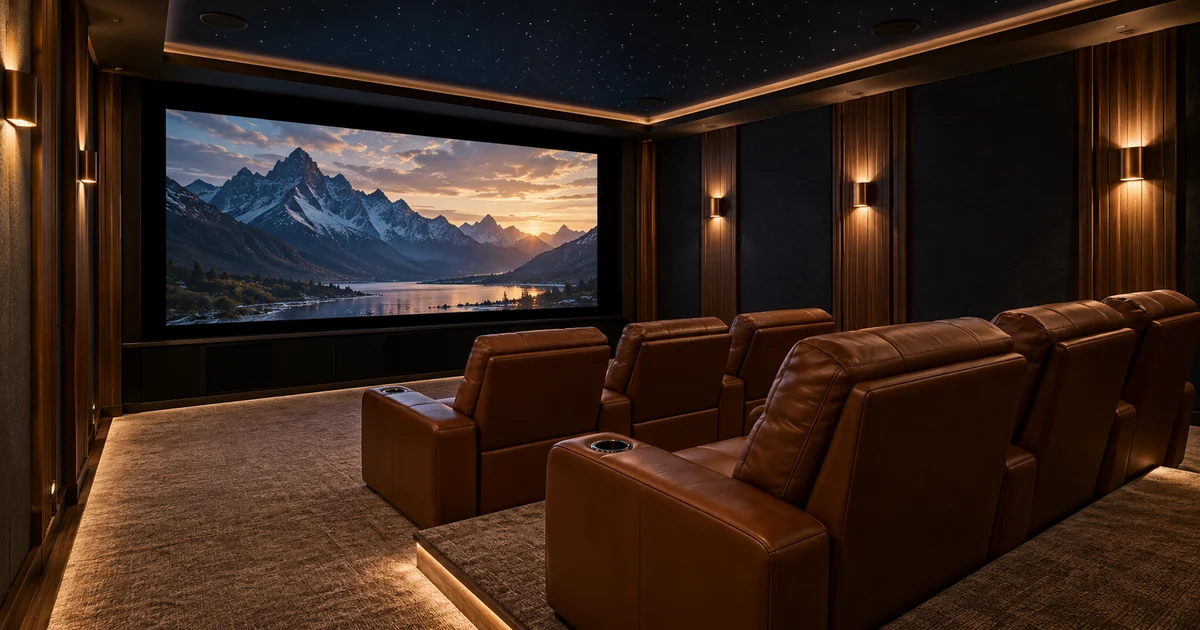
AI-generated theater design illustration. This is not a photograph of a completed Sentry Audio Video installation.
Build a new cinema, restore an existing theater or plan an upgrade
Home theater repair & takeovers
No picture, missing sound, unreliable controls or an inherited system? Request a theater service assessment.
Luxury theater upgrades
Improve projection, immersive sound, acoustics, seating, lighting and simple control. Explore theater upgrades and modernization.
Sentry Audio Video designs and installs custom home theaters and media rooms for Boca Raton homes, estates, condominiums, and major renovations. A professional home theater installation in Boca Raton should deliver clear dialogue, controlled bass, accurate video, simple operation, and clean integration with the room’s architecture.
The project begins with the room and the way the family plans to use it—not with a list of equipment. Screen size, seating distance, speaker placement, acoustics, lighting, shades, networking, equipment ventilation, and control all affect the finished experience. Coordinating those decisions before construction or renovation work is finalized prevents compromises later.
Planning a theater or media room? Request a consultation or call Sentry Audio Video at 561-717-3280 before wiring, cabinetry, lighting, or equipment locations are finalized.
Request a Home Theater Consultation
Tell us your city, room size, project stage and what you want to improve. Choose Home theater & audio video below. We review your request and contact you to discuss the room, equipment and next steps. Scheduling and any assessment charges are confirmed before a visit.
Start With the Room, Not the Equipment
A successful theater begins with an honest assessment of the space. A purpose-built theater gives a designer more control over light, sound, seating distance, and speaker locations. A multipurpose media room may need to perform just as well for a quiet family movie night as it does for watching a concert with guests. Both can deliver an exceptional experience, but they require different design choices.
Room dimensions, ceiling height, windows, wall construction, and open floor plans all matter. A large display can look impressive in a showroom yet feel overwhelming when viewers sit too close. Conversely, a screen placed too far from the seating area loses the cinematic presence homeowners expect. The viewing distance, desired screen format, and type of content should guide the display decision.
Natural light is another major factor in South Florida homes. A projector and screen can create an extraordinary theater environment in a controlled room. In a brighter great room or living area, a high-performance television may provide stronger daytime visibility. Motorized shades can be integrated to reduce glare at the touch of a button while preserving the room’s clean appearance.
Sound Design Is What Makes a Theater Feel Real
Picture quality often gets the first reaction. Sound is what makes the experience believable over time. Clear dialogue, enveloping surround effects, and controlled low-frequency performance must work together without calling attention to the equipment itself.
Speaker placement is not a decorative afterthought. Surround and height channels need to be positioned in relation to the primary seats, not merely placed where there happens to be open wall space. In-wall and in-ceiling speakers can preserve a refined interior, while architectural speaker grilles can be color-matched to blend into the room. Where performance calls for it, freestanding speakers and dedicated subwoofers may be the better answer.
The right solution depends on the room. A theater with hard stone floors, glass, and expansive open areas may need acoustic treatment and more careful calibration than a carpeted, enclosed room. Acoustic panels, fabric wall systems, rugs, and strategic furnishings can reduce unwanted reflections without making the space feel like a recording studio.
Bass also requires restraint and precision. More output is not automatically better. Proper subwoofer placement and calibration help deliver depth and impact across multiple seats while avoiding the uneven, boomy response that can travel into adjacent rooms.
Why Calibration Cannot Be Skipped
Even excellent components need to be tuned after installation. Calibration accounts for speaker distances, room acoustics, output levels, display settings, and the seating positions that matter most. This final stage is where a theater begins to sound cohesive rather than simply loud.
A professional integrator should test the system in the completed room, not treat factory settings as the finish line. Furniture, window coverings, wall surfaces, and room layout all influence real-world performance.
Build Control Around Real Life
A custom theater should feel easy to use for everyone in the household. If starting a movie requires multiple remotes, selecting several inputs, and adjusting separate lighting controls, the system has not been designed around the client.
Centralized control brings the room together. A single interface can power on the display, select the source, set the audio system, lower the shades, and transition the lights to a preferred scene. The same control platform can also tie the theater into whole-home audio, outdoor entertainment, climate settings, and security features when appropriate.
The most effective controls are personalized without being complicated. A homeowner may want simple options such as Movie Night, Sports Viewing, Music, or All Off. Behind those buttons is sophisticated programming. In front of them is a clear, dependable experience that guests and family members can use confidently.
Remote access can add practical value as well. Whether checking system status before arriving at a seasonal residence or receiving support for a configuration issue, connected monitoring and service options help protect the investment and reduce interruptions.
Custom Home Theater Installation in Boca Raton Requires Clean Infrastructure
The equipment homeowners see is only part of the project. The infrastructure behind the walls determines how reliable, serviceable, and adaptable the system will be over the years.
A professional installation considers equipment ventilation, dedicated rack locations, labeled low-voltage cabling, network capacity, and concealed wire paths from the beginning. Equipment should be accessible for maintenance, yet out of sight. Displays should sit at an intentional height. Speaker grilles, keypads, and wall plates should align cleanly with the room’s architecture.
For new construction and major renovations, planning should begin well before drywall. This is the right time to coordinate with the architect, builder, interior designer, and other trades. Early coordination protects the design vision while allowing for proper speaker back boxes, conduit pathways, projector locations, equipment cabinetry, and network wiring.
In an existing home, the approach may be different. Experienced installers can identify practical wire routes and equipment locations that minimize visual disruption. The key is setting expectations early: some spaces offer more flexibility than others, and the cleanest solution is often the one designed around the home’s construction rather than forced into it.
Choose Equipment as a System, Not as Isolated Pieces
Premium performance comes from compatibility. The display, projector, screen, speakers, amplification, control platform, networking, and sources must be selected to perform together. A theater should not be assembled as a series of unrelated purchases.
For example, an immersive surround sound design may require different amplification and processing than a simple television-and-soundbar arrangement. A dedicated projector room may require a screen material selected specifically for the room’s lighting conditions. A large property with distributed audio and multiple video zones may need a stronger network foundation than a single-room installation.
This is also where professional guidance helps homeowners make decisions that remain relevant. Choosing the correct cabling pathways, rack capacity, and network architecture today can make future upgrades far more straightforward. Not every theater needs every feature, and adding technology simply because it is available can complicate a room without improving the experience.
The Installation Process Should Be Managed From Design Through Support
A quality project has clear stages: consultation, site evaluation, system design, proposal, installation, programming, calibration, and client orientation. Each phase protects the next.
During consultation, the conversation should focus on how the room will be used, who will use it, what design constraints exist, and how the theater may connect to other areas of the property. The system design then translates those priorities into a detailed plan. A thoughtful proposal should define the equipment, scope of work, control approach, and installation expectations before work begins.
After installation, the walkthrough matters. Homeowners should understand the day-to-day controls, preferred settings, and support options. Sentry Audio Video approaches theater projects as long-term systems, with professional execution and ongoing accountability rather than a handoff once the room powers on.
Professional Installation, Programming, and Commissioning
A qualified home theater installer must do more than mount a display and connect speakers. The installation should include labeled and serviceable cabling, protected power, equipment ventilation, reliable network connectivity, coordinated lighting and shade control, clean programming, and documented system settings. For projects still under construction, structured cabling and conduit planning should be coordinated before walls and ceilings are closed.
Commissioning is the final performance step. The system should be tested for speaker polarity, channel levels, listening distances, bass response, video settings, control commands, network stability, and the seating positions that matter most. The homeowner should also receive a practical walkthrough and a clear path for future service and support.
For Boca Raton homeowners comparing home theater companies, the most important difference is accountability across the entire process: design, installation, programming, calibration, instruction, and continuing support.
Questions to Ask Before You Begin
Before selecting a partner for a custom home theater, ask how the room will be evaluated for acoustics and viewing distance, how equipment will be hidden and ventilated, and who will program and calibrate the completed system. Ask how the theater can integrate with shades, lighting, whole-home audio, networking, and security if those systems are part of the property.
It is also wise to ask about service after installation. Technology should support relaxation, not create another responsibility for the homeowner. A trusted integrator provides a clear path for assistance, updates, and future changes as the home evolves.
The right home theater does more than fill a room with equipment. It creates a polished, reliable destination for movies, music, sports, gaming, and time with family and guests. Request a Boca Raton home theater consultation or call 561-717-3280 before construction or renovation decisions are finalized.
Home theater infrastructure planning
Explore related service options and practical guides before planning installation, upgrades or continuing support.
Connect your theater project with the local Sentry team
Choose the city or regional service page for property planning and the correct office contact. Tell us whether you need new equipment and installation, an upgrade, active fault diagnosis or a system takeover. Location, supported equipment, access, visit availability and assessment charges are confirmed before scheduling.
Boca Raton
Local home theater planning & service
(561) 717-3280Fort Lauderdale
Local home theater planning & service
(954) 859-6475Miami
Local home theater planning & service
(305) 502-0003Miami Beach
Local home theater planning & service
(305) 502-0003Orlando
Local home theater planning & service
(407) 377-5360New York & Long Island
Local home theater planning & service
(516) 210-2120Boca Raton • Palm Beach County
Planning a Boca Raton home theater?
We design complete rooms around sightlines, acoustics, projection or large-format video, immersive audio, lighting, ventilation and simple control. We also upgrade inherited theaters and rooms that never performed correctly.
- Family-owned • 25 years of experience
- Florida low-voltage license EF20001874
- New construction, retrofit, repair and takeover work