A great pool area can look finished long before it feels finished. The furniture is in place, the lighting is set, the water features are running, but the experience still falls flat if the audio is thin, harsh, or coming from one overloaded speaker near the back door. Poolside audio system installation is what turns an outdoor area from visually impressive into genuinely enjoyable, especially when the system is designed around how the space is used instead of simply adding sound after the fact.
For homeowners investing in outdoor living, that distinction matters. A pool is rarely just a pool. It is part lounge, part entertainment space, part family gathering area, and often part of a broader backyard environment that includes covered patios, landscape lighting, outdoor televisions, and smart control. Audio has to support all of it without becoming intrusive, unreliable, or difficult to manage.
What poolside audio system installation really involves
The phrase sounds straightforward, but a proper poolside audio system installation is not just about mounting weather-rated speakers and connecting a music source. The real work happens in system design. Speaker type, placement, amplifier selection, control method, cabling paths, and environmental exposure all affect the final result.
Outdoor spaces behave differently than interior rooms. Indoors, walls and ceilings help contain and reinforce sound. Pool areas are open, reflective, and unpredictable. Water, stone, stucco, glass, and landscaping all influence how audio travels. That means a layout that looks reasonable on paper can still create dead spots in one seating area and excessive volume in another.
This is why coverage matters more than raw loudness. The goal is even, comfortable sound throughout the pool deck, lounging area, and adjacent entertaining spaces. When audio is distributed correctly, guests hear clear music where they are sitting without the system needing to be pushed too hard.
Why speaker placement matters more than speaker count
One of the most common mistakes in outdoor audio is concentrating too much sound in one location. It may seem efficient to place a pair of high-output speakers on the house and point them toward the pool, but that usually creates an uneven experience. People closest to the house hear the system at a much higher level, while listeners farther away get weak, less intelligible sound.
A more refined approach uses multiple speakers positioned to create balanced coverage across the space. In many pool environments, that means placing speakers closer to the listening zones and running them at lower volume. The effect is more natural, less aggressive, and far better for conversation.
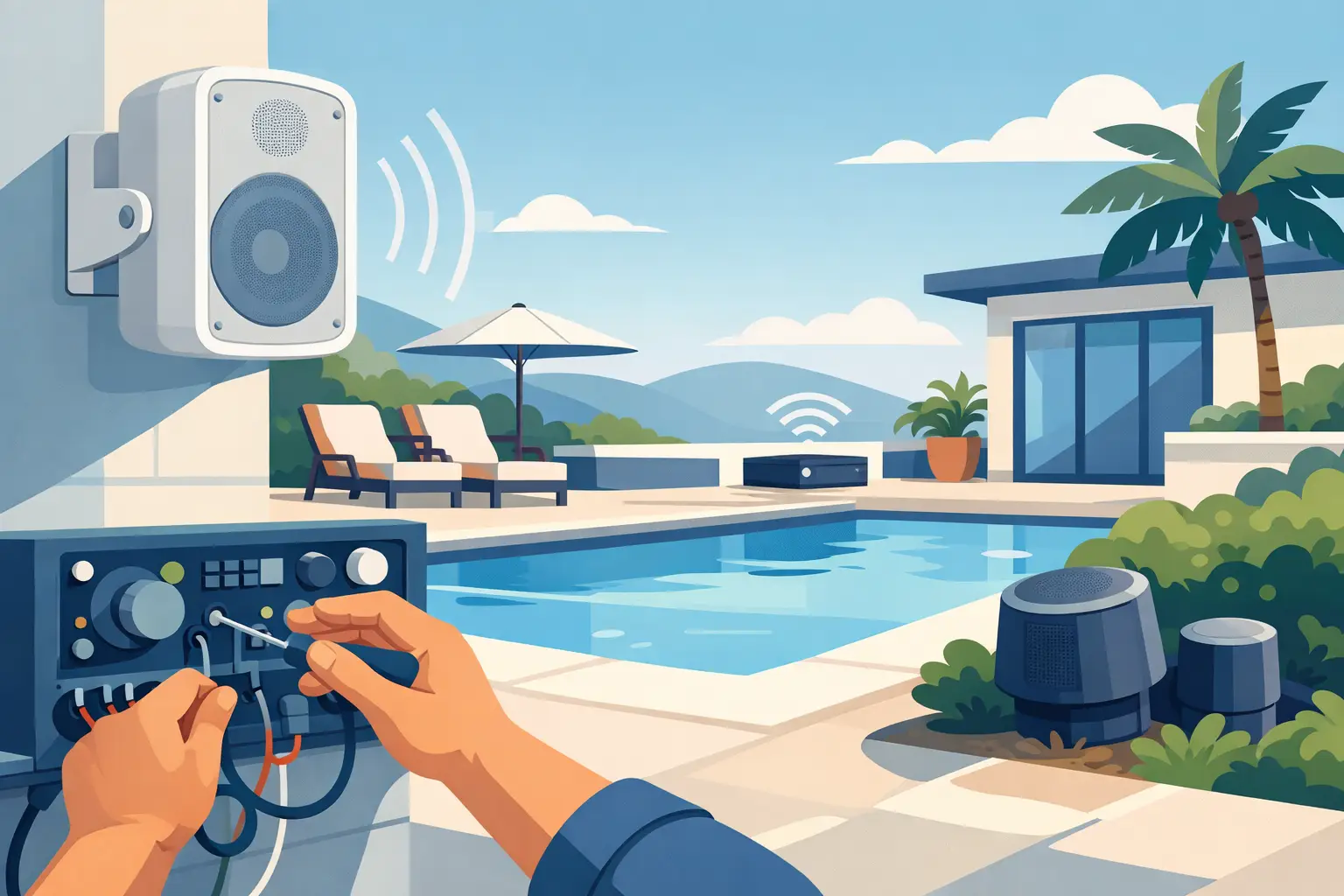
There is also an aesthetic component. Premium outdoor systems should blend into the architecture and landscape, not dominate it. Depending on the property, that may mean surface-mounted speakers under a covered patio, landscape speakers integrated into planting beds, or subwoofers concealed within the yard design. What works at a compact plunge pool in Boca Raton may be very different from what makes sense on a large estate property with multiple outdoor zones.
Different outdoor zones need different audio behavior
Pool areas are rarely one single listening environment. You may have active sound near the water, lower background music in a dining area, and separate audio preferences around a spa or covered lounge. Treating everything as one zone can limit flexibility and create frustration later.
A well-designed system accounts for how each part of the property functions. Some homeowners want the entire backyard to share the same source for entertaining. Others want independent control so someone in the outdoor kitchen can listen to one source while the pool area remains quieter. Neither approach is inherently right. It depends on how the property is used and how much control the client expects.
Weather resistance is only part of the durability story
Outdoor-rated equipment is essential, but product specifications alone do not guarantee long-term performance. South Florida conditions are especially demanding. Heat, humidity, salt exposure, intense UV, and seasonal storms all put pressure on outdoor systems. Installation quality becomes just as important as equipment selection.
That includes proper cable routing, secure mounting, appropriate protection for electronics, and thoughtful placement away from direct environmental stress where possible. It also means planning for drainage, corrosion resistance, and service access. A clean installation is not just about appearance. It directly affects reliability over time.
For this reason, electronics are often better housed in protected interior or semi-protected locations rather than exposed outdoors. Keeping amplifiers, network components, and control hardware in a structured equipment area improves serviceability and extends system life. The outdoor portion should be limited to the devices designed to live there.
Control should feel simple from day one
Sophisticated systems should not require a learning curve every time someone wants to play music by the pool. Control is one of the biggest factors separating a polished installation from a frustrating one.
The right control method depends on the property and the client. Some prefer dedicated touch panels. Others want access from a phone or tablet. In larger homes, poolside audio often performs best when integrated into a broader smart home platform, allowing music, lighting, shading, and pool features to work together through one interface.
This is where design discipline matters. The system should make common actions easy – selecting a source, adjusting volume by zone, grouping areas together, or switching from daytime background music to evening entertaining mode. If the control experience feels cluttered or inconsistent, the technology quickly gets underused.
Audio quality depends on the system behind the speakers
Outdoor audio is sometimes judged by speaker appearance, but speakers are only one part of the chain. Amplification, source quality, network stability, and tuning all shape the final experience.
A system with excellent speakers and poor amplification will still disappoint. So will a layout with no attention paid to tuning and level balancing. Proper calibration matters because outdoor spaces can become harsh quickly, especially when hardscape surfaces reflect high frequencies. A refined system should sound full and clear without becoming brittle at higher listening levels.
Subwoofer integration is another factor that is often overlooked. Low-frequency support adds depth and presence, especially in larger outdoor areas where music can otherwise sound thin. But it has to be done carefully. Too much bass in the wrong location can feel boomy and disconnected. The right design adds richness without overwhelming conversation or neighboring spaces.
Planning early leads to a cleaner result
The best time to address poolside audio system installation is during new construction or renovation, when infrastructure can be planned before surfaces are finished. That allows for concealed wiring, coordinated speaker placement, and smoother integration with lighting, landscape, and pool design.
When audio is treated as an afterthought, there are usually more compromises. Speaker locations may be limited. Wire paths can become visible. Equipment placement may be less than ideal. None of that makes a quality system impossible, but it does narrow the options.
For premium properties, the objective is to make technology feel intentional. That means coordinating with architects, builders, landscape professionals, and designers so the system supports the environment instead of being forced into it later. This is where a full-service integration partner adds real value. The technical scope is broad, but the outcome should feel effortless.
What to expect from a professional design process
A strong installation process begins with questions, not product recommendations. How do you entertain? Which areas need audio coverage? Do you want independent zones? Will the pool area share sources with the patio, outdoor kitchen, or interior spaces? Is discreet appearance a top priority, or is maximum performance the primary goal?
From there, the system can be designed around actual use. That usually includes a site review, equipment planning, layout development, infrastructure strategy, and control design. On more advanced projects, it may also include integration with surveillance, lighting scenes, motorized shades, and whole-property audio distribution.
Professional execution should be visible in the details – clean terminations, well-organized equipment, reliable networking, and a finished result that looks deliberate. Just as important, the installer should remain accountable after the system is turned on. Ongoing support matters because outdoor systems operate in demanding conditions and often connect to broader home technology ecosystems.
For clients who expect premium performance, that level of ownership is not an extra. It is part of the service.
Choosing a system that fits the property
There is no single formula for every backyard. A compact pool terrace may need discreet architectural speakers and simple zone control. A larger estate might call for layered landscape audio, buried subwoofers, multiple entertainment zones, and integrated control across the entire property. The right answer depends on the scale of the environment, the listening expectations, and the level of finish the homeowner wants to preserve.
That is why off-the-shelf thinking often falls short outdoors. Pool environments are too exposed, too varied, and too central to the way people entertain. A custom approach produces better sound, cleaner aesthetics, and a system that holds up under real-world use.
If you are planning a new outdoor living space or upgrading an existing one, treat audio as part of the architecture of the experience. When it is designed with the same care as the pool, patio, and lighting, the entire space works harder for you every day.