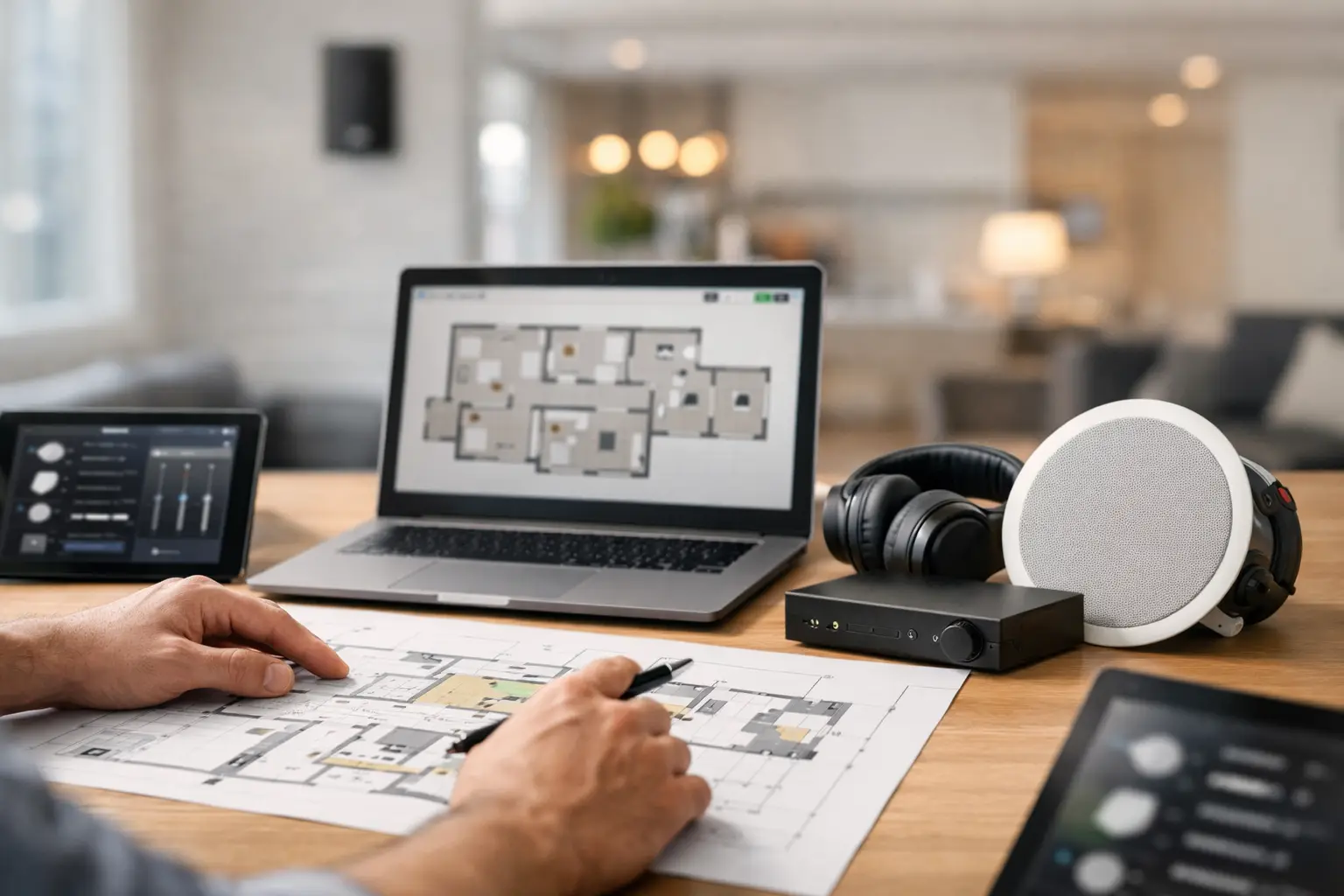
A kitchen should not sound like a formal dining room, and a pool deck should not be controlled like a quiet bedroom. Planning distributed audio zones begins with understanding how people actually live, work, host, and move through a property. When zones are designed around those habits rather than simply placing speakers in every room, the system feels natural: clear sound where it belongs, the right volume for each setting, and control that is easy for everyone to use.
For a luxury residence or a client-facing business, distributed audio is more than background music. It is part of the experience. The details behind the walls – speaker placement, wiring, amplification, network design, and controls – determine whether that experience remains polished and dependable for years.
Start With How Each Space Is Used
A floor plan is necessary, but it does not tell the full story. The better starting point is a conversation about routines. Is the kitchen the center of family activity? Does the living room become an entertaining space on weekends? Will the patio, pool area, and outdoor kitchen operate together during gatherings, or should each area have independent control?
A zone is an area that can play its own audio source and volume level independently from other areas. That does not always mean every room needs to be its own zone. A kitchen, breakfast nook, and adjacent family room may work beautifully as one shared zone if they are commonly used together. On the other hand, a primary suite, office, gym, and guest areas generally benefit from their own control.
Design for real listening patterns
The goal is not to create the highest possible zone count. Too many zones can create unnecessary complexity, while too few force people to compromise. A professional system design finds the appropriate balance between independence and simplicity.
In a commercial setting, the same principle applies with different priorities. A restaurant may need separate zones for the dining room, bar, restrooms, private event space, and exterior seating. A medical office may require consistent, low-level background audio in public areas while keeping private offices silent. The system should support the environment without becoming an operational burden for staff.
Planning Distributed Audio Zones Around Control
Control is where a well-designed audio system becomes truly useful. Every user should be able to walk into a room, select music, adjust volume, or turn the space off without needing technical knowledge. Wall keypads, touchscreens, mobile devices, and voice control can all have a role, but they should work as a coordinated system rather than as disconnected options.
For many homes, a simple preset is more valuable than an endless menu of choices. A single command can start music in the kitchen and patio at an appropriate level for a morning routine. Another can prepare indoor and outdoor entertaining areas before guests arrive. In a business, scheduled audio and clearly labeled controls can help the team maintain a consistent customer experience throughout the day.
The key is deciding who needs control and where. A homeowner may want full control from a primary touchscreen while family members use simple room-level keypads. A business owner may need manager access to the entire property, while staff members should only adjust the volume in their immediate area. Those permissions should be considered during design, not after installation.
Choose Speakers for the Room, Not Just the Ceiling
Speakers should be selected and placed according to the room’s size, ceiling height, furnishings, architectural finishes, and intended volume level. In-ceiling speakers can provide a clean, nearly invisible appearance in many interior spaces. In others, in-wall speakers, surface-mount speakers, landscape speakers, or directional outdoor models may be the better solution.
Placement matters as much as speaker quality. A large open-concept room may require multiple speakers positioned for even coverage, rather than one pair pushed to the corners. The objective is comfortable, consistent sound throughout the space, not a single loud point that leaves other seating areas weak.
Rooms with hard surfaces such as stone, glass, tile, and high ceilings deserve extra attention. These materials can make sound feel overly reflective, especially at higher volumes. Speaker location, dispersion pattern, and careful system tuning help preserve clarity without asking listeners to turn the volume up excessively.
Treat Outdoor Audio as Its Own Environment
Outdoor audio often receives the least attention during early planning and creates the most disappointment later. South Florida properties frequently include pools, patios, kitchens, balconies, cabanas, and landscaped gathering areas. Each has different coverage requirements, exposure conditions, and listening expectations.
A pair of speakers mounted near the house may be sufficient for a compact patio. A larger backyard may call for a distributed landscape system that places sound closer to listeners throughout the property. This approach can deliver fuller coverage at a more comfortable level while limiting sound spill toward neighboring homes.
Outdoor zones should also be planned around how the space is used. The pool and dining area may be grouped for an event, while a quiet lounge area remains independent. Weather-rated equipment, properly protected connections, and thoughtful placement are essential to reliable performance in heat, humidity, and changing weather conditions.
Build the Infrastructure Before the Walls Close
Distributed audio performs best when the infrastructure is designed early, particularly during new construction or a major renovation. Properly routed speaker wire, equipment locations, control wiring, and network connectivity create a clean installation and protect future flexibility.
Centralized equipment can keep amplifiers, source components, and network hardware organized in a dedicated rack or technology space. This gives the system a professional foundation while keeping living and work areas free of clutter. It also allows technicians to service, monitor, and expand the system efficiently when needed.
Network planning deserves equal attention. Modern audio platforms rely on the network for streaming services, app control, updates, and communication between system components. A dependable wired and wireless network helps avoid delayed commands, audio dropouts, and frustrating control issues that are often mistakenly blamed on the speakers themselves.
Plan Sources and Listening Options Carefully
Most properties need a mix of listening choices. Streaming music provides daily convenience, while television audio, turntables, local media, microphones, or business announcements may need to feed selected zones. The design should identify which sources must be available everywhere and which should remain limited to certain rooms.
For example, television sound from a family room may be appropriate in an adjacent patio during a gathering, but not throughout the entire house. In a commercial property, a microphone may need to reach public areas but never private offices. Source distribution should reflect these boundaries from the beginning.
It is also wise to consider whether family members or staff will want different music in different zones at the same time. A properly engineered system can support independent listening without forcing one person’s selection across the whole property.
Leave Room for Change Without Overbuilding
Properties evolve. A nursery becomes a study, a guest room becomes a fitness space, and an unused patio becomes an outdoor entertaining area. Planning for reasonable future expansion can prevent disruptive work later, especially when access above ceilings or behind finished walls is limited.
That does not mean installing equipment for every hypothetical future use. It means leaving a clear pathway, capacity, or wiring provision where expansion is likely. The right approach depends on the property’s architecture, renovation scope, and long-term plans.
Sentry Audio Video approaches distributed audio as part of a complete technology environment, coordinating sound with smart control, video, networking, outdoor entertainment, and the infrastructure that supports them. That level of planning protects the finished appearance of the property while giving owners confidence in how the system will perform.
The most successful audio system is the one people stop thinking about because it simply works. Begin with the moments that matter – a quiet morning in the kitchen, a full home during a celebration, a welcoming business environment – and let those experiences guide every zone, speaker, and control decision.