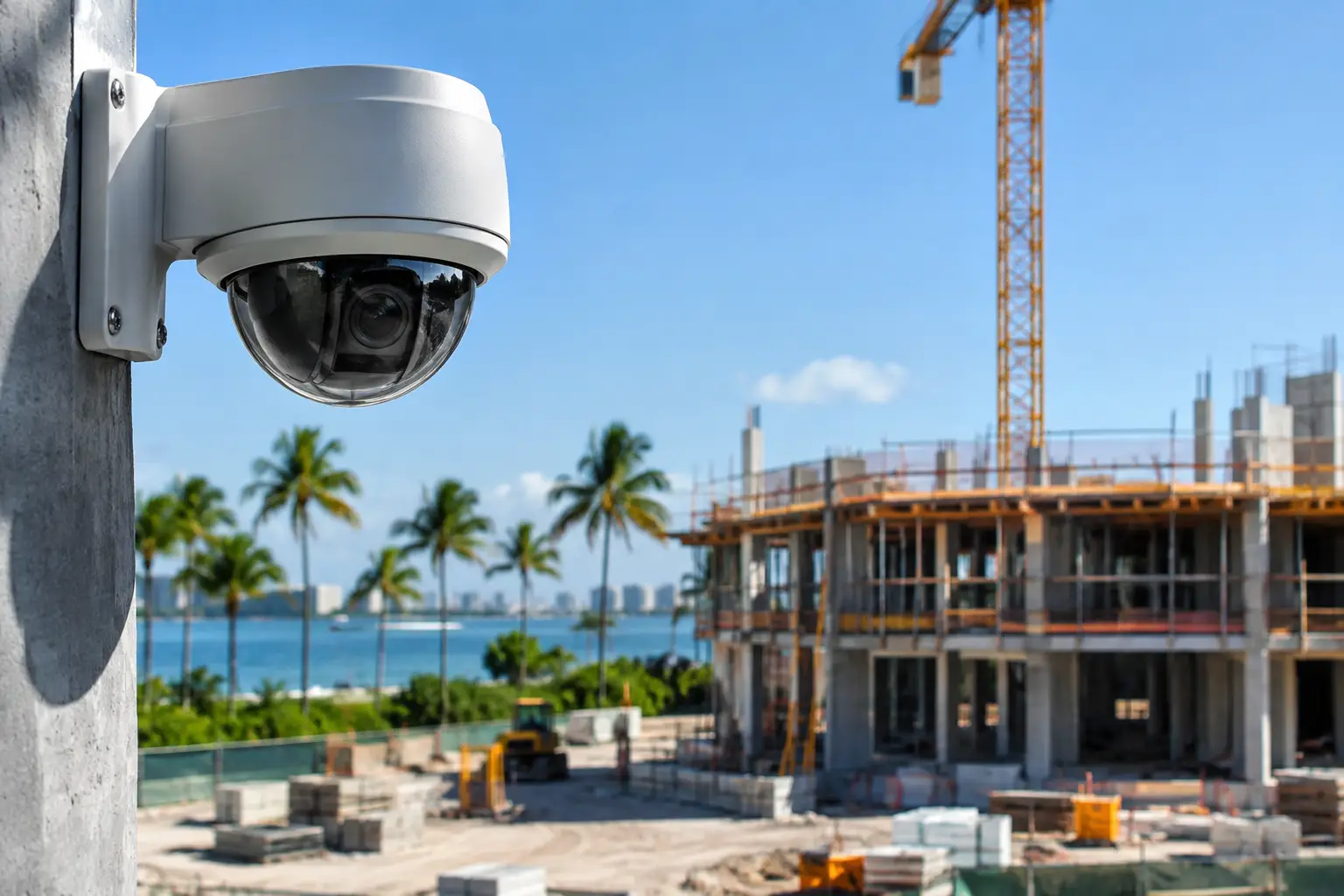
A partially completed project is at its most exposed when crews leave for the day. Materials may be staged in open areas, access points can change weekly, and a single delivery dispute can create costly delays. Construction site camera monitoring Palm Beach County gives owners, builders, and project managers a reliable view of what is happening on site without requiring someone to be there after hours.
For high-value residential construction, commercial build-outs, and major renovations, cameras are more than a record of an incident. When designed correctly, they support accountability, jobsite coordination, progress documentation, and faster decisions. The difference is not simply placing a camera at a gate. It is building a system that matches the site, the project schedule, and the level of visibility stakeholders actually need.
Why construction sites need a different camera strategy
A completed property has permanent walls, finished lighting, predictable entrances, and established network infrastructure. A construction site has none of those advantages. Fencing moves, temporary structures appear, equipment is relocated, and the areas of greatest concern shift as the project advances.
That is why a fixed, one-size-fits-all surveillance plan often leaves critical gaps. A camera positioned for early grading work may not provide the right angle once framing, exterior finishes, or interior work begins. The system should be planned around changing perimeter conditions, material storage areas, delivery routes, equipment staging, and temporary access points.
Palm Beach County adds another consideration: weather. Strong sun, heavy rain, wind, humidity, and salt air near coastal areas can affect outdoor equipment and image quality. Professional-grade camera housings, secure mounting, appropriate weather ratings, and careful placement help protect the investment while preserving useful video during difficult conditions.
What effective construction site camera monitoring provides
The primary objective is site awareness. A properly designed system gives authorized users the ability to check live views, review recorded activity, and verify what occurred at a particular time. That can be valuable after a security concern, but it is equally useful when a contractor, owner, or project manager needs clarity on deliveries, work progress, or access activity.
Protection for materials and equipment
Construction materials and equipment are frequently targeted because they are valuable, mobile, and sometimes stored before permanent security measures are in place. Cameras positioned at vehicle gates, pedestrian entries, material laydown areas, and equipment zones create a documented record of activity.
Visible surveillance can also discourage opportunistic trespassers. The goal is not to promise that a camera alone prevents every incident. Rather, it creates a stronger security posture, helps identify vulnerabilities, and provides usable footage when questions arise.
Clearer project documentation
Progress footage is especially valuable on projects involving multiple trades, absentee owners, architects, or property managers. A well-positioned camera can document key construction milestones, confirm site conditions before walls are closed, and provide a visual history of the work.
This does not replace formal inspections, contracts, or project management records. It does provide an additional source of context. When a question arises about timing, staging, or the condition of a work area, dated video can be far more useful than relying on memory.
Better oversight without constant site visits
Owners and construction managers do not need to drive to the property every time they want a status check. Secure remote viewing allows authorized users to see current site activity from a phone, tablet, or computer. For a second-home owner or a commercial client managing several locations, that visibility can be particularly valuable.
Remote access should be set up with security in mind. Individual user permissions, strong credentials, and properly configured network equipment help keep camera access limited to the people who should have it.
Choosing cameras for the conditions on your site
Camera selection should follow the jobsite plan, not the other way around. The right mix depends on the property layout, the value of stored materials, available power and connectivity, site duration, and whether the priority is active monitoring, recorded evidence, progress visibility, or all three.
Fixed cameras work well when a specific area requires consistent coverage, such as a gate, storage container, driveway, or loading area. Varifocal cameras can offer added flexibility when the field of view needs to be adjusted during installation. Pan-tilt-zoom cameras can be useful for larger sites where an operator may need to inspect different areas, though they should not be the only coverage method. A camera can only record where it is pointed at that moment.
For expansive properties, multiple fixed views usually provide more dependable documentation than relying on one movable camera. The installation should also consider nighttime performance. Adequate low-light capability, infrared illumination where appropriate, and controlled lighting near entrances can make the difference between recognizing activity and capturing an unusable silhouette.
Power, connectivity, and recording are part of the security plan
A camera is only as dependable as the infrastructure behind it. Construction environments often require temporary power, wireless connectivity, cellular service, or a combination of solutions. Each option has trade-offs.
A wired connection generally offers strong reliability where it is practical to install and protect cabling. Wireless systems can be effective for temporary or hard-to-reach locations, but their performance depends on distance, obstructions, interference, and changing site conditions. Cellular connectivity can support remote sites, although data usage and coverage must be evaluated carefully.
Recording strategy matters just as much. Local network video recording can offer consistent retention and control when properly secured. Cloud-based storage may provide convenient remote access and off-site protection. In many cases, a layered approach provides the right balance. The appropriate retention period depends on project needs, camera count, resolution, activity levels, and whether footage may be needed for later review.
A professional design also accounts for power interruptions. Backup power can help maintain operation through short outages, while system alerts can notify designated contacts if a camera goes offline or a recording device has a problem. The point is to know when coverage has been compromised, not to discover it after an incident.
Placement decisions that prevent costly blind spots
The most common surveillance failure is not poor image resolution. It is poor placement. A camera may be technically capable yet positioned too high, too far away, directly into afternoon sun, or behind a changing obstruction such as scaffolding, stacked materials, or landscaping.
Start with how people and vehicles enter the site. Capture faces and vehicle activity at the perimeter where possible, then cover the areas where valuable materials, tools, and equipment are stored. Consider the path from the street to the work zone, because activity at a side entry or temporary opening may be as significant as activity at the main gate.
During a construction project, coverage should be reviewed periodically. Framing, masonry, exterior work, and interior finishes each create new sight lines and new blind spots. A camera plan that is revisited at key phases remains useful throughout the project rather than becoming outdated halfway through it.
Privacy, safety, and access should be handled professionally
Construction camera monitoring must be purposeful. Cameras should focus on the worksite and its access points, not neighboring private areas. Audio recording can involve additional legal and privacy considerations, so it should be evaluated carefully before being enabled. Clear notice signage may also be appropriate depending on the site and the monitoring approach.
Access to footage should be limited to authorized parties. Owners may need executive-level visibility, while project managers need operational access and security personnel need incident review capabilities. Establishing these roles from the beginning prevents confusion and protects sensitive project information.
It is also wise to avoid placing cameras where they interfere with safe work practices or create unnecessary mounting hazards. Surveillance should support the jobsite, not complicate it. Clean installation methods, protected cabling, secure mounts, and thoughtful equipment placement are essential on an active project.
A system that can transition with the property
Temporary construction monitoring does not always need to be temporary in concept. On a custom residence or commercial property, early planning can allow the construction camera system to transition into permanent video surveillance when the project is complete.
This approach can reduce duplicated effort and create a more coordinated technology plan. Structured cabling, network locations, exterior camera positions, gate access, lighting control, and future smart property features can be considered together instead of as separate projects added after completion.
Sentry Audio Video designs construction and permanent surveillance solutions with that long-term view in mind. The process begins with a site assessment and a practical conversation about what must be protected, what must be documented, and who needs access. From there, the system can be built around dependable equipment, clean installation, and support that continues as the project evolves.
Before the next delivery arrives or the next phase changes the site layout, evaluate whether your cameras are showing the views that matter most. A well-designed monitoring system gives your team more than video – it gives them confidence to act on what they can clearly see.