A restaurant can serve exceptional food and still lose the room because of sound. Music that feels thin, uneven volume between tables, a bar that overwhelms the dining area, or an announcement nobody can understand all change how guests experience a visit. Well-designed Restaurant Audio Systems make the atmosphere feel intentional while giving management dependable control over every zone.
For full-service restaurants, cafés, hospitality venues, and private dining concepts, audio is not background equipment. It is part of the brand. The right system supports conversation, reinforces the energy of the space, accommodates special events, and performs consistently through busy service hours. The wrong system becomes a daily distraction for staff and a subtle reason guests decide not to return.
Audio Design Starts With the Guest Experience
The first question should not be, “Which speakers should we install?” It should be, “How should each area of the restaurant feel?” A lively bar, an intimate dining room, a patio, a waiting area, and a private event space may all exist within one property, but they should not be treated as one acoustic environment.
A thoughtful design begins with the restaurant’s service model, capacity, floor plan, finishes, and operating schedule. A fast-casual concept may need energetic, even coverage that keeps the room lively during high turnover. A fine-dining room often needs lower-level, warm background music that enhances the setting without competing with conversation. A waterfront patio may require weather-rated equipment and separate controls to account for changing crowd levels and outdoor noise.
This is why speaker placement matters as much as speaker quality. A few loud speakers mounted in the wrong locations create hot spots: one table is too loud while another barely hears the music. Distributed audio uses properly placed speakers to produce consistent coverage at comfortable levels. Guests notice the result even if they never look up at the ceiling.
Why Restaurant Audio Systems Need Zones
Most restaurants benefit from multiple audio zones. Zoning allows staff to adjust volume and content by area without affecting the entire venue. It also gives operators the flexibility to adapt the sound to the daypart, occupancy, and event schedule.
For example, a restaurant may use separate zones for the entry, main dining room, bar, patio, restrooms, and private dining room. The dining room can remain calm during dinner service while the bar carries a more energetic playlist. A private room can host a presentation or celebration without disrupting other guests. During opening and closing, managers can control all zones from one intuitive interface rather than walking the property to adjust individual components.
Zone design should also account for future operational changes. A restaurant that initially uses a room for overflow seating may later turn it into an event space. Planning the correct cabling, amplification capacity, and control architecture early can prevent disruptive retrofits after the restaurant is already operating.
Separate Music From Operational Audio
Background music is only one part of a commercial audio system. Many venues also need microphone support for private events, announcements, live entertainment, staff training, or promotional programming. Those sources should be designed as part of the overall system, not added later as a collection of disconnected equipment.
A professional installation can route microphones, television audio, event sources, and music services to the appropriate zones. That means a manager can send an announcement to the entire venue, play a presentation in one room, or keep a special event self-contained. The result is clear operation for staff and a more polished experience for guests.
The Room Itself Changes How Audio Performs
Restaurants are challenging audio environments. Hard surfaces such as glass, stone, tile, exposed concrete, and open ceilings can reflect sound and create excessive reverberation. Kitchens, bar equipment, ice machines, crowds, and outdoor traffic add further noise. In South Florida, open-air dining and humid conditions introduce another layer of planning.
No speaker system can fully solve a room with serious acoustic issues. However, the right design can reduce many common problems. Proper speaker distribution allows for lower volume levels, which can improve speech comfort. Directional speaker choices can help contain sound in targeted areas. Outdoor-rated equipment, protected connections, and appropriate mounting methods help support reliable performance in patios and exposed gathering spaces.
In some cases, acoustic treatments should be considered alongside the audio installation. Decorative ceiling elements, wall panels, upholstered furnishings, and other sound-absorbing materials may help control reflections without compromising the restaurant’s interior design. This is especially valuable when a venue looks sophisticated but sounds louder than expected once it fills with guests.
Clean Installation Protects the Design of the Space
Premium hospitality environments require more than capable equipment. They require clean execution. Speakers should complement the architecture, cables should be concealed and properly managed, equipment should be accessible for service, and the finished installation should look purposeful from every guest-facing angle.
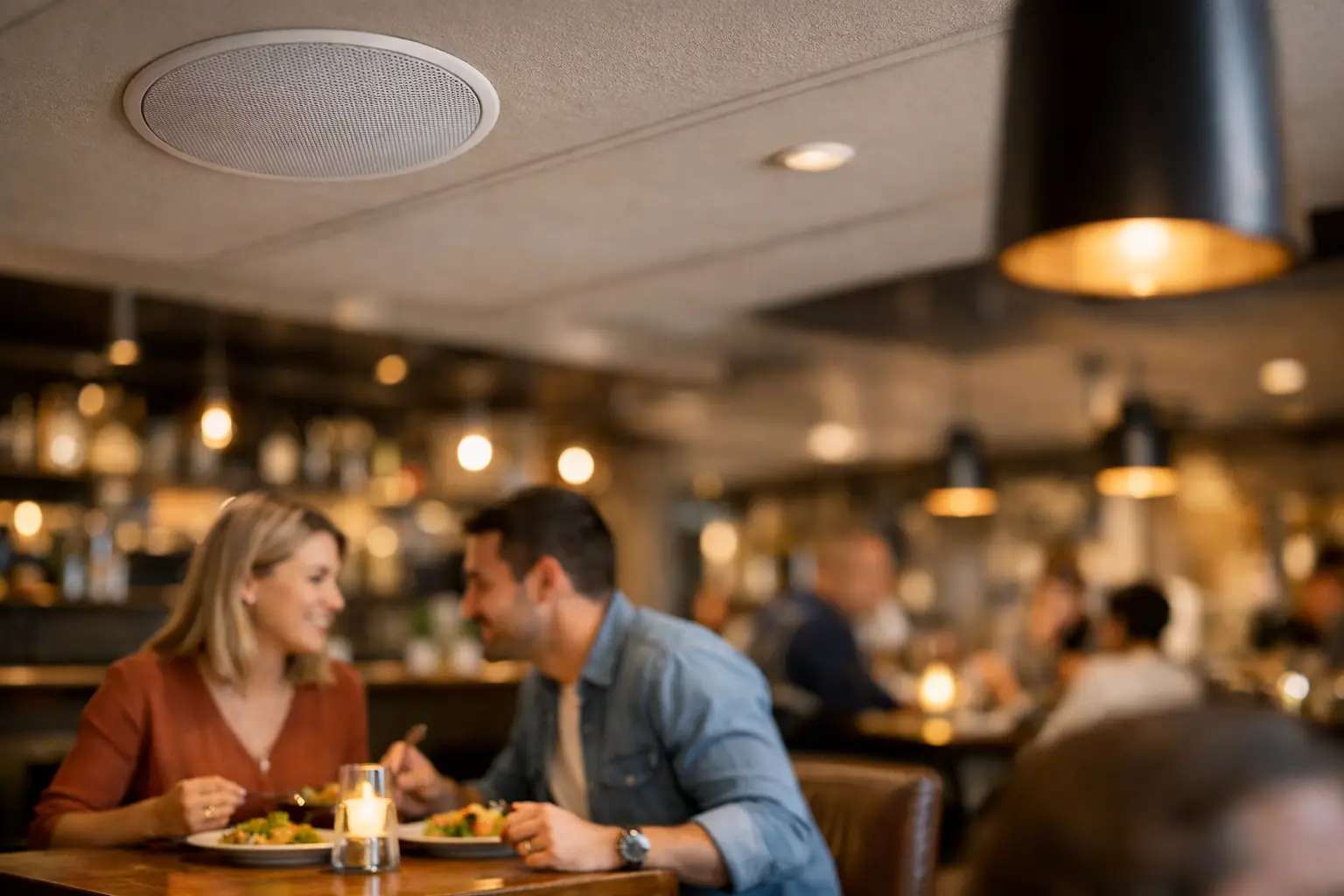
Ceiling speakers can blend into many dining rooms, while pendant speakers may suit open-ceiling concepts. Surface-mount speakers can work well in patios, bars, and areas where ceiling installation is impractical. The appropriate choice depends on ceiling height, layout, décor, acoustic behavior, and coverage requirements.
Behind the scenes, centralized equipment racks offer meaningful advantages. Amplifiers, audio processing, network components, and control hardware can be organized in a protected location rather than scattered throughout the building. This improves serviceability, reduces visual clutter, and makes it easier to identify an issue if one arises. For owners and general managers, that translates to less downtime and fewer operational interruptions.
Reliable Control Matters During Service
Restaurant managers should not need technical expertise to operate the sound system. The control experience should be simple enough for approved staff members to make routine adjustments without accidentally changing critical settings.
A well-integrated system can provide a dedicated touchscreen, wall keypad, or managed control interface for source selection, zone volume, and preset settings. A manager might select “Lunch,” “Dinner,” “Bar Service,” or “Private Event” and have the system apply the preferred audio settings for that scenario. Permissions can also be established so staff can adjust day-to-day volume while system-level configuration remains protected.
Reliability depends on more than the control screen. It comes from correctly matched speakers and amplifiers, organized wiring, dependable network infrastructure where applicable, and professional commissioning. Every zone should be tested under realistic conditions, including higher occupancy levels and event use. A system that sounds good in an empty room may behave differently during a packed Friday night.
Planning for Entertainment, Events, and Growth
Not every restaurant needs the same entertainment capabilities. Some only need refined background audio. Others host DJs, live performers, sporting events, corporate gatherings, or private celebrations. The system should reflect the actual business plan, not a generic package.
For venues with regular entertainment, the design may include dedicated inputs, wireless microphone support, subwoofers in select areas, and audio processing that protects equipment while maintaining clarity. For restaurants that use video displays, the audio plan should establish when television sound is appropriate and where it should be heard. In a dining room, television audio can quickly undermine the intended atmosphere. In a bar, it may be central to the guest experience.
Future readiness is equally valuable. Adding conduit, spare cable paths, rack capacity, and extra amplifier channels during construction or renovation gives owners room to expand without reopening walls or ceilings. That small amount of foresight can protect the property’s flexibility as the concept evolves.
Choosing a Professional Audio Partner
Restaurant audio affects guest satisfaction, staff efficiency, and the perceived quality of the venue. It deserves the same care given to lighting, furniture, kitchen workflow, and interior finishes. Look for an integration partner that begins with the floor plan and operating goals, explains the trade-offs clearly, coordinates with the project team, and remains available after installation.
Sentry Audio Video designs commercial audio solutions around the way a restaurant actually operates, with clean workmanship, reliable control, and ongoing support when it is needed. Whether you are opening a new venue, renovating a dining room, or correcting persistent sound issues, the right conversation starts before equipment is selected. A properly designed system lets guests focus on the food, the company, and the atmosphere you worked hard to create.