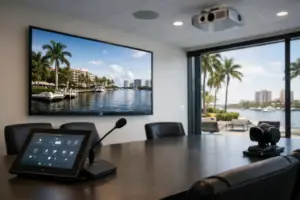
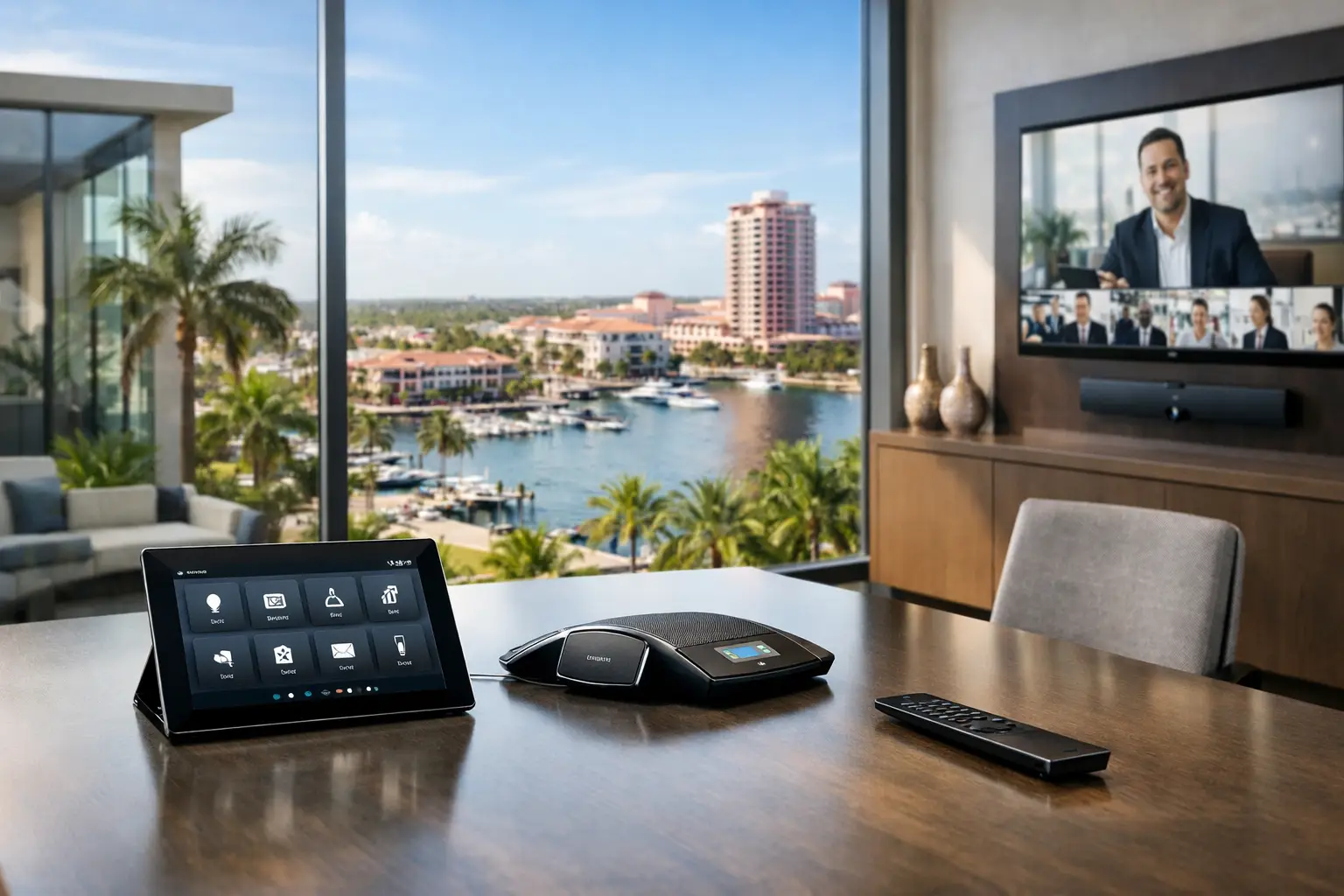
A conference room display that will not connect, surveillance cameras with blind spots, or music that changes volume from one area to another can make an otherwise polished business feel unprepared. Commercial Integration Boca Raton businesses can rely on is not about adding more technology for its own sake. It is about designing one coordinated system that supports employees, protects property, and gives clients or guests a better experience from the moment they walk in.
For a restaurant, medical office, luxury retail space, private club, corporate office, or multifamily property, technology touches daily operations more often than most owners realize. The difference is whether those systems were planned to work together or installed as separate pieces that create more calls, more confusion, and more points of failure.
What Commercial Integration Should Accomplish
Commercial integration brings audio/video, surveillance, access control, communications, fire alarm, structured cabling, and IT-enabled infrastructure into a purposeful design. The goal is not necessarily to place every function on a single screen. In some environments, keeping life-safety and security platforms properly separated is the right operational and compliance decision. The goal is to make each system reliable, appropriately connected, and intuitive for the people who use it.
A well-designed installation begins with how the space operates. A professional office may need presentation systems that start quickly, private meeting areas with dependable video conferencing, and network coverage that remains consistent as staff move throughout the suite. A hospitality venue may need distributed audio with different source and volume control by zone, digital displays that support changing promotions, and camera coverage that helps management respond to incidents.
The strongest designs also account for what happens behind the walls and above the ceiling. Organized equipment locations, labeled cabling, proper ventilation, battery backup where appropriate, and documented system layouts all influence long-term performance. These details are rarely visible to customers, yet they are often what separates a professional installation from a system that becomes difficult to service.
Commercial Integration in Boca Raton Starts With the Space
Boca Raton properties often have high expectations for fit and finish. That means technology cannot be treated as an afterthought, especially during a new build, tenant improvement, or major renovation. Displays should complement the architecture, speakers should provide clear coverage without cluttering the visual environment, and equipment should be located where it can be accessed without disrupting the workspace.
The right approach begins before equipment is selected. An integrator should review floor plans, wall construction, ceiling heights, furniture placement, lighting conditions, network requirements, and the way people move through the property. A bright lobby, for example, may require different display specifications than an interior conference room. An open ceiling restaurant has different acoustic challenges than a carpeted executive suite.
Planning early also prevents expensive compromises later. Cabling pathways, equipment-room space, camera mounting locations, and display backing are far easier to address before finishes are complete. When the project involves architects, designers, general contractors, and IT providers, the integrator should coordinate with each team rather than leave critical decisions to the final weeks of construction.
The Systems That Matter Most
The exact scope depends on the business, but a commercial environment usually benefits from a few core technology categories working in concert.
Audio/video systems shape communication and customer perception. This can include conference room displays, wireless presentation capability, video conferencing, sound reinforcement, digital signage, video walls, and distributed background music. The priority is usability. Staff should not need a lengthy process to begin a meeting or adjust the audio in an event space.
Security systems protect people, property, and information. Properly planned video surveillance considers entrances, parking areas, loading zones, cash-handling locations, common areas, and points where accountability matters. Camera placement is more than a coverage question. Lighting, viewing angles, retention requirements, privacy considerations, and network capacity all affect the value of recorded footage.
Communications and network infrastructure are the foundation beneath the visible systems. Structured cabling, commercial-grade wireless coverage, equipment racks, network switching, and clean power management create the conditions for dependable operation. A premium display or camera system cannot perform consistently on an undersized or poorly organized network.
Access control and intercom systems may also be essential, particularly for offices, managed properties, and facilities with restricted areas. These solutions can give authorized personnel convenient entry while creating a clear record of access activity. The right level of integration depends on the organization’s security policies, staffing model, and the sensitivity of the areas being protected.
Why One Integration Partner Reduces Friction
When different vendors handle AV, cameras, cabling, communications, and network infrastructure independently, the owner often becomes the person responsible for sorting out problems. A display may appear to be an AV issue but turn out to be a network configuration issue. A camera outage may trace back to power delivery, a cable run, or an equipment-room concern.
A full-service integration partner takes ownership of the complete system design and the relationship between its parts. That does not mean every technology has to come from one manufacturer. It means the selected components are specified for compatibility, installed to a consistent standard, and supported by a team that understands the full environment.
This approach also creates a cleaner handoff at project completion. Staff can receive straightforward training on the controls they use every day, while decision-makers receive documentation that makes future service, expansion, and renovation easier to manage. The objective is confidence, not complexity.
Questions to Ask Before Approving a Proposal
A thoughtful proposal should explain the purpose of the recommended system, not simply list equipment. Ask how the design supports the specific rooms and operating needs of your business. Ask where equipment will be installed, how cabling will be routed, who will coordinate with the project team, and what ongoing service looks like after installation.
It is also wise to ask about scalability. A small office may later add conference rooms, additional staff, or new security coverage. A restaurant may expand into a patio or private event area. Planning capacity into the infrastructure can make these changes more efficient without overspecifying systems that the property does not need now.
Finally, discuss control. The right interface differs by environment. A manager may need simple touchscreen control for an event space, while an executive conference room may need a more refined scheduling and presentation workflow. The best system is not the one with the most features. It is the one people can operate confidently under normal working conditions.
Clean Installation Is Part of Performance
Commercial systems must perform well, but they also need to look appropriate for the property. Visible wires, poorly placed cameras, mismatched wall plates, and overcrowded equipment closets affect both appearance and serviceability. High-quality workmanship protects the investment and reflects the standards of the business itself.
Sentry Audio Video approaches commercial projects as a complete responsibility, from consultation and design through installation, commissioning, training, and ongoing support. That process gives business owners one accountable partner for the technology that supports their property, team, and customer experience.
Whether you are opening a new location, renovating an established space, or correcting recurring technology frustrations, begin with a site-specific conversation. A clear plan now creates a more reliable, polished environment for the people who depend on it every day.