
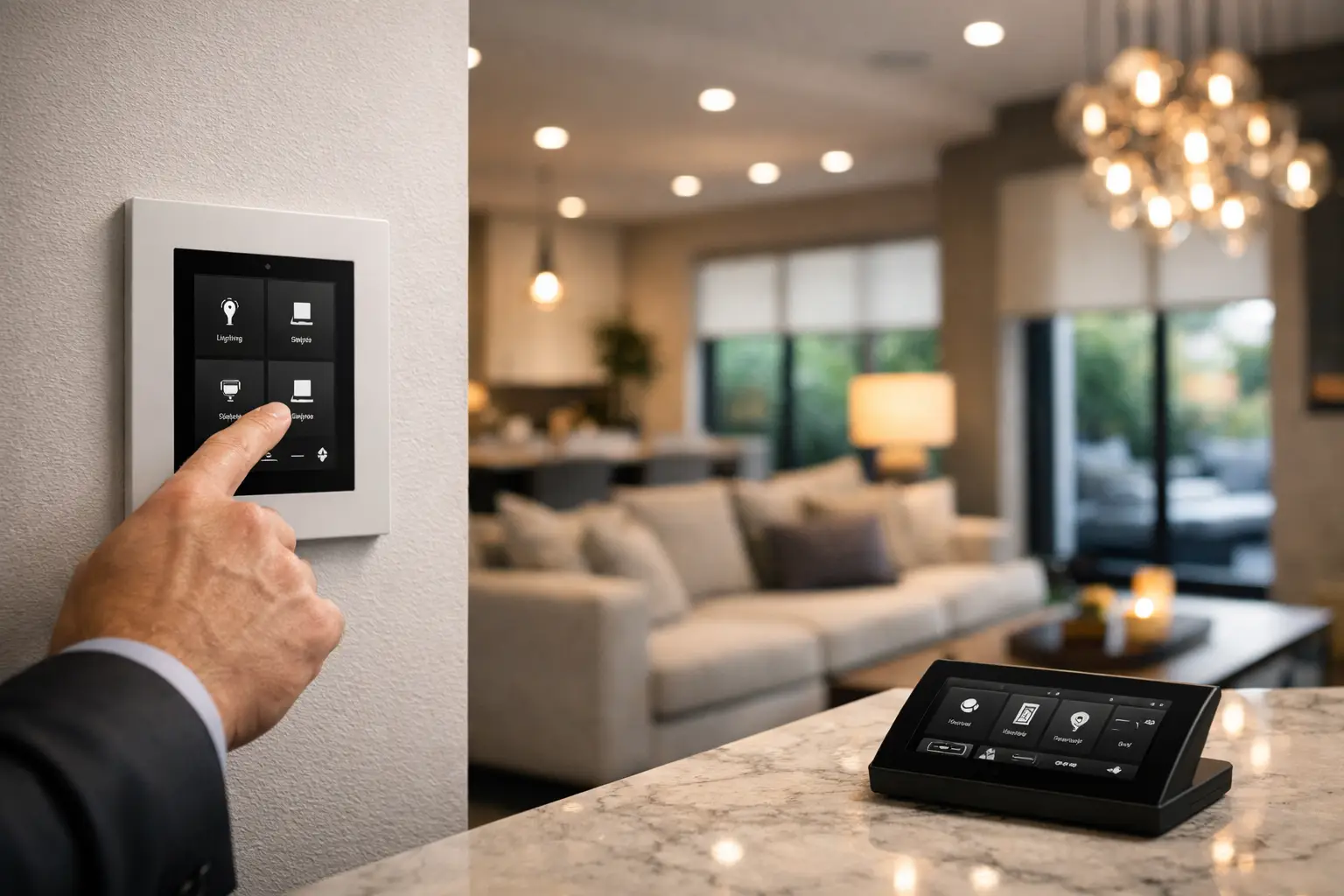
A beautifully designed home can still feel unfinished when lighting, shades, and room controls operate as separate systems. Lutron Homeworks brings those essential elements together into a tailored control experience – one that supports how your household actually lives, entertains, relaxes, and protects the property.
For luxury residences, the value is not simply the ability to turn lights on from a keypad. It is the confidence that every scene, shade position, and control location has been thoughtfully designed, professionally installed, and supported as part of a complete home technology system.
What Is Lutron HomeWorks?
Lutron HomeWorks is a premium lighting and shade control platform built for custom homes and large-scale renovations. It gives homeowners centralized control over wired and wireless lighting loads, motorized shades, keypads, occupancy sensors, and selected connected systems.
Instead of relying on a collection of wall switches and individual shade remotes, HomeWorks creates a coordinated system. A single engraved keypad can set the mood for dinner, prepare the home for the evening, or lower shades throughout a sun-facing area. Control can also be available through elegant touchscreens and mobile devices, depending on the system design.
The difference is in the level of personalization. HomeWorks is not a packaged product that gets added at the end of a project. It is an infrastructure-led solution that should be planned around the architecture, interior design, electrical layout, daylight exposure, and lifestyle of the people using the home.
Why Lighting and Shades Deserve a Unified Design
Lighting affects every room, but it is often addressed too late in a construction project. When control decisions happen after finishes are selected, homeowners can end up with crowded switch banks, inconsistent dimming, or shades that do not align with the room’s use.
A professionally designed HomeWorks system simplifies the wall while expanding what each control can do. One keypad may replace multiple switches and provide labeled buttons for common scenes such as Entertain, Relax, Evening, or Away. The labels, finishes, and button layout can be selected to complement the home rather than compete with it.
Motorized shading adds another level of comfort. In South Florida, direct sun can make a room uncomfortable, create glare on displays, and expose furnishings to intense daylight. Automated shades allow homeowners to manage privacy and daylight without walking from window to window. A well-designed schedule can raise shades in the morning, reduce glare during the afternoon, and close them at night for privacy.
This coordination also improves the experience of the home’s other systems. The right lighting scene makes a theater or media room more enjoyable. Shade control can improve visibility in a bright family room. An arrival scene can illuminate pathways, entry spaces, and outdoor entertaining areas while bringing the home to a welcoming state.
What a HomeWorks System Can Control
The exact capabilities depend on the property and the scope of work, but HomeWorks is commonly used to manage interior and exterior lighting, motorized shades and drapery tracks, wall keypads, touchscreen interfaces, and automated lighting scenes.
It can also be integrated with a broader automation platform so lighting and shades respond to events elsewhere in the home. For example, an evening routine may lower selected shades, turn on pathway lighting, adjust climate settings, and arm designated security functions through a single command. The objective is not to make every feature automatic. It is to make frequently repeated actions easier and more consistent.
There is an important distinction between convenience and control. A successful system gives homeowners quick access to the functions they use most while keeping advanced options available without making daily operation confusing. That requires careful programming, clear keypad labeling, and a plan for how each space is used.
The Value of Professional System Design
HomeWorks performs at its highest level when the design process starts early. During a new build or major renovation, an integrator can coordinate with the architect, interior designer, builder, and electrician to determine where controls belong, what type of lighting should be dimmed, how shades will be powered, and where equipment will be located.
That early coordination prevents avoidable compromises. Some lighting fixtures require specific dimming methods for stable performance. Shade pockets, power locations, and fabric selections need to be considered before walls and ceilings are complete. Outdoor lighting, guest suites, wine rooms, stairways, and pool-adjacent spaces may each have different functional requirements.
A system designer also considers the experience after installation. Keypads should be positioned where they are intuitive to use. Scene names should be meaningful to the household. Equipment should be accessible for service without disrupting finished spaces. These details may not be visible in a showroom, but they shape the reliability and ease of use homeowners notice every day.
Lutron HomeWorks in New Construction and Renovations
New construction provides the greatest design flexibility because wiring pathways, panel locations, and shade infrastructure can be planned before finishes are installed. This is especially valuable in larger homes with extensive glazing, multiple entertaining zones, and layered architectural lighting.
A renovation can also be an excellent opportunity for HomeWorks, although the approach may differ. Wireless controls can reduce the need to open finished walls in certain areas, while wired components may be used where construction access allows. The right approach depends on the home’s age, the scope of renovation, existing wiring, and the desired level of control.
It is worth setting realistic expectations. Integrating lighting and shades into a finished property may require careful trade-offs around access, control locations, and fixture compatibility. A qualified site evaluation identifies those decisions before work begins, allowing the project team to protect the home’s design while delivering dependable performance.
Details That Separate a Refined Installation
Premium control systems are judged by their daily usability, not just their specifications. A refined installation has consistent dimming, responsive keypads, shades that move as expected, and scenes that feel natural rather than overly complicated.
It also respects the visual standard of the property. Equipment panels are organized, wiring is properly managed, keypad finishes are coordinated, and visible devices are installed with precision. Behind the walls, documentation and disciplined programming make future service more efficient.
Ongoing support matters as well. Homes evolve. A room may change function, a family may want a new scene, or a renovation may add a new outdoor area. Working with an integration partner that understands the original system design makes those adjustments far more straightforward than relying on a collection of unrelated products and installers.
Is HomeWorks the Right Fit?
Lutron HomeWorks is particularly well suited to homeowners who want lighting and shading to be a deliberate part of the home’s design, rather than an afterthought. It is a strong choice for custom residences, estates, waterfront properties, multi-level homes, and projects where architecture, interiors, entertainment, security, and outdoor living need to work together.
For a smaller project with only a few rooms and limited lighting changes, a simpler control approach may be appropriate. The right system should reflect the property, the construction scope, and the experience the homeowner expects – not an arbitrary feature list.
The most productive first step is a design conversation before lighting plans, window treatments, and finish selections are finalized. Sentry Audio Video helps homeowners coordinate Lutron HomeWorks with the broader technology environment, from entertainment and surveillance to whole-home control. With a clear plan in place, the home feels composed from the moment you enter it – morning, afternoon, and well after sunset.