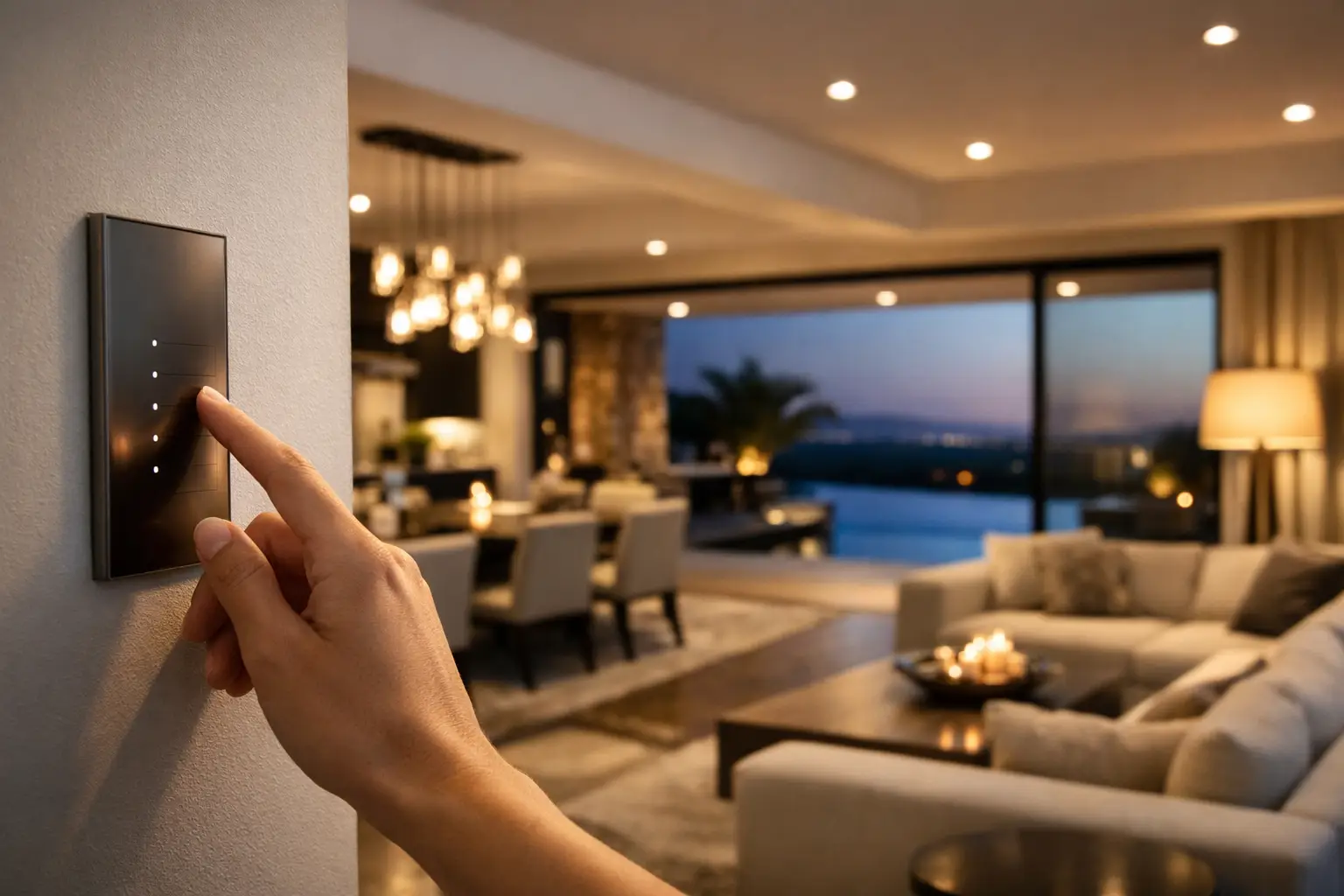
A beautifully designed room can lose its impact the moment the lighting feels harsh, inconsistent, or difficult to manage. Lutron Lighting Control replaces banks of wall switches and disconnected dimmers with a thoughtfully designed system that makes every space feel intentional – from a waterfront living room and art-filled hallway to a restaurant dining area or executive conference room.
For property owners who expect their technology to perform as well as it looks, lighting control is not simply about turning lights on and off from a keypad. It is about setting the right tone, protecting finishes and artwork, improving daily convenience, and bringing the property’s lighting, shades, entertainment, and security systems into a more organized experience.
What Lutron Lighting Control Changes
Traditional lighting layouts often create unnecessary friction. A homeowner may walk through several rooms at night, turning off individual lights one by one. A business owner may rely on staff to set the proper lighting before guests arrive. Dimmers may vary from room to room, and a renovation can leave walls crowded with switches that distract from the architecture.
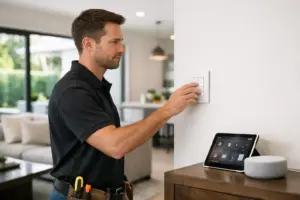
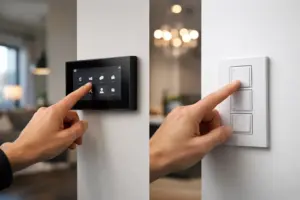
A professionally designed Lutron system consolidates that experience. Elegant keypads can replace multiple switches, while preset scenes adjust selected fixtures to defined levels with one command. A single button can set a kitchen for entertaining, create a softer path of light for late-night movement, or prepare a media room for viewing. The system can also be controlled from a wall keypad, a mobile device, or a larger automation platform, depending on the project.
The result is not a house or business full of complicated controls. It is a property that responds predictably. The right lights come on, the right areas dim, and the system feels natural to everyone who uses it.
Lighting Scenes Create a Better Experience
The greatest value of lighting control is usually found in scenes. Rather than adjusting each fixture separately, scenes combine multiple lighting levels into a setting that supports a specific activity or time of day.
In a residence, a “Morning” scene might bring kitchen and bathroom lighting up gradually while keeping adjacent areas softer. “Entertain” can highlight architectural details, dining areas, and landscape lighting without overwhelming guests. “Goodnight” can turn off common-area lights, leave select pathway lighting active, lower motorized shades where appropriate, and prepare the property for the evening.
Commercial applications benefit from the same discipline. A hospitality venue may need brighter lighting for setup, a warm presentation for service, and safe lighting levels for closing. In an office, scenes can support meetings, video presentations, focused work, and after-hours access. When these settings are planned around how a property actually operates, they improve both presentation and efficiency.
The design matters. A scene should not be built around what is technically possible; it should be built around how the client lives, entertains, works, and moves through the space. That is where an experienced integrator adds lasting value.
Lutron Lighting Control and Motorized Shades
Light from fixtures is only part of the equation. Daylight can transform a room, but in South Florida and New York properties, it can also introduce glare, heat, fading, and privacy concerns. Integrating motorized shades with lighting control gives the environment a more complete response.
For example, shades can lower during the brightest part of the day to reduce glare in a great room or conference space. As daylight decreases, interior lighting can rise to maintain a comfortable visual level. In a home theater or media room, shades and lights can move to viewing positions with a single command. In a bedroom, a scheduled shade setting can provide a more pleasant start to the day than an abrupt room full of light.
This coordination is especially valuable in properties with expansive glass, ocean exposure, tall windows, and open-concept living areas. It also preserves the clean lines of the interior. Instead of managing several separate systems, the property owner has a coordinated environment designed around comfort and appearance.
Security, Safety, and Peace of Mind
Lighting control also supports a stronger sense of security. When a property is vacant, scheduled scenes can make the home appear occupied by varying selected lights at appropriate times. Exterior, pathway, and entry lighting can be activated from a central command. If the lighting system is integrated with security and surveillance, key functions can be managed from an organized control interface rather than from disconnected applications.
For large residences, lighting pathways are also a practical safety consideration. A low-level evening scene can illuminate hallways, stairways, kitchens, and bathrooms without flooding the home with bright light. In commercial settings, carefully planned lighting helps staff move safely through entrances, corridors, service areas, and parking approaches.
There are limits to consider. Lighting control should complement a professionally designed security strategy, not replace it. A reliable system requires appropriate hardware selection, programming, network planning, and ongoing service. The goal is dependable operation, not a collection of features that create confusion when something needs attention.
Why Professional Design Makes the Difference
Lighting control is often most effective when it is considered early in a new build or renovation. Planning at that stage allows the system to support the architecture rather than compete with it. Keypad locations can be intentional, fixture types can be coordinated with control requirements, and equipment can be placed where it is accessible without affecting the finished space.
That said, many established homes and businesses can be upgraded successfully. Wireless lighting control options may reduce the need for extensive wall disruption in certain applications. The right approach depends on the property’s construction, the existing lighting loads, desired control locations, integration goals, and the client’s priorities.
A professional design process should begin with questions that go beyond fixture counts. Which rooms are used most often? Where does glare become a problem? Which areas should be simple for guests, children, staff, or property managers to operate? Is the goal greater convenience, a refined entertaining environment, improved energy management, enhanced security coordination, or all of the above?
The answers shape the system. A well-designed project may include elegant keypads in primary locations, discreet control in secondary areas, customized scenes, and integration with audio, video, shades, outdoor spaces, or central automation. It should also account for future serviceability. Equipment and wiring should be documented, installed neatly, and accessible to qualified technicians.
Choosing the Right Scope for Your Property
Not every room requires the same level of control. A formal entertaining area, primary suite, outdoor living space, lobby, or conference room may benefit from detailed scene programming. Utility spaces may only need reliable on-off control or occupancy-based behavior. Applying the same complexity everywhere can make a system harder to use and needlessly increase the scope of work.
The best projects prioritize the moments that matter. For a residence, that may mean arrival, entertaining, movie viewing, bedtime, and away settings. For a business, it may mean opening, presentation mode, guest experience, closing, and after-hours access. From there, the system can scale in a disciplined way.
It is also wise to consider who will support the system after installation. Premium technology should come with clear handoff, straightforward training, and a service partner who understands the full installation. When lighting, shades, audio/video, networking, surveillance, and automation are designed by separate providers without coordination, diagnosing issues can become difficult. A single integration partner creates clearer accountability.
A More Polished Way to Live and Work
Lutron lighting is at its best when it disappears into the experience of the property. Guests notice the warmth of a room, the ease of moving from indoors to an outdoor living area, and the fact that the environment feels composed. Owners notice that daily routines take fewer steps and that their spaces look right at any hour.
Sentry Audio Video designs lighting control around the property, the people using it, and the systems that need to work together. Whether the project is a refined residence, a high-performance workplace, or a hospitality environment, the right plan begins with a conversation about how the space should feel when every detail is working as intended.