A vacant South Florida home can go from comfortable to costly in a matter of hours. A small water leak, rising indoor humidity, a gate left unsecured, or a power interruption may not be obvious until a seasonal resident returns. Smart Home Monitoring for Seasonal Boca Raton Residents: What to Automate Before Leaving Florida is about creating informed oversight of the systems that matter most, without turning your time away into a stream of unnecessary notifications.
For seasonal homeowners, the objective is not to automate everything. It is to design a professionally integrated system that detects meaningful changes, responds where appropriate, and gives you or your property representative a clear path to action. The right plan combines security, environmental monitoring, access control, and reliable remote control into one dependable experience.
Start With the Risks of an Unoccupied Florida Home
Boca Raton properties face a different set of concerns than a primary residence that is occupied every day. Humidity can build quietly. A failed condensate line or plumbing connection can release water for days. Tropical weather can cause a loss of power or communications. Landscaping, pool service, housekeepers, and maintenance professionals may need access while you are away.
That makes a single camera at the front door insufficient. A well-designed monitoring plan considers what can happen inside the home, around the perimeter, and at key mechanical areas. It also considers who should be alerted first, what information they need, and whether the system can take an immediate protective action.
A professional integrator begins with the property itself. A waterfront estate, condominium, seasonal townhome, and gated residence all have different access points, network conditions, and priorities. The goal is not a collection of disconnected devices. It is one coordinated system with controls that remain intuitive whether you are in New York, traveling abroad, or preparing to return to Florida.
Smart Home Monitoring for Boca Raton Seasonal Residents
The first automation to prioritize is water detection and response. Water damage often develops out of sight, particularly beneath sinks, behind toilets, near water heaters, in laundry areas, and around air-handling equipment. Strategically placed sensors can notify you as soon as moisture is detected instead of waiting for visible damage or a neighbor’s call.
For higher-risk properties, pair leak detection with an automated main water shutoff valve. When a verified leak occurs, the system can close the water supply and send a detailed alert to the homeowner and designated contacts. This is one of the most valuable automations for a seasonal residence because it changes the outcome from extended water exposure to a contained incident.
Placement matters. A sensor installed in the wrong location may not detect a slow leak until water has already traveled across a floor or into cabinetry. During system design, consider every wet area, equipment closet, utility space, and plumbing fixture that could cause trouble while the house is empty.
Monitor temperature and humidity together
Climate monitoring is equally essential in South Florida. The target is not simply a low temperature reading. High humidity can threaten finishes, artwork, furnishings, electronics, and closets even when the room does not feel particularly warm on a camera feed.
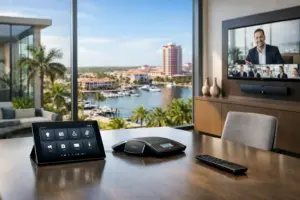
A centralized control system can maintain an appropriate unoccupied-home setting while providing alerts when temperature or humidity moves outside your preferred range. It can also report equipment status and help identify whether an issue is isolated to one area or affecting the whole property.
The exact settings depend on the home, its construction, furnishings, and how long it will be vacant. A residence with fine woodwork, extensive audio/video equipment, or specialty finishes may require tighter thresholds than a simpler seasonal property. Your integration partner should establish alert levels that are meaningful, rather than notifying you every time the system makes a normal adjustment.
Use cameras for verification, not constant surveillance
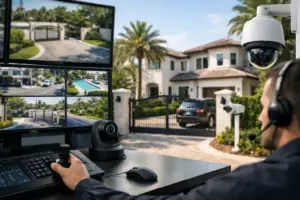
Professional video surveillance gives homeowners useful context when an alert arrives. Exterior cameras can confirm activity at gates, driveways, doors, docks, and pool areas. Interior coverage may be appropriate for select entry points, equipment rooms, or other sensitive spaces, with privacy considerations guiding every placement decision.
The most effective systems use analytics to distinguish relevant events, such as a person approaching a protected entry, from routine movement caused by trees, animals, or passing traffic. Smart alerts should include enough information to help you decide whether a property manager, neighbor, or security professional needs to respond.
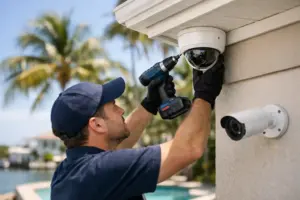
Cameras are also valuable for checking storm conditions, confirming that scheduled service has occurred, and verifying that a delivery or visitor has left the property. They should be positioned deliberately, installed cleanly, and supported by a network designed to carry video reliably. A poorly planned camera system can create blind spots and unreliable recordings at the moment they are needed most.
Control Access Without Sharing Keys
Seasonal homes often have more visitors than owners during the off-season. Housekeepers, pool professionals, landscape crews, property managers, and repair specialists may need controlled entry. Smart locks, video intercoms, garage control, and gate access can replace the uncertainty of copied keys and undocumented access.
Create individual access credentials with schedules tailored to each person. A service professional may have entry permission only during a specific weekly window, while a property manager can have broader access. You can receive a notification when a credential is used and revoke it immediately when a relationship or service arrangement changes.
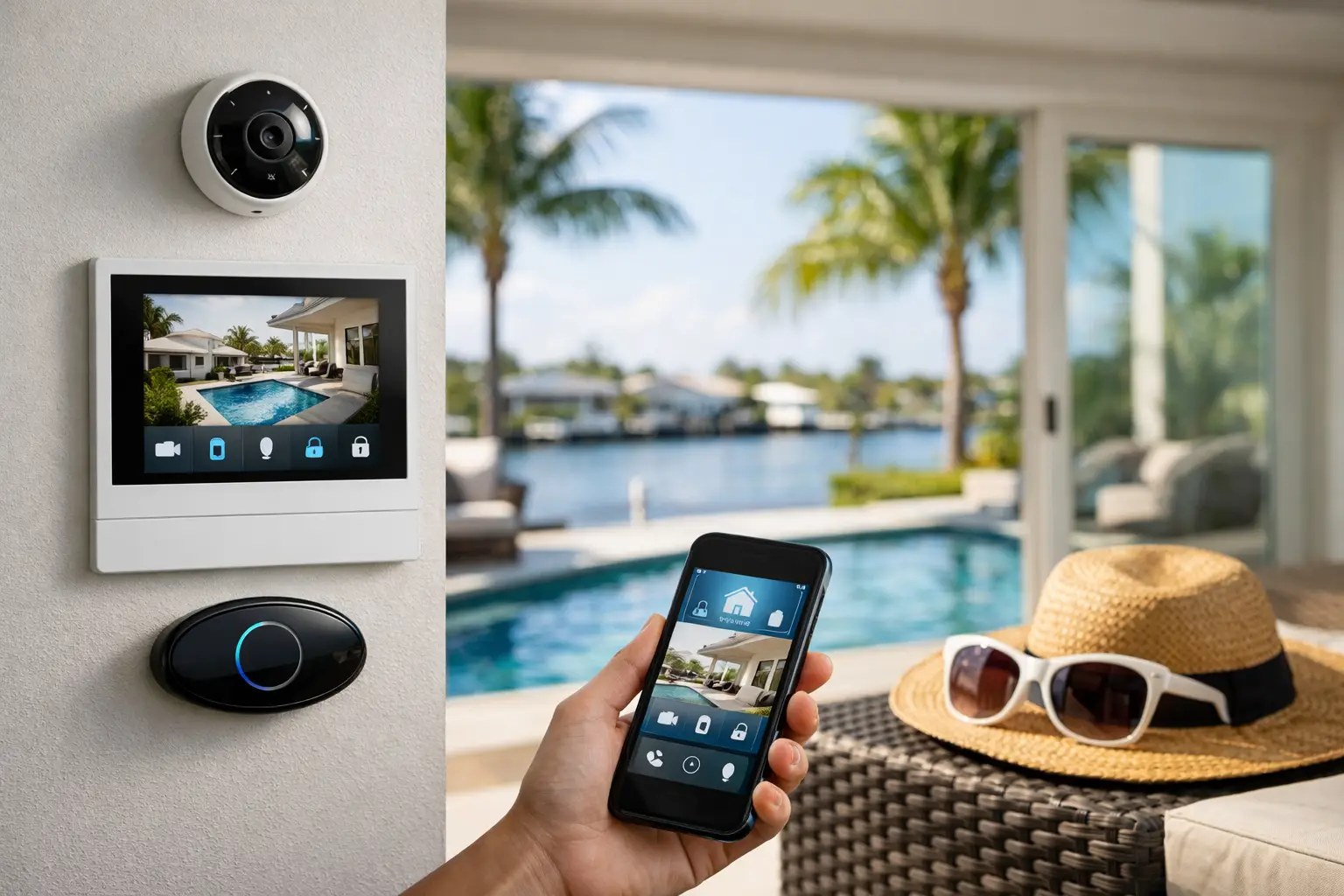
For larger homes, integrate access with surveillance and lighting. When a trusted provider arrives, you can view the entry point, release a gate remotely if necessary, and confirm that the area is properly illuminated. This is safer and more accountable than leaving spare keys in hidden locations or granting unlimited access through a single code.
Make Lighting and Shades Look Occupied, Not Random
Automated lighting can add security and preserve the home’s appearance, but schedules should reflect the way the property is actually used. Switching the same lights on and off at exactly the same time every night looks programmed. A better approach uses time-based scenes with modest variation and layers exterior, interior, and landscape lighting according to the season.
Motorized shades deserve equal attention. They can protect interiors from intense sun exposure, support privacy, and help manage solar gain during vacant periods. In a professionally integrated system, shades can follow schedules, respond to time of day, or be controlled remotely when you want to check the home by camera.
Avoid automation that creates a false sense of security. Lighting and shades are helpful visual deterrents, but they do not replace monitored security, appropriate physical protection, or a trusted person who can visit after a serious alert.
Include Pool, Outdoor, and Storm-Aware Controls
Outdoor areas need oversight because they are exposed to weather, service activity, and equipment issues. Pool and spa integration can provide visibility into operating status and allow authorized adjustments from the same control platform used for the home. Outdoor cameras can help confirm conditions around the pool, patio, gates, and backyard entertainment areas.
Before hurricane season or an extended absence, create an away scene that prepares the property with a single command. Depending on the residence, that scene may set lighting schedules, position shades, confirm selected doors are locked, adjust climate settings, arm security partitions, and notify designated contacts that the property is entering vacant mode.
Storm preparation still requires a property-specific plan and may involve actions that should not be fully automated. For example, some shade or outdoor control decisions depend on the home’s design and the forecast. The value of integration is not blind automation. It is centralized visibility and fast, reliable control when conditions change.
Build Reliability Into the System Before You Leave
Remote monitoring only works when the supporting infrastructure is dependable. Your network should be designed for the volume of cameras, controllers, access devices, and remote connections operating on the property. Wi-Fi coverage, wired connections for critical equipment, network security, backup power, and cellular communications options all deserve consideration.
Power interruptions are a practical concern in South Florida. A properly planned system can notify you when the home loses power or goes offline, while backup power keeps selected network and control components running long enough to maintain communications. The right approach depends on the property and the level of continuity you expect.
Test the complete away routine before departure. Confirm that alerts reach the intended people, camera views are useful, access credentials are current, and remote controls work from outside the home. Review contact information for property managers and service providers as well. The strongest technology plan can still fail operationally if nobody knows who is responsible for responding.
Design Alerts Around Action
Too many notifications lead to ignored notifications. Configure alerts in tiers: urgent events such as water detection, unauthorized entry, extended power loss, or major temperature and humidity changes should receive immediate attention. Lower-priority updates, such as a scheduled service arrival or a routine gate opening, can be delivered quietly or collected in a daily review.
Every critical alert should answer three questions: What happened? Where did it happen? Who should act next? When your system delivers that clarity, you can make a decision quickly instead of trying to interpret disconnected messages from separate platforms.
A custom system from Sentry Audio Video brings surveillance, environmental monitoring, access control, lighting, shades, and network infrastructure into one professionally managed plan. Before leaving Boca Raton for the season, a thoughtful walkthrough and system review can turn your home from a remote concern into a property you can check, control, and protect with confidence.