A smart home should feel remarkably simple once you are living with it. One touch can set the lighting for dinner, lower the shades, start music on the patio, and secure the property for the evening. That effortless experience, however, is the result of careful planning behind the walls, inside the equipment rack, and across every system connected to the home.
For homeowners investing in a new build, significant renovation, or elevated living space, the question is not whether individual devices can connect. The real question is whether every system will work together reliably, look clean, and remain easy to use years from now. A professionally designed smart home turns a collection of technologies into one dependable environment built around the way your household actually lives.
What a Smart Home Should Accomplish
The strongest automation systems do more than place controls on a phone. They remove friction from daily routines while giving homeowners confidence that the property is protected, comfortable, and ready to enjoy.
That may mean entering through the garage and having pathway lights activate at an appropriate level after sunset. It may mean a single “Away” command that turns off selected lighting, adjusts climate settings, lowers motorized shades, arms security, and confirms that exterior access points are secured. For a family returning from a weekend away, it can mean arriving to a home that is already comfortable, illuminated, and welcoming.
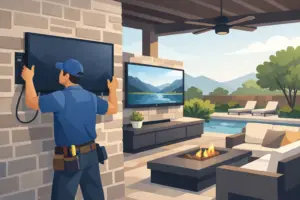
Entertainment should be equally natural. Whole-house audio can follow you from the kitchen to the pool area without juggling separate apps or remotes. A home theater should start with the correct sources, lighting, projection or display settings, and sound profile ready for the room. Outdoor areas deserve the same thoughtful experience as indoor spaces, particularly in South Florida, where patios, pools, and covered living areas are used throughout much of the year.
The goal is not to automate every possible action. The goal is to automate the actions that make the home more comfortable, secure, and enjoyable.
Start With Lifestyle, Not Devices
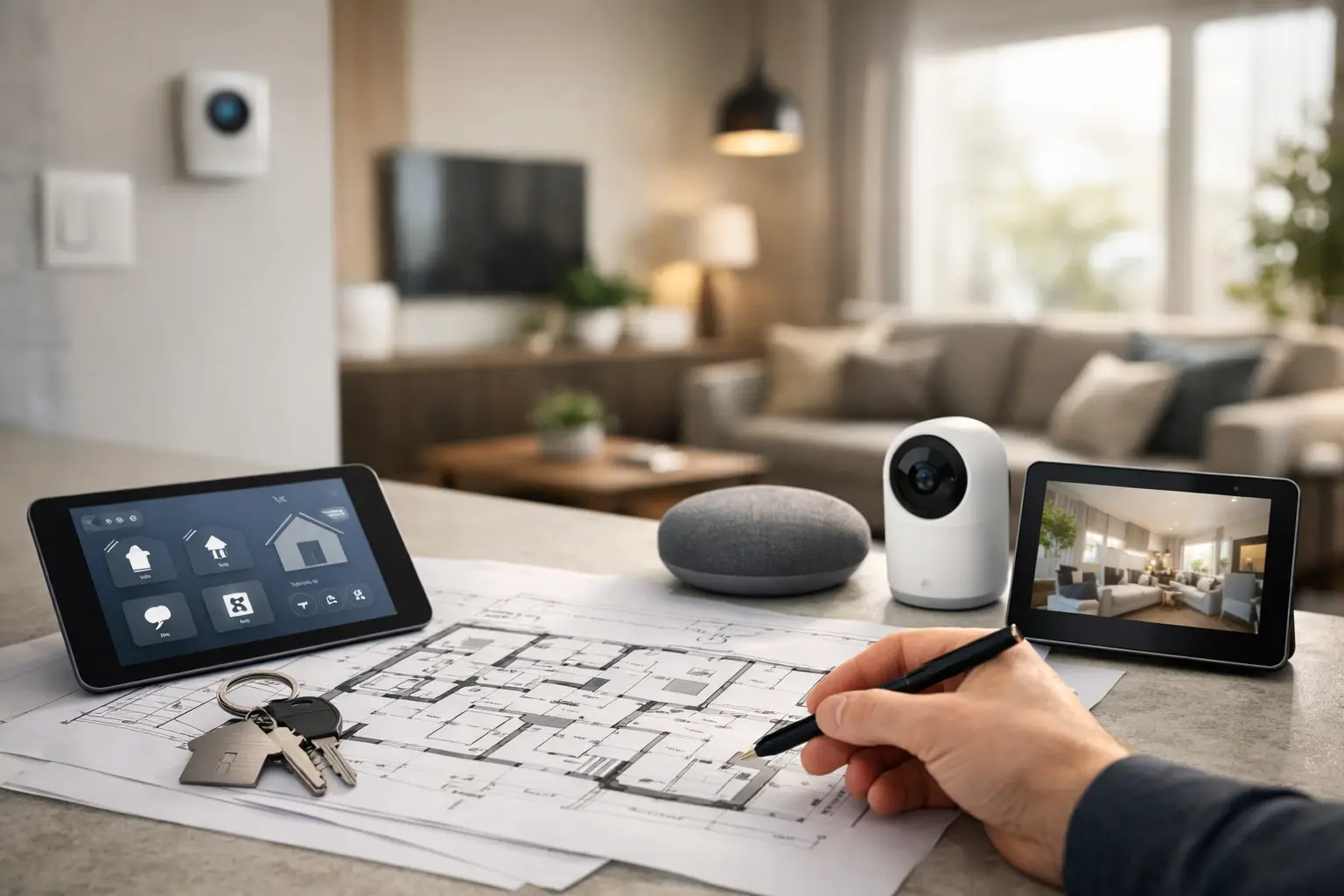
A successful system begins with a detailed conversation about the property and the people using it. Technology should support your routines rather than require everyone in the household to learn a new set of habits.
Consider how the home is used at different times of day. A primary residence may need family-friendly controls, guest access, dedicated work areas, and strong perimeter protection. A seasonal residence may place greater emphasis on remote monitoring, water and environmental alerts, surveillance, and simple controls for a property manager or caretaker. A waterfront property may need carefully planned outdoor audio, lighting, cameras, and network coverage that account for the demands of the environment.
This discovery process also reveals where centralized control creates real value. A keypad outside the primary suite may provide faster access to lighting and shades than a mobile device. A wall-mounted control in the kitchen can make entertaining easier. A dedicated theater remote may be preferable to placing all entertainment functions inside a larger automation interface. The right solution often combines elegant fixed controls, touch panels, voice control where appropriate, and mobile access when away from home.
Scenes Make Complex Moments Feel Simple
Scenes are preprogrammed settings that coordinate several systems at once. They are particularly valuable because they reduce a multi-step routine to one clear command.
A “Good Morning” scene might raise selected shades, bring kitchen lighting to a comfortable level, adjust the temperature, and turn on music in common areas. An “Entertain” scene can activate landscape and interior lighting, set the patio audio volume, and prepare a media room for guests. A “Goodnight” scene can shut down entertainment, turn off nonessential lights, secure the home, and leave low-level pathway lighting on for safety.
The right scenes are personal. A household with young children, frequent guests, or live-in staff will have different priorities than a couple using the property as a private retreat. That is why custom programming matters. It allows the system to reflect the household rather than forcing the household to adapt to preset modes.
The Infrastructure Behind Reliable Control
Beautiful interfaces and premium equipment matter, but they depend on an infrastructure designed to carry the load. Network performance, structured cabling, wireless coverage, power protection, and equipment organization directly affect how the system behaves every day.
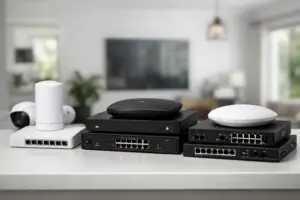
Many modern home systems rely on the network, including audio, video distribution, cameras, access control, lighting, motorized shades, and automation processors. If wireless coverage is inconsistent or network equipment is undersized, even well-chosen components can feel unreliable. A professional design evaluates coverage across the entire property, including outdoor living areas, detached spaces, guest areas, and locations where cameras or access devices are installed.
Whenever possible, planning should happen before walls are closed. Structured wiring creates flexibility for current needs and future upgrades, while centralized equipment placement keeps technology organized and accessible for service. Clean racks, labeled connections, ventilation, and proper power management are not cosmetic details. They are part of a system built for stable performance and efficient maintenance.
There are trade-offs. A fully centralized video system can offer a refined experience throughout a large residence, but it may require more extensive planning than a single-room installation. Motorized shades provide exceptional convenience and can protect interiors from strong sunlight, yet fabric selection, window geometry, power availability, and control strategy must be considered early. The correct approach depends on the home, the scope of the project, and the owner’s expectations.
Security and Comfort Belong in the Same Conversation
Security is most effective when it is integrated into the way the property operates. Video surveillance, door access, gates, alarm systems, and notifications should provide useful awareness without creating unnecessary noise or complexity.
For example, camera alerts can be configured around meaningful activity zones rather than sending an alert for every passing vehicle. A homeowner can verify a delivery, grant controlled access to a trusted visitor, or review activity remotely from a single interface. Lighting can also support security by activating around entry points when appropriate, while exterior areas remain comfortably lit for guests and family.
Privacy deserves the same level of attention. Camera placement, user permissions, notification rules, and remote access should be planned with care. A quality integration partner will discuss who needs access, what each person should be able to control, and how the system should behave when household members, guests, or staff are on the property.
Comfort systems benefit from this connected approach as well. Rather than constantly adjusting separate controls, homeowners can create schedules and scenes that align lighting, shading, entertainment, and climate preferences with daily life. The result is not technology for its own sake. It is a home that responds intelligently while remaining easy to manage.
Design for the People Who Will Use It
A smart home must work for every person who walks through the door. That includes family members who want a familiar button on the wall, guests who need simple access to lighting, and homeowners who want full visibility while traveling. The interface should be intuitive enough for daily use without an instruction manual.
This is where professional programming and system commissioning make a meaningful difference. Every control should be named clearly. Room behavior should be consistent. Frequently used functions should be immediately available, while advanced settings remain accessible without cluttering the experience. Before a project is complete, the system should be tested in real-world scenarios, not simply powered on and handed over.
Training is equally valuable. Homeowners should understand how to use the primary controls, adjust preferred settings, manage guest access, and request support. A trusted integrator remains available after installation because homes change, families grow, spaces are redesigned, and technology needs evolve.
Choose an Integration Partner Built for Long-Term Ownership
The right partner takes responsibility for the entire experience, from early consultation through design, installation, programming, and continued service. That single point of accountability is especially valuable when a project includes entertainment, security, networking, shading, lighting, and outdoor systems.
Look for a team that asks detailed questions before recommending solutions, coordinates cleanly with architects, builders, designers, and other trades, and explains the reasoning behind the plan. Premium technology deserves premium execution. Equipment should be selected for the demands of the project, installed with care, and supported by professionals who understand the complete system.
For homeowners in Boca Raton, Fort Lauderdale, and surrounding South Florida communities, Sentry Audio Video provides that end-to-end approach with a focus on clean workmanship, dependable performance, and responsive service. The most rewarding smart home projects begin with a thoughtful conversation about how you want your property to feel, function, and protect what matters most.