A smart home system can feel invisible when it works properly – and remarkably disruptive when one keypad stops responding, a room loses audio, cameras go offline, or the app no longer controls the property. For Smart Home Repair in Boca Raton, the question is often not whether the system can be repaired. It is whether a new technology integrator can responsibly take over a system installed by someone else.
In most cases, yes. A qualified integrator can assess, diagnose, repair, and improve an existing installation, even when the original company is unavailable or no longer providing service. The answer depends on the equipment, the condition of the infrastructure, access to system programming, and how the original installation was documented.
A professional takeover begins with facts, not promises. Every connected home is different, and the right path may be a focused repair, a phased modernization, or a more comprehensive rework of the system’s control and network foundation.
Can Another Company Service Your Smart Home System?
A properly trained integration company is not limited to systems it originally installed. Many homeowners move into residences with established automation, audio/video, surveillance, lighting, shading, access control, and network systems already in place. Others are left without support when an installer changes direction, becomes unreachable, or cannot maintain an aging platform.
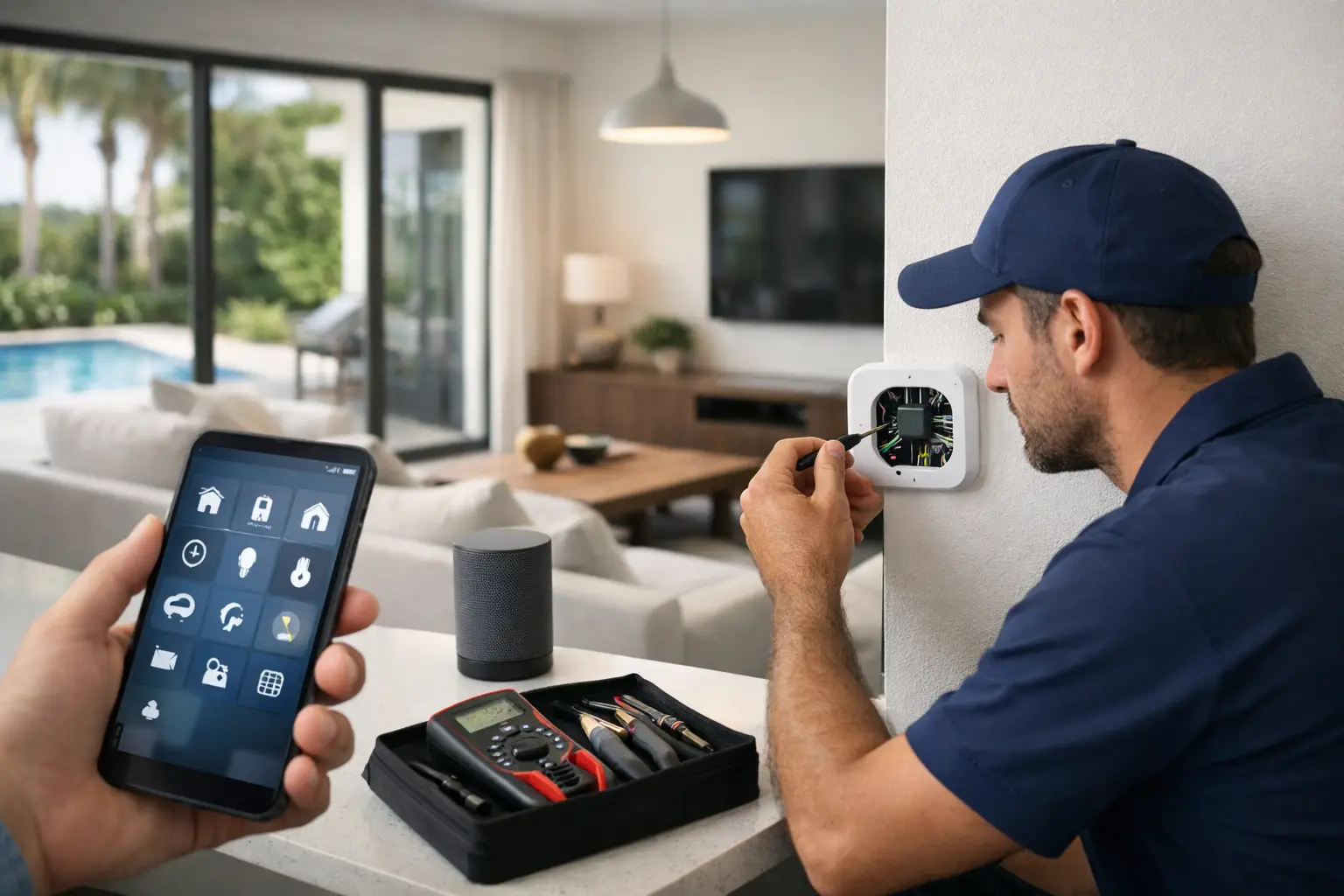
An experienced provider can service another company’s work when the system is accessible and the underlying components are supportable. That includes identifying installed product lines, reviewing the equipment rack, testing control devices, examining wiring, and confirming whether programming credentials or dealer-level access are required.
There are limits. Some systems are locked behind proprietary programming, discontinued hardware, undocumented configurations, or equipment that was installed outside recommended practices. A reputable integrator will explain those limitations clearly rather than making broad claims before the system has been inspected.
The goal is not simply to make a troublesome device respond once. It is to restore dependable day-to-day performance and establish a clear service path for the future.
What Makes a System Takeover More Complex?
The visible symptom is rarely the complete story. A television that will not turn on from a wall keypad may be affected by the control processor, the network, a power-management component, an HDMI distribution issue, or an incorrect source setting. Likewise, an intermittent camera may be a camera issue, but it can also point to cabling, network configuration, recording equipment, or power delivery.
The quality of the original installation matters. Clean labeling, organized equipment racks, documented wiring routes, current programming backups, and readable network credentials can significantly shorten the diagnostic process. In a well-executed system, another qualified technician can often understand the architecture quickly.
Poor documentation does not make repair impossible. It does mean the integrator must spend time mapping the system before changing anything. That work protects the homeowner. Guessing at connections or resetting equipment without understanding dependencies can create additional outages across audio, video, security, or control functions.
Older systems also require practical judgment. A repair may be worthwhile when the platform remains stable, supported, and appropriate for the property. When critical hardware is no longer serviceable, replacement may be the more reliable decision. Often, modernization can be completed in phases, preserving quality wiring and components that still perform well while updating the parts that create the most risk.
Smart Home Repair in Boca Raton Starts With a Professional Assessment
A qualified assessment should look beyond the device that prompted the service call. The technician needs to understand how the home is designed to operate as a whole.
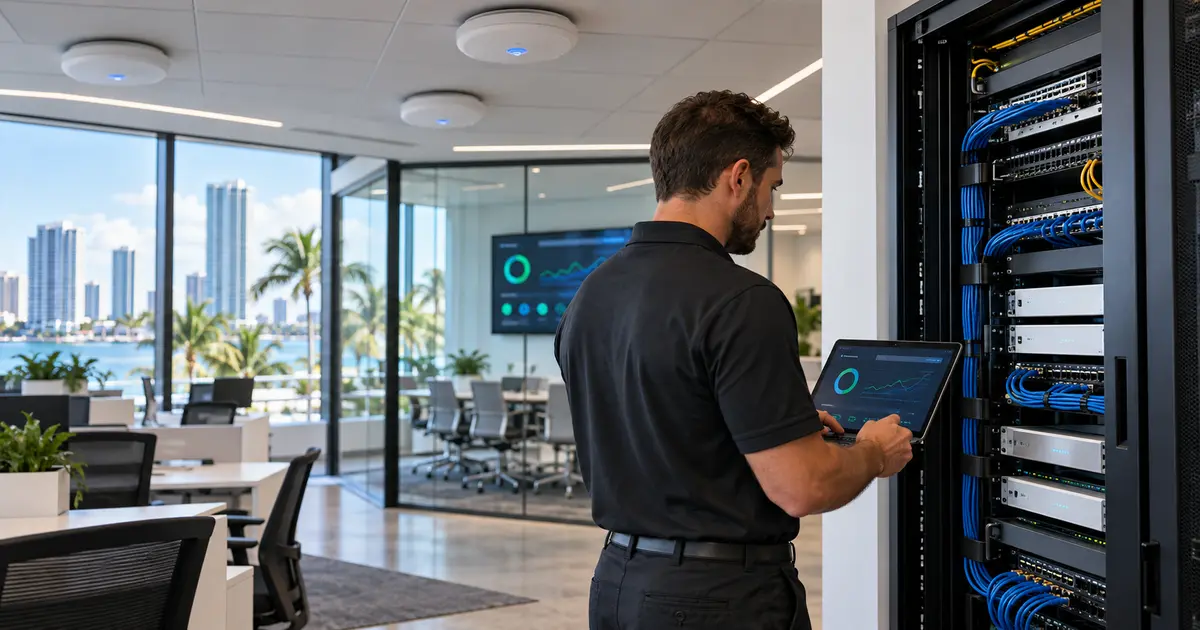
That typically begins with a review of the technology spaces: equipment racks, network hardware, source components, amplifiers, control processors, surveillance recorders, and power protection. The next step is identifying the installed platforms and verifying communication between key devices. A technician may then test affected rooms, control interfaces, wireless coverage, audio zones, video distribution, cameras, motorized shades, and other systems connected to the same foundation.
Documentation is especially valuable during this stage. Original proposals, floor plans, equipment lists, passwords, programming files, and past service records can all help. If you do not have them, do not assume the project cannot move forward. An integrator can create updated documentation as part of the takeover process.
The assessment should end with a straightforward explanation of what is working, what is failing, what presents a future concern, and which options make sense. Premium properties deserve a plan that accounts for reliability, appearance, and long-term support – not a temporary workaround that leaves the system harder to manage later.
Common Issues a New Integrator Can Address
A takeover service call may involve one isolated issue, but it is common to uncover several related concerns. Common requests include restoring app or keypad control, troubleshooting whole-home audio, correcting video distribution problems, improving network reliability, resolving surveillance viewing or recording issues, replacing failed control hardware, and updating outdated programming.
Homeowners also call when their systems have become difficult to use. A family may have multiple remotes, confusing inputs, controls that behave differently from room to room, or a mobile app that no longer reflects the actual equipment in the home. In these cases, the repair may include refining the user experience rather than replacing every component.
Security-related service requires added care. Camera systems, access control, alarm integration, and remote viewing should be reviewed with privacy, account ownership, password management, recording retention, and secure remote access in mind. When a property changes hands or a prior provider had administrator access, updating credentials and account permissions is a responsible first step.
When Repair Is the Right Choice – and When It Is Not
Repair is often the right answer when a system has solid infrastructure, quality equipment, and a clearly identifiable failure. Replacing a failing network switch, repairing a damaged cable termination, updating a control interface, or correcting system configuration can bring a well-designed installation back to the performance the home was meant to have.
Replacement becomes more sensible when the platform is unsupported, parts are unavailable, multiple systems have reached the end of their service life, or the existing design does not match how the property is used. For example, a homeowner may want better outdoor entertainment, expanded camera coverage, improved remote management, or more intuitive control than an older installation can provide.
The decision should be based on the system’s condition and your goals, not pressure to replace equipment prematurely. A capable integrator can identify which components are worth preserving and where an upgrade will deliver a meaningful improvement.
What to Have Ready Before Calling for Service
You do not need to understand the technical architecture of your home before requesting help. Still, a few details can make the first visit more productive. Gather any available equipment lists, prior invoices, login information, and details about when the issue began. If the problem affects a specific room or function, note what works, what does not, and whether the issue is constant or intermittent.
Avoid resetting major equipment or changing passwords immediately before service. Those actions can remove useful diagnostic clues and, in some cases, disconnect devices that depend on an existing configuration. If there is an urgent security concern, restrict access to the relevant account and let the service provider know right away.
It also helps to describe the result you want, not just the problem you see. Perhaps you want reliable audio throughout the home, simpler control for guests and family members, dependable camera access while traveling, or a better organized technology rack. That context helps shape the repair strategy.
Choose a Partner That Can Support the Entire Property
Smart home systems are interconnected. A provider focused only on one category may resolve a surface-level issue while missing the network, wiring, power, control, or programming factor behind it. For a property with integrated entertainment, security, shading, communications, and infrastructure, broad technical capability matters.
Look for an integrator that will inspect the existing work carefully, communicate findings in plain language, document changes, and remain available after the repair is complete. The service relationship is as important as the initial correction. You should know who to call when a system needs attention and trust that the provider understands the full environment.
Sentry Audio Video approaches takeover projects with that level of accountability. Whether the need is a targeted repair or a plan to bring an inherited system up to current expectations, the first step is a professional evaluation of what is installed, what can be preserved, and what will deliver dependable performance for the home.