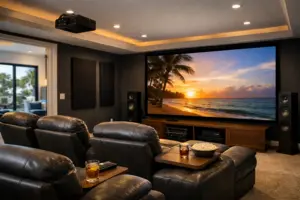
A theater can have an exceptional display and beautifully placed speakers yet still fall short because the audio signal path was treated as an afterthought. The question behind “HDMI 2.1 vs. Optical Audio: Which One Do You Actually Need for Your Home Theater?” is not simply which cable to run. It is whether your system can deliver the sound formats, control features, and long-term flexibility your room deserves.
For many homes, optical audio remains perfectly functional. For a dedicated theater, a premium soundbar, or a distributed entertainment system built around immersive audio, HDMI with eARC is usually the stronger choice. The distinction matters most before equipment is installed, cabinetry is finalized, or walls are closed.
The real decision is eARC, not the connector alone
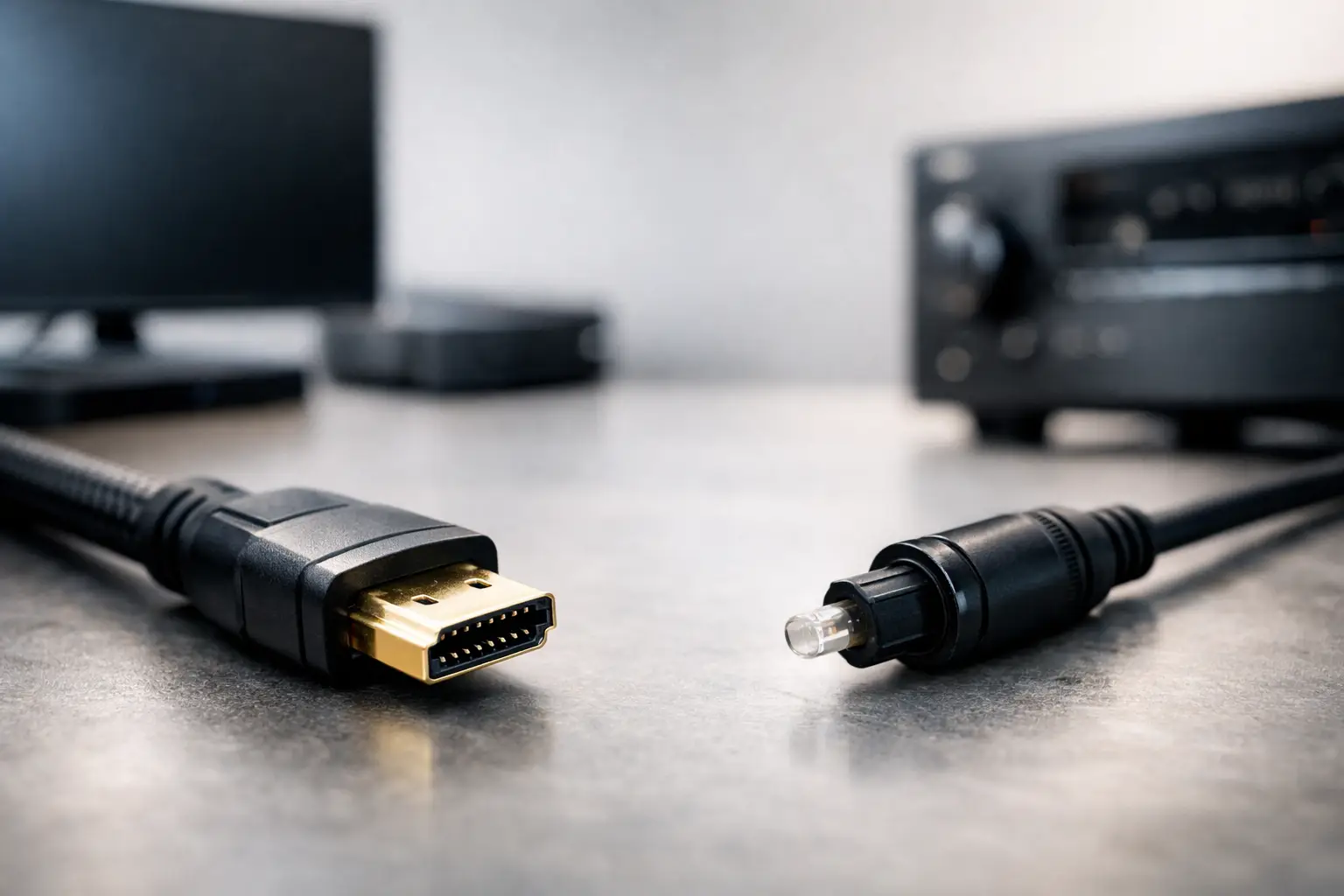
“HDMI 2.1” and “optical audio” are often presented as direct competitors, but they serve different roles. Optical, also called TOSLINK, is a dedicated digital audio connection. HDMI carries both video and audio, and its audio-return features allow the television to send sound back to an AV receiver or soundbar.
For home theater audio, the feature to look for is eARC, short for Enhanced Audio Return Channel. eARC is associated with HDMI 2.1 and has far more audio capacity than optical or standard ARC. It is designed to return higher-quality audio from your television’s built-in apps and connected sources to the audio system.
Standard ARC can be useful, but it has limits and can behave differently from one television and audio component to another. eARC offers more reliable support for uncompressed multichannel audio and premium surround formats. If a system is being designed for Dolby Atmos, lossless movie soundtracks, or a high-performance surround speaker layout, eARC deserves careful attention.
HDMI 2.1 vs. optical audio: what each path carries
The practical difference comes down to audio bandwidth and format support. Optical is capable of clean digital stereo sound and common compressed surround formats, including Dolby Digital 5.1 and DTS 5.1. That makes it a reasonable connection for a television paired with a straightforward soundbar or a modest surround system that does not need advanced audio formats.
What optical cannot reliably carry is the high-bandwidth audio found on many premium movie releases. It does not support lossless formats such as Dolby TrueHD or DTS-HD Master Audio. It also is not the right connection for Dolby Atmos in a typical home theater configuration. Even when a streaming service supplies an Atmos soundtrack in a compressed format, optical should not be the planned path for delivering it.
HDMI eARC changes that equation. It can pass uncompressed PCM audio, multichannel audio, Dolby TrueHD, DTS-HD Master Audio, and Dolby Atmos when the connected equipment supports those formats. That capacity preserves more of the detail and dynamic range built into a soundtrack, from quiet dialogue to the full impact of a cinematic score.
There is an important nuance. An HDMI 2.1 cable does not automatically create eARC capability. The television must have an eARC-labeled HDMI port, and the receiver or soundbar must also support eARC. Settings on both components may need to be configured correctly. Compatibility is a system-level issue, not a cable-only decision.
When optical audio is the right fit
Optical is not obsolete. It can be a practical and dependable solution when the system’s audio expectations match its capabilities.
It makes sense for a room where stereo sound or conventional 5.1 surround is the goal, especially when the display and audio equipment do not offer compatible ARC or eARC connections. Optical also avoids some HDMI control complications in simpler installations. If a television is paired with an existing audio system and the source material is primarily standard television programming, optical may provide all the performance the room requires.
It can also be useful as a fallback connection. In certain installations, an optical output offers a separate route for sound if an older component must remain in service. That does not make it the preferred backbone for a new theater, but it can be a sensible compatibility option.
The limitation is future flexibility. Once a client adds a higher-performance soundbar, upgrades to a surround processor, or expects immersive formats from streaming apps and movie sources, optical becomes the constraint. A system that sounds acceptable today may leave valuable performance unused tomorrow.
When HDMI eARC is the better investment
HDMI eARC is the preferred connection for most newly designed premium home theaters. It provides the headroom to support the formats clients expect from a modern entertainment space without forcing audio into a lower-capacity path.
Choose eARC when the room includes a multichannel receiver or processor, architectural surround speakers, height speakers, or a premium soundbar capable of Dolby Atmos. It is also the right choice when you want the television’s streaming apps to deliver their highest available audio quality to the sound system.
HDMI also supports system control features that matter in a professionally integrated home. HDMI-CEC can allow a single command to power on the display and audio system, select the correct input, and manage volume. CEC behavior varies by manufacturer, so it should be programmed and tested rather than assumed. In a well-designed system, the control platform can further simplify operation and avoid the frustration of multiple remotes.
For clients planning a theater during a renovation or new construction project, HDMI infrastructure should be considered early. Certified, properly rated cabling, accessible equipment locations, conduit where appropriate, and a thoughtful distribution plan are far more valuable than trying to solve signal limitations after finishes are complete.
The source connection can change the answer
eARC is specifically intended to send audio from the television back to the audio system. That is ideal when you use the television’s internal apps or connect sources directly to the television.
However, many dedicated theaters connect sources to an AV receiver or surround processor first, then send video from that component to the display. In that arrangement, the source’s audio is decoded by the receiver directly. eARC still provides value for audio originating at the television, but it is not the only path that delivers high-quality sound.
This is why an equipment diagram matters. A theater with multiple sources, video distribution, zone audio, and centralized control has different requirements than a single display and soundbar. The right answer should account for every source, every listening area, and the way the household actually uses the system.
Questions that should guide the decision
Before selecting a connection standard, define what the room must accomplish. The most useful questions are whether you want Dolby Atmos or lossless surround, whether streaming apps will run from the television, whether sources will connect through a receiver, and whether the system will expand later.
Also consider the age and capabilities of the display, receiver, soundbar, and source components. A new eARC-capable television connected to an ARC-only soundbar will operate within the soundbar’s limits. An advanced receiver cannot recover audio information that was never sent by the display. Every component in the chain must support the intended format.
Cable quality and installation practices matter as well. HDMI signal issues are often blamed on a receiver or display when the real problem is an improperly selected cable, an overly long run without the right signal solution, or a connection point that cannot be serviced. Clean cable management and properly planned infrastructure protect both performance and the finished appearance of the space.
Choose the signal path before the walls close
Optical audio is appropriate when a room needs dependable stereo or traditional surround sound and the equipment does not call for more. HDMI eARC is the clear path for immersive audio, lossless formats, integrated control, and a theater designed to perform at a higher level over time.
The most successful home theaters are not built around a single specification on a product box. They are designed around the room, the equipment chain, and the experience the homeowner expects every time the system turns on. Sentry Audio Video helps clients make those decisions before installation, so the finished theater delivers the picture, sound, and reliability worthy of the space.