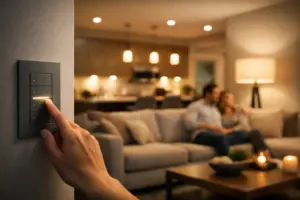
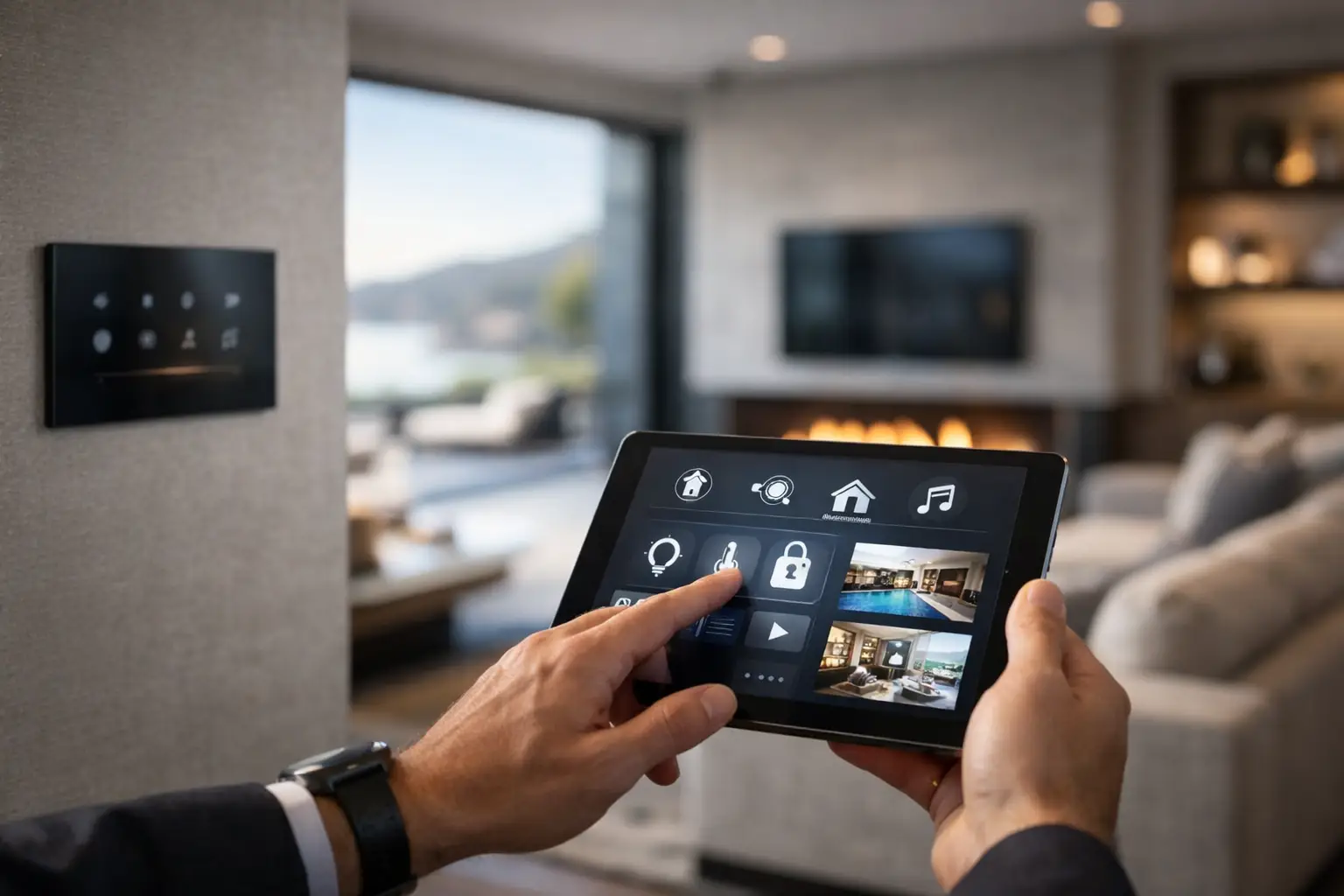
A smart home control system review should begin where daily life actually happens: at the entry keypad when your hands are full, on the patio when the sun shifts, or in the theater when one command should set the entire room for movie night. For a high-performance home, control is not about adding more apps. It is about making entertainment, lighting, shades, climate, security, and outdoor spaces feel intentionally connected.
The right system removes friction without making the home feel complicated. The wrong one can leave homeowners juggling remotes, interfaces, passwords, and inconsistent responses from room to room. That distinction is why system design, installation quality, and long-term support matter just as much as the control interface itself.
What a Smart Home Control System Should Do
A professionally integrated control system creates one consistent way to operate the technology throughout a property. Depending on the scope of the project, that may include distributed audio, video, lighting scenes, motorized shades, surveillance, climate settings, pool features, gates, and home theater equipment.
The goal is not to force every device into automation. It is to make common actions simple and make complex actions repeatable. A “Good Night” command, for example, may turn off selected lights, lower shades, arm security, adjust temperatures, and confirm that outdoor audio is off. A “Welcome Home” scene may prepare the entry, common areas, and exterior lighting before the family walks through the door.
For larger residences, centralized control also brings visual consistency. Rather than placing a different wall control or remote in every room, a carefully planned system provides intuitive touchscreens, keypads, and mobile access that follow the same logic throughout the home.
Smart Home Control System Review: The Criteria That Matter
An impressive demonstration is useful, but it is not a complete evaluation. Homeowners should assess a control system based on how it will perform after installation, when guests are visiting, when a service provider needs access, and when the household changes over time.
Reliability Comes Before Features
A control platform is only as dependable as the infrastructure behind it. Reliable operation depends on thoughtful system engineering, including a properly designed network, structured wiring, equipment ventilation, power protection, and well-organized equipment locations.
This is especially relevant in homes with numerous connected systems. If surveillance cameras, streaming, whole-house audio, lighting, and multiple control interfaces all rely on the same network, the system must be designed to handle that traffic consistently. A polished touchscreen cannot compensate for an unstable foundation.
Ask how the installation team plans for serviceability. Clean equipment racks, labeled cabling, documented programming, and remote diagnostic capabilities can make an enormous difference when adjustments or maintenance are needed later. Premium technology should be built to perform beautifully and be supported responsibly.
Control Must Feel Natural in Every Room
A system can offer extensive capability and still be frustrating if the interface is not intuitive. The best control experience presents the right choices at the right time. In a bedroom, that might mean simple lighting, shade, climate, and television controls. In a media room, it may mean clear source selection, surround sound settings, and a single command that prepares the room for viewing.
Wall keypads remain valuable because they are immediate, visible, and usable by guests. Touchscreens offer deeper control and a refined central interface. Mobile access can be helpful for checking cameras, controlling outdoor systems, or preparing the home before arrival. Each method has a role, and a custom design should balance them rather than relying on one interface for every task.
Integration Depth Defines the Experience
Not all connected products integrate at the same level. Some are simply controlled from one place. Others can participate in meaningful scenes and respond to conditions around the property.
For instance, motorized shades can be programmed around privacy and sun exposure, while exterior lighting can complement evening entertainment. Audio can follow activity from the kitchen to the backyard. A gate or video doorbell can appear on selected touchscreens, allowing a homeowner to see and communicate without leaving the room.
The appropriate level of integration depends on the property and the people using it. A family with frequent outdoor gatherings may prioritize backyard audio, pool control, landscape lighting, and shade management. A seasonal residence may place more emphasis on remote access, surveillance, entry management, and dependable notifications. A strong design begins with these habits, not a generic list of features.
Security and Privacy Need Deliberate Planning
Centralized control can bring security functions into the same experience as comfort and entertainment. Cameras, door stations, access control, alarm status, and selected alerts can be viewed from approved interfaces. This is convenient, but it also requires careful permissions and network protection.
A professionally designed system should establish who can access what, both inside and outside the home. Household members may need different permissions than staff, guests, or vendors. Remote access should be configured thoughtfully, and the technology should be maintained as devices and software evolve.
For properties in South Florida, where homeowners may spend time away from the residence, the ability to verify activity and manage the property remotely can offer genuine confidence. It should never come at the expense of privacy or system stability.
The Trade-Off Between Simplicity and Customization
There is no single ideal smart home configuration. More customization can create a highly personal experience, but it also requires clear decisions during design and careful programming. Simpler systems can be easier to learn, but they may not deliver the coordinated performance expected in a larger or more sophisticated property.
The right answer is usually layered control. Daily actions should be obvious and easy. Advanced functions should be available without crowding the main interface. Homeowners should not need to understand the underlying technology to enjoy it, yet the system should have enough flexibility to accommodate new rooms, changing routines, and future upgrades.
This is where an experienced integration partner adds value. The conversation should cover how the home is used at 7 a.m., during entertaining, while traveling, and at the end of the night. It should also address which systems must work together and which should remain intentionally independent.
Questions to Ask Before Selecting a System
Before approving a proposal, ask how the system will be documented, serviced, and expanded. Confirm what is included in programming and commissioning, how changes are handled after installation, and whether remote support is available. These are practical questions, not fine print. They reveal whether the project is being approached as a complete system or simply a collection of products.
It is also wise to ask for a demonstration that mirrors your routine. Turn on a television and audio system. Adjust shades and lighting. View a camera. Try the controls from different rooms. A quality experience should feel composed, responsive, and easy to understand on the first use.
Finally, evaluate the installer as carefully as the control platform. The same equipment can deliver very different results depending on the design, wiring, programming, installation standards, and support behind it. Sentry Audio Video approaches smart home projects as long-term technology environments, with the goal of providing one accountable partner from planning through ongoing care.
A home should not require a stack of remotes or a list of instructions to feel exceptional. Choose a control system designed around your routines, installed with discipline, and supported by professionals who will still be there when the home evolves.