A well-designed smart home should not feel like a collection of apps, remotes, and wall controls. It should respond naturally to the way your family lives. The Ultimate Guide to Smart Home Automation in Boca Raton begins with that standard: technology that brings entertainment, comfort, security, and outdoor living into one dependable, easy-to-manage experience.
For homes in Boca Raton, automation is especially valuable because daily life often moves between indoor and outdoor spaces. A single system can manage lighting, climate settings, motorized shades, pool features, music, surveillance, and entry access without turning the home into a complicated technology project. The difference is professional planning. The equipment matters, but the design, wiring, programming, and long-term support determine whether the system performs as intended.
What Smart Home Automation Actually Means
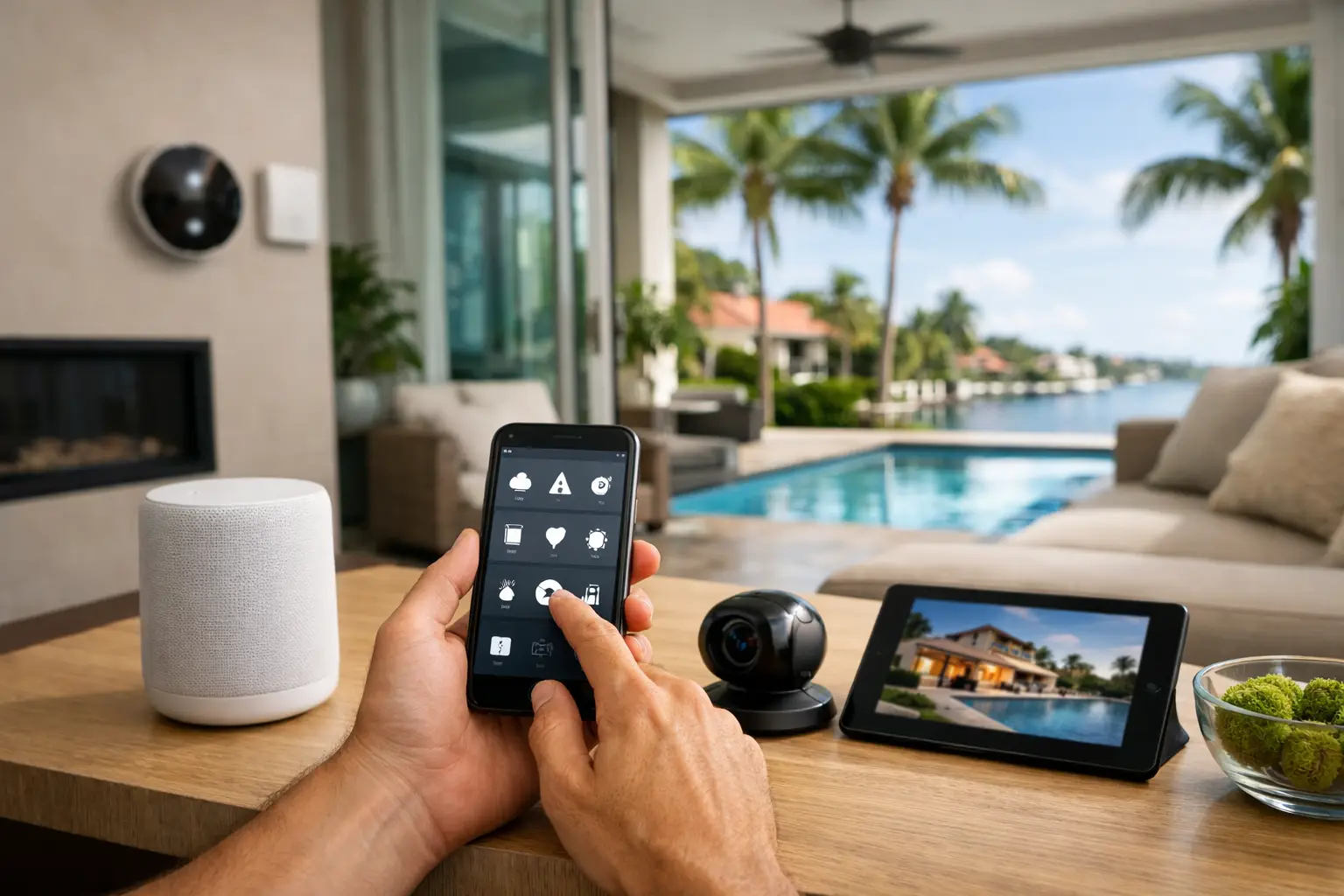
Smart home automation connects major systems throughout a residence so they can be controlled from a unified interface, scheduled around daily routines, or triggered by a specific event. Rather than opening separate applications for shades, audio, lighting, and cameras, a homeowner can use a keypad, touch panel, handheld remote, or mobile device to manage the property.
Centralized control is useful, but true integration goes further. Pressing a “Good Night” button might turn off selected lights, lower shades, arm the security system, adjust the thermostat, and confirm that exterior doors are secured. A “Poolside” scene can activate landscape lighting, start outdoor music, set the right volume for each zone, and control compatible pool features. The goal is not more buttons. It is fewer decisions and more consistent results.
The most successful systems are tailored to the home and the household. A condominium, waterfront property, seasonal residence, and large family estate each require different levels of control, networking, equipment protection, and security coverage.
The Core Systems Worth Integrating
A smart home plan does not need to include every available feature. It should focus first on the systems that create the greatest daily value, then leave room for future expansion. In a custom residence, the following categories are often the foundation.
Lighting and motorized shades
Lighting control replaces scattered switches with thoughtfully designed keypads, dimming, and scenes. It can create an inviting arrival sequence, provide safe illumination for nighttime pathways, and reduce the need to walk room to room before bed. Just as important, it preserves the look of a finished interior by reducing wall clutter.
Motorized shades add privacy, light management, and protection for furnishings. In South Florida, shade automation can help manage intense afternoon sun while preserving the view. The right fabric, track design, and control strategy require early coordination with architects, interior designers, and window-treatment professionals. Retrofit options exist, but construction-phase planning typically provides the cleanest result.
Whole-home audio and video
Music should be available where people gather, not limited to one room. Distributed audio can provide independent listening zones in living areas, bedrooms, patios, and outdoor entertaining spaces. The homeowner can select a source and volume for each area from one interface while the equipment remains neatly housed in a dedicated rack or equipment location.
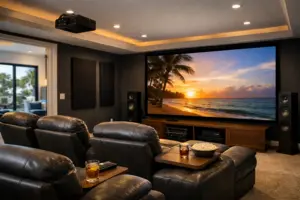
Whole-home video applies the same principle to displays and entertainment sources. It can simplify access to content throughout the home while avoiding a tangle of visible devices at every television. In a professionally designed system, the network, video distribution, remotes, and display locations are planned together rather than treated as separate projects.
Climate, pool, and outdoor living control
Boca Raton homes often make outdoor areas central to daily living. Automation can bring climate settings, pool integration, landscape lighting, outdoor displays, weather-resistant speakers, and shading into the same control experience as the interior. A patio should be as easy to operate as the family room, even when the equipment supporting it is located elsewhere.
There are practical limits. Outdoor equipment must be selected and installed for Florida heat, humidity, rain exposure, and salt air in coastal locations. Wireless coverage also needs careful consideration around patios, pools, guest houses, and large yards. A strong indoor network alone does not guarantee dependable outdoor performance.
Security, surveillance, and access
Security integration gives homeowners better awareness of what is happening at the property, whether they are home, traveling, or managing a seasonal residence. High-quality surveillance can provide camera views, recording, motion alerts, perimeter awareness, and integration with entry points. Door locks, gates, garage access, and intercom systems can also be incorporated into a broader security plan.
The right camera placement is more valuable than simply adding more cameras. A design should account for coverage angles, nighttime visibility, visitor approach paths, package areas, exterior gates, and points where a person could enter the property unnoticed. Privacy should also be considered, particularly for interior cameras and guest areas.
Smart Home Automation in Boca Raton Starts With Infrastructure
The most impressive interface cannot overcome weak infrastructure. Reliable automation depends on a structured foundation that includes properly designed cabling, a managed network, protected equipment locations, and adequate wireless coverage. This is why smart home planning belongs early in a new-build or renovation process.
Hardwired connections remain essential for many high-performance components, including access points, cameras, displays, audio systems, control processors, and equipment racks. They reduce dependence on wireless signals and make future service more efficient. Even in finished homes, strategic wiring can dramatically improve reliability where it matters most.
Network design deserves special attention. Connected lighting, surveillance, entertainment, mobile devices, access control, and guest usage all place demands on the network. A professionally managed network separates and prioritizes traffic appropriately, extends coverage to the areas that need it, and gives the integrator a clearer path to diagnose issues if they arise.
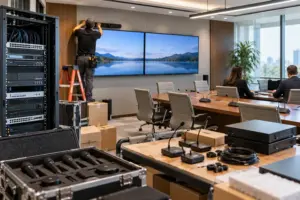
Equipment placement is another detail homeowners often notice only after the fact. A purpose-built rack keeps components organized, ventilated, labeled, and serviceable. It also prevents media rooms, closets, and cabinetry from becoming overheated storage areas for scattered electronics and tangled wiring.
Design Around Routines, Not Individual Products
The most useful automation features are usually simple scenes built around moments that repeat every day. Consider how the home is used in the morning, during arrival, while entertaining, at bedtime, and when the property is vacant. Those routines should shape the programming.
For example, an arrival scene may illuminate the entry, kitchen, and hallway while disarming selected security functions and setting a comfortable indoor temperature. An entertaining scene may bring up dining and patio lighting, start music in the appropriate zones, and keep interior lighting at a level that supports conversation. When the evening ends, one command can shut down outdoor entertainment, turn off designated lights, and secure the home.
Automation should also account for different household members. A system that is intuitive for one owner but confusing for guests, children, or household staff has not been fully designed. Clear keypad labels, consistent room controls, and straightforward programming are part of a premium experience.
Common Mistakes That Create Frustration Later
The first mistake is selecting products before defining the experience. A homeowner may know they want shades, cameras, and whole-home audio, but the design questions are more important: Which spaces need control? Who will use it? What should happen automatically? Which systems should remain manual? A clear scope prevents unnecessary complexity.
Another frequent issue is treating each technology category as an isolated purchase. Separate installers for surveillance, audio, shades, networking, and pool controls can leave the homeowner with disconnected interfaces and no single party responsible when something does not work together. A qualified integration partner coordinates these systems as one environment.
Finally, plan for service from day one. Technology evolves, network conditions change, and households add new needs. Documentation, labeled wiring, remote support capabilities, and an ongoing relationship with the integrator protect the investment long after installation day.
Choosing the Right Integration Partner
Look for an integrator that begins with discovery, not a product list. The right team will ask about the home’s architecture, existing infrastructure, lifestyle preferences, security priorities, outdoor spaces, and future plans. It should provide a clear proposal, coordinate with the project team, install with attention to finish quality, program the system around the household, and remain available for support.
Sentry Audio Video approaches automation as a complete property solution, combining custom audio/video, security, networking, lighting control, motorized shades, and outdoor entertainment under one accountable team. That breadth matters when every system needs to perform reliably together.
A smart home should make a Boca Raton property more enjoyable, secure, and responsive without demanding constant attention. Start with the routines you want to improve, build the infrastructure to support them, and choose a professional team prepared to stand behind the finished system.