Sunlight can make a room feel spectacular at 8:00 a.m. and completely unusable by 2:00 p.m. That is exactly why motorized shades home automation has become such a practical upgrade in well-designed homes. It is not just about raising and lowering window treatments with a button. It is about controlling glare, protecting interiors, improving privacy, and making the entire home respond more intelligently to the way you live.
For homeowners investing in a premium property, shades are no longer a finishing touch added at the end. They are part of the system design. When integrated correctly, they work alongside lighting, climate control, security, and audiovisual systems to create a cleaner daily experience without adding complexity.
Why motorized shades home automation matters
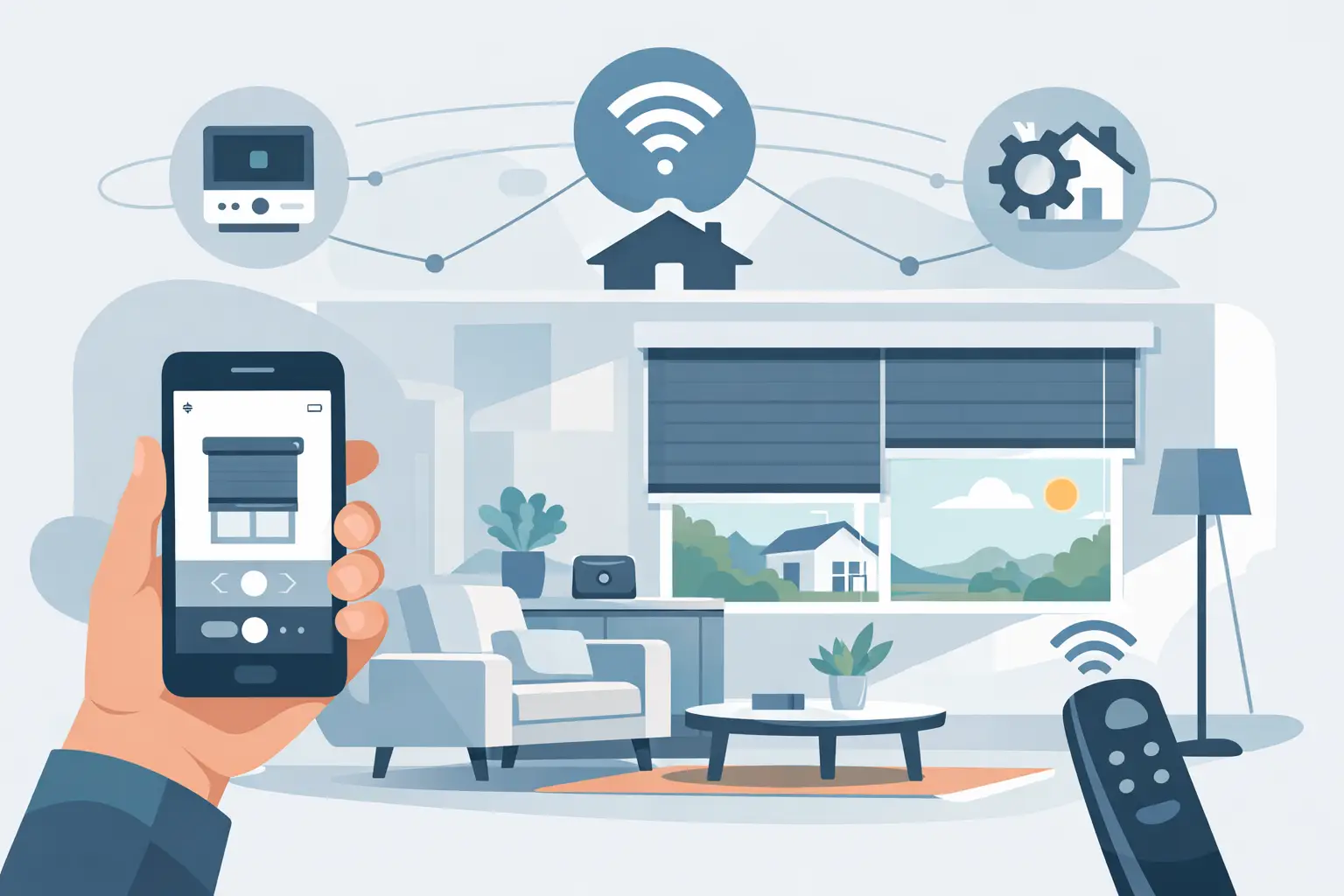
Most people first notice the convenience. A wall keypad, touch panel, handheld remote, or mobile app can adjust shades in one room or across the entire house in seconds. That alone is useful, especially in homes with tall windows, hard-to-reach openings, or large glass walls.
The bigger value is consistency. Instead of reacting to heat, glare, or privacy issues after they become a problem, automated shades can respond on a schedule or based on time of day. Morning sun can be welcomed into a breakfast area while west-facing rooms stay protected later in the afternoon. In media spaces, shades can lower automatically before a movie starts. In primary suites, blackout shades can close at night and rise gradually in the morning.
That consistency affects comfort more than most buyers expect. Rooms feel more usable throughout the day, furnishings are better protected from UV exposure, and the home operates with a more polished rhythm.
What a professionally integrated system actually does
There is a difference between stand-alone motorized shades and a fully integrated automation solution. Stand-alone operation handles the basics. Integration creates coordination.
With professional programming, shades can be tied to scenes such as Good Morning, Entertain, Away, or Movie Night. Press one button and the lighting adjusts, the shades move to preset positions, and the room shifts into the right mode. That is where automation stops feeling like a novelty and starts feeling like part of the architecture.
This also allows for more refined control. Not every window needs to be fully open or fully closed. In many homes, the right answer is a preset position that balances daylight with glare control. That level of customization matters in spaces with artwork, expansive views, or layered lighting design.
Comfort, privacy, and energy performance
Motorized shades often get marketed as a luxury feature, but the everyday benefits are straightforward. They help manage solar heat gain, reduce harsh light, and create privacy without requiring constant attention.
In South Florida, where strong sun and large glass openings are common, that matters. The right fabric and control strategy can help keep rooms more comfortable during peak daylight hours. In homes with waterfront exposure or broad western views, automation allows homeowners to preserve the view when they want it and add protection when conditions change.
Privacy is another reason these systems earn their place. In the evening, when interior lighting turns windows into viewing panels from the outside, automated schedules can close shades at the right time without anyone needing to walk room to room. For many clients, that predictability is every bit as valuable as the visual impact.
Energy performance is part of the equation too, although results depend on window orientation, fabric openness, insulation, and how the rest of the home is conditioned. Shades are not a cure-all, but they can support a more efficient indoor environment when they are selected and programmed with the property in mind.
Choosing the right shade type for the room
The phrase motorized shades covers several categories, and the right choice depends on how each room is used.
Roller shades are often the preferred option for clean, modern lines. They work well in great rooms, kitchens, offices, and bedrooms because they disappear neatly when raised and come in a wide range of fabrics. Solar screen materials can preserve views while managing glare, while blackout fabrics are more appropriate for sleeping areas and media rooms.
Roman shades add softness and are often chosen when interior design calls for more texture and depth. They can be motorized successfully, but they require more coordination between design intent and technical execution.
Dual-shade systems are especially useful in primary living spaces and bedrooms. They combine a sheer or solar fabric for daytime control with a blackout layer for privacy and room darkening. That gives homeowners flexibility without compromising aesthetics.
The key is not picking a product category in isolation. Window size, pocket detail, fascia options, wiring requirements, and fabric performance all need to be considered early. The cleanest results come when shades are planned as part of the broader design and technology scope, not after construction decisions are already locked in.
Wired or battery-powered? It depends on the project
One of the most common questions is whether shades should be hardwired or battery-powered. The answer depends on the stage of the project and the expectations for long-term performance.
In new construction or major renovation, hardwired shades are usually the stronger choice. They eliminate battery maintenance, support larger and heavier applications more confidently, and allow for a cleaner finished result. For luxury homes with many openings, hardwiring is often the right investment.
Battery-powered shades can still be an excellent solution in existing homes where opening walls is not practical. They make automation possible without major disruption, and in the right application they perform very well. The trade-off is ongoing battery service and some limitations based on window size, fabric weight, and usage frequency.
This is where professional design matters. The right answer is not always the most aggressive specification. It is the one that fits the property, the construction conditions, and the owner’s expectations.
Aesthetics matter as much as technology
The success of motorized shades home automation is measured in two ways. It has to work reliably, and it has to look like it belongs in the home.
Clean lines, quiet operation, and thoughtful concealment make a major difference. In higher-end properties, exposed hardware or awkward mounting details can undermine an otherwise excellent room. Shade pockets, recessed housings, fascia finishes, and fabric alignment all contribute to the final impression.
That is also why coordination between the integrator, designer, architect, and builder is so important. The technical system may be hidden, but the visual result is not. Good planning protects both performance and appearance.
Control should feel simple
The most successful smart home systems do not ask the homeowner to manage more technology. They reduce friction.
Shades should operate from intuitive interfaces that are consistent with the rest of the home. That might include elegant wall keypads, in-room touch panels, a mobile app, or voice control where appropriate. The point is not to offer endless ways to do the same thing. The point is to make operation clear and dependable.
Automation also needs restraint. Just because shades can move constantly does not mean they should. Over-programming can frustrate homeowners if rooms behave in ways that feel intrusive. The best systems are tuned to the household, with schedules and scenes that support daily routines rather than interrupt them.
Why installation quality changes the outcome
Motorized shades involve more than fabric selection and motor placement. Precise measurements, bracket alignment, power planning, control integration, and programming all affect how the system performs over time.
A professionally executed installation helps avoid common problems such as uneven shade movement, inconsistent stopping points, visible wiring, and controls that feel disconnected from the rest of the home. It also matters for serviceability. When a system is documented properly and installed cleanly, future adjustments and support are far more straightforward.
That is one reason homeowners in markets like Boca Raton, Fort Lauderdale, and Miami Beach often prefer a full-service integration partner rather than piecing together separate trades. Window treatments, lighting scenes, climate settings, and audiovisual environments all influence one another. Treating them as one coordinated system usually delivers a better result.
When are motorized shades worth it?
They make the strongest case in homes with large expanses of glass, tall or difficult-to-reach windows, formal entertaining spaces, dedicated media rooms, and primary suites where comfort and privacy need to be automatic. They are also valuable in second homes, where scheduled shade control can support security and protect interiors even when the property is unoccupied.
That said, not every room needs the same level of automation. A thoughtful design may prioritize key spaces first and apply simpler control in secondary areas. The goal is not to automate for its own sake. It is to improve how the home functions day after day.
For clients who want shades to do more than move on command, professional integration is where the value becomes clear. When the system is designed around the home, the architecture, and the people living there, the result feels quiet, intentional, and reliable. That is the standard Sentry Audio Video is built to deliver, and it is what turns a smart feature into a lasting improvement in the way a home lives.