A bright South Florida afternoon can turn a beautiful media room, home office, or glass-lined living space into a place where screens become difficult to see. Can smart shades reduce glare? Yes – when they are selected, positioned, and programmed around the room’s actual light conditions, they can make a dramatic difference without forcing you to live in the dark.
The key is not simply adding motorized window treatments. Effective glare control is a designed system: the fabric, openness level, window orientation, shade style, control method, and integration with the rest of the space all matter. A professionally planned smart shading system gives homeowners and business owners a more comfortable view of their displays, better protection for interiors, and dependable control that fits the rhythm of the day.
How Smart Shades Reduce Glare
Glare occurs when direct sunlight or a strong reflected light source reaches your eyes or lands on a display. It reduces contrast, creates reflections, and makes it harder to focus. On a television, glare can wash out dark scenes. In a home office or conference room, it can make presentations tiring to view. Near water, light-colored paving, or neighboring glass buildings, reflected sunlight can be just as disruptive as direct sun.
Smart shades reduce glare by lowering or adjusting before the most intense light reaches the room. Rather than walking from window to window when the sun changes position, you can schedule shade movement by time of day, trigger it through a light sensor, or control multiple shades from a wall keypad, touch panel, or mobile device.
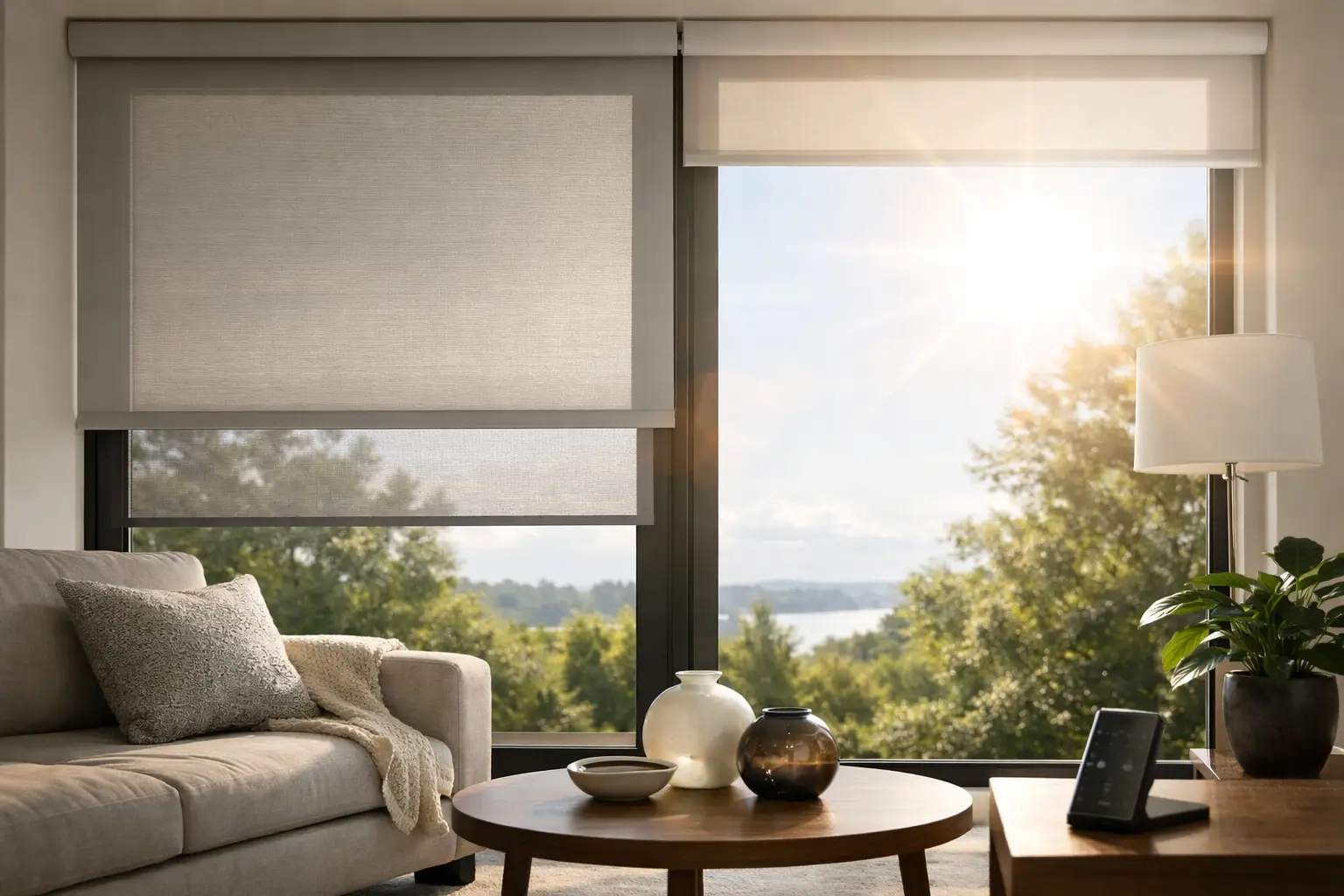
The benefit is precision. A shade can lower to a preset position that covers the troublesome portion of a window while preserving daylight and a view through the upper glass. In rooms with several exposures, each shade can respond differently. East-facing windows may need protection in the morning, while west-facing glass may require more coverage late in the day.
The Difference Between Light Control and Room Darkening
Not every glare issue calls for blackout shades. In fact, fully darkening a room may be inconvenient in a kitchen, living room, office, or lobby where natural light remains valuable. Solar screen fabrics are often an excellent choice because they filter harsh light while retaining a degree of outward visibility.
Fabric openness is an important design decision. A more open weave generally preserves more view and daylight but allows more light through. A tighter weave provides stronger glare reduction and more privacy, but it can make the glass appear darker from inside. The appropriate balance depends on the room’s purpose, its orientation, and how sensitive the display or work surface is to reflections.
For a dedicated theater or a presentation room, room-darkening roller shades or layered window treatments may be the better solution. In a primary living area, a solar shade combined with a secondary blackout layer can offer daytime glare management and complete privacy when needed. The goal is to give the room the right response for each use, not one fixed look all day.
Can Smart Shades Reduce Glare on TVs and Displays?
They can, and displays are one of the clearest reasons to invest in automated shading. Even premium televisions and projection systems have limits when intense sunlight hits the screen or reflects off glossy surfaces nearby. Raising display brightness may help in some situations, but it does not solve reflected glare, and it can compromise the intended picture quality.
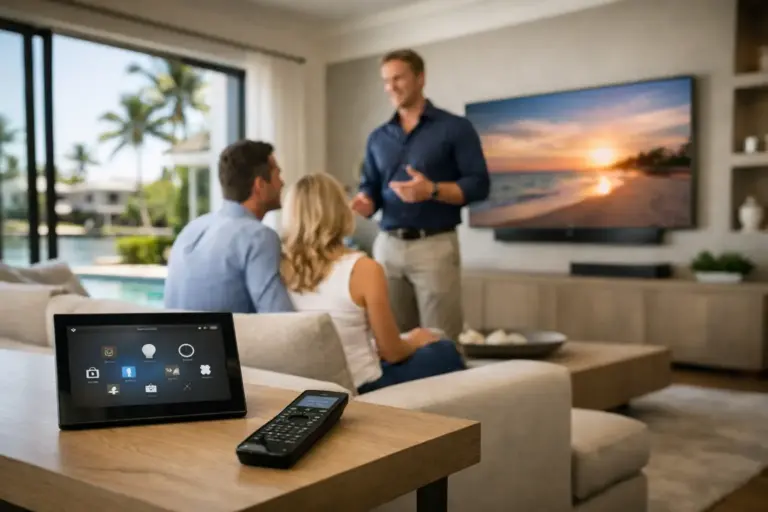
A smart shade system protects viewing conditions at the source: the window. For example, when a family selects a movie scene on the control system, shades in the media area can lower to a display-friendly position while lighting adjusts to an appropriate level. When the movie ends, the room can return to its preferred daytime setting.
In commercial environments, the same logic supports reliable presentations. Conference room shades can lower automatically before a scheduled meeting, helping participants see shared content without interrupting the meeting to address sun glare. Restaurants, hospitality spaces, and retail locations can maintain more consistent visual comfort for guests while preserving the polished appearance of the space.
There are limits. If sunlight enters from an unshaded skylight, reflects off a polished floor, or reaches a display from an uncovered side angle, window shades alone may not eliminate every reflection. A complete design considers screen placement, furniture layout, lighting, and all glass surfaces in the room.
Automation Makes the Difference
Motorization is convenient. Automation is what makes smart shades consistently effective against glare.
A well-programmed system can use schedules based on the sun’s changing path throughout the year. This is especially valuable in homes with expansive glass, where the glare pattern in January may differ significantly from the pattern in July. Preset scenes also make it easy to choose the right environment without managing each shade individually.
Common shade scenes may include a morning setting that softens early sun, an afternoon setting for stronger exposure, an entertaining mode that preserves views while reducing hot spots, and a movie or presentation setting that prioritizes screen visibility. Occupancy and daylight sensors can add another layer of response, though sensor placement and programming must be handled carefully to avoid unnecessary shade movement.
The most successful systems still give the owner control. Automated settings should feel helpful, not intrusive. If you want an unobstructed view for a few hours, a manual override should be immediate and intuitive. The system can then return to its schedule at the next programmed event or remain in the selected position until you change it.
Choosing the Right Shade System for the Room
A glare-control plan should begin with the windows, not a product catalog. Window dimensions, ceiling height, trim details, glass type, exposure, and nearby reflective surfaces all influence the solution. Large openings may require multiple shade panels, carefully aligned fascia, or recessed pockets planned during construction or renovation for a clean architectural finish.
Roller shades are a common choice for contemporary residences and commercial spaces because they provide clean lines and broad fabric options. Roman shades, drapery tracks, and other motorized treatments can also be integrated where the interior design calls for more texture or a softer aesthetic. The design should support the room rather than competing with it.
Power planning deserves equal attention. Hardwired shades are often ideal for new construction and major renovations because they minimize ongoing maintenance and support a refined installation. Rechargeable battery-powered solutions can be appropriate in finished spaces where wiring access is limited. The right choice depends on window count, access, use frequency, and the desired level of long-term serviceability.
Privacy, UV Protection, and Comfort Are Added Benefits
Glare control is often the first concern, but smart shades deliver several related benefits. They can increase daytime privacy in street-facing rooms, soften strong sunlight on artwork and furnishings, and make seating areas more comfortable during peak daylight hours.
They should not be represented as a complete substitute for every climate-control strategy, and fabric selection affects how much solar energy enters a room. Still, managing direct sunlight can reduce the uncomfortable hot spots that make certain areas less enjoyable at different times of day. In properties with valuable finishes, thoughtful shading also helps limit long-term exposure to ultraviolet and visible light that can contribute to fading.
Why Professional Design Matters
Smart shades look simple when they are working correctly. Behind that result are accurate measurements, proper mounting, reliable power and communication, fabric selection, programming, and coordination with lighting, AV, and control systems. A poorly chosen fabric may leave a television exposed to reflections. An improperly installed shade may create light gaps, operate unevenly, or detract from an otherwise finished room.
For a luxury residence or a client-facing business, the visual details matter as much as functionality. Clean wiring, quiet operation, consistent alignment, and controls that everyone can understand are part of a professional result. A qualified integration partner can also make sure shading scenes work naturally with distributed audio, media rooms, lighting control, and security settings rather than becoming another isolated app to manage.
Sentry Audio Video designs integrated shading solutions around how each space is used, from screen-focused media rooms to sunlit great rooms and presentation-driven commercial environments. The process begins with the room, the glass, and the desired experience – then builds a system that performs reliably every day.
When glare is affecting how a room looks, works, or feels, the most effective answer is rarely to block every window permanently. It is to give the space the intelligence to manage sunlight at the right moment, while keeping the views and natural light that made the space exceptional in the first place.