A luxury home can have exceptional architecture, carefully selected finishes, and expansive views – yet still feel unfinished when lighting is managed one switch at a time. The best lighting control for luxury homes in Boca Raton does more than turn fixtures on and off. It gives each space the right light at the right moment, while making a sophisticated property easier to live in, protect, and maintain.
For homes with layered architectural lighting, motorized shades, outdoor entertaining areas, guest suites, and multiple floors, lighting control should be treated as a core part of the home’s technology plan. A professionally designed system creates a consistent experience without filling walls with banks of switches or requiring every family member to learn a complicated app.
What Defines the Best Lighting Control for Luxury Homes?
The right system is not necessarily the one with the longest feature list. It is the one designed around the way the home is used. That starts with lighting zones, fixture types, window treatments, key locations, and the routines of the people who live there.
In a Boca Raton residence, daylight is a major design consideration. Large windows, glass walls, bright interiors, and waterfront exposure can make a room feel dramatically different from morning to afternoon. A thoughtful control system accounts for that change. It can coordinate interior lighting and motorized shades to preserve views, reduce glare, support privacy, and keep rooms comfortable for entertaining or relaxing.
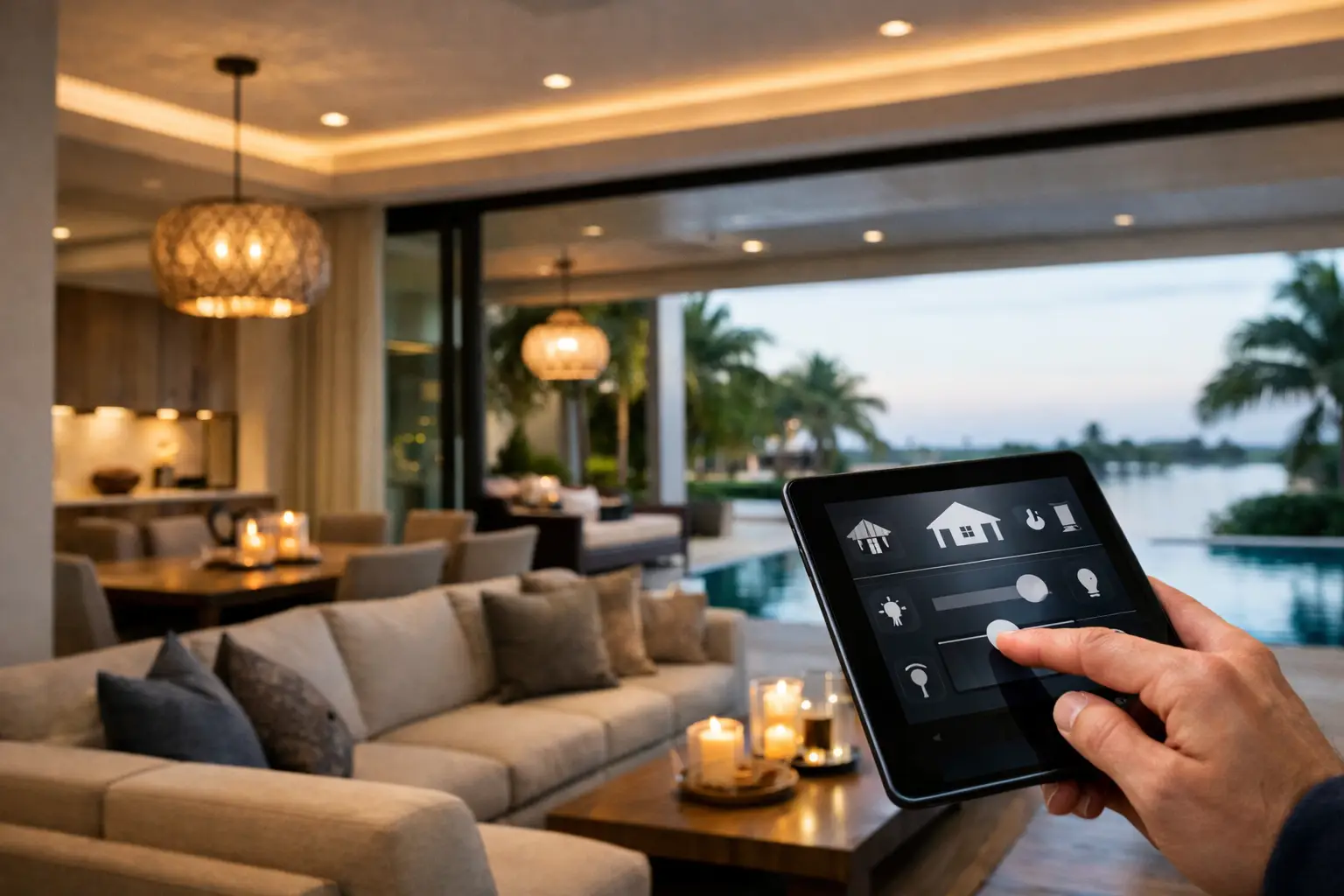
The strongest installations also feel simple. A homeowner should be able to walk into a room and use an elegant wall keypad without searching for a phone. At the same time, mobile control is valuable when the owner is away, arriving home late, or preparing the property for guests. The goal is choice without complication.
A system should control more than dimmers
Luxury lighting control is built around dimming, but dimming alone is not the full experience. The system should support the mix of recessed fixtures, decorative pendants, cove lighting, landscape lighting, pool-area illumination, and accent lighting commonly found in high-end homes.
It should also work intelligently with shades, security, climate settings, and entertainment. For example, a “Goodnight” command can lower shades, turn off selected lights, set pathway lights for late-night movement, and arm appropriate security zones. A “Dinner” scene can warm the dining area, reduce glare near art or windows, and set the adjoining living spaces for conversation.
That coordination is where custom integration earns its value. Rather than treating every device as a separate system, the home operates as a considered whole.
Choose a Control Platform That Fits the Property
For most luxury projects, established lighting-control platforms such as Lutron HomeWorks are a natural fit because they are designed for high-end residences, extensive lighting loads, elegant keypads, and shade integration. They also offer the reliability and design flexibility expected in a professionally installed system.
However, platform selection should follow the project, not the other way around. A coastal estate undergoing a full renovation has different needs than a furnished condominium, a seasonal residence, or a newly constructed home with multiple indoor and outdoor living zones.
A whole-home platform is generally the right direction when a property has numerous lighting circuits, several shade groups, or owners who want lighting tied to security and entertainment. It provides the cleanest user experience and the most room to expand. In a more focused project, a carefully planned lighting upgrade in high-use areas may be appropriate, provided it can still integrate cleanly with the home’s broader control system.
The critical point is to avoid mixing disconnected control methods throughout the property. When lighting, shades, and entertainment each require a separate app, a premium home begins to feel less refined. One familiar interface, consistent keypad design, and dependable programming make a meaningful difference every day.
Keypads Matter as Much as the Technology Behind the Wall
Touchscreens and mobile apps receive attention, but wall keypads are often the most-used part of a lighting system. They should be placed where people naturally enter, exit, and transition through the home. They should also be engraved in language that makes immediate sense.
A keypad labeled “Entertain,” “Relax,” “Clean,” and “Away” is more useful than one filled with technical terms or room-by-room commands. In a primary suite, the controls might include “Morning,” “Reading,” “Bath,” and “Goodnight.” Near a garage entry, “Welcome,” “All Off,” and “Away” may be more appropriate.
The physical design matters, too. Keypads can complement the finishes of a refined interior rather than interrupt them. Professional planning considers button count, finish, backlighting, engraving, and location early, before drywall and millwork decisions limit the options.
Build Lighting Scenes Around Real Life
The best scenes are not gimmicks. They solve small, recurring friction points in a home. A well-programmed scene may involve only a few adjustments, but those adjustments should be intentional.
A morning scene might bring on soft kitchen and hallway light before sunrise while opening shades in common areas. An arrival scene can illuminate the entry, driveway, and selected interior paths without lighting the entire house. For an evening gathering, lights near food preparation can remain bright while the dining room, lounge, and exterior spaces shift to a warmer, lower level.
Outdoor scenes deserve equal attention in South Florida. Pool decks, covered patios, landscape features, outdoor kitchens, and dock areas all have different lighting needs. The system should make it easy to transition from a family dinner to a larger gathering without manually adjusting multiple zones. It should also avoid excessive brightness near water, where glare can diminish the atmosphere and affect sightlines.
Scenes should be revisited after move-in. Furniture placement, art, window coverings, and daily routines often change how a space is used. Fine-tuning is part of delivering a finished experience, not an afterthought.
Plan for Shades, Sunlight, and Privacy
Lighting control becomes far more capable when it is planned alongside motorized shades. In homes with broad east- or west-facing glass, shades can manage direct sun and privacy while lighting responds to the reduced daylight. The room remains balanced rather than becoming too dark when shades close.
This is especially valuable in living rooms, media spaces, primary suites, and rooms facing neighboring properties. A single command can prepare a space for a movie, a daytime presentation, or a private evening at home. Timed shade schedules can also give a vacant residence a more lived-in appearance without relying on a repetitive lighting pattern.
Fabric selection and shade type should be considered early. Openness factor, color, roller versus drapery control, room orientation, and view preservation all influence the final result. A shade that looks excellent in a sample can perform very differently on a wall of glass in direct Florida sun.
Reliability Begins With Design and Infrastructure
A polished keypad does not compensate for incomplete planning behind the walls. Luxury lighting control depends on properly documented loads, compatible fixture and driver selection, thoughtful panel design, stable network infrastructure, and clear coordination with the project team.
LED compatibility is a frequent concern. Not every fixture dims in the same way, and mismatched drivers can cause flicker, limited dimming range, or inconsistent color at low levels. A professional integrator reviews these details before final programming, particularly when a home includes decorative fixtures sourced by an interior designer or specialty lighting provider.
New construction and major renovations offer the greatest flexibility because wiring pathways, control panels, keypad locations, and shade pockets can be coordinated before finishes are complete. Existing homes can also be upgraded successfully, but the design should account for wall access, available circuits, and the desired level of centralized control.
Power protection and remote support also deserve consideration. For a seasonal or secondary residence, owners benefit from a system that can be monitored and serviced efficiently when an issue arises. Dependable performance is not just about premium equipment. It is about how every component is designed, installed, documented, and supported over time.
Questions to Ask Before Approving a Lighting-Control Proposal
A quality proposal should explain what is being controlled, how the home will be operated, and how the system can grow. Ask whether the plan accounts for every fixture type and whether keypads, shade controls, and scenes are tailored to the family’s routines. Confirm who will coordinate with the lighting designer, builder, interior designer, and other trades.
It is also wise to ask how post-installation adjustments are handled. The first programming pass establishes the system, but refinements after occupancy are often what make it feel personal. Owners should know who to call for support and whether the integrator will remain available as the property evolves.
Sentry Audio Video approaches lighting control as part of a complete home environment, coordinating it with entertainment, security, shades, and network infrastructure. That single point of accountability helps protect the design intent while giving homeowners a system that is straightforward to use.
The right lighting control should disappear into the rhythm of the home: a welcoming path when you arrive, comfortable light where you gather, privacy when you want it, and one confident command when the day is done.