A large display can define a theater, boardroom, restaurant, showroom, or outdoor entertaining area. But projector versus video wall is not simply a question of which screen looks bigger. The right answer depends on the room’s light, viewing distance, architectural goals, content, operating schedule, and expectations for long-term performance.
A projector can create a cinematic image that disappears when the room is not in use. A video wall delivers bright, commanding visuals that remain visible in challenging light. Both can be exceptional when they are designed around the property rather than selected as standalone products.
Projector Versus Video Wall: The Core Difference
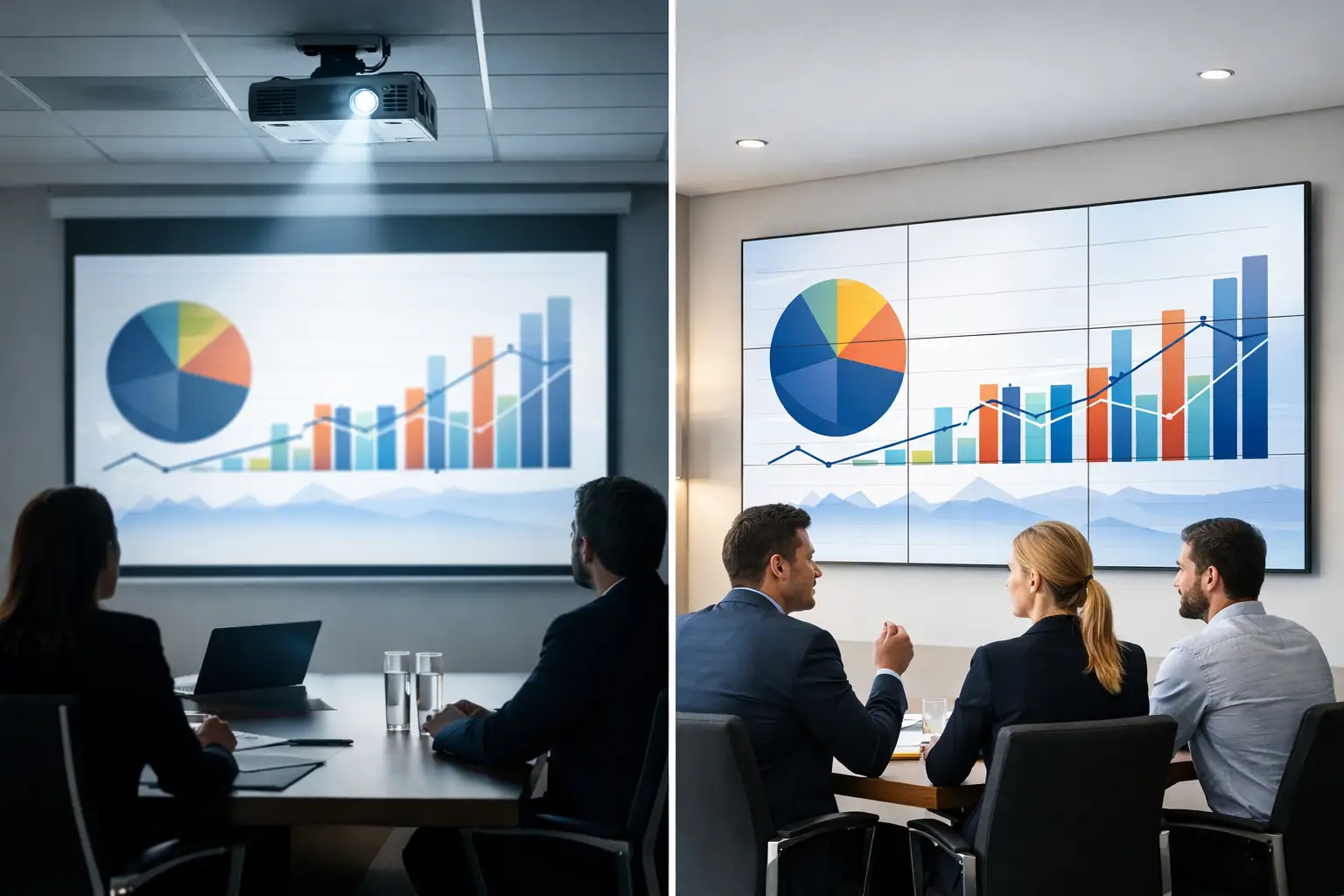
Projection places an image onto a dedicated screen or wall surface. The projector may be concealed in the ceiling, located in an equipment room, or installed in a custom enclosure outdoors. The visual result can feel expansive and immersive, especially in a controlled theater environment where lighting, screen material, and speaker placement are coordinated from the beginning.
A video wall uses multiple commercial displays or direct-view LED panels to form one large image. Unlike a projector, it produces light rather than reflecting it. That distinction changes nearly every planning decision, from brightness and room lighting to installation depth and the way the display performs during daytime use.
For a private cinema with controlled lighting, projection often delivers the more natural theater experience. For a sunlit great room, executive presentation space, lobby, or venue that runs content throughout the day, a video wall may provide the stronger and more consistent visual impact.
Brightness and Ambient Light Often Decide the Outcome
South Florida homes frequently feature open layouts, expansive glass, and strong daylight. Those architectural features are beautiful, but they can work against projection. Even a high-performance projector can lose black levels, contrast, and color richness when direct sunlight or bright interior lighting reaches the screen.
That does not make projection unsuitable for bright spaces. It means the system must be designed correctly. Motorized shades, lighting control, a projection screen with the appropriate material, and careful projector placement can preserve an impressive image. In many luxury residences, these elements are integrated so the room changes modes at the touch of a button: shades lower, lights adjust, the screen deploys, and entertainment begins.
Video walls have a natural advantage where light cannot be controlled. Direct-view LED and commercial display walls maintain high brightness, making them well suited to daylight-heavy spaces and commercial environments. A restaurant bar, sales center, hospitality venue, or corporate lobby cannot depend on every guest sitting in a darkened room. The display needs to perform from morning through evening without compromising visibility.
The trade-off is that more brightness is not always better. In a dark home theater, an overly bright LED wall can feel fatiguing unless it is calibrated and managed properly. Image comfort matters as much as raw light output.
Image Size, Viewing Distance, and Detail
Both options can produce an extraordinary large-format image, but size needs to be considered alongside seating distance. A projector can readily create a 120-inch, 150-inch, or larger image without the physical presence of a wall-mounted display. It is particularly effective when the goal is a wide cinematic canvas.
Video walls also scale dramatically, but the technology must match the viewing distance. With direct-view LED, pixel pitch matters. Pixel pitch is the distance between LED pixels, and a finer pitch is needed when viewers sit or stand close to the wall. A wall that looks excellent from across a lobby may reveal its pixel structure when installed too close to lounge seating or a conference table.
Commercial LCD video walls can offer fine detail at closer distances, though their panel bezels create visible lines between screens. Those lines may be acceptable for multi-source content, digital signage, or security monitoring. They are less desirable when the goal is one uninterrupted image in a refined residential setting.
Projection has its own requirements. Screen size, projector resolution, lens selection, and viewing distance must work together. A large screen with an improperly selected projector can expose limitations in source material, while a screen that is too small can fail to deliver the sense of scale the room was built to achieve.
Design Impact: Invisible Theater or Architectural Statement
A projector is often the preferred choice when the display should disappear. A recessed screen can be hidden in a ceiling pocket, while the projector itself may be out of sight. This approach protects clean sightlines and allows a room to function as an elegant living space when entertainment is off.
A video wall is usually more permanent and more expressive. It becomes an architectural focal point, whether it is framed in stone, integrated into millwork, mounted in a commercial feature wall, or positioned behind a reception desk. When it is off, it still occupies visual space. When it is on, it commands the room.
That distinction matters during renovation planning. If the interior design calls for a concealed cinema experience, projection may align naturally. If the property needs a statement display that remains impactful throughout the day, a video wall can be the right centerpiece.
Outdoor applications require an equally careful conversation. Projection can create memorable movie nights on a protected patio when darkness and weather protection are available. For bright outdoor gathering areas or venues operating during daylight, purpose-built outdoor displays or LED walls are generally more practical. The enclosure, ventilation, mounting structure, content sources, and control system should be planned as one installation.
Reliability, Service, and Everyday Operation
A display system is only premium when it remains easy to use and dependable after installation. Projectors have consumable and service considerations that vary by light source. Modern laser projectors offer long operating life, but optical alignment, cooling, filters where applicable, and calibration still deserve professional attention. Screens, lifts, and shades also introduce moving components that should be integrated and maintained correctly.
Video walls eliminate the need for a projection screen and can offer strong operating endurance, particularly in commercial settings. However, they are not maintenance-free. LED panels, power supplies, controllers, display modules, and thermal management all affect long-term reliability. Service access is especially important. A wall that looks clean from the front must also be designed so qualified technicians can reach components without damaging finishes or disrupting operations.
Control is another deciding factor. A polished installation should make the technology feel straightforward. One interface can turn on the display, select a source, adjust audio, control room lighting, and return the system to a known state when the meeting or event ends. For businesses, scheduled content, remote monitoring, and simple staff controls can reduce daily friction. For residences, the display should work as naturally as the rest of the home’s entertainment and automation system.
Consider the Full System, Not Just the Display
The display is only one part of the experience. A projector or video wall needs correctly designed audio, source distribution, network connectivity, power planning, equipment ventilation, mounting infrastructure, and control. In a theater, speaker placement behind an acoustically transparent screen may influence the decision toward projection. In a commercial space, multiple content sources and distributed audio may make a video wall more practical.
Installation conditions also matter. Projectors need a clear optical path and a suitable throw distance. Video walls need structural support, precise alignment, appropriate depth, electrical capacity, data paths, and access for service. Neither solution should be treated as an afterthought once finishes are complete.
This is where a professional system design earns its value. Sentry Audio Video evaluates the space, intended use, architectural constraints, and performance expectations before recommending the technology. The objective is not to favor one display category. It is to deliver a system that looks intentional, performs consistently, and remains simple for the owner or staff to operate.
When Each Option Makes Sense
Choose projection when a cinematic viewing experience, a concealed display, and controlled lighting are central to the project. It is particularly compelling for dedicated theaters, media rooms, and covered outdoor spaces used primarily after dark.
Choose a video wall when the image must remain vivid in substantial ambient light, operate for extended hours, or serve as a permanent visual feature. It is often the stronger choice for bright great rooms, executive spaces, hospitality environments, retail displays, and high-traffic commercial settings.
There are also projects where the answer is both. A residence may use projection in a private theater and a direct-view LED display in a sun-filled living area. A business may use a video wall for public-facing content and projection for a flexible training room. Each area has its own visual and operational demands.
The most successful display installations begin with a walk-through of how the space will actually be used – who is viewing, when the system operates, what light enters the room, and how the finished environment should feel. Start there, and the choice between projection and a video wall becomes far clearer.