
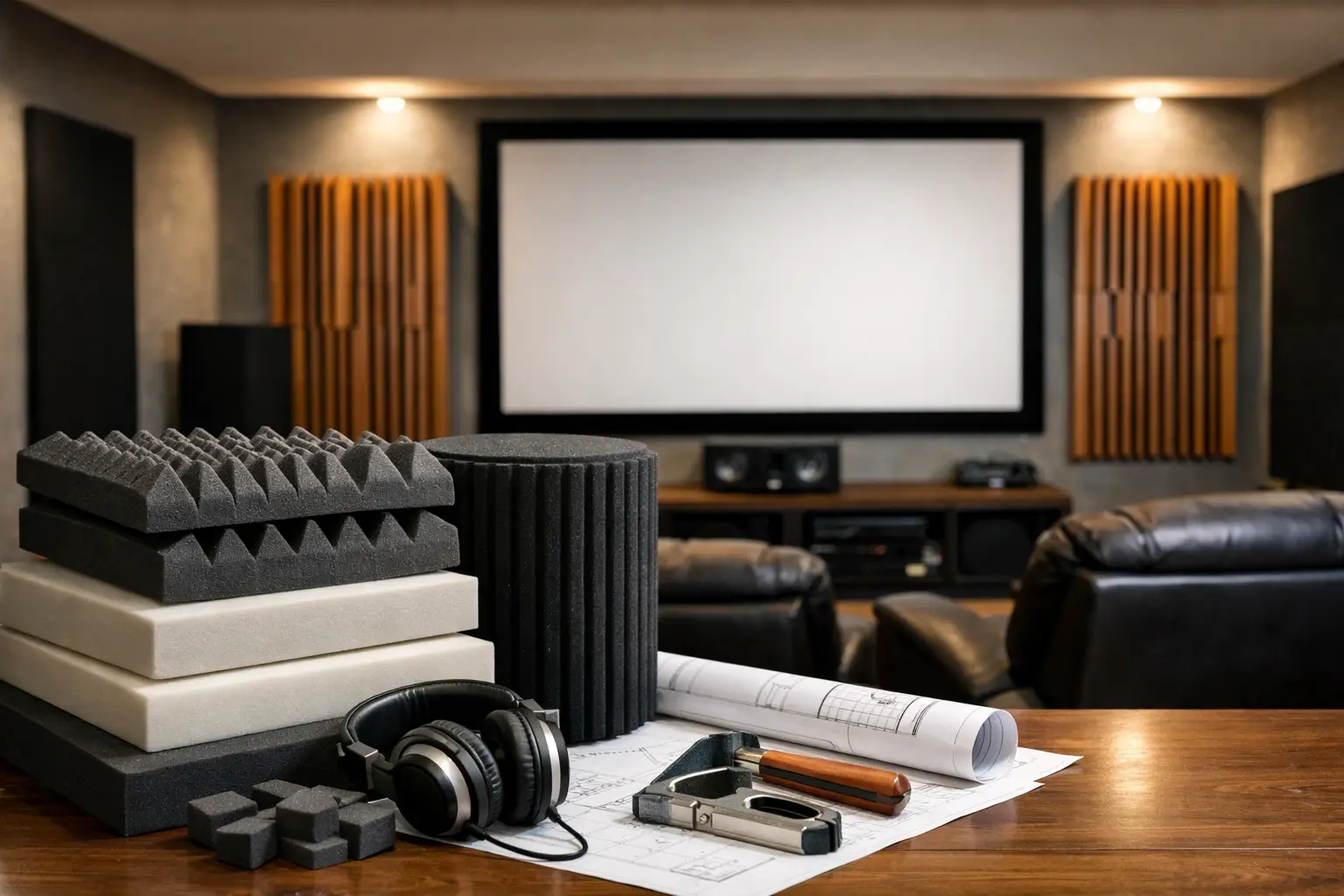
A theater can have an exceptional projector, a large display, and premium speakers, yet still sound flat, harsh, or unclear. Acoustic Treatment 101: Why Soundproofing Your Home Theater Changes Everything starts with one essential truth: the room is part of the system. Its dimensions, wall surfaces, doors, furnishings, and construction all influence what you hear.
A purpose-built home theater should make dialogue easy to follow, music full and natural, and action sequences powerful without becoming fatiguing. Achieving that result requires more than selecting quality equipment. It requires a coordinated acoustic plan that manages sound inside the room while controlling how much sound travels beyond it.
Acoustic Treatment vs. Soundproofing: A Critical Difference
Acoustic treatment and soundproofing are often used interchangeably, but they solve different problems. A professional theater design evaluates both because each affects the experience in a distinct way.
Acoustic treatment improves sound quality within the theater. It reduces unwanted reflections, controls bass buildup, and helps speakers perform closer to their intended design. Treatments may include acoustically absorptive panels, bass traps, diffusers, acoustical ceiling elements, and carefully selected finishes.
Soundproofing, also called sound isolation, limits sound transmission between the theater and surrounding rooms or exterior spaces. This is addressed through the structure: wall and ceiling assemblies, insulation, decoupling methods, sealed doors, acoustic caulking, and treatment of penetrations for wiring and ventilation.
A room can be quiet outside and still sound poor inside if it has not been acoustically treated. Conversely, a room can sound excellent for the audience but transfer substantial bass and movie effects through adjacent walls if isolation was not designed into the construction. The strongest home theaters address both priorities from the beginning.
Why the Room Can Work Against Your Speakers
Sound does not stop when it leaves a speaker. It reflects from drywall, glass, flooring, ceilings, cabinetry, and other hard surfaces. Some of those reflections reach the listener only milliseconds after the original sound, smearing detail and making voices less distinct.
Low frequencies are even more demanding. Bass waves are long, powerful, and heavily affected by room dimensions. In one seat, a soundtrack may feel overwhelming. A few feet away, the same bass note may nearly disappear. These peaks and nulls are not necessarily a problem with the subwoofer. They are often a room behavior problem.
South Florida homes also present design considerations that deserve early attention. Open floor plans, expansive glass, stone surfaces, and large-format tile can create highly reflective environments. Those finishes can look exceptional, but a theater needs complementary acoustic solutions so visual design does not compromise performance.
What Proper Acoustic Treatment Changes
The immediate improvement most homeowners notice is dialogue clarity. Conversations remain intelligible at comfortable listening levels, even during scenes with a busy musical score or significant effects. Rather than repeatedly raising the volume to understand a line, the audience hears the intended detail more naturally.
Treatment also improves imaging. When reflections are controlled, sound appears to come from the correct place on screen and moves convincingly across the front soundstage. Surround effects feel more precise instead of becoming a vague wash of noise around the room.
Bass becomes more controlled as well. The objective is not simply more bass. It is bass that is even, tight, and convincing across the primary seats. A well-designed room lets a dramatic soundtrack deliver impact without boomy buildup that overwhelms dialogue and music.
There is also a comfort factor. Highly reflective rooms can make extended listening tiring, particularly at cinema-level volumes. Acoustic treatment reduces the harshness that makes a system feel aggressive rather than immersive. The result is a theater people want to use for an entire feature film, a concert performance, or a family viewing night.
Soundproofing Preserves the Rest of the Home
A dedicated theater should feel private without disrupting the rest of the property. Sound isolation is particularly valuable when a theater is near bedrooms, living areas, home offices, or entertaining spaces. It allows a movie to play with appropriate dynamics while others can rest, work, or converse nearby.
Low-frequency energy is usually the most difficult sound to contain. Bass can travel through framing, ceilings, floors, and mechanical pathways that appear insignificant during construction. A solid door alone will not resolve this issue if sound can bypass it through gaps, recessed fixtures, ductwork, or shared structural elements.
This is why soundproofing decisions are most effective during a renovation or new construction project. Once walls are closed, meaningful structural changes can become more involved. Early coordination allows the theater, lighting, motorized shades, climate strategy, control systems, and wiring infrastructure to work together rather than compete for space.
The Core Elements of an Acoustic Plan
There is no universal panel layout or single product that works in every theater. Room size, ceiling height, seating layout, speaker locations, construction type, and intended use all matter. Still, a complete plan generally considers several core elements.
First-reflection absorption is often placed at strategic wall and ceiling locations to manage early reflections from front and surround speakers. Bass control is placed where low-frequency energy accumulates, often in corners or other room-specific locations. Diffusion may be used in larger rooms to scatter sound energy while preserving a sense of openness and liveliness.
The front of the theater deserves special attention. In many high-performance designs, speakers are placed behind an acoustically transparent projection screen. This creates a more authentic cinema presentation because voices and on-screen action originate from the same visual location. It also requires thoughtful material selection and acoustic treatment behind the screen wall.
Seating is part of the equation, too. The primary listening positions should be established before speaker calibration and final treatment placement. A theater designed around one central seat may perform beautifully for one person but unevenly for a full family or group. A professional design aims for strong, consistent performance across the seats that will actually be used.
Design the Look and the Listening Experience Together
Acoustic treatment does not have to make a home theater look technical or unfinished. Panels can be integrated into fabric wall systems, architectural millwork, stretched-fabric installations, framed artwork-style treatments, ceiling details, and custom finishes that complement the home.
The key is to avoid treating acoustics as an afterthought. Decorative materials have acoustic properties, whether they are selected intentionally or not. Plush seating, rugs, drapery, and fabric can help reduce some high-frequency reflections, but they do not replace properly designed absorption, diffusion, and bass management. Likewise, attractive wood slats or textured surfaces may provide a visual statement without delivering the performance required for the room.
A custom design process brings these decisions together. The room can retain a polished, intentional appearance while supporting the dynamic range, clarity, and immersion expected from a premium theater.
Calibration Is Where the System Becomes One Experience
Acoustic treatment and sound isolation establish the foundation, but final system calibration completes the work. Speaker distances, levels, crossover points, subwoofer integration, equalization, and processing modes must be adjusted for the finished room.
Calibration cannot fully correct major acoustic flaws. Digital processing is valuable, but it should refine an already sound room rather than attempt to overcome uncontrolled reflections or severe bass inconsistencies. The best results come from physical room design, precise installation, and professional calibration working together.
This integrated approach also supports long-term reliability. Clean cable management, accessible equipment locations, properly planned ventilation, centralized control, and documentation all make the system easier to operate and maintain. The theater should feel effortless when it is time to watch, not like another complicated technology project.
When to Plan Acoustic Treatment and Soundproofing
The right time is before construction begins whenever possible. Include the theater in the earliest design conversations for a new residence, a major renovation, or a room conversion. This creates opportunities to address wall assemblies, door selection, speaker placement, wiring pathways, equipment storage, and lighting without compromising the finished design.
For an existing theater, improvements are still possible. Treatment can often improve clarity and bass performance substantially without altering the entire room. The appropriate scope depends on the construction, current equipment, visual goals, and the level of sound isolation required.
A home theater should deliver the impact of a private cinema while fitting naturally into the way your home is used. Sentry Audio Video designs integrated theater environments that account for the room, the equipment, and the people enjoying it, so every seat delivers a more compelling experience.