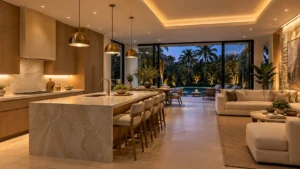
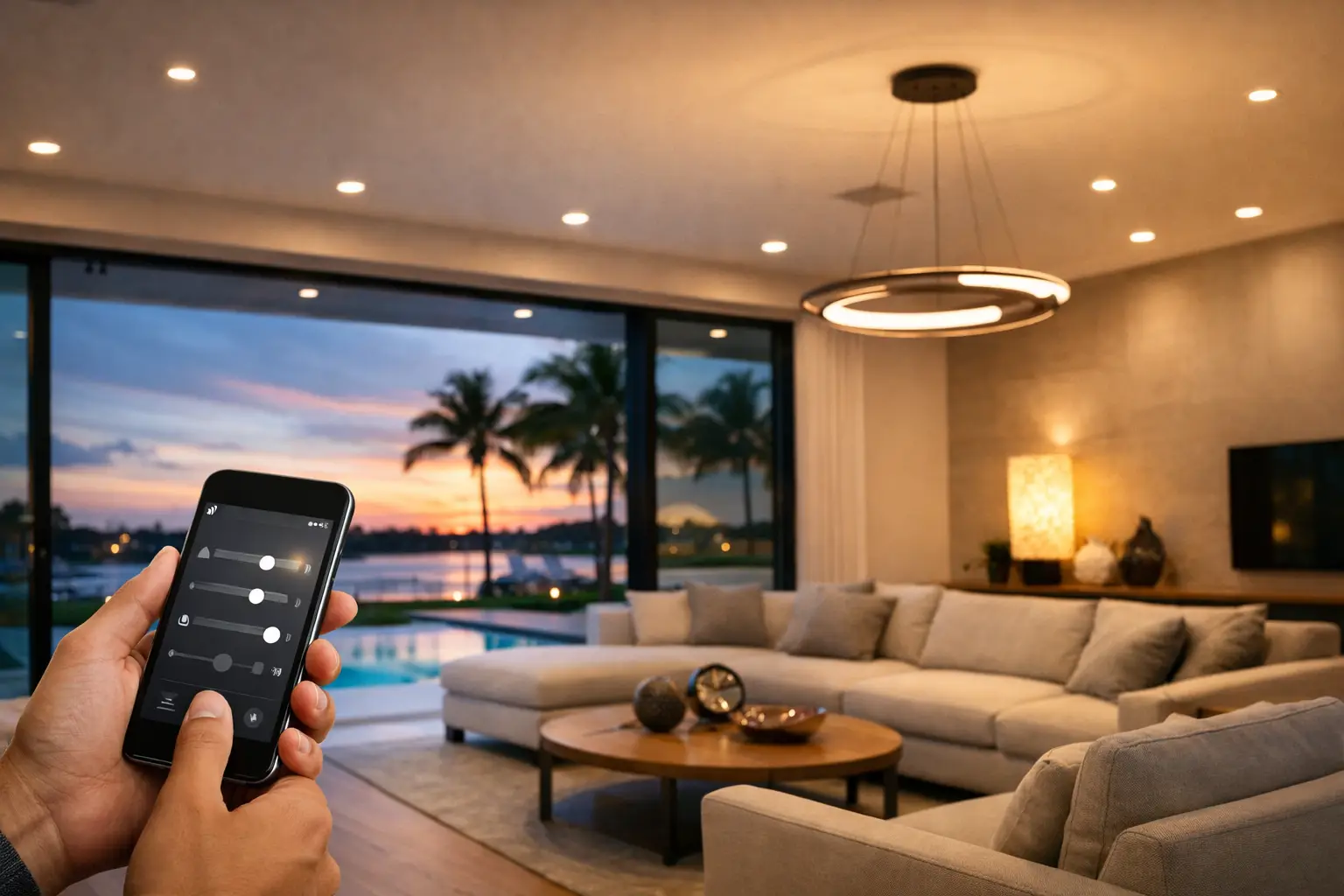
A Boca Raton property can look entirely different after sunset. Architectural details disappear, outdoor entertaining areas lose their appeal, and a beautifully finished interior can feel flat under a single row of switches. Professionally planned lighting control Boca Raton homeowners and businesses can rely on changes that experience – giving each space the right light, at the right level, without adding complexity to the wall.
This is not simply about turning lights on from a phone. A properly integrated lighting system creates purposeful scenes for arrival, entertaining, dining, work, relaxation, and closing up for the evening. It also reduces the visual clutter of multiple keypads and helps a large property feel more intuitive for family members, guests, and staff.
What Lighting Control Changes in a Boca Raton Property
Traditional switching asks you to walk room to room and make individual decisions: which fixtures should be on, how bright should they be, and what should happen outside? That approach becomes inconvenient in homes with layered lighting, expansive outdoor spaces, guest suites, motorized shades, and multiple entry points. It is even more limiting in restaurants, offices, medical spaces, and retail environments where the atmosphere needs to remain consistent throughout the day.
Lighting control brings those decisions together into a clear, reliable interface. A single keypad can call up a preset scene. A touch panel can manage a larger area. A scheduled event can adjust exterior and common-area lighting at appropriate times. When designed correctly, the technology fades into the background and the property simply feels more comfortable and polished.
The greatest value is not the number of features. It is the quality of the design behind them. Every home and business uses spaces differently, which is why a custom system should reflect how the property is actually lived in or operated.
Scenes create consistency without making spaces feel rigid
A scene sets several lights to predetermined levels with one command. For example, an evening entertaining scene might bring decorative fixtures up, soften recessed lighting, illuminate artwork, and establish the right level of pool and landscape lighting outdoors. A late-night scene may leave a safe path to bedrooms while turning off the rest of the home.
The goal is not to make every room look the same. It is to make the right setting easy to achieve. Fine control matters in Boca Raton residences where open living areas, glass walls, waterfront views, and outdoor rooms deserve thoughtful layers of light rather than one uniform brightness level.
The switch wall becomes more refined
In a property with multiple lighting zones, conventional switches can quickly take over the wall. Consolidated keypads replace rows of controls with a clean, labeled interface. This improves the appearance of finished spaces while making everyday use easier for anyone who enters the room.
Keypads should be located where decisions naturally happen: at primary entrances, beside the bed, near outdoor access points, in a business reception area, or by a conference room door. Labels should be clear and personal, not technical. “Welcome,” “Dinner,” “Outdoor,” and “All Off” are more useful than cryptic zone names.
A Lighting Control Plan Should Start With How You Use the Space
The most effective projects begin before fixtures, keypads, and equipment are selected. An experienced integrator considers room function, daylight exposure, architectural finishes, furniture placement, access patterns, and the other systems that will share control of the property.
For a residence, that conversation may include when the family arrives home, which rooms are used after dark, where guests gather, and how frequently the owners travel. For a commercial space, the questions shift toward operating hours, employee access, customer experience, presentation needs, and procedures at opening and closing.
Residential priorities: comfort, ambiance, and peace of mind
A well-designed home lighting system can support the rhythm of the day. Morning scenes can bring up key areas gradually. Afternoon settings can account for changing daylight. Evening scenes can create warmth across living spaces, patios, kitchens, and pool areas. At bedtime, a single command can turn off selected zones without leaving the homeowner to check the entire house.
When a property is vacant, scheduled interior and exterior lighting can support a more lived-in appearance. Integration with shades can also make a meaningful difference. Light and shade work together: shades reduce glare and protect interiors during bright hours, while lighting keeps rooms welcoming once daylight fades.
There are trade-offs. Full-house control is often ideal for a new build or major renovation because planning can account for every lighting load and keypad location early. In an established home, it may be more practical to begin with high-impact spaces such as the main living area, primary suite, kitchen, outdoor entertaining zones, and entry points. A thoughtful phased plan can preserve a consistent experience while allowing future expansion.
Commercial priorities: dependable operation and a better guest experience
For businesses, lighting affects more than aesthetics. It influences how customers perceive a space, how comfortably employees work, and how consistently a team can open and close each day. A restaurant may need distinct daytime, dinner, and private-event scenes. An office may require comfortable task lighting in work areas and presentation scenes in meeting rooms. A showroom may need fixtures and displays to remain visually prominent without creating glare.
Centralized control also gives owners and managers more confidence that lights are being managed consistently. Common areas, exterior paths, reception spaces, conference rooms, and after-hours zones can follow clear settings rather than depending on individual habits. The right approach depends on the business, its hours, and the complexity of the site.
Integration Is Where the Experience Becomes More Valuable
Lighting is powerful on its own, but it becomes more useful when it is part of a complete property system. A “Goodnight” command can lower shades, shut down selected entertainment areas, and set lighting for safe movement. An “Entertain” command can establish the mood across indoor and outdoor zones while preparing audio and shading for guests.
At a commercial property, a departure command can help staff place the building into its intended after-hours state. For larger estates and businesses, centralized control can also reduce the confusion that comes with separate apps and disconnected remotes.
That said, integration should remain purposeful. Not every device needs to be tied into every scene. Overcomplicated programming can make a system difficult to understand and harder to maintain. The better approach is to identify the moments that matter most, then make those moments easy to control.
Why Professional Design and Installation Matter
Lighting control sits at the intersection of design, infrastructure, programming, and everyday usability. The equipment must be selected for the lighting types in the property, from dimmable architectural fixtures to decorative pendants, exterior lighting, and specialty loads. The control system must also be organized, documented, and programmed for reliable performance.
Clean installation matters just as much as the hardware. Equipment locations should be planned, wiring should be properly managed, and keypads should feel intentional within the finished interior. During construction or renovation, early coordination with the design team and trades helps prevent compromises later, particularly around fixture selection, control locations, and low-voltage infrastructure.
Long-term support is another consideration. A premium system deserves a partner who can make adjustments as a family’s routine changes, a business evolves, or an addition is completed. Sentry Audio Video approaches lighting control as part of a complete technology environment, with system design and ongoing performance in mind from the start.
Questions to Ask Before Choosing Lighting Control in Boca Raton
Before moving forward, property owners should ask whether the proposed design supports the way the space will be used on day one and several years from now. Ask how scenes will be personalized, how guests or staff will use the controls, what happens if internet service is unavailable, and how future additions can be accommodated.
It is also wise to discuss the difference between decorative lighting and functional lighting. Both matter, but they serve different purposes. A dramatic chandelier may define a room, while recessed fixtures, cove lighting, pathway lighting, and task lighting provide the layers that make the room usable. Control should respect those roles instead of treating every light as one group.
The right lighting plan does more than add convenience. It gives a Boca Raton home or business a composed, welcoming presence every time someone walks through the door. A professional consultation is the right place to turn that vision into a system that performs beautifully every day.