A beautiful property should not disappear when the sun goes down. Landscape Lighting Woodfield Country Club homeowners can rely on should do more than brighten a walkway. It should shape the nighttime view of the home, make arrivals safer, extend the use of patios and pool areas, and operate with the same confidence as the rest of a professionally integrated residence.
At Woodfield Country Club, outdoor spaces are part of the lifestyle. Entries, architectural details, mature landscaping, terraces, and entertaining areas deserve lighting that feels intentional rather than overdone. The difference is rarely about adding more fixtures. It is about placing the right light at the right height, using the correct beam spread, and building a control system that fits how the household actually lives.
What Professional Landscape Lighting Should Accomplish
A well-designed exterior lighting system has three jobs: create atmosphere, improve visibility, and support security. Those goals often overlap, but they are not solved by treating every part of the property the same way.
At the front of the home, lighting should establish a welcoming arrival. Softly illuminated columns, textured stone, landscape beds, and specimen trees add depth without creating glare toward the street or front windows. A carefully lit entry also helps guests identify steps, changes in elevation, door hardware, and the route from the driveway to the front door.
In the backyard, the priorities shift. Pool decks, covered patios, outdoor kitchens, and lounge areas need practical illumination, but the experience should still feel relaxed. Harsh floodlighting can flatten the space and disrupt the atmosphere of an evening gathering. Layered lighting creates usable zones while preserving the warmth and privacy that make outdoor living appealing.
Security is part of the conversation as well. A property does not need to look brightly exposed to feel protected. Thoughtful path lighting, controlled perimeter illumination, and integration with surveillance cameras can improve awareness around key approaches without turning the landscape into a wall of light.
Landscape Lighting at Woodfield Country Club Is About Restraint
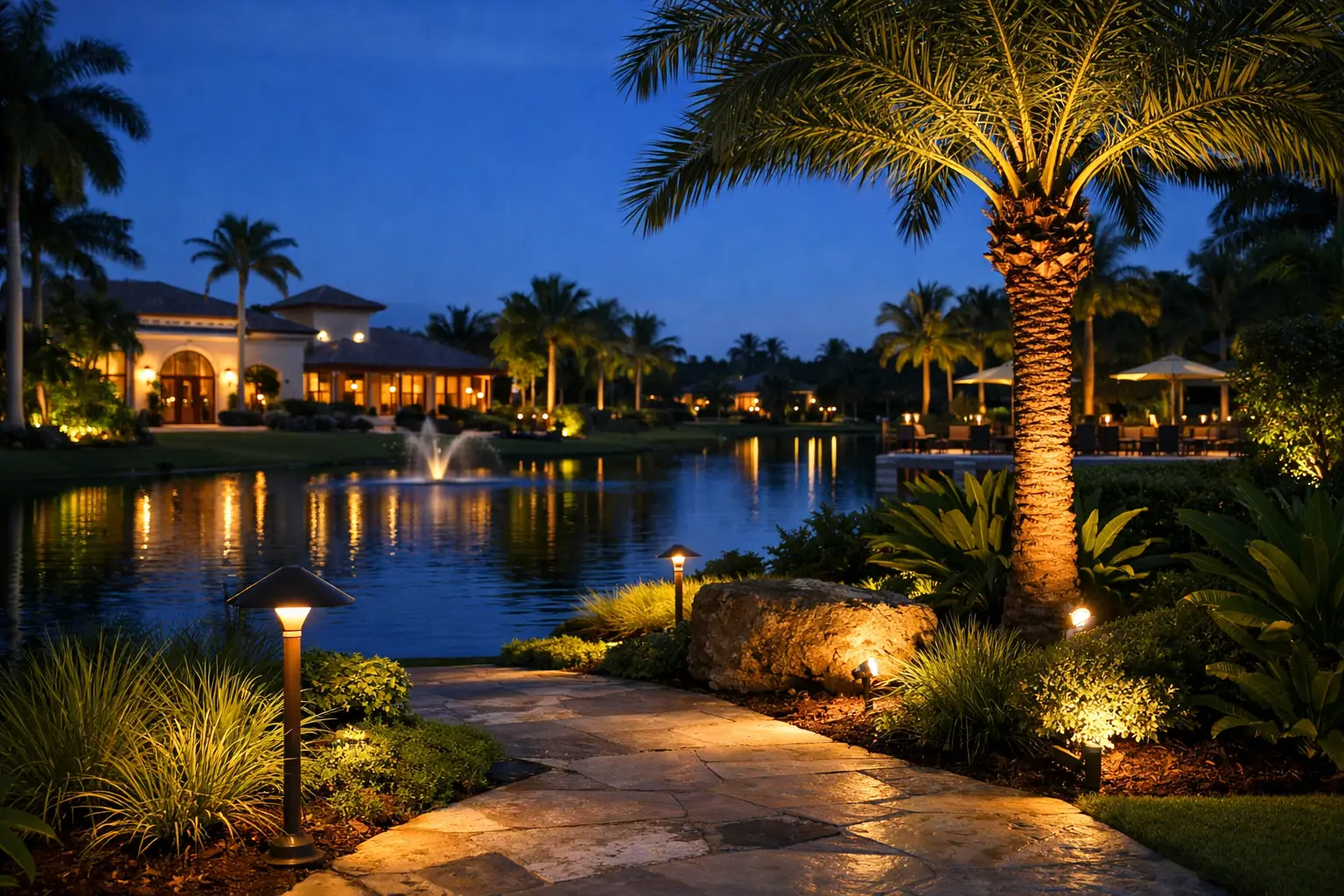
Premium landscape lighting is often defined by what you do not see. Fixtures should recede into planting beds, architectural recesses, and hardscape details. The focus should remain on the home, trees, pathways, and outdoor amenities, not on visible hardware or distracting hotspots.
This is especially important around tropical and subtropical landscaping. Palms, layered hedges, flowering trees, and broad-leaf plantings respond differently to light than stone walls or stucco elevations. Uplighting a palm can create a dramatic vertical focal point, while cross-lighting a hedge can give a boundary more visual dimension. A mature oak or banyan may call for several carefully aimed fixtures rather than one intense source at its base.
Color temperature matters just as much. Warmer white light generally complements natural stone, warm exterior finishes, and planted areas. Cooler light can be appropriate in select contemporary settings, but it may make a traditionally styled residence feel stark. The right choice depends on the home’s architecture, exterior materials, and existing interior lighting visible through windows.
The goal is visual balance. A grand entry should have presence, but it should not overpower the garden. A pool should remain easy to navigate, but it should not become the only thing visible from inside the home. Experienced design accounts for the views from the street, driveway, living room, primary suite, terrace, and neighboring properties.
Build the Lighting Plan in Layers
The strongest lighting plans use several lighting layers that work together. Architectural lighting reveals façade details, columns, rooflines, and distinctive materials. Landscape lighting adds texture through trees, palms, hedges, and garden elements. Path and step lighting makes circulation safer. Accent lighting draws attention to focal points such as fountains, sculptures, or a signature tree.
Functional areas deserve their own consideration. The approach to an outdoor kitchen needs enough light for serving and cleanup, while a dining area benefits from a softer, more social effect. A gate, side yard, dock area, or detached structure may need a controlled level of visibility for security and access. These are different uses, and they should not be forced onto one switch or one scene.
Avoid the common mistake of spacing fixtures by habit. A symmetrical layout can look appropriate along a formal walkway, but landscape beds and architectural elevations are rarely symmetrical in the same way. Fixture locations should respond to the object being illuminated, the sightlines from common viewing areas, and the amount of ambient light already present.
Glare control is equally critical. Light aimed into a seating area, neighboring window, driveway, or camera lens undermines the system’s purpose. Proper shielding, fixture aiming, and thoughtful placement protect the nighttime experience while helping cameras capture clearer images where coverage is needed.
Smart Control Makes the System Part of the Home
Landscape lighting becomes far more valuable when it is integrated into the home’s control system. Instead of relying on disconnected timers and separate apps, homeowners can manage exterior lighting from a wall keypad, touchscreen, mobile device, or voice-enabled control interface.
A single “Home” scene can bring on entry, pathway, and select landscape lighting at an appropriate level. An “Entertain” scene can highlight the terrace, pool, and dining areas while keeping the front elevation understated. A “Goodnight” scene can turn off decorative zones while leaving essential path and perimeter lighting active.
Scheduling also reduces the need for daily adjustments. Seasonal sunset changes, travel periods, and recurring entertaining routines can be accounted for in the programming. For homeowners who prioritize property awareness, lighting can also coordinate with camera notifications or gate activity. The right response depends on the property and the household’s preferences. Not every event should trigger every light, which is why customized programming matters.
Integration should feel simple at the point of use, even when the system behind it is sophisticated. The homeowner should not have to think about zones, transformers, scenes, and automation logic just to enjoy the backyard after sunset.
Design Around the Full Outdoor Experience
Landscape lighting is most effective when planned alongside outdoor audio, video, surveillance, motorized shades, pool features, and structured infrastructure. A fixture installed without regard for a speaker location, camera view, planting growth, or future construction can create avoidable compromises later.
For example, outdoor speakers should blend into the landscape without competing visually with lighting fixtures. Cameras need lighting that supports useful nighttime images without direct glare. Motorized shades on a covered patio can change how light reflects into the space. Pool and water features introduce reflective surfaces that require careful aiming and intensity control.
This coordinated approach also protects the appearance of the property. Wiring pathways, equipment locations, control components, and fixture placement should be planned for clean execution and future service access. A polished result comes from treating the outdoor environment as one connected system, not a collection of isolated products.
Why Installation Quality Determines Long-Term Results
Exterior conditions are demanding. Heat, moisture, irrigation, landscaping changes, and regular use all affect long-term system performance. Quality fixtures and components matter, but their performance depends on correct installation, secure connections, appropriate load planning, and access for future adjustments.
Landscapes also change. Trees grow, hedges fill in, and renovations alter views and traffic patterns. A professional system should be designed with the ability to refine fixture aim, update programming, and expand selected zones when the property evolves. Ongoing support is valuable because a lighting system should continue to look considered years after the initial installation.
Sentry Audio Video approaches landscape lighting as part of the complete outdoor living environment. That means beginning with how the property is used, designing for refined appearance and dependable performance, and delivering controls that make every evening easier to enjoy.
For a Woodfield Country Club residence, the right lighting plan does not simply make the home visible after dark. It gives the property a more welcoming presence, supports safer movement, and keeps the outdoor experience ready whenever the evening begins.