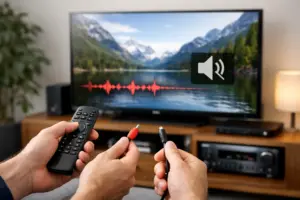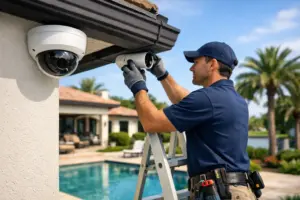
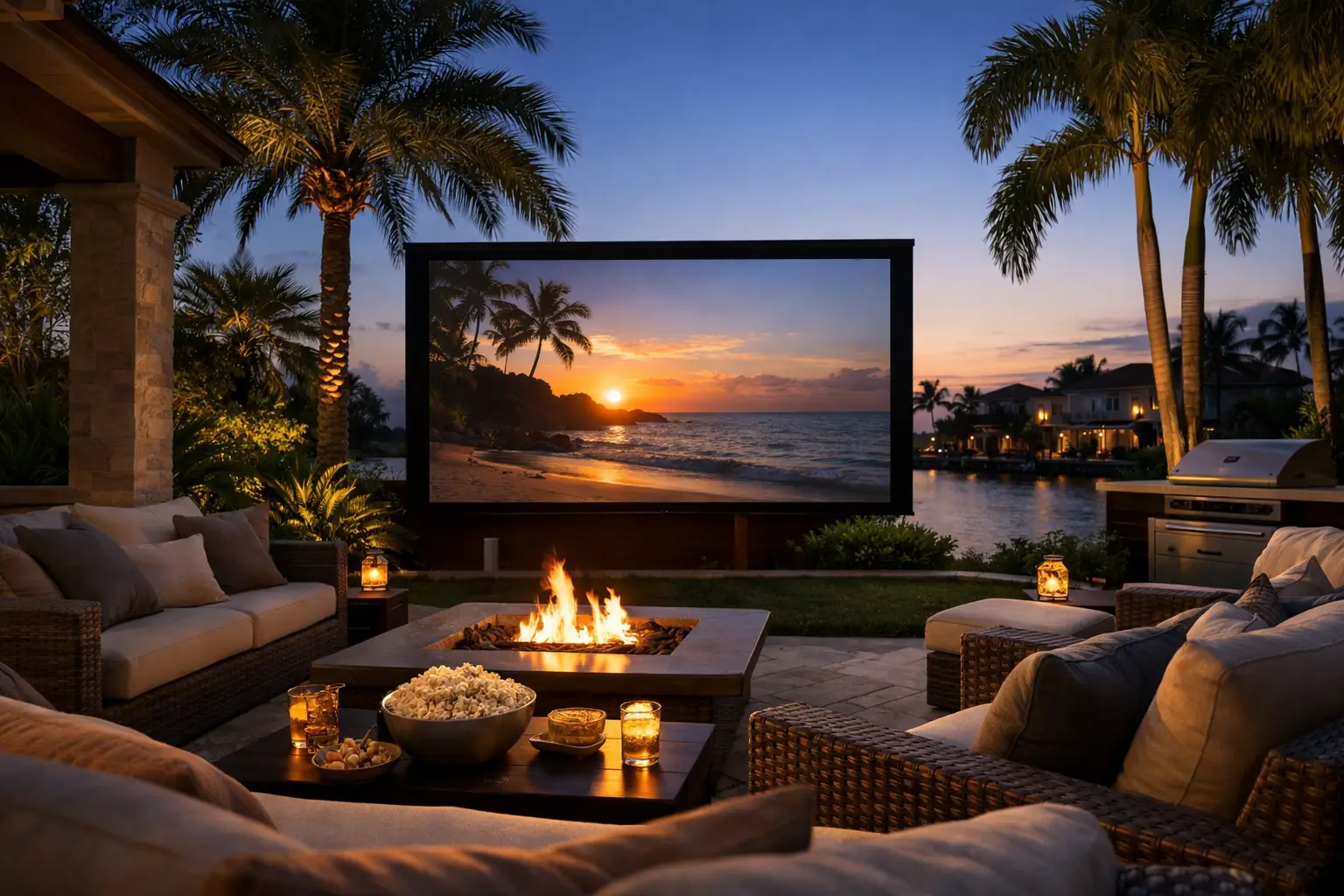
A beautiful patio can lose its appeal quickly when the screen is washed out, dialogue disappears under pool equipment, or every movie night begins with a search for remotes and cables. An Outdoor Home Theater Boca Raton homeowners will use often must be designed for South Florida conditions, not simply assembled from products intended for an indoor room. The difference is visible in the daylight, audible during conversation, and felt in the confidence that every component is properly protected.
For a family gathering, an evening by the pool, or a relaxed night under the covered patio, outdoor entertainment should feel as considered as the rest of the property. That calls for a complete system plan: display placement, audio coverage, network performance, control, equipment protection, and a clean installation that respects the architecture.
Planning an Outdoor Home Theater in Boca Raton
The first decision is not the screen size. It is how the space will actually be used. A covered lanai used primarily after sunset has different requirements than an open pool deck exposed to afternoon sun. A waterfront property may require more deliberate speaker placement to keep sound focused on the entertaining area. Homes with neighbors nearby also benefit from a system designed for clarity at comfortable listening levels rather than raw volume.
Sun direction, viewing distance, seating layout, ceiling height, wall materials, and the location of existing outdoor amenities all matter. A well-planned design accounts for sightlines from lounge furniture, dining areas, and the pool. It also considers whether the outdoor theater should operate as a dedicated zone or as part of a larger whole-home audio and video system.
This planning stage is where custom integration earns its value. Equipment can be selected to fit the environment rather than forcing the environment to accommodate a standard setup. The finished system should look intentional, with displays, speakers, controls, and wiring positioned to complement the home instead of competing with it.
Start With the Viewing Environment
Florida sunlight is the central challenge for outdoor video. Even a covered area can receive significant reflected light from pavers, water, light-colored furniture, or nearby glass. Selecting a display without studying these conditions can lead to a picture that looks acceptable at night but disappointing during the hours when the patio is most inviting.
Outdoor displays and projection serve different spaces
A purpose-built outdoor display is often the right choice for patios, kitchens, cabanas, and pool areas. These displays are engineered for outdoor temperature swings, moisture exposure, and brighter viewing conditions. Their performance makes them a practical solution when the screen will be used in daytime or early evening, especially where ambient light cannot be fully managed.
Projection can create a dramatic large-format experience, but it is more dependent on environmental control. It performs best in a deeply shaded, enclosed, or screened outdoor room that is used mainly after dark. The projector, screen, and related equipment need carefully protected locations, and the homeowner should understand that afternoon viewing may be limited. Neither approach is automatically superior. The right choice depends on how the space is oriented and when the family expects to watch.
Screen size should follow viewing distance and seating arrangement, not a simple bigger-is-better rule. A display that overwhelms a narrow patio can be uncomfortable to watch, while one that is undersized for a broad lounge area will not deliver the theater effect the space deserves.
Design Sound That Reaches the Seating, Not the Street
Outdoor audio behaves differently from audio inside a theater room. There are no walls to contain it, and sound dissipates quickly across open spaces. The answer is not merely adding more speakers. It is designing coverage so voices, music, and effects remain clear where people sit.
For covered patios, weather-rated architectural speakers can be integrated into ceilings or strategically mounted under a structure. Around a pool or landscaped entertainment area, satellite speakers and discreet subwoofers can distribute sound more evenly. This approach reduces the need to push a pair of speakers too hard and helps keep audio focused on the property.
Separate zones create a better entertaining experience
Many Boca Raton homes have more than one outdoor activity area. Guests may be talking at the dining table while children are in the pool and others are watching a program from the lounge. Zoned audio lets each space operate appropriately. The patio can play television sound while landscape speakers provide low-level music near the water, or one area can be silent without shutting down the entire backyard.
A properly calibrated system also makes dialogue easier to understand. That matters more than dramatic bass during most outdoor viewing. The goal is balanced, intelligible sound that remains enjoyable at a reasonable level.
Protect Equipment From Heat, Humidity, and Moisture
South Florida weather places real demands on outdoor entertainment systems. High humidity, heat, wind-driven rain, salt exposure near the coast, and sudden storms all influence product selection and installation methods. Components need the correct environmental ratings, but product ratings alone are not the whole solution.
Connections, mounting hardware, enclosures, ventilation, and cable pathways require equal attention. An outdoor display needs a secure mount designed for its weight and location. Equipment placed in a cabinet requires sufficient airflow and protection from moisture. Low-voltage cabling should be routed cleanly, terminated correctly, and concealed wherever the property allows.
The equipment rack or central media location is equally important. Locating source equipment and control hardware in a protected interior area can simplify maintenance and keep the outdoor space uncluttered. From there, structured cabling and a dependable network deliver content and control to the patio without exposed cords or improvised connections.
For homes near the ocean in Highland Beach, Delray Beach, or Boca Raton, the installation team should pay particular attention to corrosion resistance and exposure. Coastal conditions do not mean outdoor entertainment is impractical. They mean the design must be specific to the location.
Make Control Simple Enough for Every Guest
An outdoor theater should not require a technical explanation before someone can enjoy it. The experience should be straightforward: select the outdoor area, choose a source, adjust the volume, and enjoy the picture. Centralized control can bring the display, audio, lighting, motorized shades, and poolside entertainment together through a single elegant interface.
This is especially valuable when the backyard is part of a larger smart home system. A homeowner can create a scene that turns on the outdoor display, sets the audio level, adjusts lighting, and lowers shades in a covered patio area. For an evening gathering, the same system can shift from background music to a viewing mode without multiple remotes or separate apps.
Reliable control depends on a strong network. Streaming video, whole-property audio, surveillance, and smart-home controls all compete for connectivity. Planning the network as part of the entertainment project avoids the frustrating gaps, delayed commands, and inconsistent performance that can occur when the system is treated as an afterthought.
Why Professional Integration Changes the Result
A polished outdoor theater is a coordinated project, not a collection of individual products. The display must work with the audio system. The audio must fit the architecture and property boundaries. Control must be intuitive, and all components must operate dependably in changing conditions. When one partner manages design, equipment, installation, programming, and support, accountability stays clear from the first proposal through long-term service.
Sentry Audio Video approaches outdoor entertainment with that full-system perspective. The process begins with an on-site evaluation of the property and the client’s goals, followed by a tailored recommendation that addresses performance, aesthetics, and future expansion. Whether the project involves a single covered patio or a complete backyard with pool integration, distributed audio, lighting control, and security, every detail should support a refined and reliable experience.
Questions to Settle Before Your Installation
Before approving a design, homeowners should be able to answer a few practical questions. When will the screen be watched most often: daylight, sunset, or after dark? Will the outdoor area host quiet family viewing, larger gatherings, or both? Is the system intended to serve one patio or multiple areas across the property? And should lights, shades, and audio respond together through centralized control?
It is also wise to consider future plans. A renovation may later add a summer kitchen, cabana, landscape audio, surveillance, or expanded seating. Running the right infrastructure during the initial project can preserve options and protect the finished appearance of the property.
The most successful outdoor theater is the one that disappears into the routine of the home. When the picture remains clear, the audio feels natural, and the controls respond exactly as expected, the backyard becomes a destination that is ready whenever the evening calls for it.