Upgrade Your Existing Lutron Lighting System
Choose the route that matches your installed equipment. For original RadioRA or RadioRA 2, see our RadioRA 3 upgrade assessment and replacement planning. For Interactive, Illumination or QS, explore legacy HomeWorks upgrades to QSX.
Each assessment reviews compatible equipment, required replacements, programming and connected systems before a written scope is proposed. We can also evaluate shade modernization and lighting changes during the same project.
All four Sentry office areas: Boca Raton (561) 717-3280; Fort Lauderdale (954) 859-6475; Orlando (407) 377-5360; New York (516) 210-2120. Scheduling and assessment charges are confirmed for the property.
Plan a RadioRA 3 Installation or Upgrade
Want simpler lighting controls in a finished home, condominium or renovation? Sentry Audio Video designs, supplies, installs and programs Lutron systems across South Florida. Start with the rooms, existing wiring, lighting fixtures and control experience you want; we review the installed conditions before selecting equipment.
Discuss My RadioRA 3 ProjectCall (561) 717-3280
Tell us your city, project timeline, rooms involved and whether you already own a Lutron system. Your scope can include controls, compatible shade integration, scenes, installation and homeowner training.
A beautiful home can still feel unfinished when lighting is controlled room by room, shades are managed manually, and wall controls do not match the caliber of the space. Lutron RadioRA 3 brings those details into one thoughtfully designed system, giving homeowners refined control of lighting, shades, and connected home experiences without compromising the architecture or daily usability of the property.
For luxury residences, lighting control is not merely about turning fixtures on and off from an app. It is about arriving home to the right atmosphere, protecting interiors from harsh afternoon sun, creating usable outdoor living areas after dark, and making every room easier for family and guests to enjoy. RadioRA 3 is designed for that level of everyday performance.
What Makes Lutron RadioRA 3 Different?
RadioRA 3 is Lutron’s premium whole-home lighting control platform for residences that require more capability and design flexibility than a single-room lighting solution. It uses Lutron’s Clear Connect wireless technology to connect dimmers, switches, keypads, sensors, shades, and control processors across the home.
The advantage is not simply wireless communication. It is the ability to create a coordinated lighting plan that works as one system. A keypad at the entry can activate a welcome scene. A bedside keypad can lower shades, turn off common-area lights, and set a comfortable path to the kitchen. One command can prepare a dining room for entertaining while another shifts the entire property into an away setting.
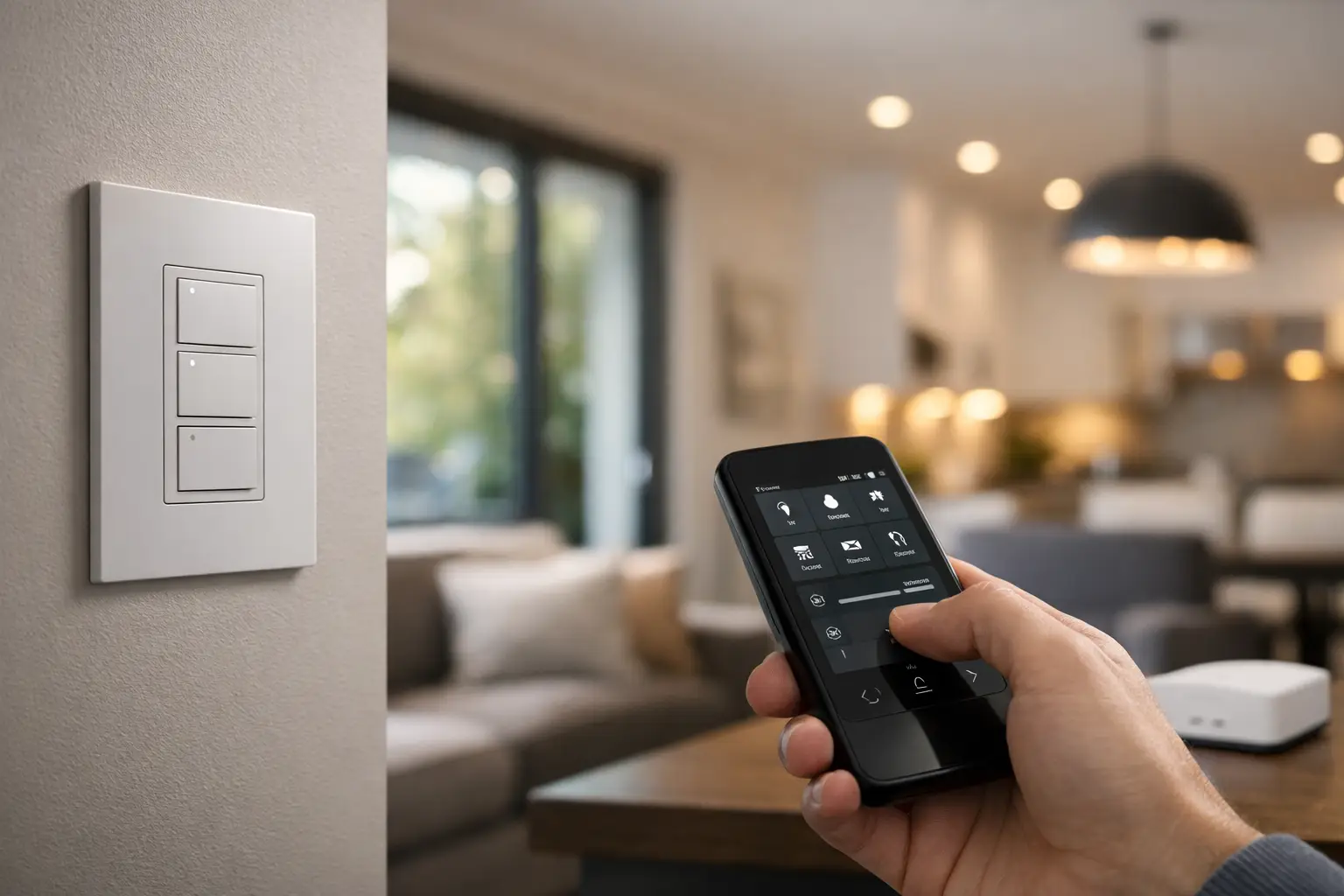
RadioRA 3 also supports Lutron’s current Sunnata-style controls, known for their clean, architectural appearance and intuitive light-bar feedback. In a home where finishes, millwork, and wall plates receive careful attention, these details matter. Controls should look intentional rather than like an assortment of unrelated devices.
Lighting Scenes That Match How You Live
The real value of a professionally designed lighting system is the experience behind the button press. Instead of asking occupants to operate several loads individually, RadioRA 3 combines them into scenes that support daily routines.
A kitchen may need bright, functional illumination in the morning, balanced lighting for meal preparation, and lower accent lighting later in the evening. In a great room, the appropriate lighting for conversation is different from the setting needed for watching a movie. Outdoor areas may require landscape lighting, step lights, and pool-area illumination to come on in a coordinated sequence as daylight fades.
These scenes can be recalled from elegant wall keypads, tabletop controls, vehicle remotes, compatible voice control, or a mobile device. The best interface depends on the room and the people using it. A well-placed keypad remains one of the most dependable ways to control a frequently used space because it is immediate, visible, and available to every guest.
Schedules and occupancy-based control add another layer of convenience. Shades can lower during the strongest sun exposure, exterior lighting can follow astronomical time, and selected areas can respond to movement when appropriate. Automation should be selective, however. A formal living room may benefit from predictable scheduled scenes, while a primary suite should prioritize quiet, personal control. Good programming accounts for both.
Lutron RadioRA 3 and Motorized Shades
Lighting and shades are most effective when planned together. Motorized shades give homeowners greater control over daylight, privacy, glare, and the appearance of the home throughout the day. When they operate alongside the lighting system, the room feels composed rather than over-managed.
For example, shades in an east-facing bedroom can rise gradually in the morning. In a waterfront living area, they can lower during intense afternoon sun to preserve views while reducing glare on displays and protecting furnishings. At night, privacy shades can close as interior lighting changes to an evening scene.
The fabric, fascia, pocket detail, power planning, and control strategy all need consideration before installation. In new construction and major renovations, early coordination is especially valuable. It allows shade pockets, low-voltage pathways, and equipment locations to be incorporated cleanly into the design instead of addressed after finishes are complete.
Why System Design Matters More Than Device Count
A RadioRA 3 system should not be selected by simply counting dimmers. The right scope begins with how the property is used, which fixtures need dimming, where multi-location control is needed, and which rooms would benefit from scene keypads.
An experienced integrator will evaluate fixture compatibility, dimming performance, load types, panel locations, wireless coverage, and the relationship between lighting control and the broader technology plan. Decorative fixtures, LED drivers, ceiling fans, landscape lighting, and specialty loads can each require different treatment. Addressing those conditions early prevents inconsistent dimming, unnecessary wall clutter, and confusing user experiences.
The layout of controls deserves equal attention. A keypad should be positioned where it makes sense at the moment a homeowner enters or leaves a space. Button labels should be clear enough for visitors, yet tailored to the household’s routines. In a large home, the same command should not mean different things in different areas without a good reason.
This design discipline also applies to finish selection. Lutron offers control options that can complement contemporary, transitional, and traditional interiors. The goal is to make the technology feel integrated with the home, not added after the design was finished.
Integration With a Complete Smart Home
RadioRA 3 can serve as a strong lighting and shade foundation within a larger integrated home. It can be coordinated with distributed audio, home theater, security, climate control, pool environments, and centralized smart-home interfaces through properly designed integration.
That coordination is especially useful for whole-home scenes. A “Goodnight” command might turn off selected lights, secure shades, stop music in common areas, and prepare the home for the evening. An “Entertain” scene can establish lighting across indoor and outdoor spaces while making key areas simple to adjust during the event.
Integration should have a clear purpose. Adding every available control to one screen can make a system harder to use, not better. The most successful projects keep common actions fast and simple while preserving deeper controls for the moments when they are actually needed. Physical keypads, dedicated remotes, and centralized touch interfaces each have a role.
Is RadioRA 3 Right for Your Property?
RadioRA 3 is an excellent fit for custom homes, substantial renovations, second residences, and properties where lighting and shading should feel cohesive across multiple rooms. It can be particularly valuable when homeowners want sophisticated control without opening every wall for new control wiring.
It is also well suited to projects that may grow over time. A homeowner may begin with main living areas, the primary suite, and outdoor entertaining zones, then expand control to additional spaces as furnishing or renovation phases progress. Planning for future capacity from the beginning helps protect that investment.
There are situations where a different Lutron platform may be more appropriate. Very large estates with extensive wired control requirements, highly complex integration needs, or a significant quantity of specialized loads may call for a more advanced system architecture. Conversely, a smaller project with only a few controlled zones may not require the depth of RadioRA 3. The right answer should follow the property and the owner’s expectations, not a one-size-fits-all package.
Professional Installation Protects the Experience
Premium lighting control depends on more than premium hardware. It requires careful documentation, clean installation, reliable programming, testing, and support after the project is complete. Each keypad must be labeled and programmed logically. Each dimmer must be tuned for the connected fixture. Every scene must be tested in the room where it will be used.
For homes in South Florida, that level of attention is especially helpful in properties with expansive glass, outdoor living areas, seasonal occupancy, and changing daylight conditions. The lighting and shade strategy should support the architecture, the climate, and the way the property is used throughout the year.
Sentry Audio Video approaches RadioRA 3 as part of a complete technology design, coordinating lighting control with the systems that shape comfort, entertainment, security, and day-to-day operation. From initial proposal through installation and ongoing service, one accountable partner helps keep the system performing as intended.
Common Questions About Lutron RadioRA 3
Can RadioRA 3 work in an existing home?
Yes. Its wireless control architecture makes it particularly practical for existing homes and renovations where preserving finished walls is a priority. Site conditions, fixture types, control locations, and coverage should still be evaluated during the design phase.
Can it control both lights and shades?
Yes. RadioRA 3 can coordinate compatible Lutron lighting controls and motorized shades in shared scenes, schedules, and room-based commands. This is one of the strongest reasons to consider the platform as a complete comfort solution rather than a lighting-only upgrade.
Will every LED fixture dim the same way?
Not necessarily. LED dimming performance depends on the fixture, driver, load characteristics, and control compatibility. Professional testing and appropriate dimmer selection are essential to achieve stable low-end dimming and consistent results.
Can the system be expanded later?
Often, yes. Expansion should be considered during the original system design so equipment capacity, processor placement, and control strategy can support future phases without unnecessary rework.
A well-designed RadioRA 3 system makes the home feel more responsive without asking homeowners to think about the technology behind it. The result is better light, better comfort, and control that remains simple when it matters most.