Changing shade fabric can refresh a room without changing its automation design. It does not follow that the existing motor, roller tube and brackets can always remain. A Lutron shade is an assembly with product-specific mechanical requirements. The sensible first step is to identify the installed system and ask which replacement options the manufacturer supports for that exact configuration.
Before buying fabric or authorizing removal, have the shade inspected and documented. Separate three possible outcomes: a supported fabric-related replacement using retained hardware, a larger assembly replacement, or a new shade. The proposal should identify which outcome is being priced and which parts are conditional on inspection or manufacturer confirmation.
Identify the installed product before discussing reuse
Collect the original order information if available. Record the shade family, dimensions, mounting arrangement, power method and identifying information needed by the service provider. A photograph of a white roller shade in a window is rarely enough to establish its exact construction. Avoid disassembling an overhead shade simply to hunt for a label without appropriate service arrangements.
The product generation also matters. Lutron has published design changes for certain Serena and Triathlon battery roller components. That is a useful reminder to match replacements to the installed system rather than assuming every part with the same general product name is interchangeable. Ask the service provider to confirm the applicable documentation and parts before placing an order.
Treat the fabric as part of a mechanical assembly
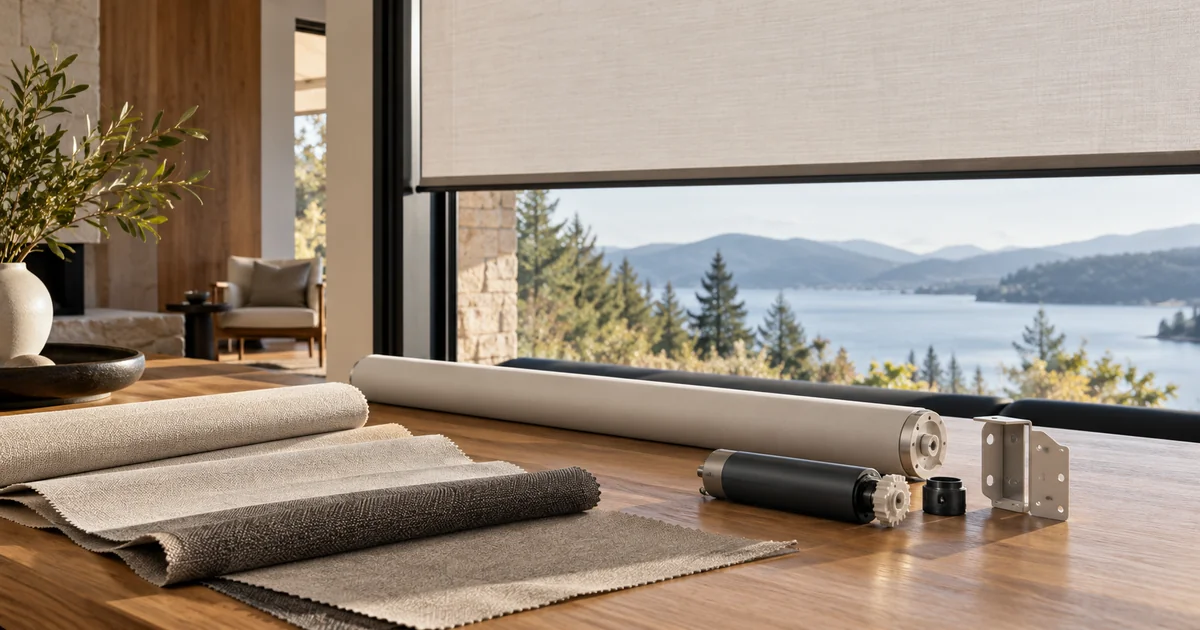
Fabric construction, size and attachment can affect how a shade rolls and fits. A replacement should be evaluated for the specific tube, motor and finished dimensions. Do not assume that any fabric cut to the old width can be attached to the existing hardware. Ask whether the proposed work uses a manufacturer-supported replacement assembly or another expressly approved method.
This guide is about mechanical reuse, not selecting opacity or color. Once the desired fabric is chosen, its suitability still needs to be checked against the installed system. A visually similar sample does not establish the same thickness, weight or rolling behavior. Confirm that the proposed option is available for the actual shade size and product line.
Review the motor, tube and brackets separately
An existing motor that still operates is not by itself proof that the entire assembly is suitable for the new fabric. Likewise, brackets that fit the old tube may not be the correct parts for a new assembly. Ask for an itemized retained-versus-replaced list so the owner can see what is included and what remains dependent on inspection.
- Exact existing shade family and identifying information.
- Proposed fabric and the supported replacement configuration.
- Motor and power components proposed for retention or replacement.
- Tube, hembar, brackets, fascia and any adapters affected by the change.
- Required adjustments, programming and final operating tests.
- Warranty and support responsibility for the completed assembly.
If parts are unavailable or the assembly is no longer supported, the quote should say so. A new complete shade may be more defensible than a collection of uncertain substitutions. That does not mean full replacement is always necessary. It means the choice should follow identification and manufacturer guidance rather than a promise made before anyone inspects the hardware.
Recheck the surrounding installation
Inspect the clearances, mounting surface and access needed to remove and reinstall the relevant parts. Finished pockets, side channels and fascia can constrain the replacement. A room may also have been remodeled since the original installation. Coordinate any access or finish work before committing to a date, especially where shades are high or concealed.
If the shade is part of a coordinated wall of windows, consider the appearance of the retained and replaced units together. New fabric may differ from aged fabric even when the description sounds similar. Decide whether the owner is approving one replacement or a coordinated set. Keep that aesthetic decision separate from the technical question of whether existing hardware can remain.
Compare the full cost and service implications
Evaluate the complete scope rather than only the price of fabric. Include assessment, supported parts, removal and installation, access arrangements, programming and testing. Ask what happens if inspection identifies an unsuitable retained component. A clear allowance or separate approval point for genuine unknowns is better than an unexplained change after the work begins.
Also ask who supports the finished result. A manufacturer-supported configuration may have different warranty implications from an improvised rebuild. The proposal should state those responsibilities without implying a warranty that has not been confirmed. Retain records of the exact replacement parts so future shade service starts with accurate information.
Test the replacement as a complete shade
After installation, verify full travel, stable rolling, final limits and the intended control method. Check the fabric and hembar at normal viewing positions. If the shade belongs to a group or scene, test that behavior as well. Do not assume that retaining a motor means no setup or verification will be needed after mechanical work.
Record accepted exceptions before completion. A fabric change should leave the owner with an understandable, serviceable shade, not merely a new material hanging in the opening. Keep the updated order and component information with the project documents. That record is especially useful if the home changes owners or another integrator later takes over support.
Buyer questions
Can we reuse the old motor because it still runs?
Possibly, but operation alone does not prove suitability for the proposed replacement. Confirm the exact system, supported assembly and mechanical requirements before promising reuse. The motor, tube and mounting hardware should be evaluated together.
Is replacing the entire shade always necessary?
No. The answer depends on identification, available supported parts and the condition of the installation. Ask for a proposal that clearly distinguishes confirmed reuse from items that need manufacturer or site verification, then approve the appropriate scope.
Plan the next step with Sentry Audio Video
For a South Florida project, start with our Lutron shades service. Sentry Audio Video can review the existing equipment, define the proposed change and identify the tests needed before ordering. Request a project review and include the equipment models, room or camera locations, and the outcome you want.
Related planning: choosing Lutron shade fabrics.
Manufacturer and technical references
- Lutron battery roller shade design changes
- Lutron Triathlon shade information
- Lutron Triathlon installation documents
Technical sources reviewed October 23, 2026. Confirm exact model, software, licensing and project requirements before purchase. Featured image is an AI-generated illustration, not a photograph of a Sentry customer project.