A light switch can turn a fixture on or off. Control4 Lighting can shape how an entire property feels, functions, and welcomes people throughout the day. With a properly designed system, the lighting in your entry, kitchen, bedrooms, outdoor spaces, and entertaining areas responds to the way you actually live – not the other way around.
For homeowners investing in a new build, major renovation, or sophisticated smart home upgrade, lighting control is often one of the highest-impact decisions in the project. It affects comfort, ambiance, energy use, security, and the visual finish of every room. The difference is not simply having lights controlled from an app. It is having an integrated system that is intuitive for the family, dependable for the property, and thoughtfully programmed around daily routines.
What Control4 Lighting Does Differently
Control4 brings lighting, shades, audio, security, climate settings, and other connected systems into one coordinated experience. Its lighting control platform replaces scattered switches and disconnected apps with consistent control from elegant keypads, touchscreens, mobile devices, and programmed scenes.
The real value is in the relationships between systems. A single “Goodnight” command can turn off common-area lights, lower shades, arm the security system, and leave a dim pathway illuminated to the bedroom. A “Welcome Home” scene can light the entry and main living areas at the right level while activating music in the rooms you use most. The result is less friction at the end of a long day and more confidence that the property is set the way it should be.
Control4 also supports a wide range of lighting loads and fixture types, including dimmable LED lighting, decorative fixtures, landscape lighting, sconces, and specialty accent lighting. Compatibility should always be confirmed during design, particularly when a home includes imported fixtures, low-voltage lighting, or LEDs with specific dimming requirements. Premium lighting control works exceptionally well when the fixtures, dimmers, drivers, and programming are selected as a complete system.
Why Professional Lighting Design Matters
Lighting control is not a product that should be considered after walls are closed and finishes are installed. The strongest results begin early, when the technology plan can be coordinated with architectural drawings, interior design, millwork, window treatments, and the electrical layout.
A professional integrator looks beyond the question of where to place a switch. The better questions are: Which lights should work together? Where should keypads be located? Which pathways need low-level illumination after dark? How should outdoor areas transition from dinner to late-night entertaining? What needs to happen when the property is vacant?
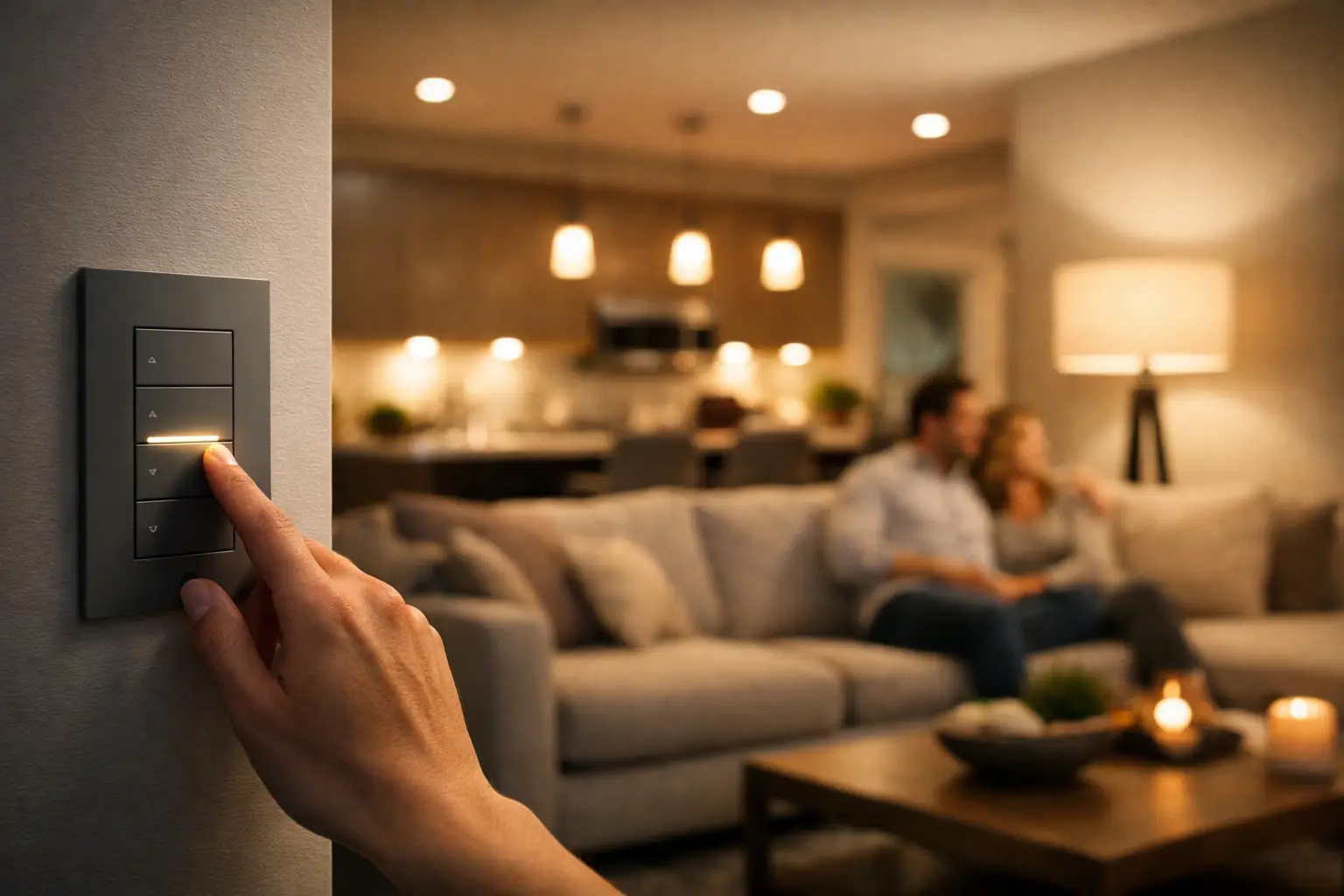
This planning prevents a common frustration in large homes: a wall crowded with mismatched switches that guests cannot identify and family members rarely use correctly. Instead, a Control4 keypad can group lighting functions logically. One button may activate a dining scene, another may set a cleaning level, and another may turn the room off. Engraved buttons provide clarity without forcing the homeowner to reach for a phone.
The installation quality matters just as much as the design. Clean wiring, organized equipment locations, correctly specified dimming modules, and complete system documentation make the difference between a polished installation and a system that becomes difficult to service. Sentry Audio Video approaches lighting control as part of the property’s larger technology foundation, with attention to both performance today and ongoing support after installation.
Control4 Lighting Scenes That Improve Daily Life
A scene is a preset combination of lighting levels that supports a particular activity or time of day. It is one of the most practical reasons to invest in a centralized lighting system. Rather than adjusting individual fixtures, you select the atmosphere you want and the system handles the details.
Start and End the Day With Less Effort
In the morning, bedroom shades can rise gradually while bathroom and kitchen lights come on at comfortable levels. At night, a bedside keypad can shut down selected areas without requiring a walk through the home. Hallway and stair lighting can be set to a soft level that preserves visibility without startling brightness.
This is especially valuable in multilevel homes and larger properties where the primary suite may be far from common spaces. The convenience is immediate, but the peace of mind is equally valuable. A single command can confirm that lights have been turned off in the areas that should be dark.
Make Entertaining Feel Effortless
A well-designed home should adapt when guests arrive. For a dinner party, a scene might warm the dining room, accent artwork, soften adjacent living spaces, and set the outdoor lighting for a smooth transition to the patio or pool area. Later, a different scene can reduce interior lighting and bring outdoor gathering areas forward.
These adjustments are not just about appearance. They help define the use of a space, improve comfort, and allow homeowners to host without constantly managing switches. In South Florida, where outdoor living is central to the home experience, coordinated landscape, patio, and pool-area lighting can make the property more usable after sunset.
Support Security and Peace of Mind
Lighting is an effective layer in a comprehensive security strategy. When integrated with security and surveillance systems, Control4 can trigger exterior or pathway lighting in response to an alert. Homeowners can also create an away schedule that varies lighting activity in occupied areas, giving the property a more natural lived-in appearance while they travel.
Thoughtful programming is essential here. Not every security event should flood the entire property with light, and not every exterior fixture should run all night. The proper approach depends on the layout, neighboring properties, landscaping, camera coverage, and the homeowner’s preferences.
Keypads, Touchscreens, and App Control
A premium lighting system should offer multiple ways to control the home without making any one method mandatory. Keypads remain the fastest and most reliable option for everyday use because they are always available, require no login, and provide tactile control at the point of entry.
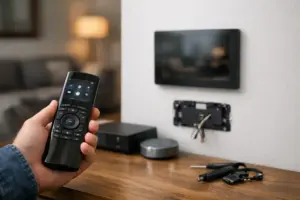
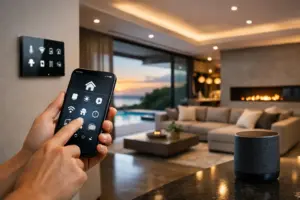
Touchscreens offer a wider view of the property, making them useful for monitoring rooms, selecting scenes, managing shades, checking cameras, or controlling entertainment. The Control4 app adds convenience when you are away from home or want to make an adjustment from another area of the property.
Voice control can also be useful for simple requests, such as turning on a room or activating a familiar scene. However, it should complement physical controls rather than replace them. Guests, children, and household staff should be able to operate core lighting functions immediately, even if they have never used the app or do not know the preferred voice command.
Lighting and Motorized Shades Work Better Together
Lighting and shades should be designed as a pair. During the day, automated shades can manage glare, privacy, and natural light across rooms with expansive windows. As daylight changes, electric lighting can respond to maintain a comfortable visual balance.
This coordination is particularly valuable in rooms with water views, high sun exposure, or large glass walls. The goal is not to block the view or make the home feel automated for its own sake. It is to protect furnishings, reduce glare on displays, improve comfort, and preserve the mood of the room without constant manual adjustments.
For media rooms and home theaters, the relationship is even more direct. A movie scene can lower shades, dim overhead fixtures, illuminate steps and pathways, and set accent lighting at the appropriate level. When the viewing session ends, the room can return to a comfortable conversation setting with one command.
What to Plan Before Installing Control4 Lighting
The most successful projects have a clear scope before equipment is selected. Start with how the property is used, then identify the rooms and moments where better control would make a meaningful difference. A formal living room may need only a few refined scenes, while a kitchen, great room, outdoor entertainment area, and primary suite may deserve more detailed programming.
Consider future needs as well. If a renovation is being completed in phases, infrastructure can be planned now to support future lighting zones, shade control, audio, surveillance, and networked devices. This is far easier to coordinate when the walls are open than after finishes are complete.
It is also wise to discuss service expectations early. Lighting control is a long-term property system, not a one-time installation. Homeowners may want new scenes after moving in, seasonal updates for outdoor areas, or support when furnishings and room uses change. A trusted integration partner should be prepared to stand behind the design, installation, and continued performance of the system.
A Control4 lighting project should feel effortless once it is complete, but that ease is the product of careful design, disciplined installation, and programming tailored to the people who live there. The right conversation begins with your home, your routines, and the experience you want every room to deliver.