A lighting control system can look simple at first glance: replace switches, add a few keypads, and control the lights from an app. In a professionally designed property, however, the system becomes part of how the home operates. So, how much does a Lutron lighting system cost in South Florida? Most installed projects fall between $8,000 and $50,000, while comprehensive luxury-home systems can exceed $100,000.
The right number depends less on the square footage alone than on the level of control, the number of lighting loads, the construction conditions, and how the system connects with shades, security, climate, audio/video, and outdoor living areas. A thoughtful proposal should account for all of those details before equipment is selected.
How Much Does a Lutron Lighting System Cost in South Florida?
For a professionally installed Lutron lighting control system, these are useful planning ranges:
- A focused lighting upgrade for a condo, primary living area, or select rooms often starts around $8,000 to $15,000.
- A whole-home Lutron RadioRA 3 system for a mid-size residence commonly ranges from $15,000 to $40,000.
- A large custom home, major renovation, or property using Lutron HomeWorks with extensive keypad control, shades, exterior lighting, and automation integration may range from $40,000 to $100,000 or more.
- Estates, waterfront properties, and residences with guest houses, gates, landscape lighting, multiple equipment locations, and fully integrated shading can move well beyond that range.
These figures typically reflect the controls, keypads, dimmers, processors or hubs, programming, professional installation, commissioning, and project management. They are not simply the cost of wall devices. The difference matters because the value of a Lutron system comes from reliable performance across the entire property, not from a collection of individual switches.
South Florida homes also present distinct planning considerations. Oceanfront and coastal properties may have multiple entertaining zones, expansive glass walls, motorized shades, exterior spaces, pool areas, and layered architectural lighting. In Palm Beach, Boca Raton, Fort Lauderdale, and Miami Beach, it is common for a lighting-control design to extend well beyond the interior rooms.
What Drives the Price of a Lutron System?
The number of controlled lighting loads is one of the largest cost factors. A load is a circuit or group of fixtures controlled together, such as kitchen recessed lights, a dining chandelier, under-cabinet lighting, or landscape uplighting. More loads require more control hardware, more programming, and more time to verify that every scene works exactly as intended.
A home with 25 lighting loads and a few common-area keypads is a very different project from a residence with 125 loads, tunable fixtures, outdoor zones, and dedicated control stations throughout the property. The latter requires a deeper design process, better documentation, and more coordination with the builder, lighting designer, electrician, and interior designer.
Keypads also influence the investment. Lutron keypads replace banks of switches with clean, engraved controls that can activate scenes such as Entertain, Evening, Away, or Goodnight. They reduce wall clutter while making the home easier to use. A keypad may control one room, an entire floor, or multiple systems at once, depending on the design.
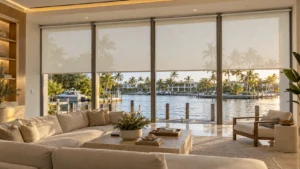
Motorized shades are another major variable. Lutron shading solutions are frequently paired with lighting control because both systems shape comfort, privacy, glare reduction, and the appearance of a room. A shade package can add significantly to the scope, particularly when windows are oversized, fabric selection is specialized, or recessed pockets and wiring must be planned during construction.
RadioRA 3 vs. HomeWorks: Choosing the Right Platform
Lutron offers multiple lighting-control platforms, but two are especially relevant for custom residential projects: RadioRA 3 and HomeWorks.
RadioRA 3 is well suited to many established homes, condos, and targeted renovations. It uses a combination of wireless and wired communication, allowing professional integrators to expand control without opening every wall. It can provide elegant keypad control, whole-home scenes, app access, and integration with compatible smart-home systems. For many homes, it offers the right balance of capability and project scope.
HomeWorks is designed for larger, more complex properties and new construction projects where a fully engineered lighting and shading infrastructure is desired. It supports a greater number of loads, keypads, shades, and advanced system integrations. It is often the preferred choice for properties with extensive architectural lighting, multiple structures, detailed scene requirements, and a centralized technology approach.
Neither platform is automatically the right answer because one is more advanced. The best choice is the one that supports the property now and leaves room for the way the owner plans to live in it over time. Installing a platform that is undersized can limit future expansion. Specifying more infrastructure than the home needs can add unnecessary scope. Professional design is what brings those decisions into balance.
New Construction and Renovations Affect Installation Costs
The timing of the project has a direct impact on the final investment. In new construction or a full renovation, low-voltage wiring, panel locations, shade pockets, keypad backboxes, and equipment spaces can be planned before drywall and finishes are complete. That approach usually produces the cleanest result and gives the design team the greatest flexibility.
In an existing home, wireless controls can make a substantial upgrade possible with limited disruption. Even so, a retrofit may require additional site evaluation. Wall construction, existing dimming compatibility, fixture types, electrical box capacity, Wi-Fi coverage, and access to equipment locations all affect the installation plan.
Fixtures deserve particular attention. Not every LED fixture dims the same way, and a lighting system can only perform as well as the fixtures and drivers connected to it. A qualified integrator evaluates compatibility early, especially when the project includes decorative pendants, imported fixtures, low-voltage lighting, or specialty LEDs. Resolving these issues before installation protects the appearance of the lighting and prevents the flicker, pop-on, limited dimming range, or inconsistent behavior that can frustrate homeowners after a renovation is complete.
What Professional Design and Programming Add
A Lutron project should not end when the devices are installed. The final result depends on programming and commissioning: defining scenes, setting dimming levels, labeling controls, testing communication, and making sure the system responds consistently throughout the property.
For example, an Entertain scene may illuminate kitchen task lighting, soften dining fixtures, activate accent lighting, and set exterior areas for guests. A Goodnight command can turn off selected lights, close shades, and notify the larger automation system that the home is transitioning to nighttime mode. These scenes should feel intuitive, not overly complicated.
Integration can increase the project cost, but it also increases the practical value of the system when designed correctly. Lutron lighting may be coordinated with motorized shades, whole-home audio, security, surveillance, climate controls, pool areas, and centralized smart-home control. The goal is not to place every feature on one screen. It is to create dependable control that makes everyday routines easier.
That work also includes clean installation standards that homeowners may not see once the project is complete: organized equipment, documented wiring, properly labeled components, network planning, and a clear service path if a future update is needed. These details are especially valuable in larger homes where several systems must work together without confusion.
How to Plan an Accurate Investment Range
The fastest way to move from a broad estimate to a reliable number is to begin with a walkthrough and a clear conversation about how each space will be used. A professional proposal should identify the controlled areas, the desired keypad locations, shade needs, exterior zones, fixture compatibility concerns, and any required integration with other technology systems.
Before requesting pricing, it helps to know whether the project is a new build, renovation, or occupied-home upgrade; which rooms need scene control; whether shades are part of the plan; and whether lighting should coordinate with security, audio/video, or outdoor entertainment. Architectural plans, reflected ceiling plans, lighting schedules, and interior elevations are especially useful when available.
A lower initial equipment figure is not always the lower long-term investment if it leaves out programming, documentation, testing, or support. A complete system proposal should make clear what is included, where future expansion is possible, and who is responsible for performance after installation.
For homeowners planning a lighting upgrade in South Florida, the most productive next step is a site-specific design consultation. Sentry Audio Video can evaluate the home, coordinate with the project team, and build a Lutron solution that delivers refined control, clean workmanship, and dependable performance from the first keypad press.