A well-designed lighting system should feel less like another app to manage and more like a natural part of the property. Understanding how voice lighting responds helps homeowners and business owners see the difference between a simple spoken command and a fully integrated experience that anticipates the way a space is used.
When someone says, “Turn on the kitchen lights,” the visible result appears immediate. Behind that response, however, several systems must work together correctly: the voice assistant must recognize the request, the automation platform must interpret it, the lighting control system must receive the instruction, and the correct fixtures must respond at the intended level. The quality of that experience comes down to system design, programming, network reliability, and professional installation.
How Voice Lighting Responds to a Spoken Command
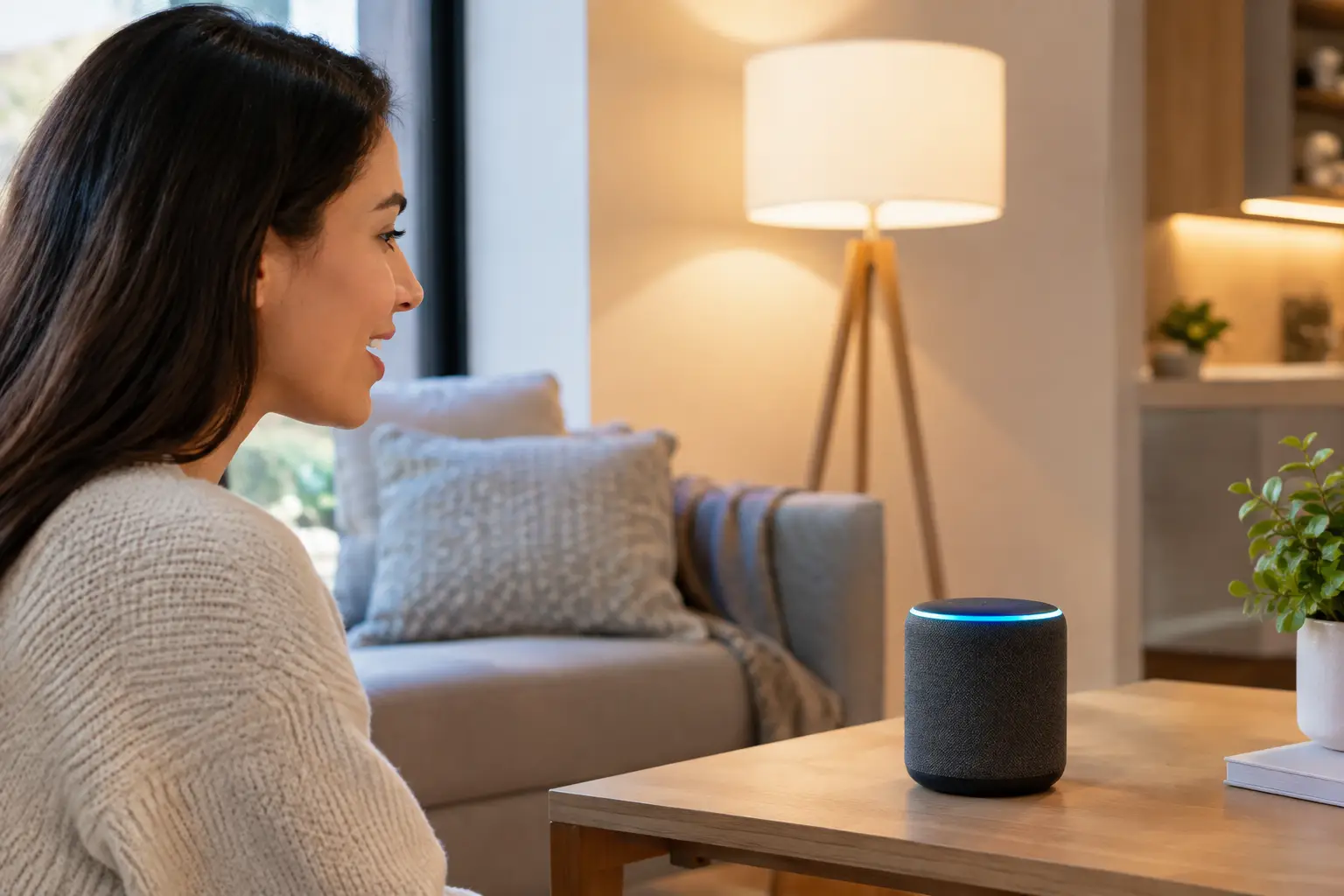
Voice control begins with a microphone-equipped device or integrated control interface listening for a wake phrase. Once activated, it captures the command and sends it to the connected voice service for interpretation. The service identifies the action, such as turning lights on, off, brighter, warmer, or setting a scene.
The command is then handed off to the property’s lighting control platform. That platform determines what “kitchen lights,” “patio,” or “downstairs” means within the specific project. In a properly programmed system, those names are not vague labels. They correspond to defined lighting loads, keypads, dimmers, fixture groups, or preset scenes.
Finally, the lighting system sends the appropriate signal to the dimming modules, switches, drivers, or smart fixtures. Depending on the technology used, the response may travel over wired control infrastructure, a professionally designed wireless network, or a combination of both. The lights then fade to the requested level rather than simply snapping on and off, creating a more polished result.
This chain happens in seconds. Yet it explains why voice control can feel inconsistent when it is added without a complete plan. A command may be recognized correctly but mapped to the wrong room, delayed by network issues, or blocked by a device that is no longer communicating with the system.
Voice Control Is About More Than On and Off
The most useful voice lighting commands are typically tied to how a household or business operates. Individual fixture control has its place, but scenes create the experience clients expect from a premium smart property.
A homeowner might say, “Good morning,” and trigger kitchen lighting at a comfortable level, open motorized shades, and activate selected common-area lights. At night, “Goodnight” can turn off interior lighting, leave a safe pathway illuminated, close shades, and prepare the home for rest. The command is simple because the programming handles the complexity.
In outdoor living areas, a phrase such as “Entertain outside” can establish lighting for a patio, pool area, dining space, and landscape accents without requiring multiple instructions. The right scene balances visibility, atmosphere, and safety. It also avoids the common problem of overlighting a space with every fixture at full intensity.
For commercial environments, voice lighting control can be valuable in conference rooms, hospitality settings, and executive spaces. A command such as “Start presentation” can lower lighting near a display while preserving sufficient room illumination for note-taking and safe movement. A closing command can return common areas to an after-hours lighting profile.
The advantage is not that voice replaces every control method. It is that it gives people another intuitive way to operate a system that is already carefully organized.
What Determines Whether the Response Feels Reliable?
A voice-controlled lighting system is only as dependable as the infrastructure supporting it. Professional integration addresses the details that are easy to overlook during planning but highly noticeable after move-in.
Clear Naming and Intelligent Programming
Voice assistants work best when rooms, zones, and scenes have clear, distinctive names. A property with “Living Room,” “Main Living,” “Great Room,” and “Family Area” may create confusion if those names overlap in everyday conversation. The programming should reflect how the client naturally refers to each area.
This is also where an experienced integrator adds real value. A client may ask for “outside lights,” but that could mean landscape lighting, patio downlights, pool-area illumination, entry lighting, or all exterior zones. The system can be designed to recognize useful variations while preserving predictable results.
A Stable Network and Control Backbone
Voice commands often depend on network communication. If wireless coverage is uneven, if equipment is poorly placed, or if the network has not been engineered for connected devices, response times can suffer. A command that works intermittently quickly becomes frustrating.
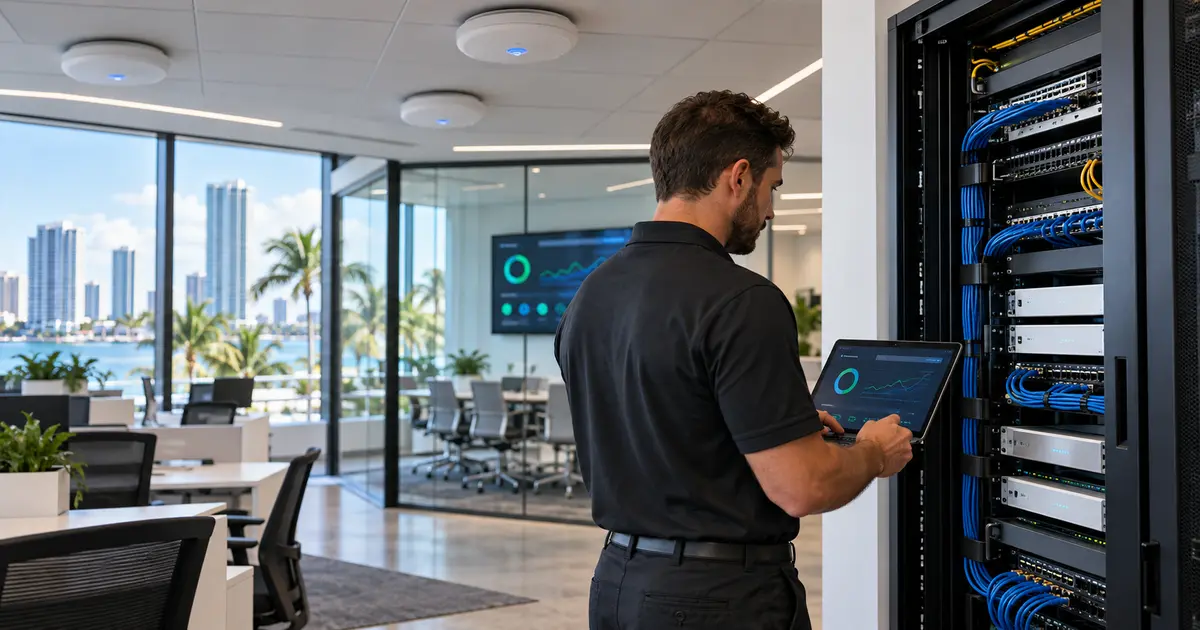
For larger homes and commercial properties, a purpose-built network and structured cabling plan support far more than lighting. They provide the foundation for audio/video, surveillance, shades, access control, communications, and automation. This approach gives each system the reliable connectivity it needs rather than forcing complex technology onto an unreliable network.
The Right Dimming and Fixture Compatibility
Not every light source dims in the same way. Fixture type, driver quality, dimming protocol, and load compatibility all affect whether lights fade smoothly, respond consistently, and remain free from flicker or audible noise.
This matters especially in high-end spaces with decorative pendants, recessed architectural lighting, LED tape, landscape fixtures, and specialty lighting. The control system must be matched to the equipment it operates. Otherwise, a perfectly understood voice command can still produce an unsatisfactory lighting result.
Thoughtful Fail-Safes and Physical Controls
Voice is convenient, but it should not be the only way to control a room. Keypads, wall controls, touchscreens, and mobile access remain essential. They provide immediate operation when someone prefers tactile control, when the home is busy, or when a voice service is temporarily unavailable.
A professionally designed system also retains practical control during network interruptions. The goal is not to make the property dependent on one interface. The goal is to make every interface work together.
Where Voice Lighting Can Be Especially Valuable
Voice lighting is particularly effective when hands are occupied or when a quick adjustment improves comfort. In the kitchen, it can control task and ambient lighting while cooking or hosting. In a home theater, it can bring lights to an intermission level without interrupting the viewing experience. At an entryway, it can illuminate a path when arriving with guests or carrying packages.
It can also support accessibility. For residents with limited mobility, voice control can reduce the need to reach switches throughout the property. The system should still be tailored to the individual, with straightforward phrases and reliable alternate controls.
For second homes and seasonal properties in South Florida, voice commands become more valuable when they are part of broader remote monitoring and automation. Owners can establish arrival scenes, manage lighting while away, and create a lived-in appearance without needing to adjust each zone individually.
The Limits of Voice Control
Voice control is powerful, but it is not always the preferred answer. In a loud gathering, a keypad may be faster. In a bedroom, speaking commands can be disruptive if someone is asleep. In shared offices, verbal commands may not suit the environment or privacy expectations.
There is also a difference between convenience and over-automation. A useful system does not force occupants to remember elaborate phrases for ordinary tasks. The most successful designs reserve voice commands for natural, repeatable requests and use keypads, sensors, schedules, and scenes to handle the rest.
Occupancy sensors can automatically brighten a hallway or powder room when someone enters. Scheduled programming can adjust exterior lighting based on time of day. Keypads can provide one-touch control at the door. Voice then becomes an added layer of flexibility, not a workaround for poor design.
Designing Lighting Around the Way You Live
The strongest lighting systems begin with a conversation about the property itself. Which rooms are used most often? Where do family members gather? What should happen when guests arrive, when the home is secured for the night, or when entertaining moves outdoors? The answers shape the scenes, voice phrases, control locations, and hardware selection.
Sentry Audio Video approaches voice lighting as part of a complete environment, not as an isolated feature. Lighting can be coordinated with motorized shades, entertainment systems, security settings, and centralized control so the property responds with consistency and purpose.
The right voice command should feel effortless because the planning behind it was thorough. When every zone is named clearly, every fixture is properly controlled, and every scene supports the way you use the space, lighting becomes one less thing to think about.