A luxury home should not require a collection of remotes, separate apps, and repeated trips to equipment closets just to set the right mood. A properly designed Smart Home Palm Beach system brings the technology throughout your property into one intuitive experience – from the front gate and family room to the patio, pool area, and primary suite.
The difference is not simply adding more devices. It is designing a system around how your household actually lives, entertaining patterns, architectural details, privacy expectations, and the level of control you want every day. For Palm Beach homeowners, that often means pairing elevated comfort with dependable security and outdoor performance that stands up to the demands of South Florida living.
What a Smart Home Should Actually Do
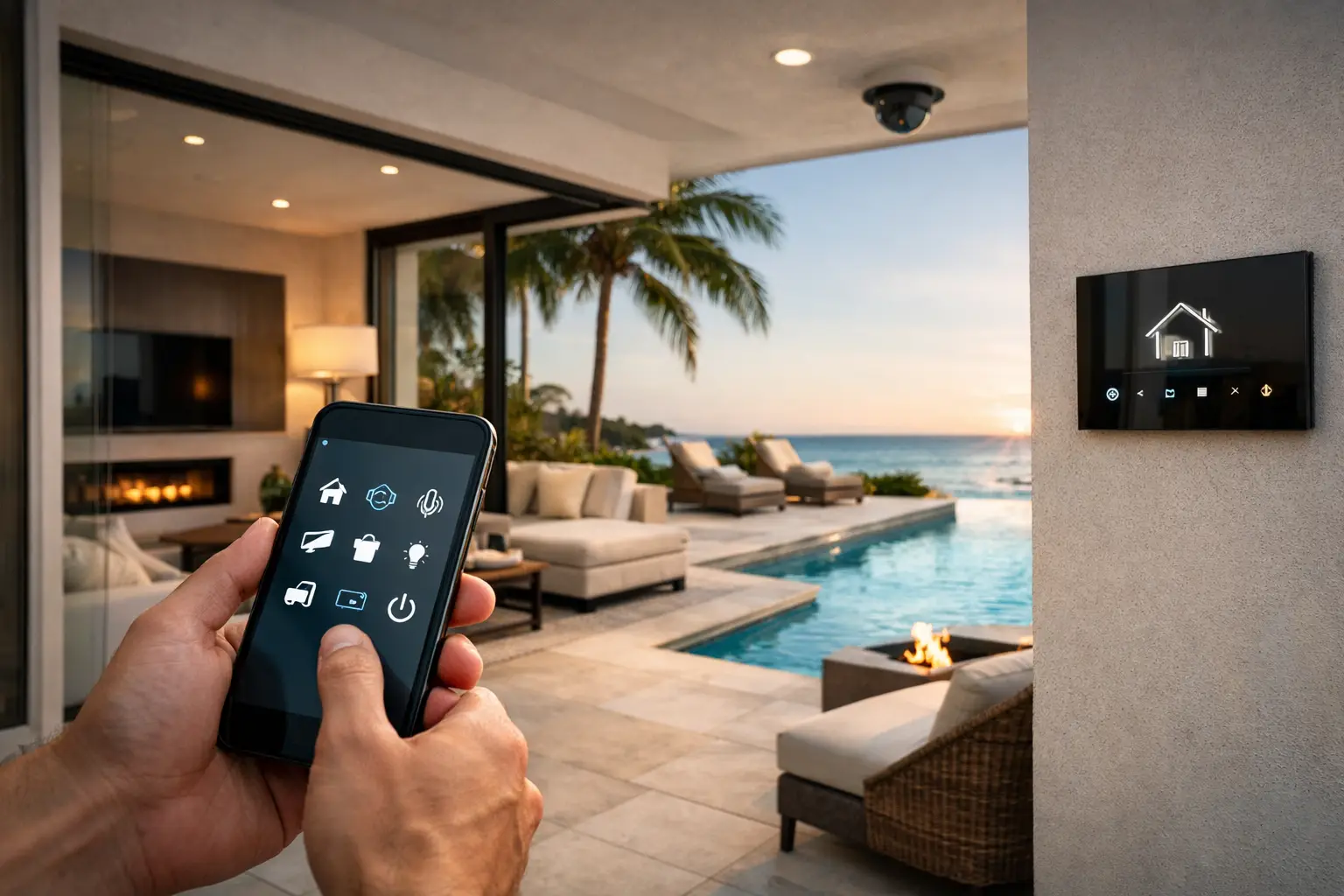
A smart home is often described as a home controlled from a phone. That description is incomplete. Phones are useful, but a professionally integrated residence should work naturally through elegant wall keypads, touch panels, voice control where appropriate, and thoughtfully programmed automations.
At its best, the system reduces friction. A single command can lower motorized shades, adjust lighting, begin music in the living area, and prepare the television or theater for a movie. When you leave, another command can turn off selected systems, arm security, close shades, and confirm that exterior access points are secure.
The goal is not to automate every action for its own sake. A quality design focuses on the moments that happen often and should feel effortless: arriving home, hosting guests, moving between indoor and outdoor spaces, winding down at night, or checking on the property while traveling.
Smart Home Palm Beach Design Starts With the Property
No two residences have the same technology needs. An oceanfront property may prioritize privacy, access control, surveillance coverage, and motorized shading that protects interiors from intense sun. A family home may need easy whole-house music, reliable wireless coverage, viewing access for cameras, and room controls that guests can understand without instruction. A seasonal residence may place greater emphasis on remote monitoring and simple away-mode control.
That is why custom design matters. Before equipment is selected, an experienced integrator evaluates the home’s layout, construction stage, equipment locations, network requirements, outdoor zones, and the owner’s daily routines. The system should fit the architecture, not compete with it.
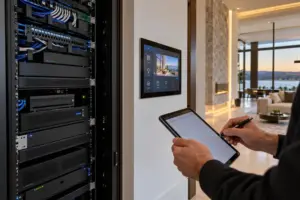
For renovations and new construction, early planning is especially valuable. Structured cabling can be placed where it will support displays, access points, cameras, speakers, control interfaces, and future expansion without visible wire runs or unnecessary disruption later. The cleanest installation is usually the one considered before walls and ceilings are finished.
Entertainment That Feels Present, Not Complicated
Whole-house audio is one of the most immediately satisfying parts of a smart home. Music can follow you from the kitchen to the patio, with independently controlled zones when different areas call for different listening experiences. Architectural speakers can deliver full sound while preserving the visual character of the room.
Video distribution provides a similarly refined experience. Instead of adding multiple source devices and cables at every display, a centralized system can make selected content available throughout the residence. The details depend on the property and how each room is used, but the objective remains the same: familiar, consistent control wherever you watch.
Dedicated home theaters and media rooms deserve even more planning. Screen size, seating placement, projector or display selection, speaker positioning, acoustic conditions, lighting scenes, and shade control all influence the final result. Premium equipment matters, but performance depends on how those components are engineered to work together in the room.
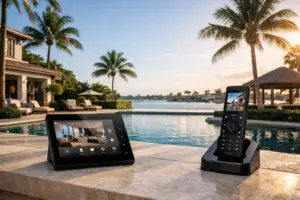
Outdoor entertainment should receive the same attention. Palm Beach homes are designed for patios, pools, summer kitchens, and waterfront gatherings. Weather-rated audio, discreet landscape speakers, outdoor displays, and zone-based control can make these spaces as enjoyable after sunset as they are during the day. Equipment selection and installation practices must account for heat, humidity, salt air, and direct exposure rather than treating the exterior as an afterthought.
Security, Access, and Awareness in One View
Security technology is most valuable when it is easy to use and reliably integrated into the broader home. Video surveillance, door stations, gate access, intrusion detection, and monitored fire systems can be designed as coordinated layers rather than isolated products.
For example, when someone arrives at a gate or front entry, the homeowner can receive a notification and view the visitor through a touch panel or mobile interface. The right solution may allow authorized access while keeping a record of activity. Camera views can be brought up quickly from a central control system, especially useful for larger properties with multiple entrances, garages, guest areas, or dock access.
Privacy should be part of the planning conversation. Camera placement must provide meaningful coverage without intruding on private spaces, and access permissions should be tailored for family members, staff, and property managers. A well-designed system gives the owner awareness without making the home feel overly technical or restrictive.
Remote access is valuable for many Palm Beach property owners, particularly those who divide time between homes. It can provide status checks, notifications, and control while away. However, remote access is only as dependable as the underlying network and cybersecurity practices. The technology infrastructure cannot be an afterthought.
The Network Is the Foundation of Every Connected System
When a home has streaming video, surveillance cameras, wireless control, distributed audio, motorized shades, and connected security, the network carries a major share of the load. An unreliable network can make excellent equipment appear unreliable.
Professional network design considers coverage, capacity, hardwired connections, secure segmentation, and equipment management. Large residences, concrete construction, outdoor living areas, and detached structures can all create coverage challenges that standard wireless setups often fail to address. A tailored design places access points and network hardware strategically, with wired infrastructure supporting the most critical devices.
Cybersecurity also deserves attention. Secure credentials, protected remote access, timely updates, and separation between certain system categories help protect the home’s connected environment. This is not about creating complexity for the homeowner. It is about making the experience stable, private, and easier to support over time.
Automation Should Follow Your Routine
The most successful automation is quietly useful. It does not need to announce itself. A morning scene might raise selected shades, set lighting levels, and play audio in common areas. An evening scene can create comfortable lighting, close privacy shades, and activate outdoor entertainment zones for guests.
There are trade-offs. Fully automatic routines can be convenient, but they must account for real life. A schedule that works on weekdays may be wrong on weekends. Sunlight conditions vary by season and room orientation. A homeowner may want shades to respond to heat and glare in one area while keeping a water view open in another.
That is why control should remain simple even when automation is sophisticated. Homeowners should be able to override a scene easily, make adjustments without technical knowledge, and trust that common actions will work consistently. Good programming respects personal preference instead of forcing the household to adapt to the system.
Choosing an Integration Partner in Palm Beach
Technology integration is not a one-time equipment purchase. It is a design, installation, programming, testing, and support relationship. The right partner should be able to take responsibility across entertainment, security, networking, controls, shades, and infrastructure rather than leaving the owner to coordinate multiple disconnected vendors.
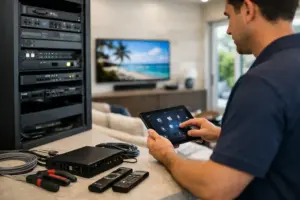
Ask how the company approaches proposals and system design. A professional recommendation should explain what the system will do, where equipment will live, how the technology will be controlled, and what ongoing support looks like. Ask about workmanship as well. Rack organization, cable labeling, equipment ventilation, discreet speaker placement, and clean finish details affect both performance and long-term serviceability.
It is also reasonable to ask how the system can grow. A home may begin with audio, surveillance, and lighting control, then add a theater, outdoor zones, or additional automation later. A scalable plan protects the investment and avoids redesigning the foundation each time the property changes.
Sentry Audio Video approaches each project as a complete environment, with the technical depth to coordinate lifestyle technology, security, and the infrastructure behind them. The result should feel polished from the first walkthrough through daily use.
A smart home should make a Palm Beach residence more enjoyable, more secure, and easier to manage without turning technology into another responsibility. The right design leaves you with fewer decisions to make and more time to enjoy the spaces you invested in.