
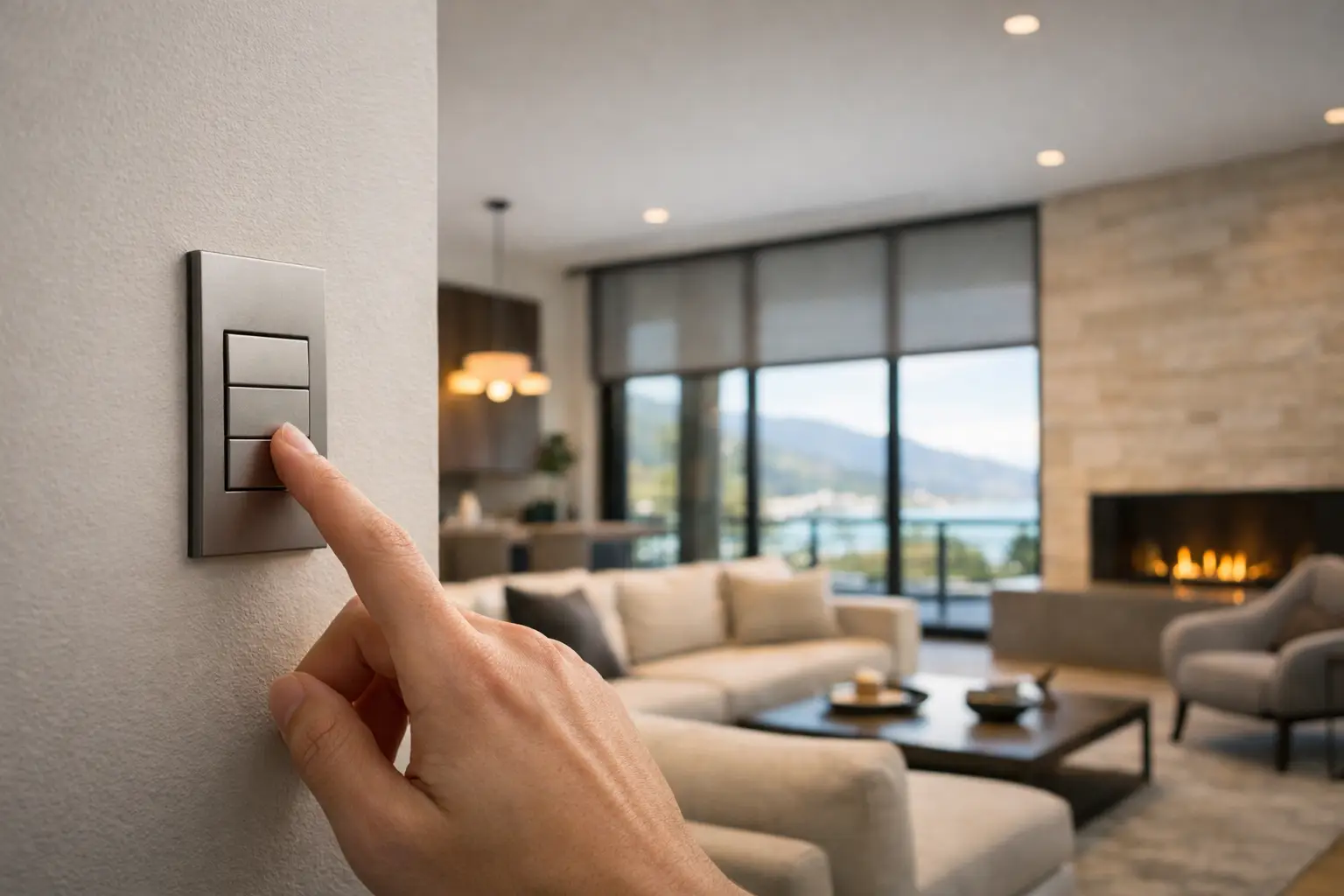
A luxury home can have exceptional architecture, custom millwork, and carefully selected finishes, then lose its sense of refinement with a wall crowded by mismatched control devices. That small visual interruption is one reason why Luxury Homes Are Switching to Lutron Palladiom. These architectural keypads bring lighting, shades, and selected home controls into a format designed to complement the room rather than compete with it.
Palladiom is not simply a premium light switch. It is an interface intended for homes where every material, sightline, and daily interaction has been considered. For homeowners building or renovating in South Florida’s coastal communities, where expansive glass, motorized shades, and layered lighting are common, the value is both immediate and practical: less wall clutter, clearer control, and a finished appearance that belongs with the rest of the home.
Why Luxury Homes Are Switching to Lutron Palladiom
The first reason is architectural consistency. Standard keypads often look like an afterthought, especially in rooms with natural stone, textured wallcoverings, specialty plaster, or custom wood paneling. Palladiom keypads are designed with a restrained profile and premium finishes, including metal, glass, and other carefully considered material options. The control becomes part of the design language instead of a necessary compromise.
That matters because luxury homes are increasingly designed as complete environments. Lighting, window treatments, audio, climate, security, and outdoor spaces all need to work together without introducing visual noise. A refined keypad at the entry, bedside, kitchen, great room, and patio provides a consistent point of interaction across the property.
The second reason is that homeowners want simple control without sacrificing capability. A single Palladiom keypad can activate a lighting scene, adjust shades, turn on selected entertainment zones, or place the home in an evening or away setting. Rather than asking guests or family members to understand multiple apps and devices, the most important functions are available where people naturally use them.
This is especially valuable in larger residences. A homeowner should not need to walk through several rooms to prepare the house for entertaining, close shades at sunset, or set the proper lighting for a late-night arrival. Thoughtful programming puts these actions behind clear, personalized buttons.
It Delivers a More Considered Experience, Not More Technology
The appeal of Palladiom is not that it adds another control layer. It reduces friction. A well-designed system gives each room an intuitive set of choices based on how that space is actually used.
In a kitchen, controls may include bright task lighting, an entertaining scene, pendant lighting, and shade positions that manage afternoon glare. In a primary suite, the keypad may provide reading lights, a full-room off command, bedside shade control, and a nighttime path-light scene. At an entry, a single command can welcome the household with exterior lighting, interior illumination, and a preferred shade position.
The details are what separate a professionally designed control system from a collection of products. Button labels should be understandable at a glance. Scene levels should feel natural. Keypad locations should be convenient, not merely available. A qualified integration team evaluates circulation patterns, daylight, furniture placement, architectural drawings, and the homeowner’s routines before finalizing the programming.
Palladiom Supports the Shift Toward Layered Lighting
Luxury lighting design is rarely based on one overhead fixture per room. It uses layers: ambient illumination for general visibility, task lighting for functional areas, accent lighting for art and architecture, and decorative fixtures that establish character. Palladiom helps make those layers usable.
Without proper control, a sophisticated lighting plan can become inconvenient. A wall of individual dimmers may technically manage every load, but it does not make the room easy to live in. Scene control allows multiple fixtures to respond together at intentionally selected levels. The room can transition from daytime activity to dinner, entertaining, or relaxation with a single press.
This also preserves the designer’s original intent. Many homeowners initially use every circuit at full brightness because that is the fastest option. With professionally tuned scenes, each setting brings out the warmth, texture, and depth of the space without requiring constant adjustment.
The same principle applies to motorized shades. In homes with large windows and waterfront exposures, shades are central to comfort, privacy, and protecting interiors from harsh sun. Integrating them with lighting means the home can respond as one environment. A sunset scene can lower shades, reduce interior lights to a comfortable level, and prepare living areas for the evening.
The Materials Matter as Much as the Controls
Palladiom’s design appeal is closely tied to its material options and fine detailing. Luxury homeowners and design professionals are accustomed to specifying finishes with purpose. Cabinet hardware, plumbing fixtures, door levers, stone, and wall treatments are selected to create a coherent result. Keypads deserve the same consideration.
A keypad in a polished metal finish may complement contemporary hardware in a Miami Beach residence. A darker, quieter finish may suit a modern coastal home in Boca Raton. Glass options can work beautifully in clean-lined spaces where visual lightness is the priority. The right choice depends on the wall finish, adjacent fixtures, and the level of contrast the design calls for.
There is a practical trade-off to consider. Premium architectural controls should be selected early, ideally while lighting plans and finish schedules are being developed. Waiting until the final stage of construction can limit placement decisions, create avoidable coordination issues, or result in controls that do not match the design vision. Early collaboration between the homeowner, interior designer, builder, electrician, and technology integrator produces the strongest result.
Why Professional Integration Is Essential
Palladiom is at its best within a properly engineered Lutron lighting and shading system. The keypad is the elegant, tactile part the homeowner sees, but performance depends on what happens behind the walls and in the system design.
That includes identifying every lighting load, specifying the correct control hardware, planning low-voltage infrastructure where appropriate, coordinating shade pockets and power, and ensuring control locations are logical. It also includes programming the scenes, testing each space, and making refinements after the family has lived with the system.
A luxury home may include detailed lighting fixtures, motorized treatments, distributed audio, outdoor entertainment, surveillance, and access control. These systems should feel coordinated, but not every function needs to appear on every keypad. Overloading a keypad with options makes it less intuitive. The right approach is to reserve physical controls for the functions that benefit from immediate access, while using a central control interface for deeper adjustments.
Reliability is another major consideration. Homeowners expect a wall keypad to work every time, whether it is controlling a single room or calling up an entire-home scene. Proper installation, clean programming, network planning, and ongoing support are what turn premium equipment into a dependable daily experience.
Palladiom Is Not the Right Answer for Every Space
Palladiom is an architectural choice, and it should be used intentionally. Utility areas, secondary closets, garages, and other highly functional spaces may be better served by simpler controls. Not every room requires a premium keypad, and applying one everywhere without a plan can dilute the investment.
The strongest projects use Palladiom in the visible, high-use areas where design and experience matter most: main living spaces, entries, primary suites, formal dining rooms, entertaining areas, and prominent hallways. Supporting spaces can use complementary controls selected for function and consistency.
Homeowners should also distinguish between a keypad’s appearance and the system behind it. Beautiful controls cannot compensate for incomplete lighting design, poorly placed shades, or programming that does not match the way the household lives. The goal is not to specify a product for its own sake. The goal is to create a home that responds gracefully and predictably.
A Better First Step Than Choosing Finishes
Before selecting a Palladiom finish, begin with a control plan. Walk through the home room by room and identify the moments that should be effortless: arriving home, starting the day, entertaining, watching a movie, preparing for bed, securing the property, and managing sun exposure.
From there, determine which lighting and shade scenes belong at each location and which controls are better handled through a centralized interface. This process keeps the system focused on real life rather than adding features that rarely get used.
For a new build or major renovation, bringing an experienced integrator into the project before walls are closed protects the design, simplifies coordination, and gives every control a clear purpose. Palladiom earns its place when it feels like it was always meant to be part of the home.