A lighting control system rarely fails all at once. More often, a keypad begins responding inconsistently, a dimmer develops an audible buzz, a replacement part becomes difficult to source, or a once-simple lighting scene no longer reflects how your home is used. If you are asking, “When Should I Upgrade My Aging Lutron Lighting,” the right answer is usually not based on the system’s age alone. It is based on reliability, supportability, and whether the system still delivers the comfort and control your property deserves.
Lutron has built a strong reputation for lighting control, and many legacy installations continue to perform well for years. Still, even a quality system reaches a point where maintenance becomes reactive, functionality becomes limited, and a carefully planned modernization offers more value than another isolated repair. For homeowners in South Florida, where seasonal occupancy, hurricane preparation, and expansive indoor-outdoor living add real demands to a property, dependable lighting control is more than a convenience.
When Should I Upgrade My Aging Lutron Lighting?
The clearest reason to upgrade is recurring unreliability. If lights fail to respond consistently to wall controls, scenes activate incorrectly, devices drop offline, or certain areas require repeated service calls, the system is signaling that it needs more than a quick adjustment. One failed device is not necessarily a reason to replace an entire system. Repeated issues across multiple rooms are different.
Support status also matters. Legacy processors, keypads, dimmers, interfaces, and communication components may be discontinued or increasingly difficult to obtain. A system can appear to work perfectly until one essential component fails. At that point, a replacement may require a workaround that affects appearance, programming, or system performance.
An upgrade also makes sense when your lifestyle has outgrown the original design. A lighting system installed for a home ten or fifteen years ago may not account for newly remodeled spaces, outdoor entertaining areas, motorized shades, expanded security, or the desire for unified control from an elegant keypad or mobile interface. If the system no longer feels intuitive, it is no longer doing its job as well as it should.
Signs Your Current System Is Becoming a Liability
Aging equipment does not automatically mean poor equipment. The question is whether its limitations are creating friction in daily use or unnecessary risk for the property. Pay attention to small issues before they turn into a larger interruption.
Frequent bulb flickering or inconsistent dimming can be a warning sign, particularly after LEDs have replaced older lamp types. LED fixtures and retrofit lamps have different load characteristics, and legacy dimming modules may not deliver the smooth low-end performance expected in a premium residence. Sometimes the solution is selecting compatible fixtures or adjusting settings. In other cases, the dimming hardware itself is no longer the right match.
Another sign is an increase in service dependency. If only one person in the household understands which controls operate which lights, or if every change requires a service visit because the programming platform is too limited, the system has become harder to live with. Quality technology should reduce complexity, not create it.
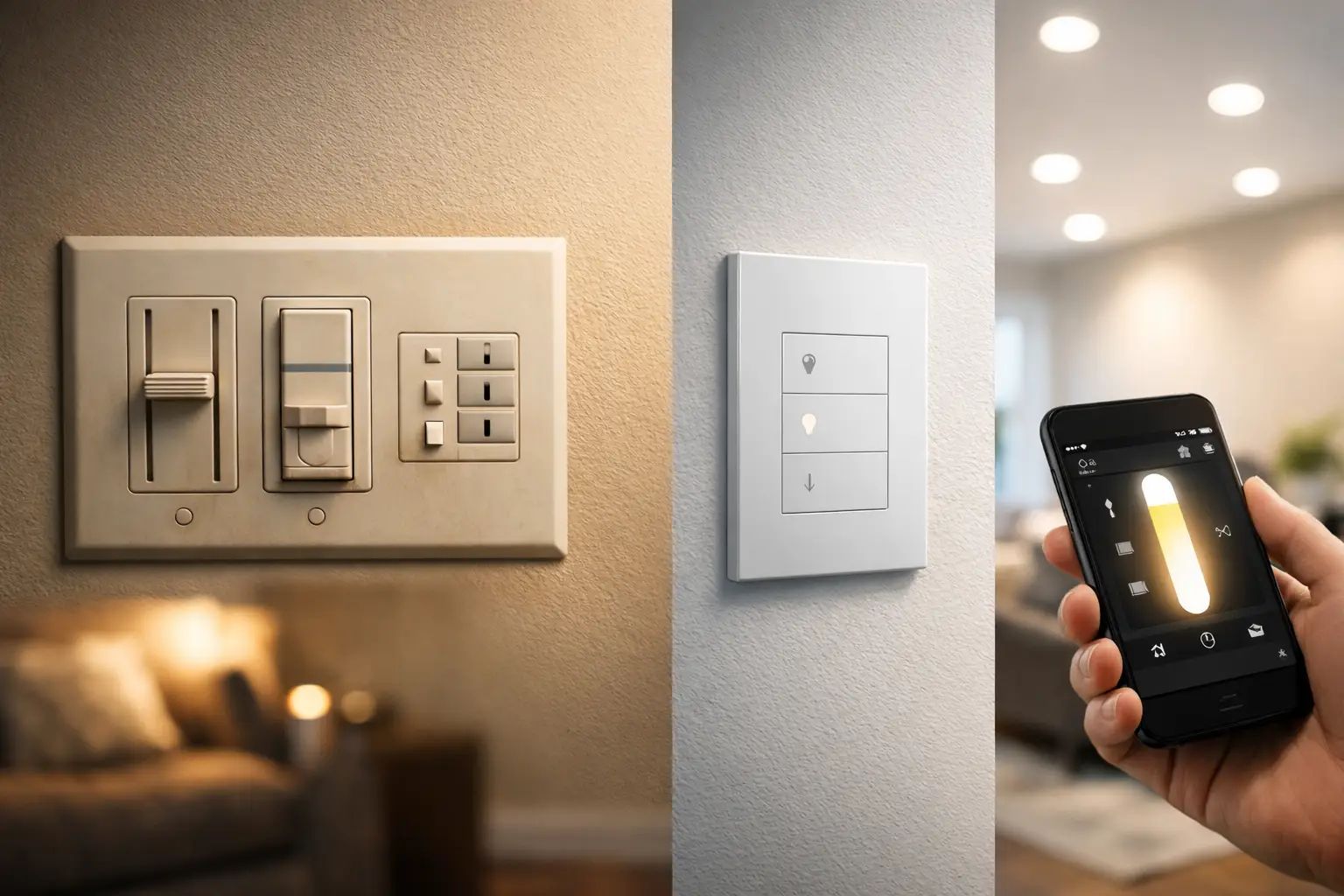
Appearance can be a practical concern as well. Worn, mismatched, or dated keypads can undermine an otherwise refined interior. During renovations, homeowners often discover that the original keypads, faceplates, and control locations no longer complement the architecture or new finishes. Updating the control layer can improve both usability and the visual consistency of a space.
What a Modern Lutron Upgrade Can Improve
A thoughtful upgrade is not simply a swap of old controls for new ones. It is an opportunity to revisit how light supports the way each room is used. The goal is to create consistent, responsive, and elegant control while protecting the investment already made in the home.
Modern Lutron lighting control can consolidate multiple circuits into clear, personalized scenes. A single command can set the right level for entertaining, dining, reading, late-night movement, or arriving home. Rather than walking from room to room adjusting individual switches, the home responds as one coordinated environment.
Integration is another major benefit. Lighting may be programmed to work alongside motorized shades, security systems, climate controls, and whole-home audio/video. For example, an evening scene can lower shades, adjust interior and landscape lighting, and prepare the entertainment areas without requiring separate apps or banks of wall controls. The value is not in adding technology for its own sake. It is in making the home feel more intentional and easier to manage.
For properties that are vacant part of the year, updated lighting control can also support a more confident away mode. Scheduled or programmed activity can make the property appear occupied while allowing authorized users to verify and adjust conditions remotely. This should complement a properly designed security strategy, not replace one.
Upgrade the Entire System or Modernize in Phases?
This decision depends on the architecture of the existing system, the condition of its core components, and the scope of any planned renovation. A full upgrade is often the cleanest path when the central processor is obsolete, multiple control types are discontinued, or the home has undergone substantial changes since the original installation. It creates a consistent platform, avoids piecemeal compatibility issues, and gives the system a reliable foundation for future integrations.
Phased modernization can be appropriate when the core infrastructure remains stable and certain areas need attention first. A homeowner may prioritize the main living areas, primary suite, kitchen, exterior spaces, or a newly renovated wing of the property. This approach can preserve working components while moving the system forward in a deliberate sequence.
The trade-off is that hybrid systems require careful design. Not every legacy component communicates cleanly with a newer platform, and a partial solution should never leave the homeowner with confusing controls or an unsupported dependency hidden behind the walls. An experienced integrator evaluates the complete system before recommending a path.
Plan the Upgrade Around Fixtures, Shades, and Architecture
Lighting control performs only as well as the fixtures and loads it is asked to manage. Before selecting dimmers or keypads, assess the lighting itself. Decorative fixtures, recessed lighting, linear LEDs, landscape lighting, and specialty loads may each have different dimming requirements. The most polished result comes from validating compatibility before installation, rather than discovering performance issues after finishes are complete.
Motorized shades deserve the same level of planning. Window treatments affect glare, privacy, heat gain, and the way natural light moves through a room. Pairing shades with lighting scenes creates a more comfortable result throughout the day, particularly in residences with expansive glass, waterfront exposures, or west-facing entertainment spaces.
Control placement is equally important. A keypad should be located where it feels natural at an entry, beside the bed, near a patio door, or in a primary entertaining area. Labels should be clear enough that guests and household staff can use the system with confidence. A beautiful keypad is valuable, but an intuitive one is indispensable.
Do Not Wait for a Complete Failure
Waiting until a critical processor or keypad fails can turn a planned upgrade into an urgent service issue. That pressure limits design choices and may force decisions around availability rather than performance. Planning ahead provides time to review lighting scenes, select finishes, coordinate with designers and other trades, and schedule work with minimal disruption.
This is especially relevant before a renovation. Walls may be open, fixtures may be changing, and the property may already be in a period of transition. It is the ideal time to confirm wiring, update control locations, and build a lighting plan that supports the finished space rather than adapting around old limitations.
For a business, the same principle applies. If a restaurant, office, hospitality space, or showroom depends on lighting to shape the guest experience and support daily operations, aging controls can become an avoidable point of failure. A planned modernization helps protect uptime and maintains a polished environment for clients and staff.
Start With a Professional System Assessment
The first step is not choosing a keypad style or adding another app. It is a complete assessment of the existing Lutron system: the processor, dimming panels, wall controls, connected loads, programming, network environment, and integration points. This reveals what can be retained, what should be replaced, and where an upgrade will create the most meaningful improvement.
Sentry Audio Video approaches lighting control as part of the larger property experience. The right recommendation considers daily use, architectural details, entertainment spaces, shades, security, and the level of support expected after installation. Whether the answer is a targeted modernization or a fully redesigned control system, the objective remains the same: reliable performance, clean execution, and lighting that feels effortless every day.