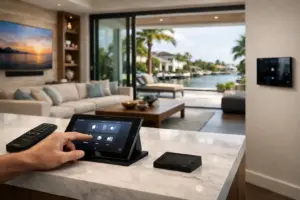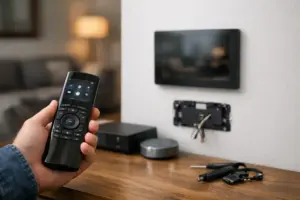
A lighting control decision made during a renovation can affect how your home feels and functions for decades. The right Lutron platform does more than turn lights on and off from a wall keypad. It can coordinate lighting scenes, motorized shades, exterior spaces, climate, and select smart home functions into an experience that is simple for every family member and guest to use.
So, which Lutron system should I buy? For most professionally designed residences, the answer comes down to three platforms: Caséta, RadioRA 3, and HomeWorks. Each is a respected Lutron solution, but they serve very different property sizes, design goals, and levels of integration. Choosing based on the initial room count alone can create limitations later. Choosing based on how you want the entire property to operate is the more reliable approach.
Start With the Scope of Your Property
Before comparing product names, define what you expect the system to control. A single living room with a few lighting zones is very different from a primary residence with layered interior lighting, landscape lighting, motorized shades, guest suites, outdoor entertaining areas, and centralized smart home control.
The most useful questions are practical ones. Do you want elegant keypads that replace banks of switches? Are you planning shades in bedrooms, great rooms, or rooms with expansive glass? Will the property be renovated in phases? Do you want one button to set an evening scene, lower shades, turn on pathway lighting, and prepare the entertainment area?
Also consider the wall conditions. A finished condominium, a major renovation, and new construction each create different opportunities for wiring, panel location, keypad placement, and long-term expansion. Professional planning early in the process helps preserve the clean appearance and dependable performance expected in a premium property.
Which Lutron System Should I Buy? The Short Answer
Caséta is generally well suited to smaller, focused lighting and shade projects. RadioRA 3 is the strong choice for most upscale homes that need more coverage, more keypads, and deeper integration. HomeWorks is the premier platform for large estates, architectural lighting, extensive shade packages, and highly customized control.
For commercial environments, Lutron Vive and Athena may be better fits than the residential platforms. The right choice depends on the type of facility, lighting control requirements, occupancy needs, and the desired level of centralized management.
The platform matters, but the design behind it matters just as much. A capable system will still feel complicated if zones are poorly organized, scenes are not programmed around the client’s routine, or control locations are treated as an afterthought.
Caséta: Focused Control for Smaller Projects
Caséta is Lutron’s most accessible lighting control platform and can be an excellent fit when the project scope is contained. It is often appropriate for a condominium, a second home, a selective lighting upgrade, or a few key spaces where convenience is the priority.
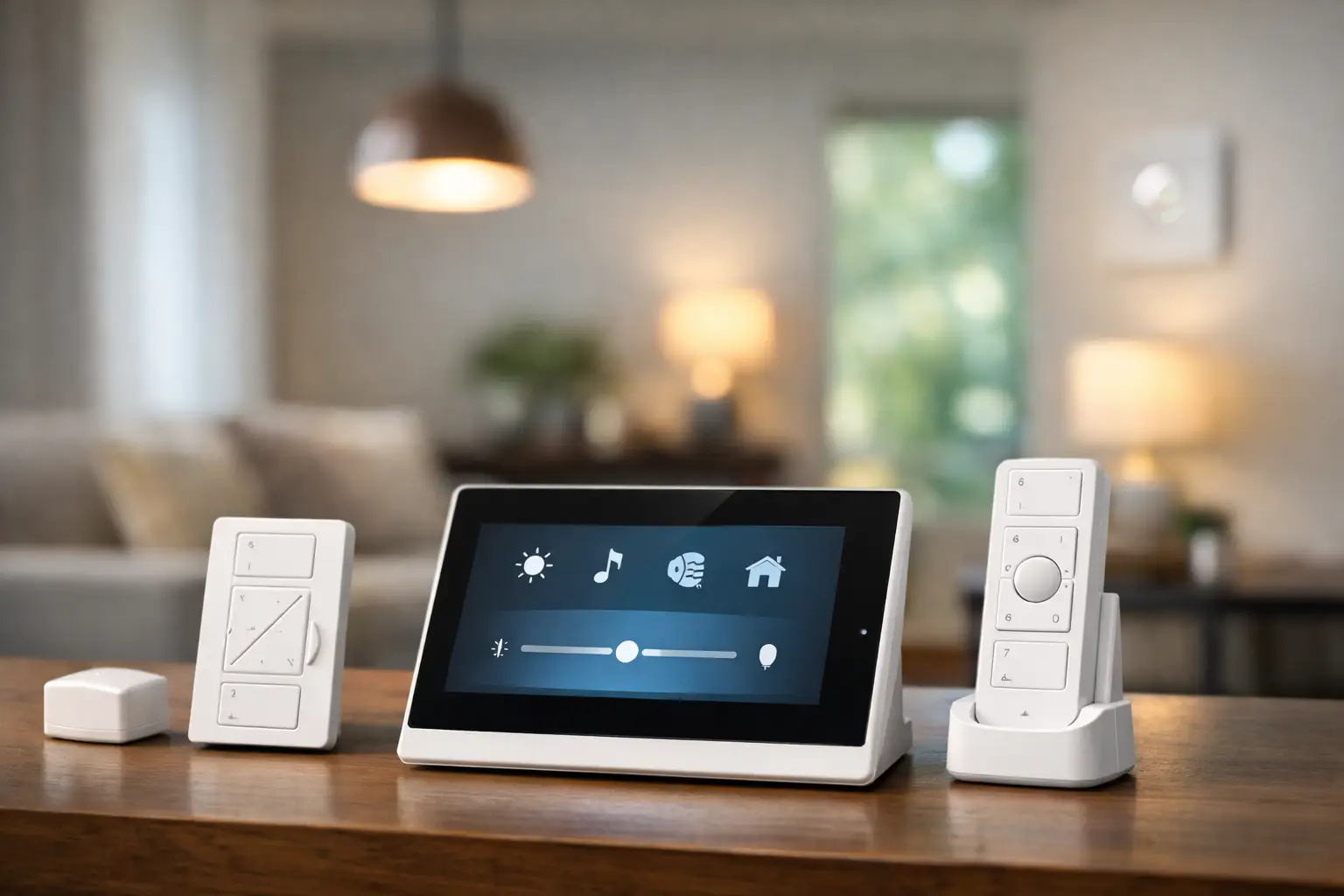
It supports compatible dimmers, switches, Pico controls, selected shade solutions, schedules, and app-based control. For a homeowner who wants dependable scene control in a living room, kitchen, primary suite, or outdoor area, Caséta can deliver a meaningful improvement without designing an extensive whole-property system.
Its trade-off is scale and design flexibility. As lighting loads, keypad needs, and automation expectations grow, Caséta can become less elegant than a platform designed for a larger, more coordinated installation. It may not be the right long-term foundation for a residence with extensive custom lighting, multiple shade groups, several entertainment zones, and plans for a more sophisticated control experience.
Caséta is a sensible answer when the goal is targeted convenience. It is not necessarily the right answer when the goal is a fully unified luxury residence.
RadioRA 3: The Versatile Choice for Established Homes
For many homes in Boca Raton, Fort Lauderdale, and surrounding South Florida communities, RadioRA 3 sits in the practical sweet spot. It brings a more refined keypad experience, broader system capacity, and stronger integration potential without requiring the scope of a full HomeWorks installation.
RadioRA 3 is designed for properties where lighting should work as a connected system rather than a collection of individual controls. It accommodates a larger number of devices and supports Lutron’s Sunnata RF keypads, which provide a clean, contemporary interface for scene selection. Instead of relying on a row of labeled switches, a keypad can present intuitive commands such as Welcome, Entertain, Evening, Goodnight, and Away.
This is also where lighting and shading begin to feel truly coordinated. In a great room, for example, one scene can set accent lighting, lower solar shades to reduce glare, and create the right atmosphere for television or conversation. In a primary suite, a bedside keypad can manage lights and shades without requiring anyone to walk across a dark room.
RadioRA 3 is especially compelling for renovations because it offers significant control capability while reducing the need to run control wiring to every device location. That said, wireless design still requires professional assessment. Construction materials, equipment locations, and the size of the property affect system performance. A proper design accounts for coverage before installation, not after a client discovers an unreliable area.
Choose RadioRA 3 if you want a polished, expandable whole-home lighting and shade system with sophisticated scenes and thoughtful integration into the rest of the property.
HomeWorks: Built for Architectural Ambition
HomeWorks is Lutron’s flagship residential lighting and shade control platform. It is designed for large homes, new construction, substantial renovations, and properties where lighting is central to the architecture and lifestyle.
The difference is not simply more devices. HomeWorks provides a higher level of customization, broader keypad options, deeper design possibilities, and the infrastructure needed for complex lighting control. It is the right conversation when a home includes many rooms, detailed lighting layers, significant shade coverage, detached structures, outdoor living areas, and a desire for exceptional fit and finish.
A HomeWorks design can support keypads with custom engraving and finishes selected to complement the interiors. It can organize a property into highly specific scenes that make sense for the way the family actually lives. Morning routines, arrivals, entertaining, housekeeping, vacation settings, and late-night pathways can all be programmed with a level of detail that feels natural rather than technical.
HomeWorks also provides a better foundation when the lighting plan itself is ambitious. Homes with decorative fixtures, recessed lighting, cove lighting, art lighting, landscape lighting, and specialty loads need careful dimming compatibility and zone planning. The system should be designed alongside the lighting designer, architect, builder, and interior designer whenever possible. That coordination protects the visual intent of the home and prevents a beautiful lighting plan from becoming difficult to operate.
The trade-off is that HomeWorks requires a more involved design process and a larger investment in infrastructure, programming, and commissioning. For the right property, that investment is justified by the finished experience and the flexibility to accommodate future changes.
Do Not Choose Only by Size
Square footage is useful, but it is not the deciding factor. A smaller waterfront residence with floor-to-ceiling glass, motorized shades, layered lighting, and multiple entertaining spaces may call for a more capable platform than a larger home with straightforward switching needs.
Likewise, a client may initially request lighting control but later decide to include whole-house audio, home theater control, security, climate coordination, or pool and backyard entertainment. A system should be selected with the complete technology plan in mind. This does not mean every feature must be installed immediately. It means the design should avoid closing off future options.
A phased plan can be effective when it preserves the infrastructure and system architecture for later stages. The key is to identify those stages before walls are closed and finishes are finalized.
Shades Change the Conversation
Motorized shades are often the factor that moves a project from simple lighting control to a more complete Lutron system. In South Florida, shades can improve comfort in rooms exposed to intense sunlight, protect furnishings, reduce glare, and add privacy without interrupting the home’s design.
They also make scenes more valuable. A media room scene is more effective when shades lower automatically. An afternoon scene in a glass-lined living area can manage daylight while maintaining views. An Away setting can put the property into a consistent, secure-looking state.
Lutron shading solutions should be specified early, particularly for concealed pockets, fascia choices, power planning, and fabric selection. The details have a major impact on the finished look.
The Value of Professional System Design
Lutron equipment is only one part of the result. The real value comes from a system designed around the property, installed cleanly, programmed with purpose, and supported after move-in. Lighting load compatibility, wireless coverage, keypad layouts, shade measurements, panel capacity, and integration requirements all need to be resolved before the final walkthrough.
Sentry Audio Video approaches Lutron projects as part of the larger technology environment. That means considering how lighting and shades interact with audio/video, security, networking, climate, and outdoor living rather than treating each category as a separate project. The result is a more coherent control experience and one accountable partner for system performance.
If your project is a focused upgrade, Caséta may be all you need. If you want refined lighting and shade control across an established home, RadioRA 3 is often the right fit. If your home demands architectural lighting, extensive customization, and a platform built for the long term, HomeWorks deserves serious consideration. The right choice is the one that makes every room easier to enjoy from day one and still fits the way your property will evolve.
Planning a Lutron system? Explore Sentry Audio Video’s Lutron HomeWorks dealer and system-selection services and lighting, shade and pre-wire planning.