When a homeowner presses a single button to start a movie, lower the shades, set the room lighting, and bring theater-quality sound to life, that experience is not created by one product. It is the result of thoughtful AV integration. The same principle applies to a business owner who needs clear communications, reliable displays, controlled music, surveillance, and dependable network access without asking staff to manage a tangle of remotes and apps.
The visible technology matters, but the real value is in how every component works together behind the scenes. A properly planned system makes a property more enjoyable to live in, easier to manage, and better prepared for the demands placed on it every day.
What AV Integration Actually Means
AV integration is the professional design and coordination of audio, video, control, networking, security, and related systems into one purposeful environment. Instead of treating a television, speakers, cameras, shades, lighting controls, and Wi-Fi as unrelated purchases, an integrator designs them as parts of a complete system.
That distinction becomes clear after installation. A room can have premium equipment and still disappoint if the audio is poorly placed, the control platform is confusing, the network cannot support streaming, or the wiring was treated as an afterthought. Great performance comes from the decisions made before walls are closed, furniture is selected, or equipment is mounted.
For a residence, integration may bring whole-home audio, home theater, outdoor entertainment, climate control, motorized shades, surveillance, and centralized control into a unified experience. For a commercial property, it can connect meeting rooms, digital displays, distributed audio, communications, access systems, surveillance, fire alarm coordination, and IT infrastructure. The exact scope changes, but the goal remains the same: technology that supports the way people use the space.
AV Integration Starts With the Property, Not the Equipment
Every successful project begins with questions that have little to do with selecting displays or speakers. How is the property used? Which rooms are used most often? Where do guests gather? What needs to remain simple for family members, staff, or visitors? What needs to keep working when the property owner is away?
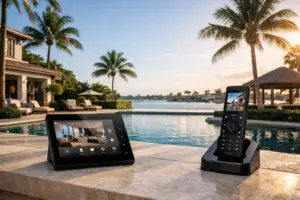
A waterfront home in South Florida may need carefully planned outdoor audio, glare-conscious display placement, strong wireless coverage, and discreet security coverage around entrances, docks, and pool areas. A high-end office or hospitality environment may require easy presentation control, clear zoning for audio, secure communications, and infrastructure that can adapt as operations change.
This discovery process also identifies constraints early. Architectural finishes, ceiling construction, window treatments, equipment closet locations, and furniture layouts all influence the right solution. Waiting until the final stage of a renovation can limit placement options and increase compromises. Early coordination lets the technology complement the design instead of competing with it.
The Infrastructure Behind Reliable Performance
The equipment a client sees is only part of the installation. Dependable performance relies on the structured cabling, network design, power planning, ventilation, equipment organization, and labeling that support it.
A professionally designed system commonly accounts for five essential layers:
- Structured wiring that provides organized pathways for audio, video, controls, cameras, and network connections.
- A managed network built to handle streaming, smart home devices, security systems, and multiple users at once.
- Centralized equipment placement that keeps components accessible, protected, and easier to service.
- Control programming that gives users clear, consistent access to the features they use most.
- Documentation and labeling that allow future service, upgrades, and troubleshooting to be handled efficiently.
These details may not be glamorous, but they separate a polished installation from a collection of components that gradually becomes difficult to operate. They also provide flexibility. A property owner may begin with media-room upgrades and later add cameras, distributed audio, shades, or outdoor zones without rebuilding the foundation.
Control Should Feel Natural, Not Complicated
More technology does not automatically create more convenience. In fact, a poorly designed control experience can make a sophisticated property frustrating to use. The goal is not to place every possible command on a screen. It is to make common actions simple and predictable.
For example, a “Good Night” command might turn off selected entertainment areas, adjust lighting, close shades, and arm designated security functions. In a commercial setting, a meeting-room interface might allow employees to start a presentation, choose a source, control room audio, and end the session without calling IT.
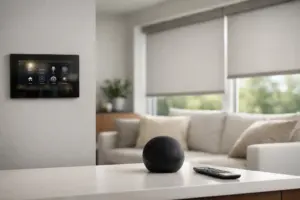
The right control method depends on the client. Some prefer wall keypads in key locations, while others want touchscreens, handheld remotes, or mobile access. Most properties benefit from a combination. The important consideration is consistency: the controls in the theater, bedroom, patio, conference room, or reception area should be intuitive for the people who use them.
Sound and Picture Need More Than Premium Products
A display or speaker may look impressive in a showroom, but a property presents different conditions. Room dimensions, ceiling height, natural light, acoustics, seating positions, and ambient noise all affect the result.
A dedicated theater requires attention to speaker placement, screen size, viewing distance, room treatment, and light control. A family room may call for a more discreet approach that respects interior design while providing clear dialogue and immersive sound. Outdoor spaces bring their own challenges, including weather exposure, coverage areas, and sound containment for neighboring properties.
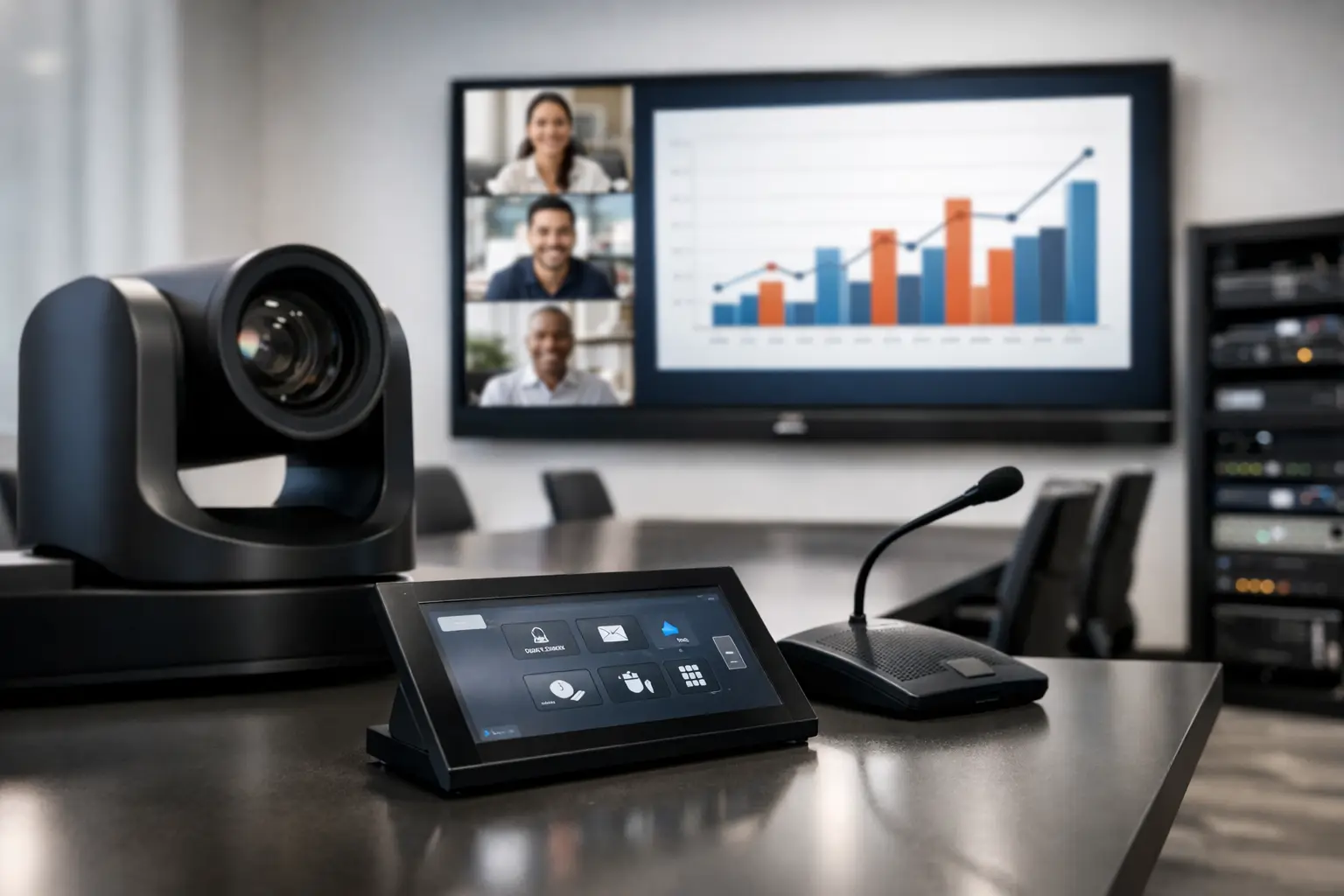
The same care applies to commercial AV. Music needs to be evenly distributed without becoming intrusive. Displays need to be visible from the intended viewing positions. Conference-room cameras and microphones must support natural communication, not create a frustrating experience for remote participants. Design decisions should be made for the room and its purpose, not simply from a product specification sheet.
Security and Lifestyle Systems Work Better Together
Security is often planned separately from entertainment and automation, but the systems can benefit from coordinated design. Cameras, access control, video intercoms, gate systems, lighting scenes, and alerts are more useful when the control experience is clear and the underlying network is designed to support them.
Integration can allow a homeowner to view an entry camera from a selected touchscreen, receive appropriate alerts, or activate lighting around an exterior area. For commercial clients, centralized visibility can help managers oversee entrances, common spaces, and critical areas while maintaining appropriate access for staff.
That does not mean every system should be tied to every other system. Some functions should remain independent for safety, reliability, privacy, or code-related reasons. A qualified integrator evaluates where coordination adds real value and where separation is the smarter choice.
A Professional Process Protects the Investment
The quality of an integrated system is shaped as much by the process as by the equipment. Clear proposals, site reviews, detailed planning, clean installation standards, programming, testing, and client education all matter. So does support after the project is complete.
At Sentry Audio Video, the objective is to provide one accountable partner from initial consultation through installation and ongoing service. That approach helps prevent the common handoff problems that occur when separate providers handle networking, entertainment, security, and controls without a shared plan.
Before moving forward, property owners should ask how the system will be documented, who will service it, how future additions will be handled, and what happens if a component needs attention. The answers reveal whether the proposal is focused only on installation day or on dependable ownership over time.
Technology should never make a beautiful home or high-performing business harder to manage. Start with how you want each space to feel and function, then build the infrastructure and control around that vision. A professional consultation can turn that first conversation into a system designed to perform with confidence for years to come.