A beautifully appointed residence can still feel unnecessarily complicated when every room has its own remotes, wall controls, apps, and passwords. A Smart Home Woodfield Country Club installation replaces that clutter with a thoughtfully designed system that puts entertainment, security, lighting, window shades, and outdoor spaces under intuitive control.
For homeowners in a private club community, the goal is not to fill a home with technology for its own sake. It is to make the property easier to enjoy, easier to manage, and better protected whether the family is home, traveling, or welcoming guests. The difference comes down to system design, installation quality, and the team responsible for long-term performance.
What a Smart Home Should Do for Your Lifestyle
A professionally integrated smart home should respond naturally to how you live. When you arrive, selected lights can come on, shades can move to a preferred position, and the home can shift into an occupied setting. When it is time to entertain, one command can prepare the main living area, patio, and audio system without requiring guests to handle a stack of remotes.
The real value is consistency. A custom-installed system brings key technologies into one organized experience instead of leaving each device to operate as a separate island. This matters in larger homes, where a minor inconvenience repeated across multiple rooms can quickly become frustrating.
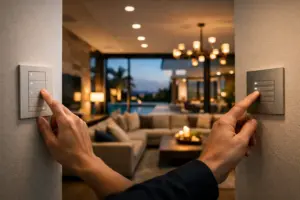
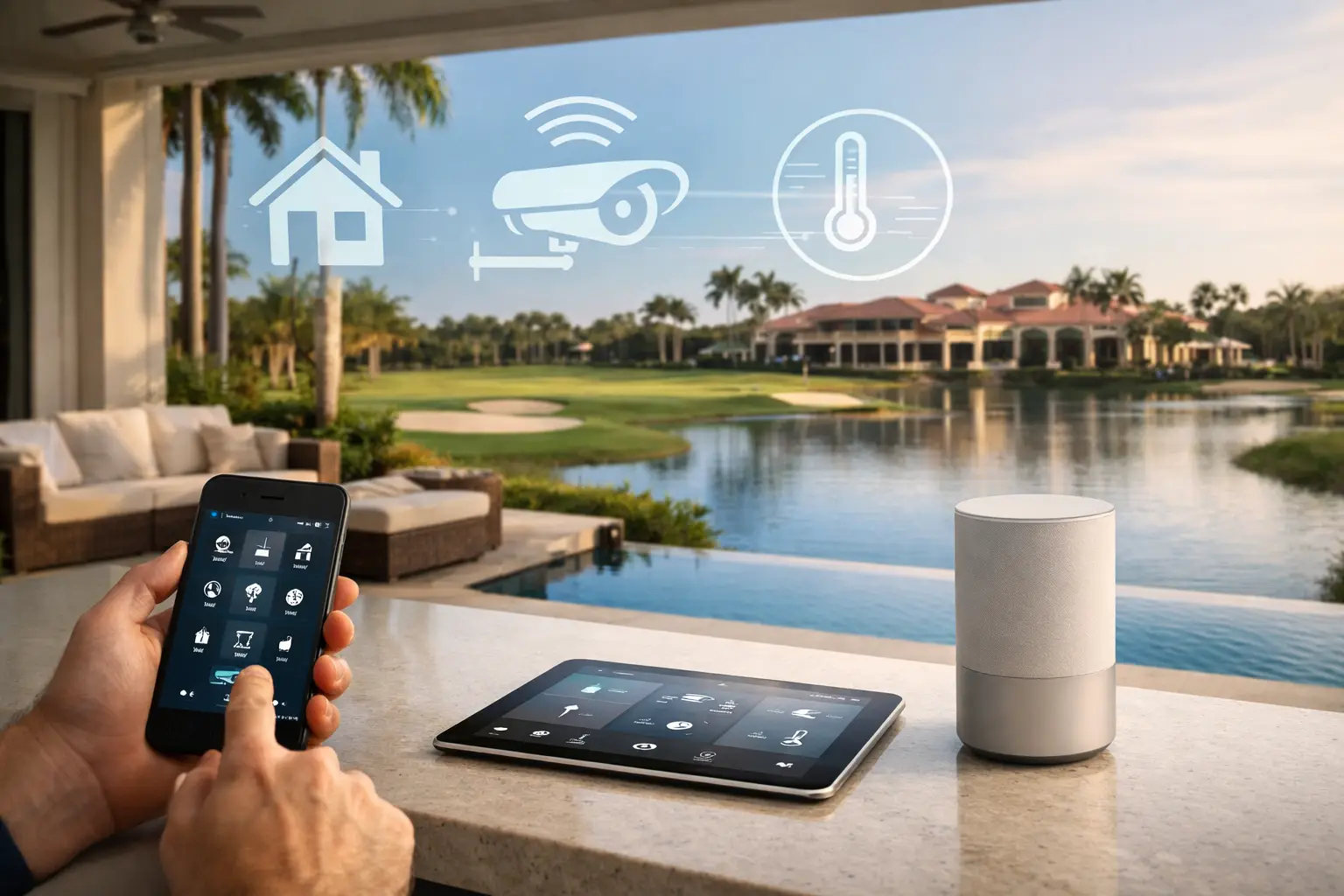
Control can be available through elegant in-wall keypads, dedicated touchscreens, handheld remotes, and a secure mobile interface. The right combination depends on the household. Some clients prefer simple, labeled wall controls for everyday functions. Others want detailed control from a tablet or phone. A strong design supports both without making the system difficult for family members, staff, or guests to use.
Smart Home Woodfield Country Club Priorities
Every property has its own architecture, routines, and technology requirements. Still, several priorities consistently shape smart home planning for Woodfield Country Club residences.
Security That Works as Part of the Home
Security is often the starting point, particularly for seasonal residents and homeowners who travel frequently. Professionally placed cameras provide meaningful coverage at entry points, driveways, perimeter areas, and outdoor living spaces. Placement matters as much as camera quality. A camera obstructed by landscaping, pointed toward glare, or mounted without a clear purpose creates a false sense of protection.
Integrated surveillance allows homeowners to review live and recorded video from an authorized device while receiving relevant notifications. Access control can also simplify the management of gates, doors, service personnel, and deliveries. Rather than adding another disconnected application, security should be incorporated into the same home-control environment used every day.
Privacy deserves equal attention. A properly designed network, secure credentials, and professional configuration help protect the connected systems that manage the residence. This is especially important when cameras, entry systems, and remote access are involved.
Entertainment That Belongs in the Room
A premium entertainment system should complement the architecture instead of competing with it. In a formal living room, that may mean a display that sits cleanly within millwork or appears only when wanted. In a family room, it may mean a simple remote that turns on the display, selects the right source, and sets the audio level without confusion.
Whole-home audio extends that experience beyond a single room. Music can follow the family from the kitchen to the patio, or separate zones can play different sources at the same time. Carefully selected speaker locations deliver even coverage while preserving the visual character of the home.
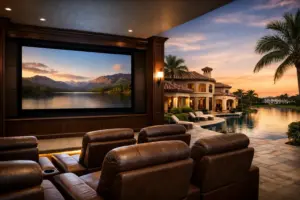
For a dedicated theater or media room, design decisions should be made before finishes are finalized. Screen location, speaker placement, acoustic treatment, seating layout, lighting control, and equipment ventilation all affect the finished experience. Installing premium components without addressing the room itself leaves performance on the table.
Lighting and Shades With a Purpose
Lighting control and motorized shades bring both refinement and practical value to a residence. They can establish the right setting for a dinner party, protect furnishings from harsh afternoon sun, improve privacy after dark, and eliminate the need to adjust numerous individual window coverings.
The most successful scenes are specific and uncomplicated. “Morning” might raise selected shades and provide soft lighting in the kitchen. “Evening” can adjust common-area lighting, lower privacy shades, and prepare outdoor areas for use. “Away” can turn off nonessential lights and place the home in a more secure state.
Not every window needs the same treatment. Large glass walls, bedrooms, formal spaces, and rooms with artwork may have very different shade requirements. Fabric selection, mounting details, quiet operation, and integration with the home’s controls deserve attention early in the design process.
Outdoor Living Is Its Own Zone
South Florida homes are designed for indoor-outdoor living, and the technology should respect that. A well-planned patio system can provide music, video, landscape audio, shade control, and pool integration from the same interface used indoors.
Outdoor equipment must be selected and installed for the environment. Heat, humidity, rain exposure, and salt air can affect performance and longevity. Proper mounting, protected connections, weather-appropriate components, and clean cable routing are not cosmetic details. They are part of building a system that continues to perform season after season.
Start With the Infrastructure, Not the Devices
The least visible part of a smart home is often the most important: the infrastructure behind it. Reliable wired and wireless coverage, organized equipment locations, ventilation, structured cabling, power protection, and documented connections provide the foundation for every connected feature in the home.
A strong network is particularly critical. Video surveillance, distributed audio, control systems, streaming, and remote access all rely on dependable connectivity. Extending coverage with random equipment may solve a short-term problem, but it rarely creates the stable foundation expected in a luxury residence.
During a renovation or new build, this is the time to plan for future flexibility. Running the right cabling before walls and ceilings are finished provides options for displays, cameras, access points, speakers, shades, and control locations later. It also keeps visible wiring to a minimum and protects the polished look of the completed space.
Why Custom Design Is Worth the Planning Time
There is no universal smart home package that works equally well for every property. A family with young children may prioritize straightforward controls, security alerts, and audio in high-use spaces. A seasonal homeowner may place greater value on remote monitoring, access management, and arrival scenes. A client who entertains regularly may focus on whole-home music, media spaces, and outdoor control.
The design process should begin with those habits. Which rooms are used most? Who needs access? Are there staff members who need simple daily controls? Is the home being renovated in phases? Which technology must remain discreet, and which features should make a visual statement?
Those conversations prevent a common problem: purchasing impressive equipment that does not serve the way the household actually lives. They also allow the integration team to coordinate with designers, builders, millwork professionals, and other trades before installation decisions become difficult or expensive to revise.
Choose an Integrator Who Owns the Result
A smart home is not a collection of boxes. It is a connected system that must be designed, installed, programmed, tested, and supported as one complete experience. Homeowners should expect clean workmanship, clear documentation, reliable performance, and a knowledgeable team that can address issues after the installation is complete.
Look for an integration partner with experience across audio/video, security, networking, lighting control, motorized shades, and outdoor technology. Broad technical scope matters because these systems affect one another. When one trusted team takes responsibility for the full design, there is less confusion about who owns a problem when it arises.
Sentry Audio Video approaches each project with that level of accountability, from the initial consultation through installation, programming, and ongoing service. The objective is not simply to add more technology. It is to deliver a refined home environment that performs reliably and feels effortless to use.
A well-planned smart home should disappear into daily life until the moment it makes something easier: welcoming you home, protecting an empty property, setting the mood for guests, or bringing the patio to life for an evening outside. That is the standard worth planning for.