A luxury residence should not require a collection of remotes, disconnected apps, and guesswork to manage the systems that shape daily life. Smart Home Technology in Woodfield Country Club brings entertainment, lighting, shading, security, climate settings, and outdoor spaces into one thoughtfully designed experience – built around how your family actually lives.
For homeowners, the difference is not simply having more technology. It is having technology that performs reliably, looks polished, and remains easy to use whether you are settling in for the evening, hosting guests, traveling, or arriving home after a long day. The right integration turns dozens of individual components into a home that responds with purpose.
What a Custom Smart Home System Should Do
A professionally integrated smart home is designed as a complete ecosystem rather than a series of separate products. A single, intuitive interface can control the systems you use most, while automation handles routine actions in the background. The goal is simple: fewer decisions, fewer points of friction, and a more comfortable home environment.
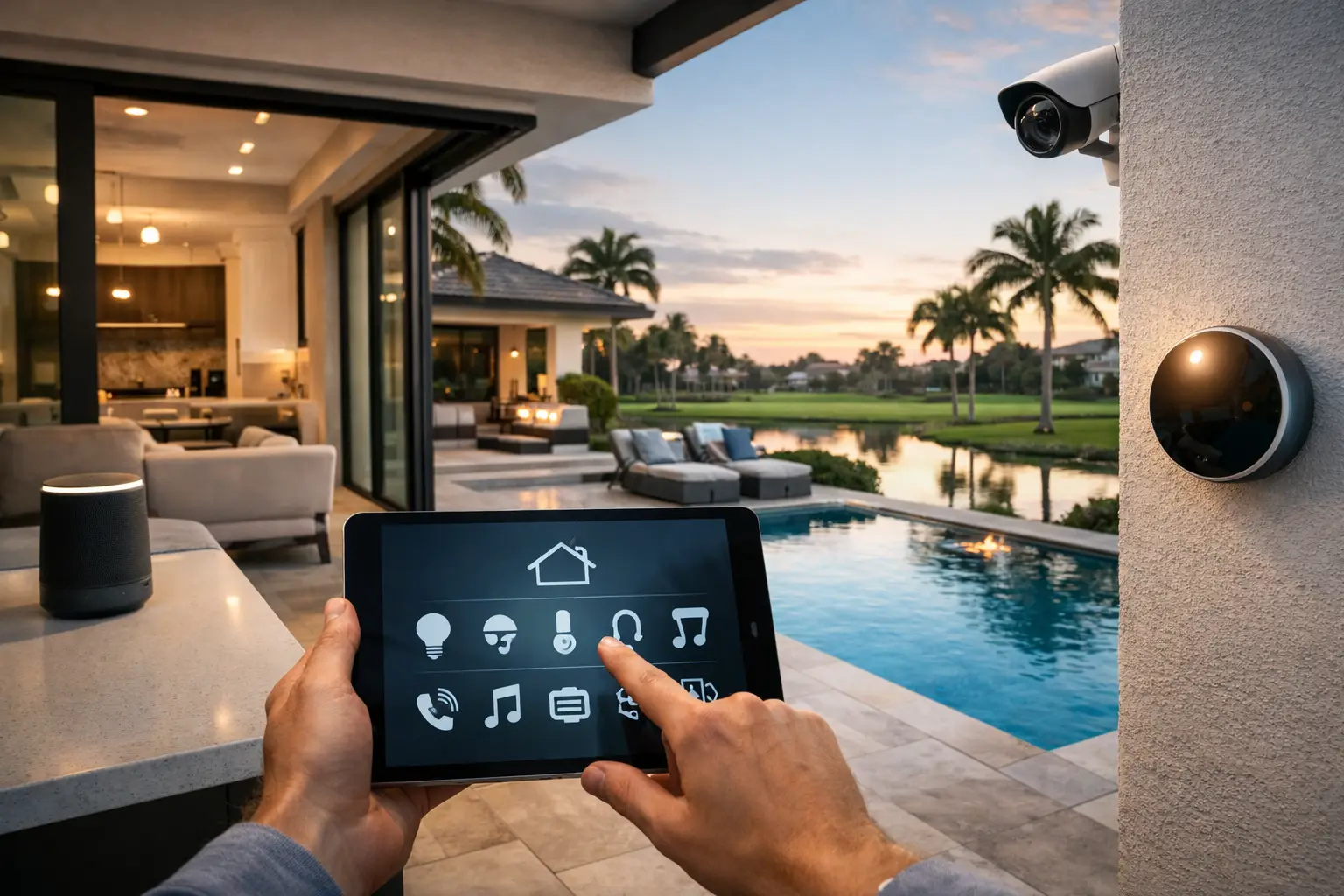
In a Woodfield Country Club residence, that might mean one touch lowers motorized shades, sets the lighting, adjusts the temperature, and starts music in the main living areas. At night, a “Goodnight” command can turn off selected lights, arm the security system, lock designated entry points, and leave pathway lighting active. When you are away, the home can provide immediate awareness through monitored cameras, alerts, and remote access.
The experience should still feel personal. Some homeowners want a dedicated wall keypad in key rooms. Others prefer elegant touch panels, handheld remotes in entertainment areas, or voice control for simple tasks. A quality system uses the right control method for each space instead of forcing every interaction through a phone.
Smart Home Technology for Woodfield Country Club Living
Homes in Woodfield Country Club often include multiple entertaining zones, expansive outdoor living areas, guest spaces, and detailed architectural finishes. Those features make careful design essential. Technology should support the home’s architecture and lifestyle without becoming visually intrusive or difficult to maintain.
Entertainment That Works in Every Room
Whole-house audio allows music to follow the moment, whether it is playing softly in the kitchen during breakfast or creating a more energetic atmosphere across the living room, patio, and pool area during a gathering. Each zone can play the same source or something entirely different, with independent volume control where it matters.
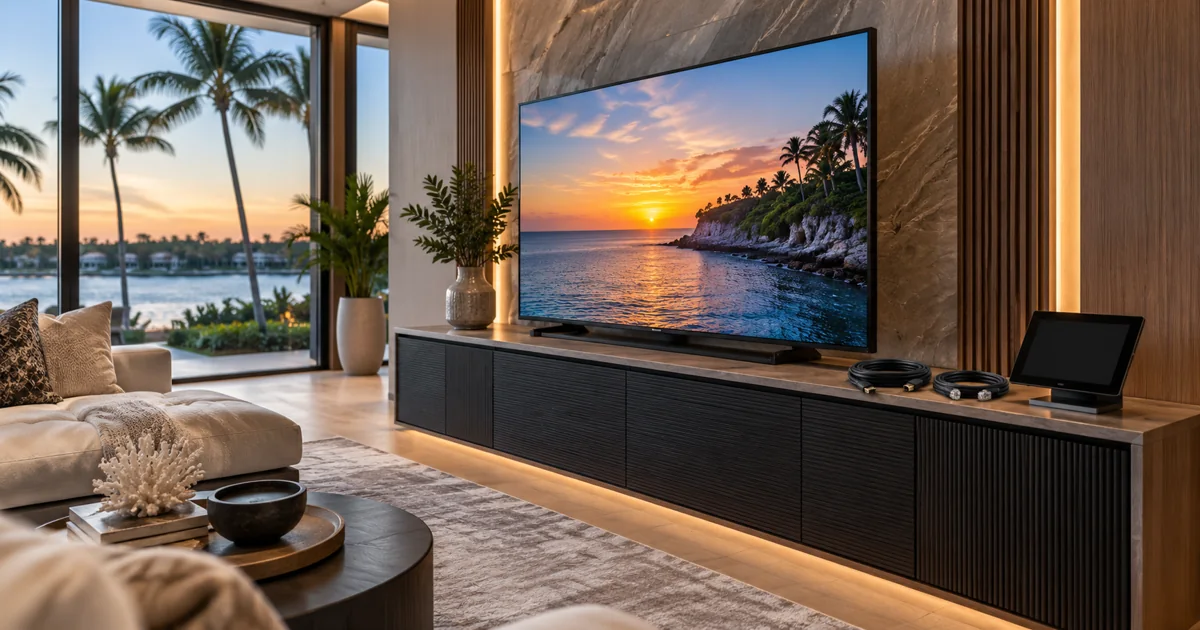
Whole-house video extends that convenience to televisions and media spaces. Rather than placing visible equipment in every room, a centralized system can distribute content throughout the house while keeping components organized in a properly ventilated equipment rack. This approach reduces clutter, simplifies service, and gives the finished space a cleaner appearance.
For a dedicated media room or home theater, system design matters even more. Screen size, speaker placement, room acoustics, lighting, seating position, and control all affect the final experience. Premium performance is not achieved by selecting equipment alone. It comes from engineering the room and calibrating every component to work together.
Lighting and Motorized Shades With a Purpose
Lighting control does more than eliminate wall clutter. It gives homeowners the ability to create consistent scenes that match how each room is used. A kitchen can have bright task lighting for meal preparation, a softer setting for casual dining, and a late-night pathway setting that avoids lighting the entire space. In common areas, scenes can establish the right tone for entertaining without adjusting individual fixtures one at a time.
Motorized shades add privacy, daylight management, and a refined finishing detail. They can raise automatically in the morning, lower during the strongest afternoon sun, or respond to a selected scene. In rooms with large windows, proper shade integration can help protect furnishings and artwork while preserving the view when privacy is not needed.
There is a practical trade-off to consider. Fully automated schedules are convenient, but they must be tailored to the household’s routine. A well-designed system makes schedules easy to revise and always allows manual control when the day does not go as planned.
Security That Fits Into Daily Life
Security is most effective when it is easy to understand and use. Integrated surveillance systems can provide clear views of entrances, driveways, garages, perimeter areas, and outdoor living spaces. Homeowners can check live video remotely, receive meaningful event alerts, and review recorded footage when needed.
The best camera placement is not determined by quantity. It is determined by sightlines, lighting conditions, network design, privacy considerations, and the specific areas that need coverage. A camera facing an entry gate may need a different lens and mounting strategy than one watching a dark side yard or a broad pool deck.
Access control can further simplify arrivals for family members, guests, and service personnel. Depending on the property and the homeowner’s preferences, designated doors or gates can be managed through authorized credentials and integrated with notifications or camera views. Security, lighting, and surveillance should work as one coordinated system, not as unrelated applications.
The Infrastructure Behind Reliable Performance
The visible controls are only one part of a smart home. Reliable operation depends on the infrastructure behind the walls and inside the equipment rack. Structured wiring, network design, wireless coverage, power management, and equipment ventilation are foundational decisions that influence every connected system in the residence.
A strong network is especially important in large homes with high-resolution video, multiple streaming zones, surveillance cameras, touch panels, and wireless devices operating at the same time. Dead zones and inconsistent connections are not minor inconveniences when lighting, shades, cameras, and entertainment are all expected to respond immediately.
Professional planning also anticipates future needs. During a renovation or new construction project, adding pathways, properly labeled cabling, rack space, and capacity for additional zones can prevent unnecessary disruption later. The system does not need every feature on day one, but it should be built on a foundation that can accommodate the next phase.
Why Custom Design Matters More Than a Product List
Every residence has a different floor plan, construction method, lifestyle, and set of priorities. A family with young children may place greater emphasis on perimeter awareness, entry monitoring, and simple whole-home controls. Frequent hosts may prioritize distributed audio, pool integration, outdoor television, and lighting scenes. Seasonal residents may focus on remote management and property visibility while away.
That is why a professional consultation should begin with questions, not a product list. Which rooms are used most? How do you entertain? What equipment should remain out of sight? Are there spaces where wall controls are preferable to touchscreens? Which systems need to be available remotely? The answers inform a design that is functional, discreet, and appropriate for the property.
Clean workmanship is equally important. Wall plates should align with the interior design. Speakers should be placed for sound quality without compromising the ceiling plan. Equipment should be accessible for service without occupying valuable living space. Cables should be organized, labeled, and installed with long-term maintenance in mind.
Plan the System Before the Finishes Are Complete
The ideal time to plan smart home technology is before walls are closed and final finishes are selected. Early coordination with the architect, builder, designer, and landscape team creates more options for concealed wiring, speaker locations, shade pockets, camera views, television placement, and outdoor coverage.
Even in an existing residence, a careful site evaluation can identify practical installation paths and minimize disruption. The key is to understand the home as a whole before making isolated upgrades. Adding a new outdoor television, for example, may involve weather-rated components, audio coverage, network access, power planning, and the control system that ties it into the rest of the property.
Sentry Audio Video designs and supports integrated systems with that full-picture approach. From the initial proposal through installation and ongoing service, the focus is on dependable performance, polished execution, and technology that feels natural from the first use. A well-planned consultation can turn the systems throughout your home into one confident, effortless experience.