You walk from the kitchen to the patio and the music follows you without getting louder in one room and disappearing in the next. No dead spots, no stack of remotes, no speakers placed as an afterthought. That is usually the moment people start asking, what is a whole house audio system, and whether it is something they should plan into a home rather than piece together later.
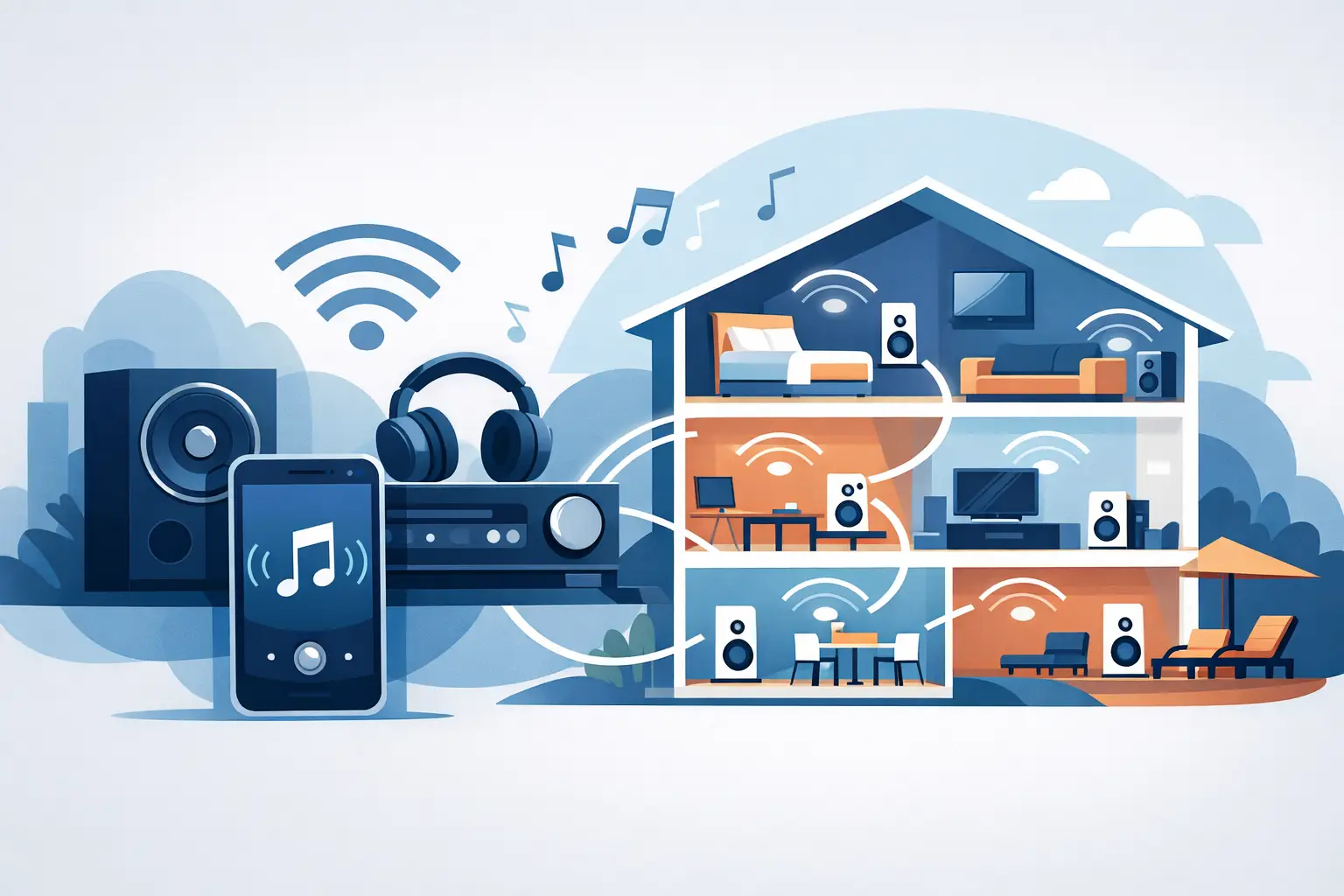
At its core, a whole house audio system is a professionally integrated sound system that distributes music or other audio to multiple rooms or zones throughout a property. Instead of relying on standalone speakers in different spaces, the system is designed so the home works as one coordinated environment. You can play the same source everywhere, send different audio to different rooms, and control it all from a wall keypad, touch panel, or mobile device.
That sounds simple on the surface, but the difference between a true whole-home system and a collection of separate speakers is significant. The goal is not just to add sound to more rooms. The goal is reliable performance, clean aesthetics, consistent control, and audio that feels like part of the home itself.
What is a whole house audio system and how does it work?
A whole house audio system combines several components into one coordinated platform. Audio sources feed into the system, amplification powers the speakers, and a control interface lets you choose what plays and where. In a well-designed setup, those pieces are selected to work together from the beginning rather than forced into place after construction or renovation is complete.
Most systems are organized by zones. A zone might be the kitchen, primary suite, living room, gym, office, patio, or pool area. Each zone can have its own volume, source selection, and sometimes its own sound profile depending on the room and speaker layout. That means one person can listen to jazz in the office while someone else has a podcast in the kitchen and music is playing outside for guests.
In many homes, the electronics that power the system are placed in a centralized rack. Speakers are installed in ceilings, walls, outdoor areas, or built into architectural elements to preserve the look of the space. From there, control becomes the user experience that matters most. If the system is hard to use, it will not get used the way it should.
The key parts of a whole-home audio system
The exact design varies by property, but most installations include source components, amplifiers, speakers, control interfaces, networking, and structured cabling. In some projects, streaming services are built in. In others, the system may also integrate televisions, media rooms, outdoor entertainment areas, or smart home control.
Speakers are often the most visible part, but they are only one part of the equation. The wiring, equipment placement, acoustic planning, and control strategy all shape how the system performs day to day. This is where custom design matters. A large open-concept home in South Florida with glass walls and outdoor entertaining space has very different audio needs than a townhouse in New York with tighter room separation and different construction conditions.
Amplification is another area where quality shows up quickly. Underpowered systems tend to sound strained and uneven, especially when several zones are active at once. A properly engineered system gives each area the power and clarity it needs without forcing the homeowner to constantly adjust settings.
Wired vs wireless – what actually matters
Many buyers assume whole house audio means choosing between wired and wireless. In practice, that is only part of the conversation.
A wired backbone is still the preferred foundation for performance-focused installations, especially in larger homes or remodels where walls are open and infrastructure can be planned properly. Hardwired speaker connections and centralized equipment typically deliver stronger reliability, cleaner integration, and better long-term flexibility. They also support a more polished finish, with equipment tucked away and speakers positioned intentionally.
Wireless audio has a place, especially in certain retrofit situations or in spaces where adding cabling is less practical. But convenience should not be confused with equivalence. Wireless products can work well for some applications, yet they may introduce limitations in coverage, control consistency, audio quality, or integration with the rest of the property. It depends on the home, the goals, and the level of performance expected.
For premium residences, the strongest result is often a hybrid approach – hardwired where performance and permanence matter most, with wireless flexibility added only where it makes sense.
What is a whole house audio system used for?
Music is the obvious answer, but that is not the only use case. In a well-integrated property, whole-home audio supports daily living as much as entertaining.
A family may use it for morning news in the kitchen, background music during dinner, and outdoor audio by the pool on weekends. In a larger residence, it can create distinct environments across different wings of the home without cluttering the space with visible equipment. For homeowners who host frequently, it helps the property feel coordinated and elevated rather than pieced together room by room.
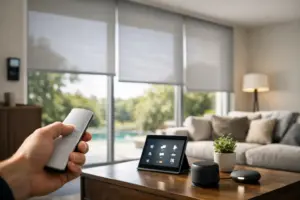
Some systems also distribute TV audio to adjacent spaces, support doorbell or paging functions, or integrate with automation scenes. For example, a single command might lower shades, adjust lighting, and start a selected playlist in the main living areas. When planned correctly, audio becomes part of a broader technology ecosystem rather than a standalone feature.
Why custom design makes such a difference
This is where many projects either succeed or disappoint. Two homes can have similar square footage and entirely different audio needs because architecture, finishes, furniture layout, ceiling height, outdoor exposure, and listening habits all affect the design.
A custom whole house audio system starts with questions. Which rooms matter most? Is the patio used casually or for large-scale entertaining? Do you want music in circulation areas only, or in every primary living space? Should speakers disappear visually, or are certain rooms better suited to visible high-performance models? How should the system behave when guests are over versus when the house is quiet?
Those choices affect speaker type, zone count, amplification, rack design, user interface, and control programming. They also influence future scalability. A well-planned system can accommodate added outdoor areas, new sources, security integration, or expanded automation without starting over.
Professional execution matters just as much as product selection. Clean installation, proper calibration, and dependable service support are what turn a technology package into a reliable part of the property.
Common misconceptions about whole-house audio
One misconception is that every room has to play the same thing all the time. It can, but that is only one option. The real advantage is flexibility.
Another is that more speakers automatically means better sound. Speaker quantity helps with coverage, but placement and tuning matter more. A poorly planned layout can leave one area overly loud while another feels thin.
Some homeowners also assume whole-home audio is only for new construction. It is easiest to build into a home during construction or renovation, but retrofit solutions are available. The right path depends on access, finish requirements, and how integrated the final result needs to be.
Is a whole house audio system worth it?
If audio is part of how you live in your home, the answer is often yes. Not because every property needs the same level of system, but because a professionally designed solution adds convenience, consistency, and a more refined daily experience.
The value shows up in ways that are easy to appreciate once the system is in place. Rooms feel finished. Outdoor spaces become more usable. Entertaining becomes simpler. Control feels intuitive instead of fragmented. And when the system is integrated with the rest of the home’s technology, it supports the larger goal most homeowners want – a house that responds clearly and reliably.
For clients building or upgrading high-end homes in markets such as Boca Raton, Fort Lauderdale, or Palm Beach, whole-house audio is often less about adding another feature and more about bringing the property up to the standard of the way they want to live.
What to ask before moving forward
Before planning a system, it helps to think beyond brand names and start with the experience you want. Which spaces need independent control? Where do you spend time every day? Do you want background audio, critical listening, or both? Should outdoor areas perform at the same level as indoor spaces? Will the system eventually tie into lighting, shading, video, or security?
Those answers shape the right design far better than selecting equipment in isolation. An experienced integrator should be able to explain the trade-offs clearly, map the system around the property, and recommend a solution that fits the architecture as well as the lifestyle.
A whole house audio system should never feel like technology you have to manage. It should feel like part of the home from the first room to the last, with performance and control that earn your trust every time you press play.