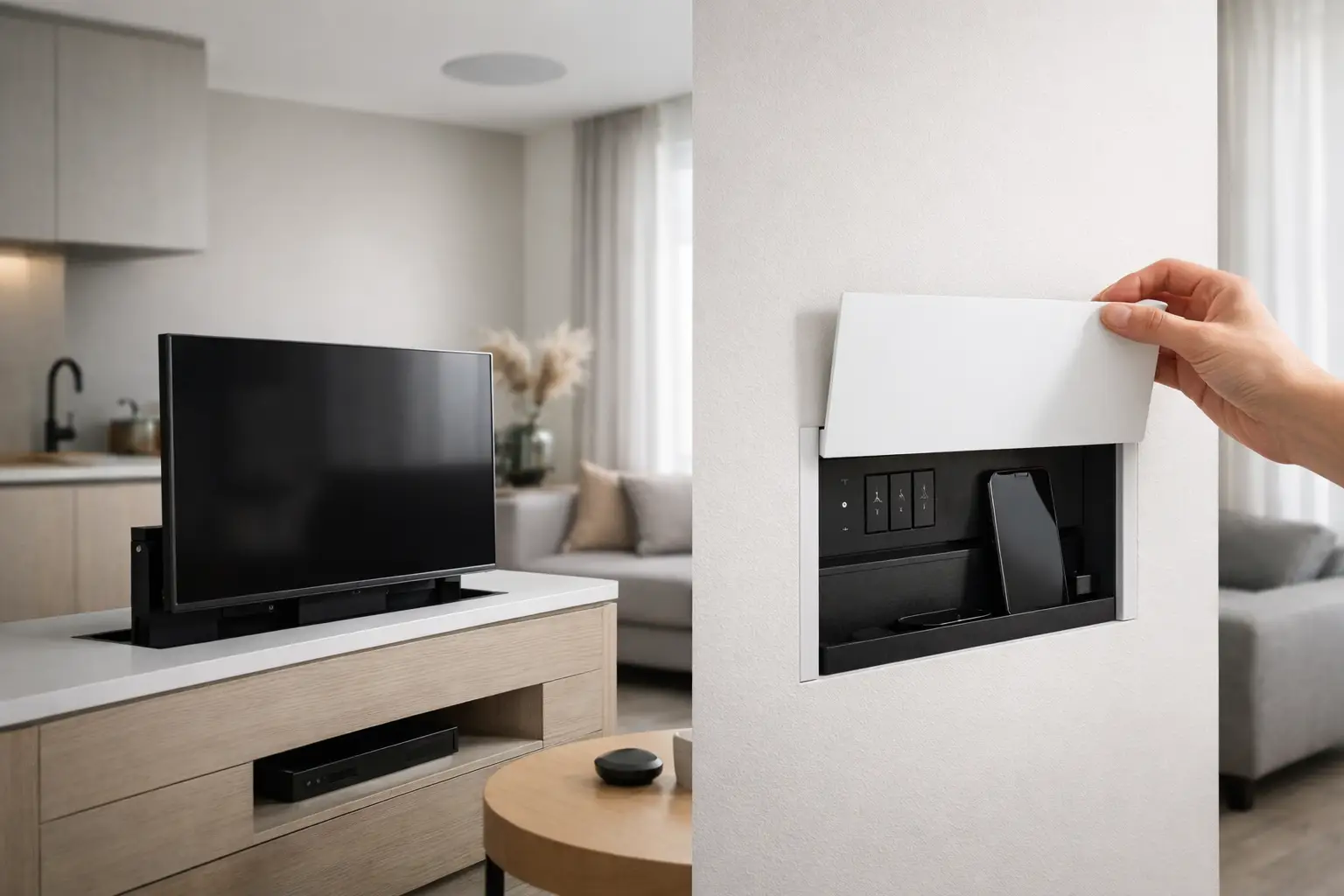
A minimalist room can lose its impact the moment a television dominates the wall, speaker grilles interrupt the architecture, or a tangle of cables appears beneath a console. Hidden Technology: How to Conceal TVs, Speakers, and Wires for Minimalist Interior Design is not about making performance disappear. It is about giving exceptional entertainment, communication, and control systems a place in the home without asking them to compete with the interior design.
For high-end residences, that outcome depends on planning. A concealed system must still deliver excellent picture quality, clear sound, dependable network connectivity, ventilation, service access, and intuitive control. When those details are addressed before finishes are selected and walls are closed, the technology feels intentional rather than added on.
Start With the Room, Not the Equipment
The strongest hidden-technology installations begin with how a room will be used. A formal living room may need a display that disappears when not in use. A family room may call for a larger screen and full surround sound without filling the space with visible components. An outdoor lounge requires weather-conscious placement, protected wiring, and sound that reaches seating areas without becoming intrusive.
This is why equipment selection should follow the design and performance brief. Sightlines, ceiling heights, millwork details, natural light, furniture placement, wall materials, and acoustic surfaces all influence the solution. A television mounted too high for the sake of concealment can be uncomfortable to watch. Speakers hidden behind the wrong finish can lose clarity. Cables buried without a service strategy can turn a simple future upgrade into a disruptive project.
A professional technology integrator coordinates these decisions with the homeowner, interior designer, architect, builder, and millwork team. The objective is a finished space where every detail appears composed, while the underlying system remains reliable and maintainable.
Conceal TVs Without Sacrificing the View
A television is usually the most difficult component to hide because it occupies visual space even when powered off. The right approach depends on whether the display is used occasionally, daily, or as the center of the room’s entertainment experience.
Use Art-Style Displays Where a Screen Must Remain Visible
An art-style display can be a smart choice for rooms where a television needs to stay on the wall but should not read as a black rectangle. When idle, it can present curated artwork or photography that supports the room’s palette and scale. Proper frame selection, mounting height, and cable concealment matter just as much as the display itself. A narrow surface-mounted raceway or visible power cord immediately undermines the intended effect.
This option works especially well in transitional spaces, bedrooms, sitting rooms, and living areas where viewing is important but the screen should not define the architecture.
Build the TV Into Custom Millwork
Custom cabinetry provides a more architectural solution. A display can sit within a recessed niche, behind sliding panels, or behind pocket doors that close fully when the system is off. This approach gives designers control over proportions while allowing source equipment, control processors, and associated hardware to be located elsewhere.
The key is not to treat the television cavity as a simple box. It needs adequate ventilation, protected cable pathways, a mounting structure designed for the display’s weight, and space to access connections. If doors are used, they must be designed so the screen has a clear viewing path and remote or control signals continue to function as intended.
Consider Motorized Lifts and Concealed Displays
For rooms where visual purity is the priority, a motorized lift can raise a display from cabinetry or lower it from a ceiling recess only when needed. This is often an excellent fit for bedrooms, multipurpose rooms, waterfront homes with prominent views, and spaces with carefully designed feature walls.
Motorization adds complexity, so quality components and precise installation are essential. The lift must operate quietly, align correctly, and include a practical path for service. It also requires early coordination for framing, cabinetry, power, control wiring, and clearance. When designed well, the motion feels refined. When treated as an afterthought, it can create noise, vibration, and difficult access.
Hidden Speakers Need Acoustic Planning
Minimalist interiors often favor sound that is heard but not seen. In-ceiling and in-wall speakers are a natural answer, but placement should never be based on symmetry alone. Audio performance depends on speaker position, room dimensions, ceiling height, seating locations, surface materials, and the level of listening the client expects.
Flush-Mount Speakers for Everyday Listening
Architectural speakers can be installed flush with ceilings or walls and finished with paintable grilles that recede into the surrounding surface. In many rooms, they offer the right balance of discreet appearance and strong performance. Distributed audio can provide music throughout the home without speakers occupying counters, shelves, or furniture.
For open-concept homes, speaker zoning is especially valuable. The kitchen, dining area, great room, patio, and pool area can each have appropriate coverage and independent volume control. That means the entire property can support entertaining without forcing one playlist and one volume level on every space.
Invisible Speakers for Design-Driven Rooms
Invisible speakers are installed behind compatible finishing materials, leaving no visible grille. They can be plastered, painted, or finished to match the surrounding surface. In the right application, they allow a wall or ceiling plane to remain completely uninterrupted.
There are trade-offs. Invisible speakers are not automatically the right answer for every room or every listening expectation. They require compatible materials, careful installation, and appropriate system design. For a dedicated home theater or a room where critical music listening is the goal, architectural speakers, on-wall speakers, or a combination of solutions may deliver stronger results. The best systems use concealment where it serves the room and performance where it matters most.
Do Not Forget Bass and Surround Sound
Low-frequency performance is often the hardest element to hide. A subwoofer may be integrated into millwork, located in an adjacent equipment space, or selected and positioned to minimize visual impact. Its enclosure, ventilation, vibration isolation, and room interaction all need attention.
Surround sound also benefits from planning before drywall. Speaker wire can be routed to precise locations, allowing rear and height channels to disappear into the room rather than appearing later as visible additions. The result is an immersive experience that supports the room’s design instead of overwhelming it.
The Wire Plan Is What Makes Minimalism Possible
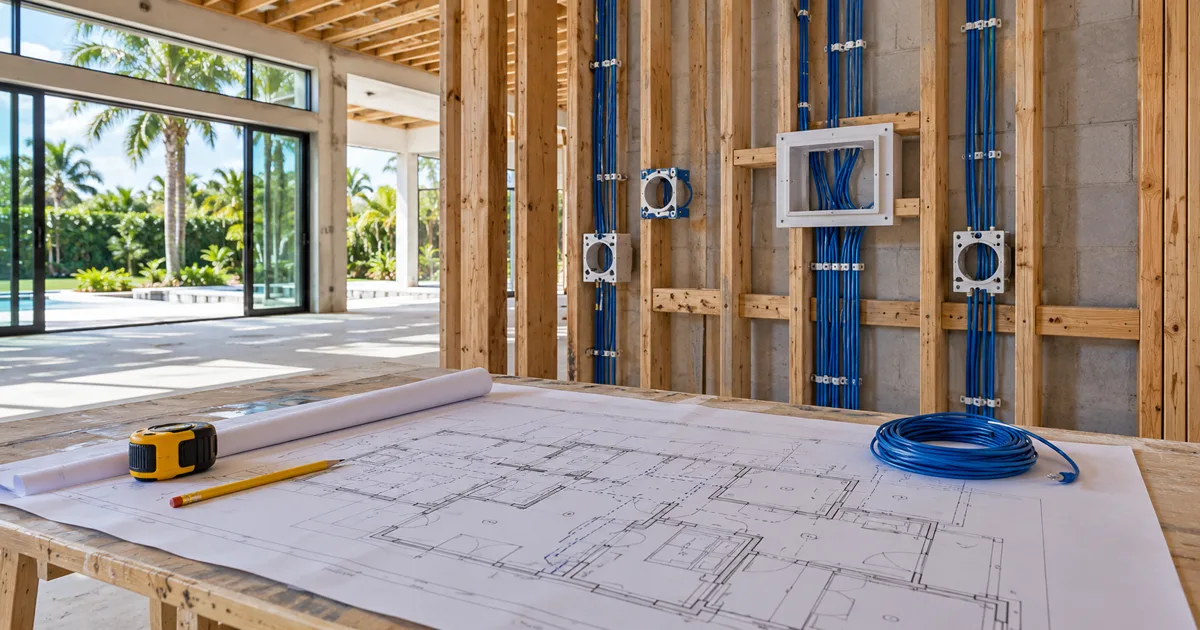
Visible wire is rarely a technology problem. It is usually a planning problem. Every display, speaker, access point, keypad, camera, shade, and control device needs a considered path for power, signal, and network connectivity.
Structured cabling provides that foundation. Dedicated low-voltage wiring routes signals through walls, ceilings, conduits, and equipment pathways so the finished environment remains clean. It also creates flexibility for future changes, such as adding a new display, updating a control interface, expanding audio zones, or integrating another area of the property.
A centralized equipment rack is often the cleanest approach for larger systems. Source components, network hardware, amplifiers, and control equipment can be organized in a conditioned, accessible location rather than spread across furniture throughout the home. This reduces visible clutter, improves serviceability, and helps maintain system performance.
Wireless technology has a role, particularly for certain control and network functions, but it should not be used as an excuse to skip infrastructure. Wired connections remain valuable for high-demand video distribution, stable networking, fixed audio systems, and equipment that must perform consistently. In premium residences, reliability is part of the design standard.
Plan for Control, Service, and Daily Use
Hidden technology should never mean hidden usability. If a system requires multiple remotes, confusing inputs, or a cabinet door left open to operate, the design has not fully solved the problem. A properly integrated control system can bring televisions, audio, lighting, motorized shades, climate settings, pool features, and security functions into a clear, personalized interface.
The best control experience is simple enough for every member of the household and refined enough for guests. A single touch can prepare a room for a movie, lower shades, adjust lighting, and start the appropriate audio source. Just as important, the system should respond consistently and provide straightforward support when questions arise.
Service access deserves the same attention. Behind every flush display, concealed speaker, and custom panel, there should be a practical method to reach connections and equipment. Removable millwork panels, properly located access points, labeled cabling, and organized racks protect the homeowner from unnecessary disruption later.
Coordinate Technology Before Construction Is Complete
The ideal time to plan hidden AV is during architectural design or early renovation, before drywall, cabinetry, and finish selections are finalized. This creates opportunities that are difficult or costly to recreate after the home is complete: recessed display niches, speaker back boxes, conduit runs, in-ceiling speaker locations, dedicated equipment rooms, and concealed power provisions.
For projects in Boca Raton, Fort Lauderdale, and surrounding South Florida communities, this early coordination is particularly valuable in open-plan homes, waterfront properties, and indoor-outdoor entertaining spaces. Humidity, sunlight, reflected light, concrete construction, and outdoor exposure can all affect product selection, placement, and long-term performance.
Sentry Audio Video designs concealed technology around the property, the architecture, and the way each client lives or works. The goal is not simply to hide equipment. It is to deliver a space that remains visually calm while sound, video, automation, security, and connectivity perform exactly as expected. When the details are planned early, the most impressive part of the system is often what you never see.