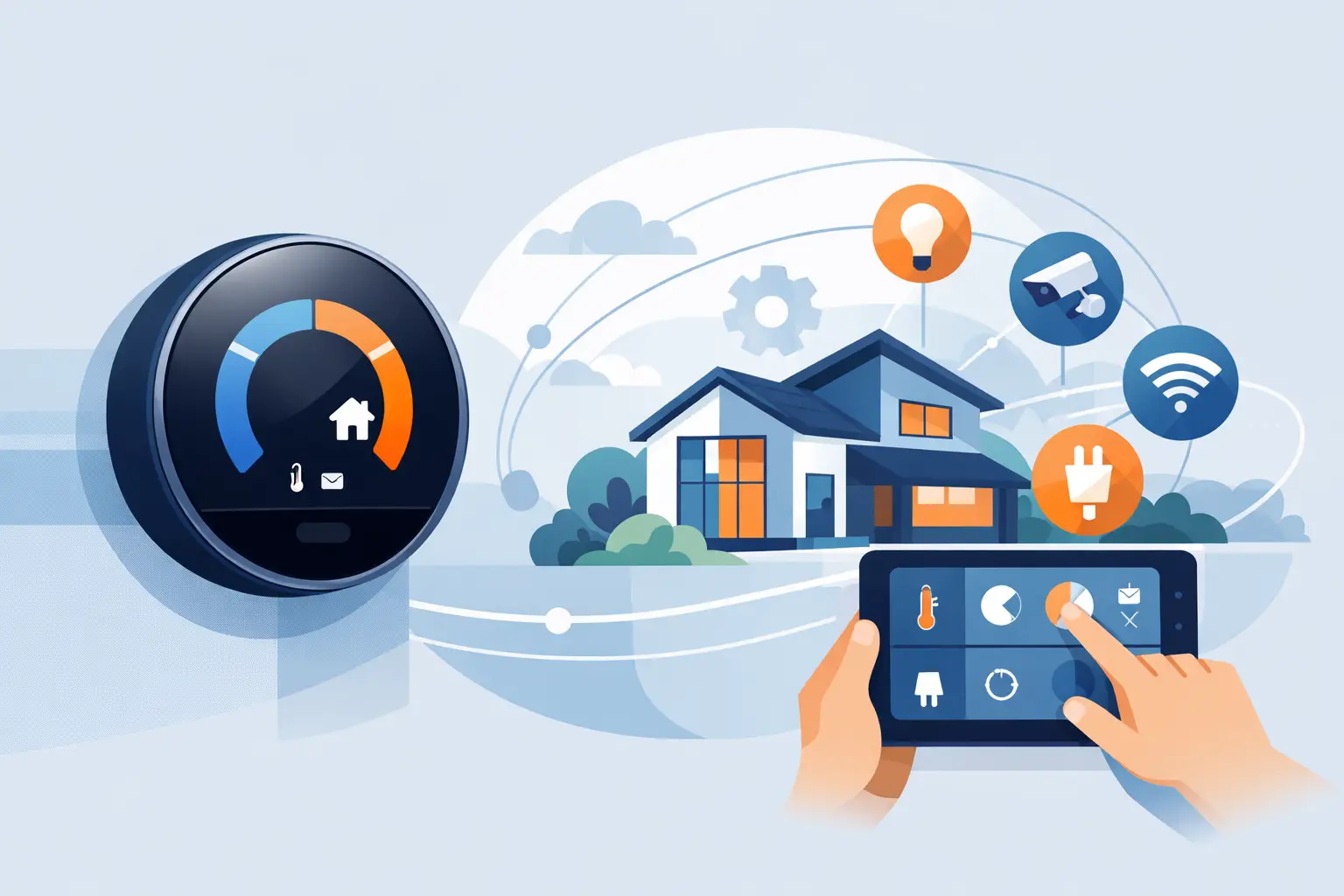
You notice the difference in a well-designed home the first week you live with it. The temperature is right when you wake up, the house adjusts before guests arrive, and no one is walking room to room making manual changes. That is where smart thermostat integration with home automation stops being a gadget upgrade and starts becoming part of how a property performs.
For homeowners investing in a connected residence, climate control should not operate as a standalone feature. It should work alongside lighting, shading, security, occupancy settings, and daily routines. When it is designed correctly, the result is not more complexity. It is fewer touchpoints, better consistency, and a home that responds intelligently to how you actually use it.
Why smart thermostat integration with home automation matters
A thermostat on its own can follow a schedule and let you adjust settings from an app. That is useful, but it only solves part of the problem. In a fully integrated environment, the thermostat becomes one component in a coordinated control strategy.
That distinction matters in larger homes, second residences, and properties with outdoor living spaces, guest suites, motorized shades, or multiple comfort zones. In those settings, temperature control is tied to how the entire property operates. If shades lower during peak afternoon sun, the cooling demand changes. If a security system shifts the house to away mode, the climate settings should respond automatically. If a room is rarely occupied during the day, it should not be treated like the primary living area.
This is where integration adds real value. It gives homeowners centralized control while allowing behind-the-scenes automation to handle routine adjustments with more precision than a manual schedule ever could.
What a smart thermostat should connect to
The strongest smart thermostat integration with home automation starts with system design, not product selection alone. A premium thermostat may offer attractive features, but the real question is what it can communicate with and how reliably it can do it.
Lighting is one of the most practical connections. If a home enters an evening scene, lighting may dim, shades may close, and the climate setting may shift slightly for nighttime comfort. Security is another key integration point. Arming the home for vacation mode can trigger broader setbacks without relying on someone to remember every adjustment.
Motorized shading often has an even larger impact than homeowners expect. In sun-exposed properties, managing heat gain through scheduled or sensor-driven shade control can reduce unnecessary cooling demand while improving comfort in living spaces with large expanses of glass. Occupancy awareness also plays a role. Depending on the system, climate responses can be based on actual room use, time of day, or whole-home status.
Voice control and mobile access are convenient, but they should be treated as access methods, not the entire strategy. The real goal is a system that works automatically and predictably, with manual control available when needed.
Integration works best when zoning is taken seriously
One of the most common mistakes in connected homes is assuming one thermostat or one global setting can deliver comfort everywhere. It rarely does. Homes with multiple floors, open glass-heavy living areas, home offices, bedrooms with different occupancy patterns, or outdoor-adjacent spaces need a more thoughtful approach.
Zoning is what allows integration to become genuinely useful. Instead of treating the property as one environment, the system can respond differently by area. Bedrooms can follow a nighttime comfort profile while main living areas settle earlier. A media room can maintain stable temperature during use without forcing changes across the entire home. Guest rooms can remain moderated until they are needed.
This is especially important in high-end properties where architecture, orientation, and occupancy vary significantly from one area to another. A polished installation accounts for those realities from the beginning. It does not simply add smart devices and hope the software smooths out the differences.
The trade-off between convenience and control
Homeowners are often told that more automation always means a better experience. That is not necessarily true. The right level of automation depends on the property, the household, and how much direct control the client wants to retain.
Some clients prefer tightly managed scenes where climate changes happen automatically based on occupancy, schedules, and security state. Others want essential automations in place but still prefer to fine-tune temperatures manually in certain rooms or at certain times. Neither approach is wrong.
A professional integration should support both. It should reduce repetitive tasks without making the system feel opaque or unpredictable. If climate settings change, the reason should make sense. If a homeowner wants to override a setting, that should be simple and immediate. Reliability matters more than novelty.
Not every thermostat belongs in a custom system
This is where many projects are won or lost. On paper, many smart thermostats promise compatibility. In practice, compatibility can mean anything from full two-way integration to a limited connection that only handles basic setpoint changes. That difference becomes clear very quickly once the system is in daily use.
A custom home automation environment needs products that communicate consistently with the chosen control platform and support the level of programming the home requires. It also needs equipment suited to the property itself, including the number of zones, the complexity of the climate setup, and the expectations for remote access and serviceability.
That is why thermostat selection should never happen in isolation. The thermostat has to fit the architecture of the larger system. It should support a clean user experience on touch panels, mobile devices, and wall interfaces. It should also allow service teams to diagnose issues efficiently without turning a minor adjustment into a major disruption.
Why professional design changes the outcome
The visible hardware is only a small part of what makes integrated climate control successful. The larger value comes from programming logic, system coordination, and installation discipline.
A professionally designed system considers how the property is used throughout the day, how zones interact, how occupancy is handled, and what should happen during events like entertaining, travel, bedtime, or seasonal changes. It also accounts for interface design. If homeowners, family members, or staff cannot use the controls intuitively, even good technology will feel frustrating.
Clean execution matters here more than people realize. Thermostat placement, network stability, control processor configuration, and system testing all affect long-term performance. In larger residences, that level of detail is the difference between a home that feels intelligently managed and one that constantly needs attention.
For clients in markets like Boca Raton and Fort Lauderdale, where second homes, waterfront properties, and heavily glazed architecture are common, these details become even more important. Environmental conditions, occupancy patterns, and property scale all influence how well integrated climate control will perform.
What homeowners should expect from a premium experience
A well-integrated thermostat system should feel quiet in the best sense of the word. You should not be thinking about it often. Comfort should remain consistent, scenes should behave predictably, and adjustments should be easy whether you are at home or away.
You should also expect the system to support the broader lifestyle of the property. If you are entertaining outdoors, arriving from travel, preparing a guest suite, or setting the home for an extended absence, climate control should fit naturally into those moments. It should not require a separate process or separate mindset.
Just as important, you should expect support after installation. Integrated systems perform best when there is a trusted partner behind them – someone who understands the design intent, can refine settings over time, and takes ownership of performance. That service layer is a major part of the value in a custom solution.
Smart thermostat integration with home automation is really about trust
Technology should make a home easier to live in, not harder to manage. When climate control is thoughtfully integrated, the payoff is not just app access or modern hardware. It is the confidence that your home will respond appropriately whether you are in the primary suite, hosting on the patio, leaving for the airport, or returning after weeks away.
That kind of performance does not happen by accident. It comes from careful design, the right equipment, and an integration partner that treats the whole property as one connected environment. The best systems are not the ones that show off the most features. They are the ones that quietly get the details right, day after day.