A search for “Crestron SWAMP to NAX upgrade Palm Beach” usually starts when a formerly dependable whole-home audio system becomes harder to live with. A music service changes, an older source stops behaving as expected, or a homeowner wants more dependable control from the interfaces they use every day. The speakers may still sound excellent. The issue is often the aging audio distribution platform behind the walls and inside the rack.
For Palm Beach estates, waterfront residences, and professionally designed commercial environments, an upgrade deserves more than a component swap. Moving from Crestron SWAMP to Crestron NAX calls for an assessment of the existing system, the network that supports it, the control programming, and the way each zone is actually used. When planned correctly, the result is a modern audio foundation that feels purposeful, sounds refined, and remains serviceable for years to come.
Why a Crestron SWAMP to NAX upgrade makes sense
Crestron SWAMP systems have served many properties well by distributing audio across multiple rooms through centralized equipment. In a well-built installation, the in-ceiling, landscape, patio, and architectural speakers connected to that system may have substantial life left. Replacing them simply because the source platform has aged is not always the right answer.
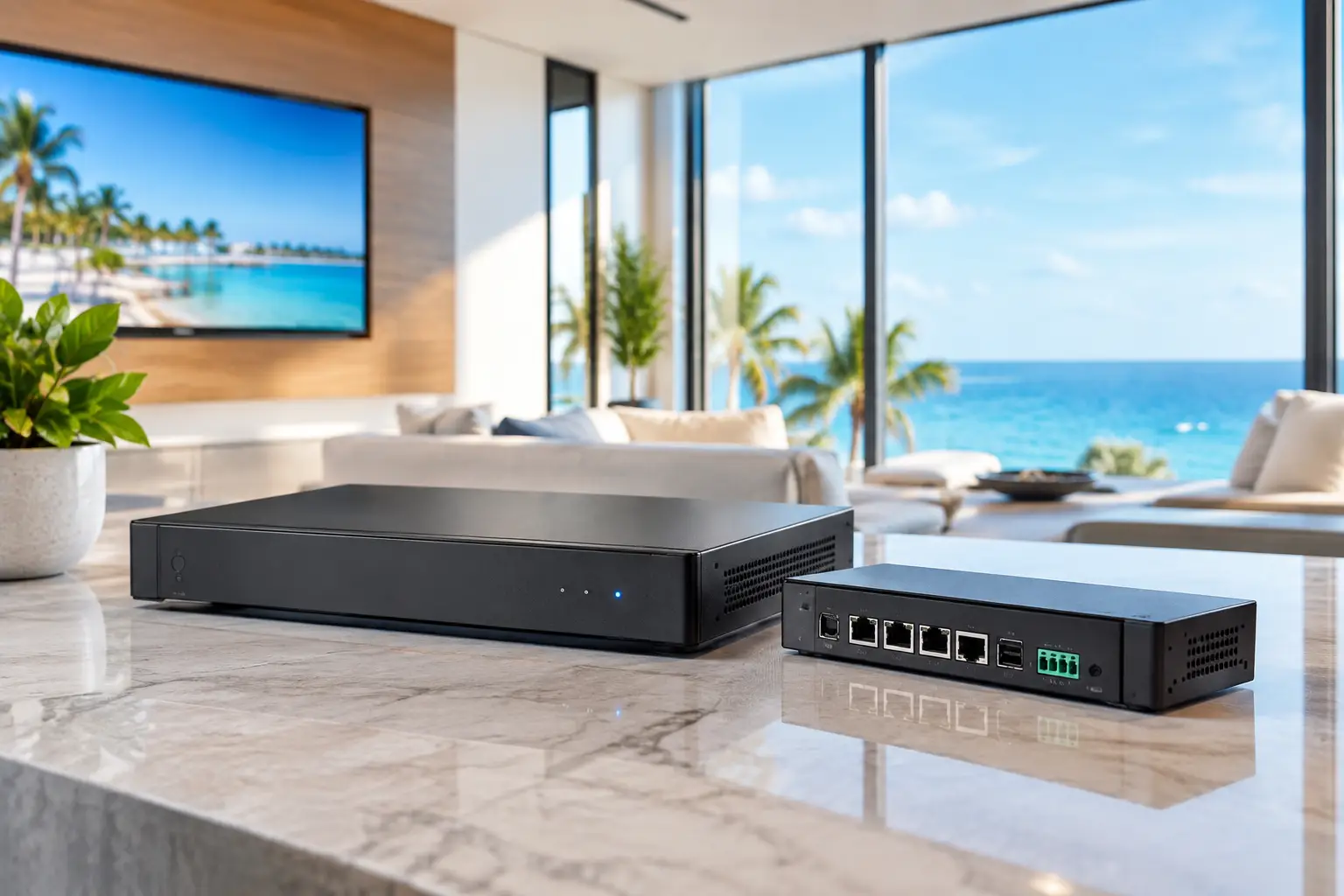
Crestron NAX is a newer network-audio platform designed for current multiroom listening expectations. It provides a path toward modern streaming, flexible zone expansion, and better alignment with current Crestron control environments. Depending on the selected NAX components and system design, a property can support distributed audio with dedicated streaming amplification or source distribution suited to the number and type of listening areas.
The practical benefit is not just newer hardware. It is a system built around how people use a home now: different music in the kitchen and pool area, a shared playlist across entertaining spaces, or easy access to preferred sources from a touch panel, keypad, or control application. For business settings, it can mean consistent audio in guest areas, offices, lounges, or meeting spaces without placing daily operation on staff who should be focused elsewhere.
That said, NAX is not automatically the correct answer for every legacy system. The existing architecture, source requirements, speaker loads, control processor, and network all determine the right scope. A professional evaluation prevents an upgrade from becoming a series of workarounds.
What can often stay in place
A thoughtful upgrade is not a demolition project. In many homes, the strongest parts of the original installation can remain. High-quality speakers, carefully routed speaker wire, equipment cabinetry, and even portions of the existing rack infrastructure may be suitable for continued use.
The condition and design of each zone matter. An interior bedroom with a pair of efficient ceiling speakers has different power needs than a large outdoor area with multiple landscape speakers and a subwoofer. An experienced integrator verifies impedance, amplifier requirements, cable condition, and zone labeling before determining what can be retained.
Existing Crestron touch panels, keypads, processors, and automation scenes also deserve review. If a client enjoys selecting music from a bedside panel or activating a whole-home entertaining scene from the kitchen, that experience should be considered during the design phase. Some equipment and programming may transition cleanly; other elements may need updating to provide reliable compatibility and an interface that remains intuitive.
The network is part of the audio system
A network-audio upgrade is only as dependable as the network supporting it. This is one of the most overlooked parts of a SWAMP-to-NAX migration. Audio distribution, streaming services, control commands, video surveillance, wireless access points, and other connected systems can all compete for network resources if the infrastructure was not designed for the property’s current needs.
Before installing NAX equipment, the network should be assessed for switch capacity, managed-switch configuration, multicast handling, segmentation, wireless coverage, and overall traffic patterns. In larger residences, separate network design decisions can make the difference between reliable performance and intermittent dropouts that are difficult to diagnose after the fact.
This is particularly relevant in Palm Beach properties where equipment racks may serve guest houses, pool pavilions, docks, detached offices, or multiple entertainment zones. Fiber or properly specified network connections between buildings may be just as important as the audio components installed in the central rack. The goal is not to add complexity. It is to make the infrastructure support the experience without calling attention to itself.
Control and streaming require careful coordination
Modern streaming access should be planned around the household or business, not simply added as an afterthought. Consider who controls music, which rooms should be grouped, whether guests need limited access, and how source choices appear on the property’s control interfaces.
A family may want simple presets for morning music, outdoor entertaining, and evening relaxation. A commercial property may need approved source options with predictable volume behavior across public areas. These are design decisions as much as technical ones. They should be settled before installation, not improvised after equipment is powered on.
A professional upgrade process protects the finished system
The cleanest projects begin with documentation. The integrator inventories the existing SWAMP equipment, identifies every speaker zone, tests relevant wiring, reviews network equipment, and confirms the client’s objectives. This discovery phase often reveals small issues that have been hidden for years, such as mislabeled zones, weak network links, aging power conditioning, or outdoor speakers that need separate attention.
Next comes a migration plan. The plan should identify which NAX components will serve each area, what existing equipment will remain, whether rack modifications are required, and how control will be updated. For a large residence, phasing may be the right approach. A client may choose to modernize primary living areas and exterior entertainment spaces first, then complete secondary bedrooms or guest accommodations later. This can be effective when the system is extensive, provided the interim design is intentional and supported.
Installation should be orderly and documented. Equipment should be mounted cleanly, wiring dressed and labeled, ventilation considered, and final configurations recorded for future service. These details may not be visible when music is playing, but they are central to long-term performance and efficient support.
Commissioning is where the system becomes a finished experience. Each zone should be tested independently and in grouped playback. Control interfaces should be reviewed in the rooms where they will be used. Volume limits, source naming, favorite selections, and outdoor listening behavior should be adjusted for the property rather than left at factory defaults.
Common upgrade decisions that deserve attention
A SWAMP-to-NAX project often creates an opportunity to address issues beyond the audio platform. Outdoor zones may need separate tuning because open-air spaces absorb sound differently than interior rooms. A media room may benefit from a distinct audio solution rather than being treated like a background-music zone. In properties with multiple users, clear control permissions and simple favorites can reduce confusion.
It also helps to decide whether all audio must remain centralized. Centralized racks are ideal for many projects because they provide a clean, serviceable home for equipment. In certain renovations or detached structures, however, a distributed approach may reduce cabling demands and better fit the building layout. There is no single answer. The right design follows the property, the listening priorities, and the service expectations of the owner.
Compatibility deserves equal care. Legacy source devices, older control code, and third-party equipment should be evaluated individually rather than assumed to work in the new environment. A clear scope protects the client from surprises and gives the integration team the information needed to deliver dependable results.
Choosing a partner for a NAX migration
This type of upgrade sits at the intersection of audio design, networking, programming, rack fabrication, and ongoing service. Selecting an integration partner with experience across all of those disciplines matters. The objective is not merely to replace discontinued equipment. It is to improve day-to-day use while protecting the investment already made in the property.
Sentry Audio Video approaches Crestron audio upgrades as part of the complete connected environment. That means looking beyond the audio chassis to the speakers, network, control experience, rack condition, and future service needs. For homeowners and businesses, one accountable team simplifies decisions and helps preserve the polished workmanship expected in a premium property.
If your current system still has excellent speakers but no longer delivers the control, source access, or reliability you expect, the next step is an on-site evaluation. A well-designed NAX migration can make familiar rooms feel current again while giving your property an audio foundation ready for the way you live and entertain.
Planning a broader modernization? Review Sentry’s Crestron repair and system-upgrade services and Crestron Home installation and programming.