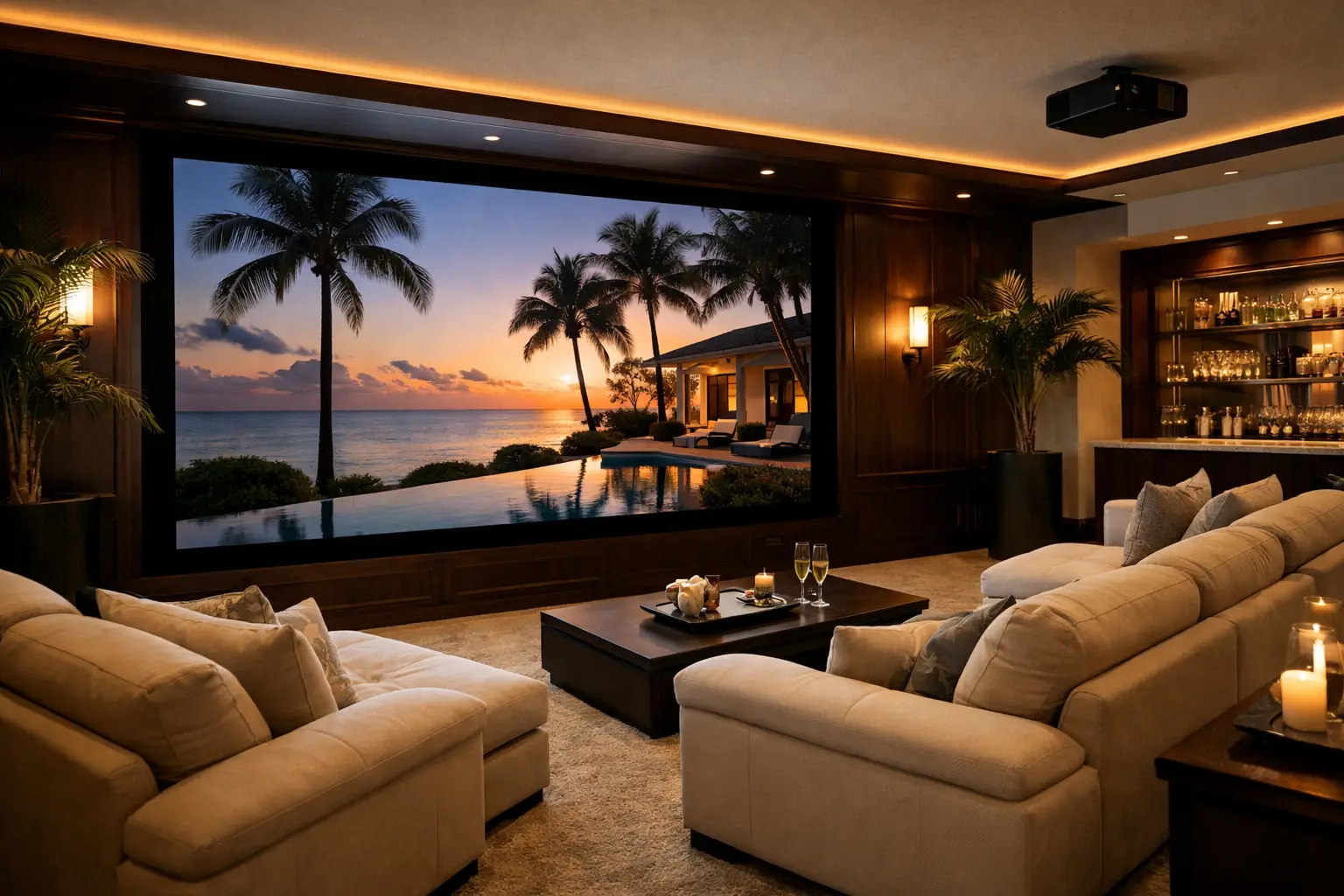
A large screen and premium speakers are only part of a great theater. The difference between a room that looks impressive and one that delivers a truly involving experience comes down to planning, calibration, and installation quality. A custom Home Theater Palm Beach homeowners can rely on should feel intuitive from the first movie night, with every component working together as designed.
For luxury residences, a theater is more than an entertainment upgrade. It is a dedicated space for family time, hosting, and enjoying cinematic sound and picture without compromise. That requires a system designed around the room, the home, and the way the household actually lives.
What Defines a Custom Home Theater in Palm Beach?
A professional home theater begins with the environment, not a product list. Room dimensions, ceiling height, seating positions, windows, wall materials, and ambient light all influence how a display and audio system will perform. Ignoring those details can produce uneven sound, screen glare, visible wiring, or controls that are frustrating to use.
The right display solution depends on the room. A high-performance television may be the practical choice for a brighter media room, while a projection system can create a more traditional theater experience in a dedicated, light-controlled space. Screen size should be selected from viewing distance and seating layout, rather than choosing the largest possible option.
Audio design deserves the same care. Proper speaker placement, subwoofer positioning, acoustic treatment, and system tuning help dialogue remain clear while music and cinematic effects retain their impact. A powerful system that is poorly calibrated can sound harsh or boomy. A well-designed system delivers detail, balance, and control at every listening level.
Design Decisions That Shape the Experience
The strongest theater projects address performance and appearance at the same time. Equipment can be concealed in custom cabinetry or a dedicated rack, with ventilation and future service access planned from the start. Speakers may be integrated into walls or ceilings when appropriate, while architectural finishes, acoustic panels, and lighting complement the room rather than competing with it.
Control is equally important. A single, easy-to-use interface can manage the display, surround sound, lighting scenes, motorized shades, and source selection. Instead of juggling remotes or navigating multiple apps, the homeowner can select a movie, lower the lights, and set the room for viewing with a simple command.
This integration is especially valuable in Palm Beach properties where entertainment often extends beyond one room. A theater can connect with whole-house audio, distributed video, outdoor entertainment areas, security, and climate control through a thoughtfully planned automation system. The goal is convenience without unnecessary complexity.
Why Professional Installation Matters
Premium equipment cannot compensate for poor infrastructure. Clean wiring, correctly sized conduits, reliable network connectivity, power planning, and properly ventilated equipment locations are the foundation of a dependable installation. They also protect the finished look of a high-end home.
A qualified integrator coordinates the technical details before walls are closed and finishes are installed. During renovations and new construction, this means working alongside architects, designers, builders, and other trades to keep technology aligned with the broader vision for the property. In an existing home, it means finding installation paths that preserve the home’s architecture and minimize disruption.
Professional calibration is the final step that many installations miss. Displays require accurate picture settings for the room’s lighting conditions. Speakers need measurement-based adjustment to account for seating and room acoustics. Controls must be programmed for clear, consistent operation. These details turn a collection of components into a system that performs as promised.
Planning for Service, Not Just Installation
A theater should remain enjoyable after the installation team leaves. Technology evolves, households change, and occasional support needs are inevitable. Selecting a partner that can document the system, provide ongoing service, and make thoughtful upgrades protects the investment over time.
Sentry Audio Video approaches each project as a complete integration, from early consultation and system design through installation, programming, and support. That accountability matters when the theater connects to other critical home systems and the homeowner expects everything to work reliably.
Whether you are building a dedicated cinema or refining a media room in Palm Beach, begin with a conversation about the room, your viewing habits, and the level of integration you want. The right design will make every gathering easier to host and every viewing experience more memorable.
Home theater installation for Palm Beach houses and condominiums
Palm Beach theater projects often begin with an architectural question: how can the room deliver a convincing cinema experience while respecting the home? The answer depends on the property. A dedicated room allows more freedom with speaker placement, light control and seating. A living room or condominium requires a careful balance between performance, furniture, views and the way the household uses the space throughout the day.
Sentry Audio Video plans home theater installations, upgrades and existing-system assessments for Palm Beach. We coordinate display placement, speakers, control and the network supporting the room. If your project includes a designer, contractor or building manager, early coordination helps establish the installation requirements before finishes are selected. Our regional team can be reached at (561) 717-3280; Palm Beach is a service area, and this page does not represent a separate island showroom.
North End, Midtown and Estate Section planning
We discuss service in the North End, Midtown and Estate Section based on the actual address and project scope. Neighborhood names help define coverage; they do not substitute for a site assessment or imply that Sentry has completed a project at a particular property. A waterfront living room with abundant glass presents different acoustic and light-control questions from an enclosed interior room, even when both homes are on the same street.
For condominium work, we ask about building access, approved work hours, equipment deliveries and any restrictions affecting wiring or sound transmission. Common walls and shared structural assemblies require special care. Permission to mount a television should never be assumed to include permission for every cable route or construction change. Defining those conditions in advance helps keep the project realistic and the proposal clear.
Picture design: projection, television and room lighting
When a projector makes sense
A projector is appealing when you want a large image and can control the room’s light. The screen, projector and seats need to be designed together. Throw distance determines whether the projector can produce the desired image from its available mounting position. Lens alignment, ceiling details and ventilation also matter. A projector should remain accessible for maintenance without requiring damage to finished surfaces.
The screen material needs to match the room and projector rather than simply carry an attractive specification. We review ambient light, viewing angles and the relationship between the front speakers and screen. If speakers sit behind an acoustically transparent screen, there must be sufficient space and a suitable layout. If they sit beside or below it, the design should keep dialogue connected to the picture without blocking sightlines.
When a large television is more practical
A television can be a strong choice for everyday viewing in a room that stays bright. We evaluate reflected light, seating distance, wall support and the depth of the installed assembly. Cabling and power need appropriate routes, and equipment hidden behind the display should remain serviceable. The design should account for how the screen looks when switched off as well as when a film is playing.
We also consider the complete video path. A new display may support features that an older receiver or concealed cable cannot reliably pass. During an upgrade, we identify those limits before assuming that a screen replacement will solve every picture problem. We test the intended sources and explain any equipment that must change to support the requested performance.
Acoustics and speaker design for clear, balanced sound
Natural stone, glass and large open spaces can make a room sound lively. That may suit conversation but reduce clarity during a soundtrack. We review the room’s reflective surfaces and speaker positions before proposing treatment. The aim is controlled sound that supports speech and music without turning every surface into an acoustic panel. A discreet treatment plan can work with the interior design when its role is understood early.
Surround sound and bass across the seating area
Speaker count is only one design choice. Front, surround and overhead channels should have useful separation, and seats should be located where the system can create a coherent presentation. We explain the compromise when ceiling access or furniture prevents an ideal arrangement. A layout that fits the room and is calibrated carefully can be more satisfying than an ambitious channel count with poorly positioned speakers.
Bass requires its own assessment. A subwoofer that sounds powerful in one chair may leave another seat with weak or uneven low frequencies. We evaluate placement options, crossover settings and the potential benefit of multiple subwoofers where appropriate. Adding more bass output is different from improving consistency; both should be considered against the room’s dimensions and the listener’s priorities.
Acoustic treatment is different from sound isolation
Panels, curtains and soft furnishings help manage reflections within the room. They do not necessarily prevent sound from reaching an adjoining bedroom or neighboring residence. Isolation can involve construction assemblies, doors and penetrations, with input from the appropriate professionals. We make that distinction clearly so a homeowner does not buy decorative treatment expecting a soundproof room.
Seating, controls and the experience of using the room
Comfortable seating begins with actual dimensions, including reclined depth and safe circulation. We plan sightlines from the seats people will occupy, not just a centered photograph of the room. A second row may require a riser and careful coordination of access, lighting and electrical work. We also consider where a guest will set a drink, reach a control and enter the room while a movie is playing.
Control should make the installation understandable. A well-designed command can turn on the appropriate equipment, select a source and place the room in a suitable viewing state. The selected platform and compatible devices determine the integration available. We explain what will be automated, which accounts remain with the homeowner and any licenses or subscriptions required. The household should receive a walkthrough rather than discover the operation by trial and error.
Installation coordination and commissioning
Plan cabling before surfaces close
During construction or renovation, we review speaker cable, network connections, display signal paths and accessible conduit where practical. Equipment needs ventilation and sufficient service space. A cabinet that fits the components on paper may still be unsuitable if heat cannot escape or cables cannot be connected without strain. Coordination with the cabinetmaker and project team helps prevent those conflicts.
In a finished home, the proposal should explain the anticipated wiring route and any limitations. Wall patching, painting, electrical work and special access should have clearly assigned responsibility. Concealed conditions can change the work required, so the process for approving additional scope should be understood before installation starts. This is especially useful in homes with decorative ceilings or surfaces that require specialist repair.
Test the system as the homeowner will use it
Commissioning includes verifying channel assignments, speaker levels, distances and subwoofer integration. Room-correction software provides useful information, but its output still needs review. For the picture, we check alignment, source settings and suitable display modes. If a project requires specialist measurement-based video calibration, that service should be identified separately rather than implied by a routine setup check.
We test source changes, everyday volume control and shutdown behavior before handover. Documentation should identify the equipment, relevant access arrangements and the practical support contact. Good labeling also helps a future technician understand the installation. These steps protect the time invested in the room and make later changes less disruptive.
Upgrade a Palm Beach home theater without replacing everything
An older room can have useful infrastructure even when its controls or video equipment feel dated. We assess speakers, wiring, displays, receivers, amplifiers and the network before proposing a replacement scope. Existing speakers may remain serviceable while a receiver or video cable needs updating. Conversely, a new processor cannot correct a damaged speaker or an unsuitable wiring path by itself.
Common goals include clearer dialogue, better streaming reliability, a larger picture, simpler controls and restoration after equipment failure. We prioritize the symptom and the desired outcome. A phased upgrade may preserve the room’s finishes while addressing its most restrictive components first. The proposal should state what remains, what changes and what limitations will continue after the work.
Takeovers when the original installer is unavailable
For an existing system, we start with the available documentation and account access. Programming files, licenses and manufacturer support can affect what is recoverable. Some systems can be repaired or reconfigured; others require a replacement component or new programming. We explain those dependencies before promising that an undocumented installation can be restored exactly as it was.
Prepare photos of the equipment, model numbers, the original proposal if available and a description of the problem. Do not factory-reset components simply to make them discoverable before an assessment. A reset may erase configuration that would help diagnose the fault. A takeover visit is an evaluation of the existing system, with further work subject to the agreed scope.
Support for seasonal use
If the home is occupied seasonally, discuss how the room will be checked before your return. Confirm that subscriptions and internet service remain active, and identify who may authorize a service visit. Remote assistance depends on compatible equipment and approved access. We can discuss appropriate support arrangements without promising that every equipment or internet fault can be resolved remotely.
Palm Beach home theater installation FAQs
Can you install a theater in an existing living room?
Yes, subject to the room and practical wiring access. We discuss display placement, discreet speaker options, furniture and normal lighting conditions. A multipurpose room can provide an excellent experience, but its acoustic and light-control limits should be understood before equipment is selected.
Can you retain my current speakers?
Possibly. We check their condition, placement and compatibility with the proposed system. Keeping suitable speakers can preserve the investment, while damaged or poorly located speakers may limit the result. The decision should follow an assessment rather than a blanket replacement policy.
How much will my Palm Beach theater cost?
Cost depends on the room, equipment, cable access, control requirements and construction coordination. We develop a written scope after reviewing those factors. Ask the proposal to identify AV equipment and labor separately from furniture, construction, electrical changes, permits and taxes so the total is understandable.
Do you service systems installed by another company?
We can assess an existing theater and discuss repairs, upgrades or a takeover. The available credentials, programming records, product support and equipment condition determine what is feasible. An initial diagnosis helps establish the next step without assuming that every component must be replaced.
What is the next step?
Call (561) 717-3280 with your address, room photos and a description of your goals. Explore our Palm Beach and South Florida service areas or compare a regional project through our Boca Raton custom theater installation page. For a separate property to the west, see smart home installation in West Palm Beach.