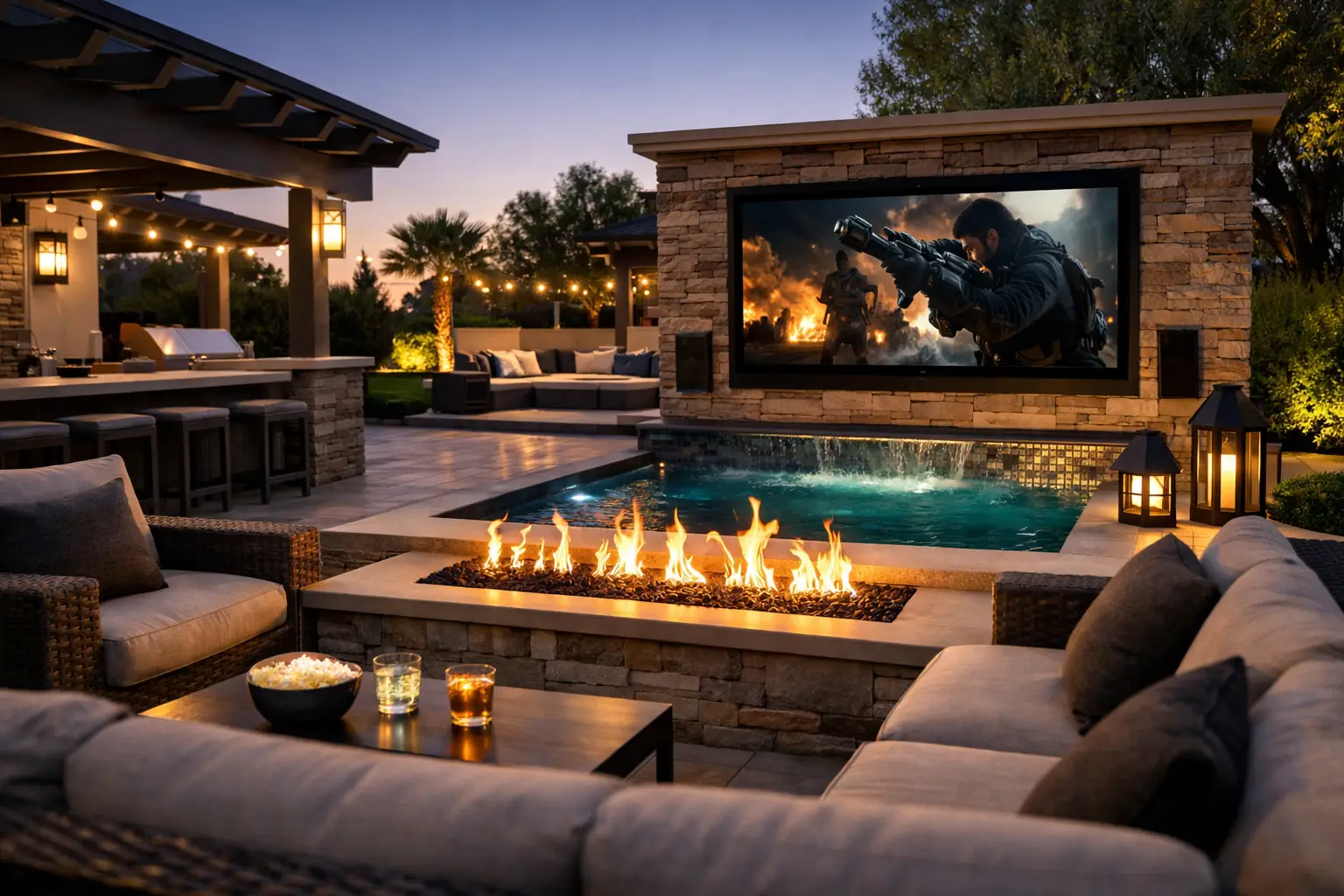
A great outdoor space should not force you to choose between beautiful design and dependable performance. A professionally planned backyard entertainment system design brings music, video, lighting, and control together so the patio, pool area, outdoor kitchen, and lounge spaces feel as intentional as the rooms inside your home.
The difference is rarely one impressive display or a powerful speaker. It is the planning behind the system: where people gather, how sound carries across the property, what equipment can withstand heat and moisture, and how easily the entire area responds when guests arrive. For South Florida properties especially, outdoor AV needs to be designed for real conditions, not just installed where there happens to be an open wall.
Start With How You Use the Space
Before selecting equipment, define what a successful evening outdoors looks like. A family that wants low-key music around the pool has different needs from a homeowner who regularly hosts dinner parties, watches major events on the terrace, or wants a dedicated outdoor cinema experience.
Think in zones rather than treating the backyard as one large room. The dining area may need clear, comfortable background music. The pool deck may benefit from wider sound coverage at a different volume. A covered lanai may be the right location for a weather-rated display and focused audio. Separating these areas gives you control without filling the entire property with unnecessary volume.
This approach also protects the atmosphere. Music should feel present where people are sitting, not overpowering near the grill while disappearing at the far end of the pool. Proper speaker placement, tuning, and zone control make that possible.
Build the System Around Outdoor Conditions
Outdoor equipment is exposed to more than rain. Direct sun, high humidity, salt air near the coast, wind-driven moisture, landscaping debris, insects, and changing temperatures all affect long-term performance. Equipment selected for an indoor media room is not automatically appropriate for a covered patio.
Weather-rated displays are designed for higher brightness, broader operating temperatures, and improved protection from the elements. Still, placement matters. A screen facing the afternoon sun can be difficult to watch regardless of its rating. A professional design considers sightlines, glare, shade structures, mounting height, and the distance between seating and the display.
Audio requires the same discipline. Outdoor speakers should be selected for the listening area and installed to distribute sound evenly. Landscape speakers can blend into planting beds while directing audio toward the home, helping reduce sound spill beyond the property. Surface-mounted speakers may be ideal beneath a covered structure, while discreet in-ground subwoofers add depth without dominating the visual design.
The equipment enclosure deserves equal attention. Amplifiers, network hardware, source components, and control processors need a protected, ventilated location with organized wiring and access for future service. A clean installation is more than an aesthetic detail. It supports reliability, simplifies maintenance, and keeps critical equipment out of harsh outdoor exposure.
Backyard Entertainment System Design Needs Strong Infrastructure
The visible components get attention, but the infrastructure determines whether the system remains dependable. Video distribution, high-resolution streaming, smart controls, surveillance access, and multiple audio zones all depend on a well-planned network and structured cabling strategy.
Whenever construction or renovation allows, run properly rated cables before hardscape, ceilings, walls, and landscaping are finished. This creates cleaner results and gives the system room to grow. It may be sensible to prepare for an additional display location, future speakers, security cameras, motorized shades, or a second outdoor gathering area even if those features are not installed immediately.
Wireless connectivity can be useful outdoors, but it should be engineered around the size and construction of the property. Pools, exterior walls, stone finishes, landscaping, and distance from indoor access points can affect coverage. Reliable outdoor wireless requires purposeful access point placement and network design, rather than hoping a signal from inside reaches every corner of the yard.
Power planning should also be addressed early. Displays, amplifiers, lighting controls, and network equipment need protected power and appropriate surge protection. The objective is not simply to make equipment turn on. It is to protect the investment and reduce avoidable service issues during Florida’s active storm season.
Make Control Simple Enough for Every Guest
An outdoor system should feel easy to operate, even when several technologies are working behind the scenes. If turning on the television requires multiple remotes, changing the music zone involves a separate app, and outdoor lighting is controlled somewhere else, the experience becomes frustrating quickly.
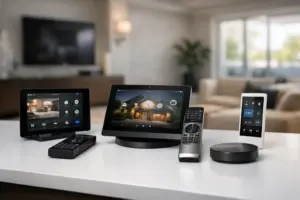
Centralized control brings those functions into one familiar interface. From a wall keypad, handheld remote, or mobile device, you can select a favorite playlist, adjust volume by zone, power on a display, control lighting scenes, or set the mood for a dinner party. A well-programmed system replaces confusion with simple, labeled choices.
The right level of control depends on the property. Some homeowners prefer a straightforward set of outdoor scenes, such as Pool Day, Dinner, and Movie Night. Others want the backyard integrated with the rest of the home, allowing audio, video, shades, climate settings, and security features to be managed from a single platform. Neither approach is automatically right. The best design reflects how the household actually lives.
Coordinate Entertainment With Lighting, Shades, and Security
Outdoor entertainment is stronger when it is considered alongside the other systems that shape the space. Lighting can define pathways, highlight landscaping, improve safety around steps and water features, and create a more inviting evening setting. It can also improve display viewing by reducing glare or providing low-level illumination during a movie.
Motorized shades or screens can be valuable in covered outdoor rooms where sunlight, wind, privacy, or insects affect comfort. When coordinated with the AV system, these elements can support a better viewing experience without requiring manual adjustments throughout the evening.
Security integration adds practical value as well. Homeowners may want to view perimeter cameras from an outdoor display, receive alerts through a control interface, or monitor entry points while entertaining. The goal is not to make a backyard feel overly technical. It is to give the property owner confident control of the environment.
Prioritize Sound Quality Without Creating a Neighborhood Problem
More volume is not the same as better sound. In fact, the strongest outdoor installations often feel more refined because speakers are placed closer to listeners and distributed across the space. This allows for clear, full sound at comfortable levels.
Directionality, speaker spacing, landscaping, walls, and open water all influence how audio travels. A pool can reflect sound differently than a lawn, while an open patio may require a different approach than an enclosed courtyard. For properties near neighboring homes, a thoughtful design can focus sound toward the intended listening areas and reduce unwanted spillover.
This is one reason an on-site assessment matters. Plans and photos are useful, but real-world conditions reveal where equipment should be installed, where cabling can be concealed, and where acoustic compromises may be necessary. An experienced integrator can explain those trade-offs before installation begins.
Plan for Serviceability and Long-Term Ownership
A premium outdoor entertainment system should not become difficult to support once the project is complete. Equipment should be documented, wiring should be labeled, and components should remain accessible for updates or service. These details are often invisible on day one, yet they have a direct impact on ownership experience over time.
Choose a partner that can design the system, coordinate with the builder and landscape professionals, complete the installation cleanly, program the controls, and remain available afterward. Sentry Audio Video approaches outdoor projects as part of the larger technology ecosystem of the property, whether the goal is a focused patio upgrade or a fully integrated estate.
The most satisfying outdoor spaces do not announce their technology. They make it easier to enjoy the people, food, music, and moments that bring everyone outside. Start with a site consultation and a clear picture of how you want to use the space, then let the design support that vision for years to come.