
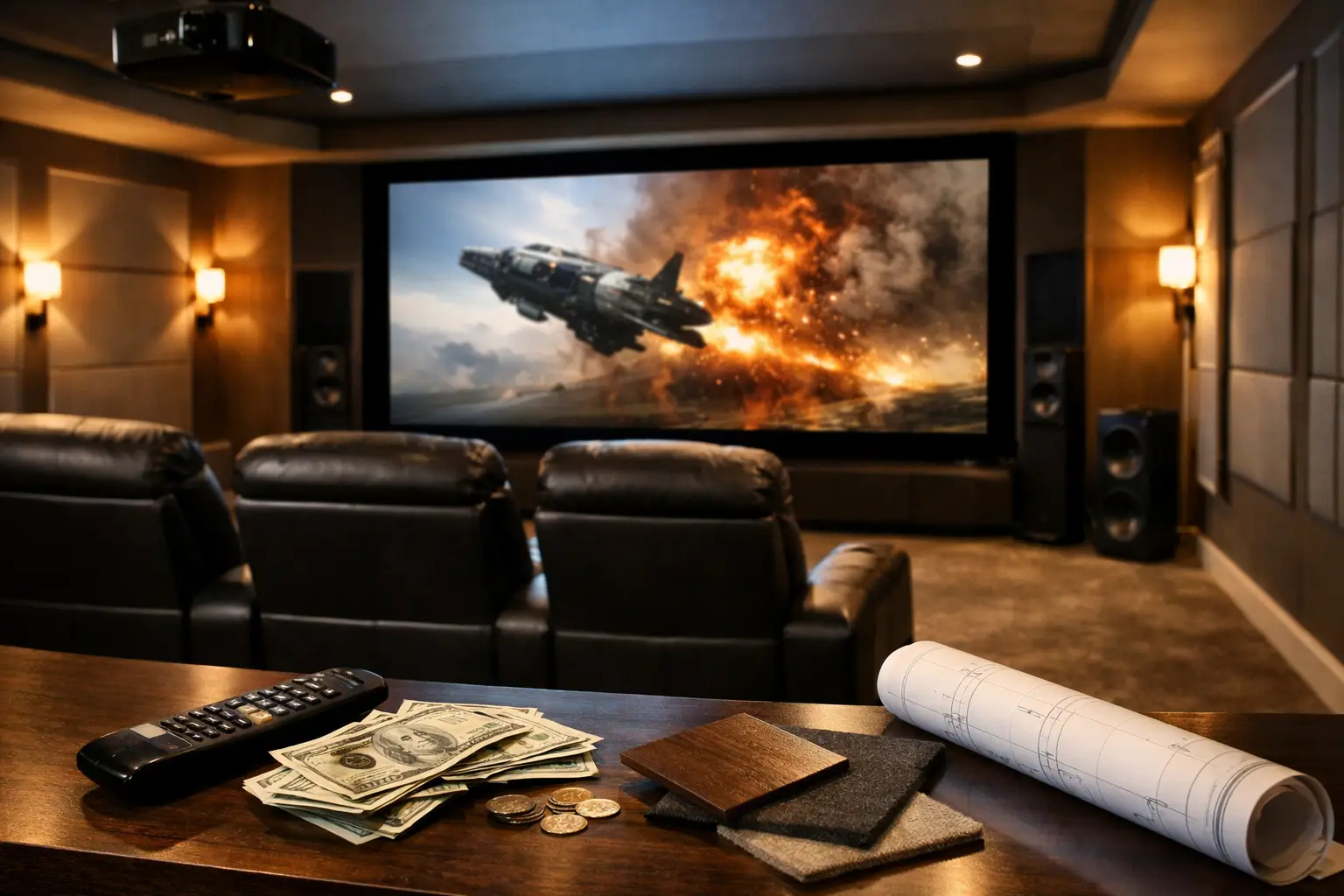
A dedicated theater is not simply a large display, a projector, and a few speakers placed in a spare room. It is a purpose-built environment where picture, sound, lighting, seating, control, and room construction work together. So, How Much Does a Dedicated Home Theater Cost? For a professionally designed and installed room, most homeowners should plan for a substantial investment that commonly begins around $50,000 and can extend well beyond $250,000 for highly customized spaces.
The number can vary dramatically because the room itself is often as important as the equipment inside it. The right question is not only what the system costs, but what level of performance, finish, reliability, and integration you expect every time the room is used.
Typical Dedicated Home Theater Cost Ranges
A thoughtfully designed entry-level dedicated theater generally starts in the $50,000 to $100,000 range. At this level, homeowners can expect a quality projection or large-format display solution, immersive surround sound, acoustical treatments, theater seating, lighting control, and professional installation. The room will deliver a significant step up from a multipurpose media room, particularly when the lights go down and a film begins.
Many premium dedicated theaters fall between $100,000 and $200,000. This investment typically allows for stronger audio performance, more refined acoustic design, upgraded seating, custom millwork or wall treatments, sophisticated control, and a more polished visual experience. It may also include motorized shades, dedicated equipment racks, enhanced networking, and integration with the rest of the home.
For luxury residences where every detail is tailored, theater investments of $250,000 and above are common. These rooms may include a large acoustically transparent screen, high-output projection, reference-level speaker systems, multiple subwoofers, custom star ceilings, tiered seating platforms, detailed architectural finishes, and tightly engineered sound isolation. The final figure can rise further when the theater is part of a major renovation or new construction project.
What Drives the Cost of a Dedicated Home Theater?
The equipment matters, but a dependable theater is the result of many coordinated decisions. A proposal should account for the full system rather than treating the display or projector as the entire project.
Room dimensions and construction
A room with favorable dimensions is easier to optimize for sound and sightlines. A narrow room, low ceiling, unusual shape, or extensive glass may require more engineering and treatment to achieve the intended result. If walls, ceilings, flooring, or door assemblies need to be modified for sound control, construction becomes a meaningful part of the investment.
Sound isolation is especially valuable in homes where bedrooms, offices, or common areas sit near the theater. It helps contain high-impact bass and reduces outside noise that can interfere with quiet dialogue. Isolation requires planning at the framing and construction stages, which is why it is most efficient to address before finishes are complete.
Video performance
The display system is selected around the room, not just a specification sheet. Screen size, viewing distance, ambient light, ceiling height, and seating layout all affect the proper solution. A dedicated projection system can create the cinematic scale many homeowners want, while a large-format display can be an excellent choice for rooms where controlling light is more difficult.
The screen itself also matters. Acoustic transparency allows speakers to be positioned behind the image, creating a more natural relationship between on-screen action and sound. Specialized screen materials, masking options, and custom framing can further shape both performance and appearance.
Audio, acoustics, and bass management
A theater can have premium speakers and still sound disappointing if acoustics are ignored. Reflections from hard surfaces can blur dialogue, while uneven bass can make some seats feel overwhelming and others feel thin. Professional acoustic design addresses these issues through speaker placement, treatment strategy, calibration, and subwoofer integration.
Immersive audio layouts add cost because they require additional speakers, amplification, processing, wiring, and installation labor. They also create a more convincing sound field, with effects moving above and around the audience rather than staying confined to the front of the room. For many clients, this is the upgrade that makes a theater feel truly transportive.
Seating, sightlines, and interior finishes
Theater seating ranges from refined recliners to fully custom rows with coordinated fabrics, lighting, and accessories. A second row may require a raised platform so every guest has a clear view of the screen. That platform must be engineered with safe steps, appropriate dimensions, and integrated wiring where needed.
Interior finishes also have a dual role. Fabric walls, acoustic panels, wood detailing, dark ceiling treatments, and controlled accent lighting establish the theater’s character while supporting better viewing and listening conditions. A room designed as an extension of the home’s architecture will require closer coordination among the AV integrator, designer, and construction team.
Control, networking, and equipment infrastructure
The best theater experience is uncomplicated for the people using it. A professionally integrated control system can prepare the room with one command: select a source, set the audio mode, lower shades, dim the lights, and start the presentation. The cost of control reflects the level of integration, the number of connected systems, and the desired user interface.
Reliable infrastructure is equally essential. Properly ventilated equipment racks, clean cable management, dedicated network planning, power protection, and labeling may not be the most visible parts of the room, but they protect performance and simplify future service. These details distinguish a polished installation from a collection of components.
Dedicated Theater vs. Multipurpose Media Room
A multipurpose media room can be an excellent entertainment space, but it is not the same as a dedicated theater. Media rooms are designed to serve several daily functions, often with windows, brighter finishes, flexible furniture, and shared living space. They commonly cost less because the room is not built around controlled acoustics, sightlines, and cinematic presentation.
A dedicated theater makes different trade-offs. It prioritizes light control, sound performance, comfortable viewing angles, and an environment that disappears once the movie starts. If a homeowner wants an immersive room for family movie nights, hosting, and private viewing, the dedicated approach delivers benefits that a general living area cannot fully replicate.
New Construction and Renovation Considerations
The most cost-effective time to plan a theater is before walls are closed. During new construction or a significant renovation, wiring routes, speaker locations, equipment space, structural support, shading, lighting, and sound isolation can be coordinated from the start. This creates a cleaner result and avoids unnecessary rework later.
Existing homes can absolutely support exceptional theaters, but the scope must be evaluated carefully. Access limitations, finished surfaces, ceiling conditions, and the location of adjacent rooms can influence the installation approach. A site evaluation should identify these realities early, then shape a design that respects the property while meeting the homeowner’s expectations.
How to Plan the Right Investment
Start with the room and the experience you want to create. Consider how many people will use the theater regularly, whether it will host larger gatherings, what level of light control is possible, and how the space should connect with the rest of the home. Those answers guide choices that have a much greater impact than selecting equipment in isolation.
A detailed design proposal should clearly separate equipment, installation, programming, construction coordination, and finish-related allowances. It should also explain what is included in calibration, client training, and ongoing support. This gives homeowners a practical view of the complete investment and reduces surprises once work begins.
For homeowners in South Florida, Sentry Audio Video approaches dedicated theaters as complete performance environments, with system design and installation coordinated around the room, the property, and the people who will enjoy it. The goal is not simply impressive specifications. It is a theater that looks refined, performs consistently, and feels effortless to use for years to come.