A camera over the front door is easy. A truly protected home is more complex. If you are asking how to integrate home security, the real question is how to make surveillance, alarm response, lighting, access control, and daily living work together without gaps, false alerts, or frustrating controls.
That difference matters most in larger homes, second residences, and properties with multiple entry points, outdoor living areas, gates, and service access. In those environments, separate devices rarely deliver the level of performance homeowners expect. Integration does.
What home security integration actually means
Home security integration means your protection systems are designed to operate as one coordinated environment rather than a collection of isolated parts. Your cameras should communicate with your alarm system. Your entry points should trigger intelligent notifications. Exterior lighting should respond to events, not just a timer. Locks, gates, intercoms, and remote access should all be managed through a control experience that makes sense.
This is where many projects either succeed or fail. Adding more devices does not automatically improve security. In some cases, it creates more noise, more complexity, and less confidence. A well-integrated system is built around clear priorities: deterrence, awareness, response time, and ease of use.
How to integrate home security with a full-home strategy
The strongest approach starts with the property itself. Before choosing equipment, look at how the home is used. A primary residence with children, staff access, frequent deliveries, and a pool area has different requirements than a seasonal property that may sit unoccupied for extended periods.
Perimeter protection usually comes first. That includes front entry doors, secondary doors, accessible windows, gates, garage access, and outdoor zones where movement should be noticed early. From there, interior security fills in the next layer with alarm sensors, key rooms, panic capability, and controlled access.
Video surveillance should support that structure, not sit beside it as a separate system. Cameras need to cover meaningful paths of travel, points of approach, and decision zones such as front walks, driveways, side yards, rear patios, and entry vestibules. Good coverage is not about putting cameras everywhere. It is about putting them where identification and event verification actually happen.
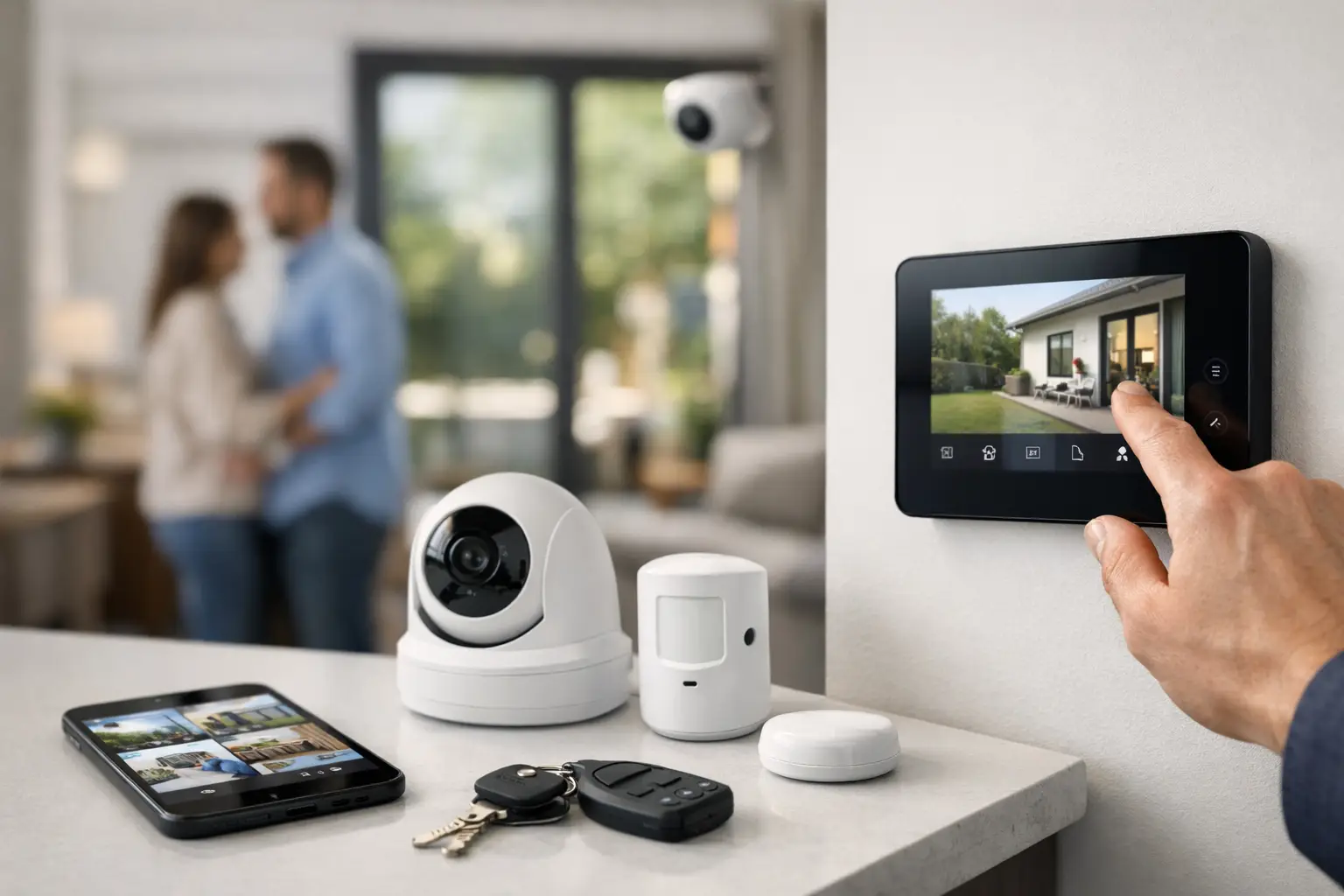
Then comes automation. This is where integration becomes valuable in everyday use. When the system is armed, selected doors can lock automatically. If motion is detected in a protected exterior zone at night, lights can activate while video recording is prioritized. If someone rings the gate or front door, the homeowner can see the live feed, speak through an intercom, and grant access from a single interface.
Start with the core systems
A professionally integrated security system usually centers on five components: intrusion detection, surveillance, access control, lighting response, and system control.
Intrusion detection covers doors, windows, glass break, motion sensing, and alarm logic. This is the backbone of active security, especially when the property is unoccupied or overnight.
Surveillance adds context. It helps verify events, document activity, and reduce uncertainty. High-quality cameras matter, but placement, recording strategy, and remote viewing experience matter just as much.
Access control includes smart locks, gate entry, garage management, and in some homes, controlled access for wine rooms, offices, or service areas. This is often underestimated, yet it has a direct impact on daily convenience and long-term security.
Lighting response plays two roles. It improves visibility for cameras and creates an immediate deterrent when unexpected activity occurs. The right response is situational. A soft pathway light at arrival is useful. A full exterior scene during an after-hours perimeter event may be more appropriate.
System control ties everything together. This is where homeowners either enjoy the system or stop using half of it. If core functions are fragmented across multiple apps and inconsistent interfaces, adoption drops quickly. A single, intuitive control method changes that.
Integration works best when it is tailored to the property
There is no universal blueprint for how to integrate home security because every property has different patterns, risks, and architectural constraints. A waterfront home with expansive glass, detached guest space, and multiple outdoor entertainment zones requires a different plan than a downtown residence with controlled building access and limited perimeter exposure.
The design should account for sightlines, landscaping, visitor flow, blind spots, lighting conditions, and how the household actually moves through the space. It should also reflect lifestyle priorities. Some clients want aggressive awareness and immediate alerts. Others want discreet protection with fewer notifications and more background automation.
This is also where structured infrastructure becomes critical. Reliable performance depends on more than devices. Cabling, network design, equipment placement, backup power, and secure remote access all affect whether the system performs consistently over time.
Common mistakes that weaken security integration
One of the most common issues is treating security as an add-on after the home is already finished. When surveillance, access control, and automation are introduced too late, camera angles are compromised, wiring paths are limited, and system logic becomes reactive instead of intentional.
Another mistake is overloading the homeowner with alerts. More notifications do not create more security. They often create fatigue. A better approach is event-based intelligence that prioritizes unusual activity, critical zones, and meaningful exceptions.
Inconsistent control is another problem. If locks are managed one way, cameras another way, and alarms through a third system, response slows down. During a real event, speed and clarity matter.
There is also the issue of appearance. In premium homes, visible hardware, poor camera placement, and cluttered retrofits can undermine the design of the property. Security should be present and effective, but it should also be professionally executed.
Why professional integration matters
A high-performance home security system should do more than function on day one. It should remain reliable through weather changes, occupancy changes, renovations, service access, and evolving family routines. That takes planning, commissioning, and ongoing support.
Professional integration helps align the security plan with the architecture, the network, and the rest of the smart home. It also allows for more thoughtful programming. For example, an away mode can do more than arm the alarm. It can adjust shades, activate selected lighting schedules, verify locked doors, and increase surveillance monitoring around key areas.
For homeowners in markets such as Boca Raton, Fort Lauderdale, and surrounding luxury communities, that level of coordination is often the difference between a system that looks impressive during installation and one that still delivers confidence months or years later.
A company like Sentry Audio Video approaches this from the full-property perspective. That matters because security rarely stands alone in a well-appointed home. It overlaps with gates, audio alerts, lighting scenes, outdoor spaces, network performance, and remote property management.
Questions to ask before you move forward
Before any system is designed, homeowners should be clear on what they want the system to accomplish. Is the top priority family safety, perimeter awareness, managing access for staff and vendors, protecting a vacant property, or all of the above? Those answers shape the design.
It also helps to ask how the system will be used every day. Will you arm and disarm from a touch panel, mobile device, or entry keypad? Do you want live video available from one platform or several? Should the system respond differently when the home is occupied versus vacant?
And just as important, ask who will support it after installation. Integrated security is not only about hardware selection. Long-term performance depends on service, updates, testing, and a partner who takes ownership when something needs attention.
A smarter standard for home protection
The goal is not simply to add security products. It is to create a home that is more aware, more responsive, and easier to manage. When surveillance, alarms, access, and automation are thoughtfully integrated, the result is not just greater protection. It is greater confidence in how the home operates every day.
If you are planning a new build, a major renovation, or an upgrade to an existing property, this is the right time to think beyond individual devices. The strongest systems are designed with the whole home in mind, and that approach pays off every time you arrive, leave, or check in from anywhere.