A gate camera that captures a vehicle is useful. A security system that identifies the plate, records the time, and presents that information when it matters is far more valuable. License Plate Recognition gives property owners a practical way to know which vehicles approached, entered, or exited a monitored area without relying on a guard, a handwritten log, or hours of video review.
For South Florida homes, private communities, offices, hospitality properties, and commercial facilities, this capability can add meaningful context to a surveillance system. It is not simply a camera feature. When designed correctly, it becomes part of a coordinated security strategy that supports access control, incident investigation, and day-to-day property awareness.
What License Plate Recognition Actually Does
License Plate Recognition, often called LPR or automatic license plate recognition, uses specialized cameras and software to detect a plate within a video image and convert the visible characters into searchable data. Instead of scrubbing through footage to find a specific vehicle, an authorized user can search for a plate number, review a time range, or receive an event notification tied to a recognized or unknown vehicle.
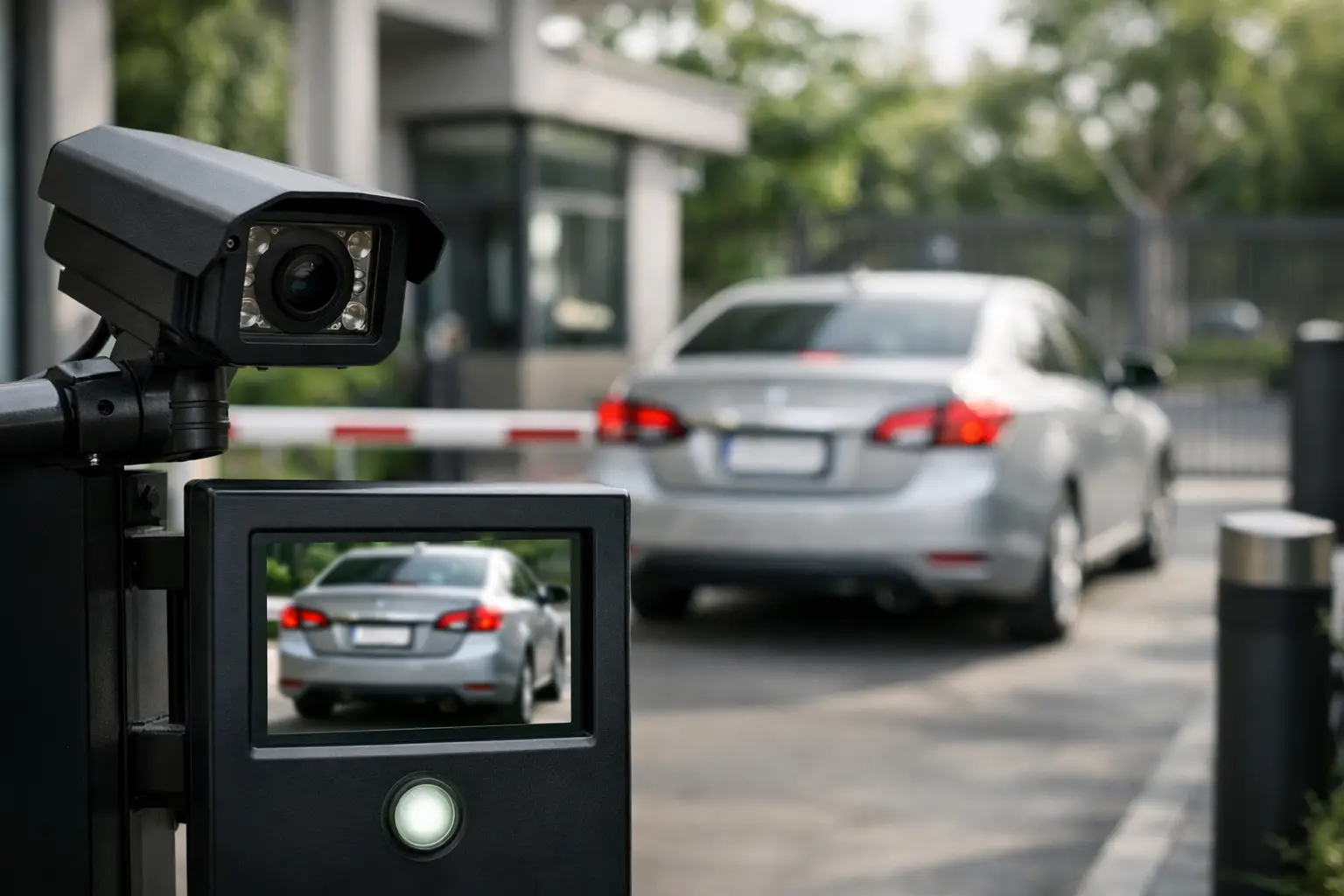
The strongest systems do more than collect plate numbers. They preserve the associated video clip, capture an overview image of the vehicle, record the direction of travel, and document the precise time and camera location. That context matters. A plate number alone may not explain whether a vehicle stopped at a gate, entered a service drive, circled a property, or left after an incident.
LPR is most effective at defined traffic points: vehicle gates, driveway entrances, parking lot lanes, loading areas, service entrances, and private roadways. It can also support controlled-access environments by comparing detected plates against an approved list or a watch list, depending on the property’s policies and the system’s configuration.
Where Plate Recognition Delivers Real Value
At a residence, plate recognition can provide an additional layer of awareness at a driveway or gate. Homeowners may want a clear record of recurring service vehicles, visitors arriving during a particular window, or an unfamiliar vehicle near the entrance. For larger estates and gated properties, it can help security personnel confirm activity at the perimeter while giving the owner a more organized record than standard motion alerts alone.
Commercial properties often have more operational uses. A facility manager may need to verify vendor arrivals, review activity at a delivery entrance, or investigate a parking-related complaint. For offices, multifamily properties, country clubs, and hospitality environments, LPR can help establish a searchable record of vehicle activity while reducing the time spent reviewing footage after the fact.
The benefit is not that a system replaces human judgment. It gives the people responsible for the property faster, clearer information. If a concern arises at 7:40 p.m., the security team should be able to locate the relevant entry point, review associated footage, and determine what occurred without searching through an entire evening of recordings.
Camera Placement Determines Recognition Quality
A common mistake is assuming any surveillance camera with a view of a driveway can reliably read plates. General-purpose cameras are excellent for showing activity, faces, and a broad scene, but plate recognition is a specialized task. The camera must be positioned and configured for the lane, speed, lighting, angle, and distance involved.
The ideal capture point allows vehicles to move through a predictable path. A camera placed too high, too far away, or at an extreme side angle may still produce usable overview video while failing to capture readable characters consistently. Reflections, headlights, tinted covers, rain, shadows, and direct sun can all affect results. In South Florida, intense sunlight and sudden weather changes make careful planning particularly valuable.
Professional design considers the camera’s focal length, mounting height, infrared performance, exposure settings, and field of view. It also considers what happens after dark. A plate can be visible to the human eye and still be overexposed or blurred in a poorly configured camera image. The goal is not merely to install a camera at the gate. It is to create a dependable capture zone that works in the real conditions of the property.
Recognition Accuracy Is Not a Guarantee
License plate recognition is powerful, but it should be discussed honestly. Performance depends on installation quality and conditions. Vehicles traveling quickly, plates obscured by dirt or glare, unusual plate designs, poor lighting, and obstructed views can reduce recognition accuracy. A system may also have difficulty when several vehicles overlap in a tight entry lane.
That is why LPR should be paired with conventional surveillance coverage. The plate camera is designed to capture readable plate data. An overview camera provides the wider scene, vehicle color, vehicle type, occupant activity, and surrounding context. Together, those views create a stronger evidentiary record than either camera alone.
Alerting also requires discipline. Not every unfamiliar plate should trigger an urgent notification. On a busy property, excessive alerts quickly become noise. A thoughtful configuration might reserve immediate notifications for an approved watch list, after-hours activity, restricted service entrances, or a vehicle that remains in a designated area longer than expected. The right notification plan is based on how the property operates, not on turning on every available alert.
Integrating LPR With Access Control and Surveillance
The greatest value often comes from integration. A well-designed system can connect plate data with video surveillance, access control, intercoms, gate operators, and centralized management software. This allows authorized staff to view a vehicle event alongside related security information, rather than moving between disconnected applications.
For example, a gated property may use plate recognition as a verification layer for frequent authorized visitors while retaining an intercom or credential-based process for other arrivals. A commercial site may use LPR records to investigate a delivery issue by comparing the vehicle’s arrival time with a door access event and nearby camera footage.
Automation should be approached carefully. Using a recognized plate as one factor in a controlled entry process can be convenient, but access decisions should reflect the risk level of the site. A private driveway has different requirements than a sensitive commercial facility. In higher-security applications, plate recognition may be most appropriate as a verification and audit tool rather than the only condition for entry.
Privacy, Retention, and Responsible Use
Because LPR turns video into searchable information, property owners should establish clear rules for who can access it, how long records are retained, and why data is being collected. A system should serve a defined security or operational purpose, not become an unmanaged archive.
For businesses and managed properties, written procedures are especially helpful. Designate authorized users, set appropriate retention periods, protect administrative credentials, and review access logs when necessary. Signage and policies may also be appropriate depending on the environment and legal guidance. Requirements can vary by location and property type, so owners should consult qualified legal counsel on privacy and notice obligations.
Cybersecurity also belongs in the conversation. Cameras, recorders, network switches, and remote viewing tools should be installed on a properly designed network with secure credentials, current firmware practices, and controlled remote access. Physical security and network security are closely connected when surveillance systems are IP-based.
Planning a System That Fits the Property
A successful LPR project begins with a site evaluation, not a product selection. The integrator should understand where vehicles enter, how traffic moves, whether gates create a natural stopping point, what lighting conditions exist, and which users need access to the information. They should also review network capacity, recording requirements, and whether the system will integrate with existing security infrastructure.
For a luxury residence, the priority may be discreet equipment placement, reliable gate coverage, and simple access through a centralized control interface. For a commercial property, the focus may be multiple entry lanes, defined user permissions, longer retention, and dependable monitoring across several areas. Both require clean installation, deliberate programming, and a support plan after the project is complete.
Sentry Audio Video approaches security integration as a complete system, with attention to the cameras, structured cabling, network foundation, recording platform, and user experience. The result should feel organized and dependable, not like a collection of isolated devices.
The right License Plate Recognition system gives a property more than another camera angle. It provides searchable, time-stamped vehicle intelligence that can make access events easier to verify and incidents faster to investigate. When camera placement, integration, privacy practices, and ongoing support are handled with care, that intelligence becomes a meaningful part of protecting the people and places that matter most.