A high-performance property can have exceptional displays, surveillance cameras, wireless access points, and automated controls, yet still disappoint when the wiring behind the walls is poorly planned. Structured cabling contractors create the physical foundation that allows every connected system to communicate reliably, perform consistently, and remain serviceable long after construction is complete.
For homeowners, that foundation supports the experience of a connected residence: dependable Wi-Fi, whole-home audio, video distribution, security, climate control, motorized shades, and outdoor entertainment. For businesses, it supports communications, surveillance, access control, conference rooms, digital displays, and the network systems that keep operations moving. The quality of the cabling plan often determines whether those systems feel effortless or require ongoing attention.
What Structured Cabling Is Really Designed to Do
Structured cabling is an organized infrastructure of low-voltage cables, pathways, racks, terminations, patch panels, and labeling. Rather than treating each technology as a separate installation, it creates a coordinated system designed to support current needs and future changes.
A properly designed system typically begins at a central equipment location. This may be a dedicated technology room, closet, or rack that houses network equipment, distributed audio components, surveillance recorders, and control hardware. From there, cables run through planned pathways to rooms, entertainment areas, cameras, wireless access points, access control devices, and other endpoints throughout the property.
The difference is not simply whether a cable reaches a device. It is whether that cable is the right type, installed along the right route, terminated correctly, tested, documented, and accessible for future service. A cable hidden behind finished walls can be difficult to correct later. Decisions made before drywall and millwork are installed have an outsized effect on the technology experience for years to come.
Why Structured Cabling Contractors Matter Before Walls Close
Technology requirements tend to grow after a move-in or renovation is complete. A homeowner may add cameras at the gate, upgrade a media room, extend Wi-Fi to the patio, or bring pool controls into the automation system. A business may reconfigure offices, add meeting spaces, expand surveillance coverage, or introduce new communications equipment.
Experienced structured cabling contractors plan for these realities. They evaluate the property’s layout, construction details, intended systems, and likely growth areas before recommending cable runs and equipment locations. That planning can include reserved conduits, additional cable capacity, accessible pull points, and properly sized pathways. These provisions create options without requiring disruptive work later.
This is particularly valuable in luxury homes and commercial environments with detailed finishes. Stone walls, custom ceilings, built-in cabinetry, and landscaped outdoor areas are not ideal places to revisit once the project is complete. Thoughtful prewire work protects both the visual standard of the property and the flexibility of its technology.
The Network Is Not a Standalone System
A common mistake is treating the network as separate from entertainment, security, and automation. In a professionally integrated property, the network supports nearly everything. Video surveillance needs reliable connectivity and power. Wireless access points need carefully positioned data runs. Smart controls communicate over the network. Audio, video, and communications systems may all depend on stable network performance.
That is why cabling design should be coordinated with the entire technology scope. A camera location may affect network switch capacity. A television location may need data, video, control, and audio connections. An outdoor entertaining area may require weather-appropriate pathways and carefully planned equipment protection. Coordination avoids last-minute compromises that can limit performance or clutter finished spaces.
What to Expect From a Professional Cabling Scope
The strongest projects begin with a discovery process, not a generic wiring package. The contractor should ask how the property will be used, which rooms need coverage, where equipment will live, and what systems may be added later. A family with multiple media zones has different requirements than a business with conference rooms, guest Wi-Fi, and monitored entry points.
The design should then identify cable types and destinations based on actual performance needs. Category cabling is commonly used for network-connected devices, while fiber may be appropriate for certain long-distance runs, high-capacity applications, or connections between buildings. Coaxial cabling, speaker wire, control wiring, and specialized security cabling may also have a place in the design. There is no single cable type that solves every requirement.
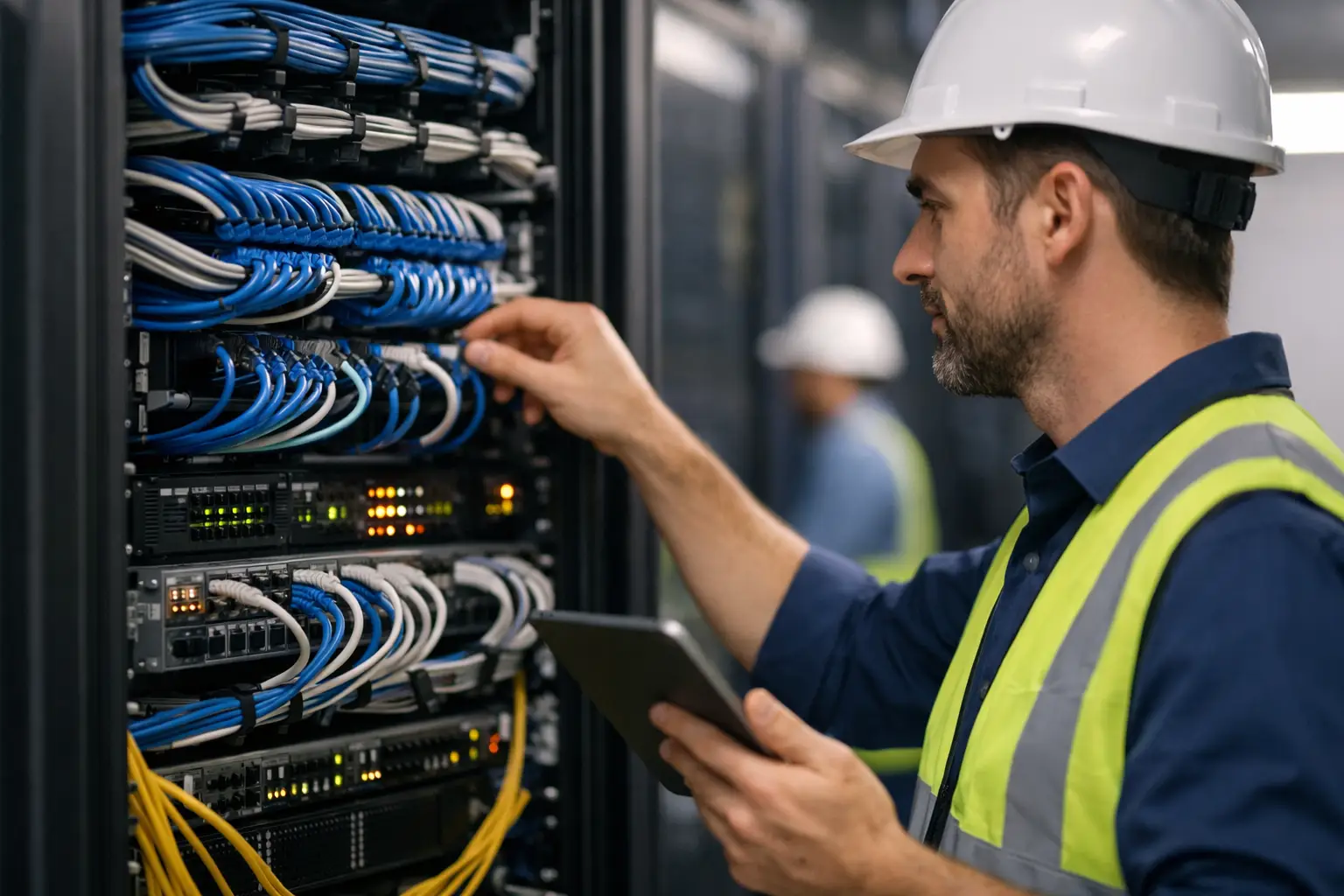
A complete scope also addresses the central equipment location. Equipment racks need adequate space, ventilation, service access, and a logical layout. The room should not be an afterthought or a crowded corner where network gear, audio components, and surveillance hardware are difficult to reach. Clean rack construction and cable management make service more efficient and make future expansion far easier.
Testing, Labeling, and Documentation Are Part of the Work
A finished cabling installation should be more than cables that disappear into walls. Every run should be identified at both ends, terminated to professional standards, and tested. Clear labeling gives technicians a direct way to trace a connection, troubleshoot a device, or make future changes without unnecessary disruption.
Documentation matters just as much. A record of cable locations, equipment connections, and rack assignments gives the property owner a useful reference long after the initial project team has left. It also helps protect the value of the installation when a property changes hands or a business evolves.
These details may not be visible from a finished living room, lobby, or conference room. They are visible in the system’s reliability, serviceability, and ability to adapt.
Questions to Ask Structured Cabling Contractors
Selecting a partner for cabling work requires more than comparing a list of cable runs. Ask how the proposed design supports the systems you plan to use, how future expansion will be handled, and where the central equipment will be located. The answers should be specific to your home or facility, not a one-size-fits-all response.
It is also wise to ask who is responsible for coordinating the cabling with AV, security, automation, communications, and network equipment. When separate providers work independently, gaps can appear between scopes. One partner who understands the full technology environment can take greater ownership of system performance from design through final commissioning.
Ask about testing procedures, labeling standards, documentation, and post-installation support. A professional contractor should be comfortable explaining how the work will be verified and how the installation can be serviced in the future. The goal is not simply to complete the rough-in phase. The goal is to deliver infrastructure that supports the finished property as intended.
The Trade-Off Between More Cabling and More Flexibility
Every project requires practical choices. Not every wall needs every possible cable, and overspecifying a property without a clear purpose can add complexity without meaningful benefit. The right approach is to prioritize the locations where performance, reliability, or future access will matter most.
For example, a media room, office, equipment room, gate, exterior camera location, and wireless access point each deserve deliberate planning. Secondary spaces may need simpler provisions. In some situations, conduit is more valuable than additional cable because it preserves a route for later additions. In other situations, installing extra category cable during construction is the most sensible way to protect flexibility.
The answer depends on the property, the construction timeline, and the systems being integrated. A qualified partner should explain these trade-offs clearly and recommend a design aligned with the way you will use the space.
A Cleaner Path to Long-Term Technology Performance
Structured cabling is one of the few technology investments that becomes harder to improve after finishes are complete. When it is designed early and installed with care, it gives every connected system a stronger foundation while keeping equipment, wiring, and future service work organized.
For projects across South Florida, Sentry Audio Video brings cabling, network infrastructure, security, AV, and automation under one accountable team. The right next step is a detailed conversation before construction advances: identify the systems that matter most, protect the pathways that will be difficult to revisit, and give your property the infrastructure to perform with confidence for years ahead.