A network can look excellent on paper and still fall short when the cabling is not designed for the real distance, pathway, equipment, and future demands of the property. If you are asking which cabling supports 10 gigabit, the short answer is Cat6A copper and fiber optic cable are the most dependable choices. Cat6 can also carry 10 Gigabit Ethernet in the right conditions, but its shorter supported distance makes it a more situational answer than a long-term standard.
For a luxury residence, office, hospitality space, or mixed-use property, the right decision is not simply about achieving a speed test today. It is about creating infrastructure that supports high-resolution video distribution, surveillance, wireless access points, centralized storage, communications, and networked control systems without forcing a disruptive recabling project later.
Which Cabling Supports 10 Gigabit Reliably?
10 Gigabit Ethernet, commonly written as 10GbE, moves data at up to 10 gigabits per second. It is typically delivered over copper as 10GBASE-T or over fiber using optical transceivers. Both are proven technologies, but they serve different installation conditions.
Cat6: Suitable for Short 10GbE Runs
Cat6 can support 10GbE, generally up to 55 meters, or about 180 feet, under favorable conditions. That distance can be reduced by factors such as cable bundle size, nearby electrical interference, installation quality, and the amount of crosstalk between adjacent cables.
For a short connection inside an equipment rack, between nearby network rooms, or within a compact commercial suite, Cat6 may be appropriate. The concern is not that Cat6 is incapable of 10GbE. The concern is leaving too little margin when the cable route changes, equipment moves, or additional services are added.
A proper installation includes more than the cable itself. Patch cords, keystone jacks, patch panels, termination methods, and testing all affect the finished channel. A Cat6 cable run can lose its intended performance if lower-rated components are introduced or terminations are poorly executed.
Cat6A: The Copper Standard for 10 Gigabit
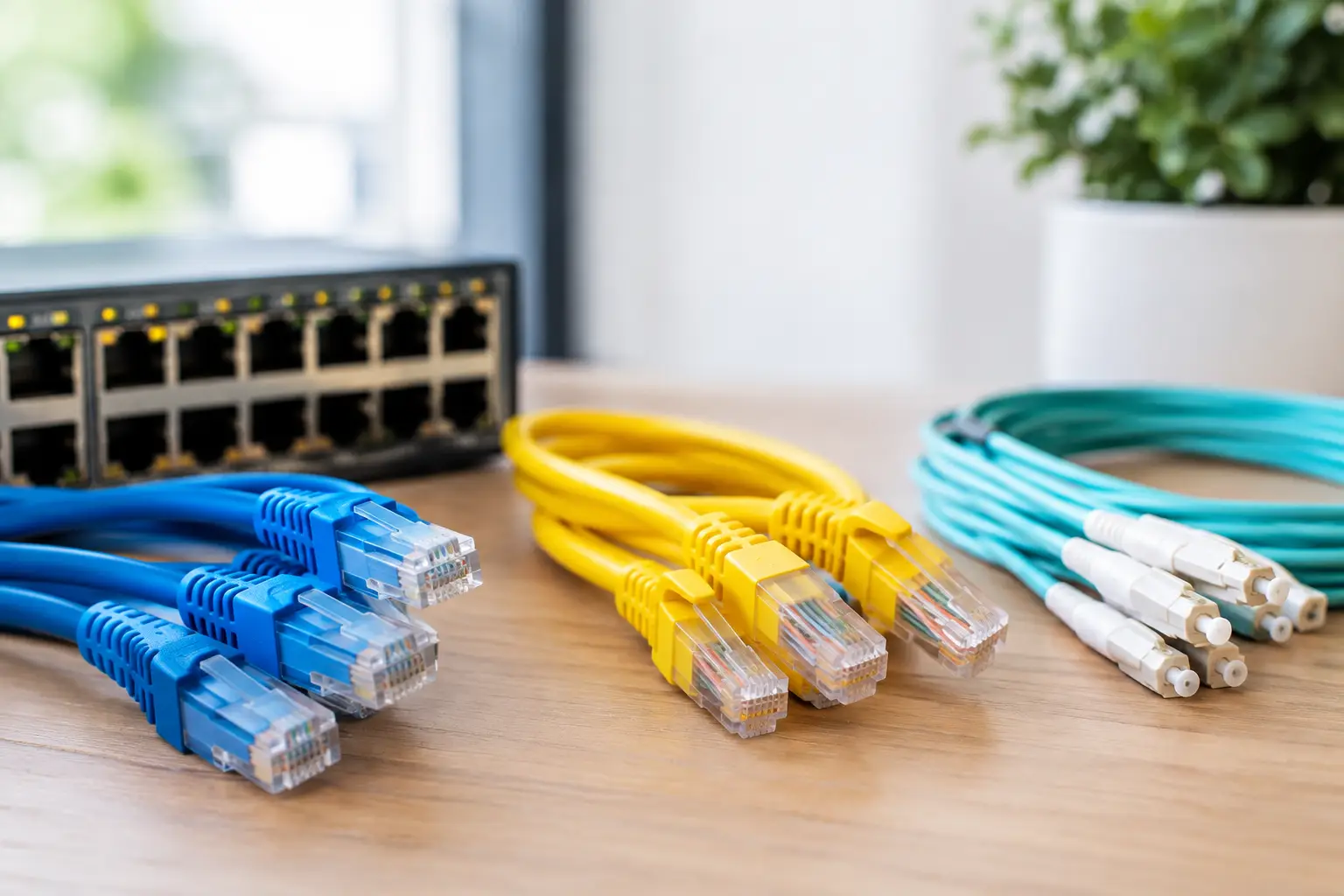
Cat6A is designed to support 10GbE over the full 100-meter channel length, or 328 feet. This includes the permanent cable installed in walls or ceilings along with patch cords at each end. For most new structured wiring installations, this makes Cat6A the preferred copper choice.
The larger construction of Cat6A helps control alien crosstalk, which is interference created between neighboring cables. That advantage matters in dense cable bundles serving wireless access points, surveillance cameras, offices, media rooms, and distributed AV systems.
Cat6A also gives property owners useful flexibility. It supports standard Ethernet connections while preserving a clear path to 10GbE when network switches, storage systems, or high-bandwidth AV infrastructure require it. The cable is thicker and requires thoughtful pathway planning, bend-radius control, and clean termination, but those details are exactly where professional design protects long-term performance.
Cat7 and Cat8: Specialized Copper Options
Cat7 cable is often discussed alongside Cat6A, but it is not a standard ANSI/TIA category used in the same way in North American structured cabling specifications. It can support 10GbE and is commonly shielded, yet the connector and system design must be evaluated carefully. In many residential and commercial projects, Cat6A provides a clearer, more widely supported path for 10GbE copper infrastructure.
Cat8 is engineered for higher-speed data center applications, including 25GbE and 40GbE over short copper distances. It can support 10GbE, but it is usually unnecessary for horizontal runs throughout a home or business. Its typical channel length is limited to 30 meters, and its thicker, shielded construction calls for more specialized installation planning.
The lesson is straightforward: higher category numbers do not automatically create the right solution. The cable must suit the distance, installed environment, network equipment, and planned use of the space.
Fiber Optic Cable: The Right Choice for Distance and Isolation
Fiber is the preferred answer when 10GbE must travel beyond copper’s 100-meter limit, connect separate buildings, serve large properties, or avoid electrical interference. Because fiber carries light rather than electrical signals, it is immune to electromagnetic interference and does not create a conductive path between buildings.
Multimode fiber is frequently used for shorter high-speed backbone links within a building or campus. OM3 multimode fiber supports 10GbE up to 300 meters, while OM4 can support it up to 400 meters when paired with the proper optics. Single-mode fiber, often identified as OS2, supports 10GbE over much longer distances and is an excellent consideration for estate-scale properties, detached structures, and commercial facilities with distributed network rooms.
Fiber does require compatible optical transceivers at the switch or media interface, plus precise termination and testing. Those added requirements are worthwhile when distance, electrical isolation, or future capacity is a priority. A properly planned fiber backbone can support much more than 10GbE as system needs grow.
Copper or Fiber: How the Decision Is Made
The practical choice begins with the route. For outlets, access points, surveillance devices, touch panels, and AV endpoints within 100 meters of the network rack, Cat6A is typically the dependable copper standard. It supports 10GbE where needed and can also carry Power over Ethernet for compatible devices.
For a guest house, gatehouse, pool pavilion, detached office, or another building, fiber is usually the stronger architectural decision. Copper between buildings can introduce grounding and surge concerns, especially in South Florida where storm activity is a serious design consideration. Fiber creates a nonconductive connection while providing ample bandwidth for security, communications, and entertainment systems.
The same thinking applies inside larger commercial properties. A fiber backbone between telecommunications rooms, floors, or wings keeps long runs out of copper’s distance limitations. Cat6A can then distribute service from those local network points to individual endpoints.
Installation Quality Determines Real-World Performance
A cable rating is only one part of network performance. A 10GbE-capable design can be undermined by excessive pull tension, tight bends, crushed cable, improper separation from electrical pathways, mismatched jacks, or unlabeled terminations. These issues may not be obvious when a network first comes online, but they can lead to intermittent failures that are difficult to diagnose after walls and ceilings are complete.
Cable pathways should also account for future service. Conduit, accessible pathways, appropriately sized enclosures, and organized equipment racks allow a system to expand without compromising the finished space. This is especially valuable during new construction and major renovations, when the infrastructure can be designed around the property rather than forced into it later.
Power delivery deserves attention as well. High-power PoE devices generate heat in cable bundles, and heat affects copper cabling performance. When access points, cameras, displays, control hardware, and other connected devices share pathways, cable selection and bundle management should be planned as part of the whole system.
A Practical Standard for Homes and Businesses
For most premium homes and commercial spaces, a balanced 10GbE cabling strategy looks like this: Cat6A to key rooms and device locations, with fiber installed for long backbone runs and separate buildings. Not every outlet needs an active 10GbE connection on day one, but providing the physical infrastructure while walls are open preserves options for years to come.
Media rooms, home offices, network closets, conference rooms, AV racks, security locations, and wireless access point locations are common priorities. The exact plan depends on the property layout, the number of connected systems, and whether centralized video, high-capacity storage, or enterprise-grade network services are part of the design.
Sentry Audio Video approaches structured cabling as the foundation beneath the visible technology. The goal is clean workmanship, tested performance, and an infrastructure plan that supports the way the property will be used now and later. A well-designed cabling system stays out of sight, but it is what allows every connected system to perform with confidence.