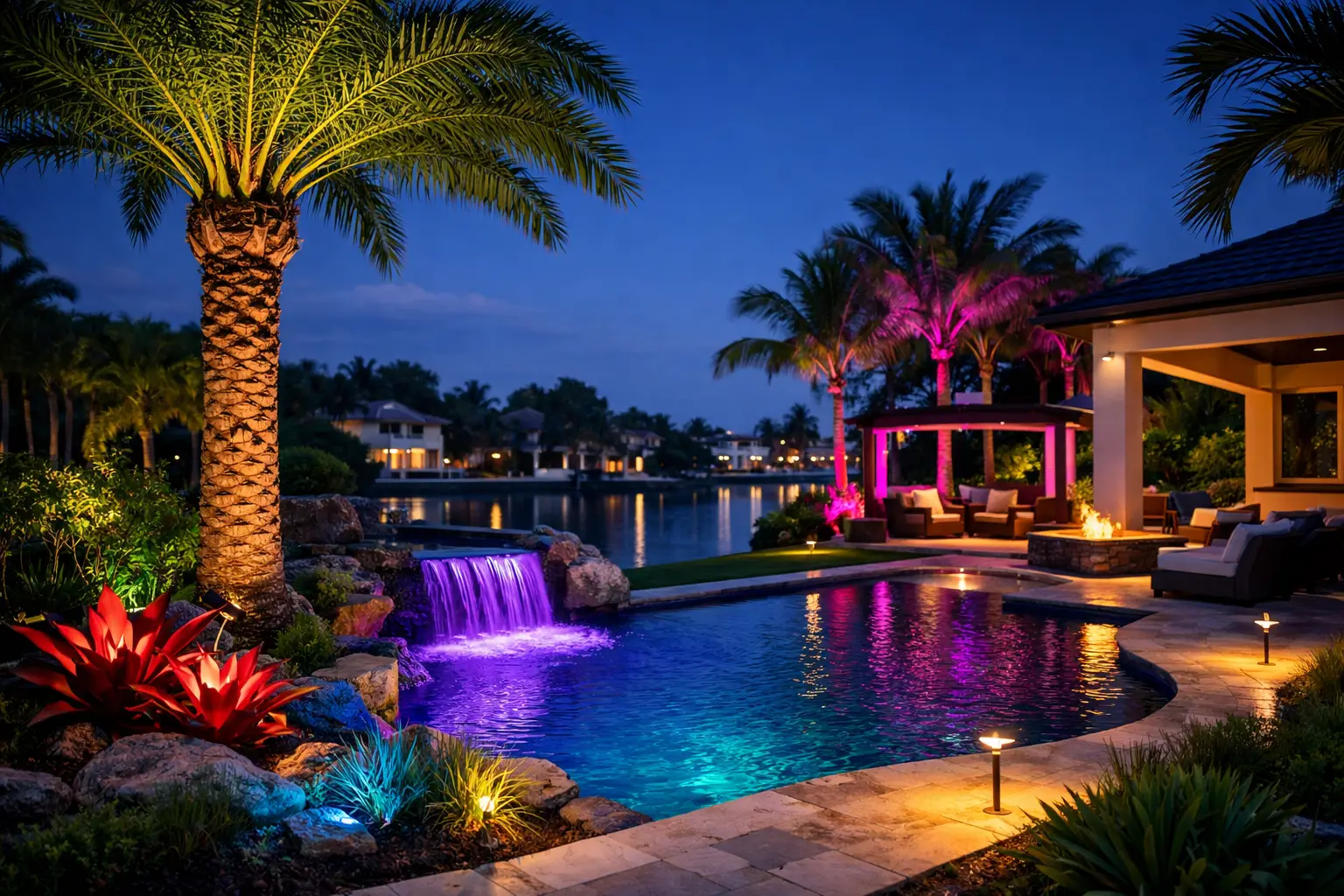
A beautifully designed Boca Raton property should not disappear when the sun goes down. RGB Landscape Lighting Boca Raton homeowners choose can turn a pool terrace, palm-lined drive, garden wall, or outdoor kitchen into an intentional nighttime setting – with the right color, the right fixture placement, and control that feels effortless.
This is not about washing every surface in bright color. Premium landscape lighting design uses color selectively to define architecture, support entertaining, improve visibility, and create atmosphere. When it is integrated correctly, the system can shift from warm white for a quiet evening to a tailored scene for a celebration without cluttering the property with switches, remotes, or uneven pools of light.
What RGB Landscape Lighting Should Do for Your Property
The strongest outdoor lighting systems begin with a practical purpose. Pathways, stairs, gates, and changes in elevation need clear illumination. Entry points and driveway approaches need visibility. Architectural features, planting beds, specimen trees, and water elements deserve depth after dark.
RGB capability adds a new layer of flexibility. Instead of committing the entire property to one fixed light color, homeowners can choose scenes that fit the occasion. Warm white may be the everyday setting for dinner on the patio. Soft blue can complement a pool environment. Seasonal colors can add personality for holidays or family events. The goal is to make the home feel more inviting, not make it look like an event venue every night.
Color also works especially well as an accent. A subtle violet wash behind a sculptural palm, a restrained blue on a fountain wall, or a color transition around an outdoor lounge can create drama without overpowering the rest of the landscape. The surrounding lighting should still provide comfortable, natural visibility.
RGB Landscape Lighting Boca Raton Properties Need to Withstand
South Florida places real demands on exterior technology. Humidity, heavy rain, intense sun, heat, irrigation exposure, and coastal air can all affect outdoor fixtures and connections. A system that looks impressive on installation day but develops corrosion, inconsistent color, or intermittent operation later is not a premium installation.
Fixture selection matters. Outdoor-rated housings, properly protected connections, well-designed power distribution, and thoughtful fixture placement all contribute to long-term performance. In coastal communities such as Highland Beach, Delray Beach, and Boca Raton, material quality and installation details become even more important because salt air can accelerate wear.
Landscape conditions matter as well. Mature plantings grow. Mulch shifts. Water runoff changes. Fixtures mounted too close to foliage may become blocked, while fixtures aimed poorly can create glare from the patio or across a neighboring property. A professional design accounts for how the landscape will look and function months after installation, not only during the final walkthrough.
A quality lighting plan should also avoid overlighting. More fixtures do not automatically create a better result. Excessive brightness can flatten stonework, eliminate the visual contrast that makes a garden interesting, and make interior rooms feel exposed at night. Well-controlled light, placed with purpose, has far more impact.
The Difference Between RGB and RGBW Lighting
Not every color-changing fixture delivers the same quality of white light. Standard RGB fixtures combine red, green, and blue LEDs to create a range of colors, including white. That approach can be useful for dramatic effects, but the white tone may not always feel as warm, balanced, or refined as homeowners expect for everyday use.
RGBW fixtures add a dedicated white LED. This gives the system stronger performance when the desired look is classic architectural lighting rather than color. For a luxury residence, that distinction is significant. Most evenings call for elegant white light, with color reserved for targeted accents, entertaining, and special scenes.
The desired color temperature should be part of the design conversation. Warmer whites often complement natural stone, tropical foliage, wood ceilings, and outdoor dining areas. Cooler white can work for contemporary architecture or crisp water features, but it may feel stark when used broadly. There is no universal setting that suits every property. The architecture, materials, landscaping, and homeowner preferences should direct the choice.
Design the System in Zones, Not as One Large Canvas
One of the greatest advantages of a professionally planned RGB system is zoning. Rather than controlling the entire exterior as a single group, the property can be divided into meaningful areas: front entry, driveway, façade, pool deck, landscape beds, outdoor kitchen, dock, or backyard gathering space.
This approach provides better control and a more polished result. The front of the home can remain in warm white while the pool terrace shifts to a relaxed color scene. A family hosting guests can brighten pathways and the outdoor kitchen while keeping the garden perimeter understated. When the evening is over, one command can return the home to its preferred nightly setting.
Zones also make a system more useful from a security and comfort standpoint. Landscape lighting can be scheduled to support arrival times and nighttime visibility, then adjusted for an event without rebuilding the entire program. Scenes can be activated from a wall keypad, touch panel, mobile device, or a centralized home control system.
For homes with whole-house audio, motorized shades, pool integration, surveillance, and outdoor entertainment, lighting should not operate as an isolated feature. A single “Evening” scene might activate exterior lighting, set patio audio to a preferred level, bring the pool area to life, and adjust interior shades for privacy. A “Goodnight” scene can return the property to a secure, composed lighting level with one touch.
Where Color Has the Most Impact
Color is most effective when it supports a focal point. Palm canopies, uplighted oaks, textured feature walls, fountains, pergolas, planters, and poolside landscaping are natural opportunities. The best applications are often subtle enough that guests notice the atmosphere before they notice the equipment.
Pool areas deserve special planning. Reflections can amplify color, and a fixture placed at the wrong angle may create glare across the water or into an outdoor seating area. The lighting around a pool should complement the water, walking surfaces, and nearby architecture while preserving safe visibility on steps and transitions.
Outdoor kitchens and covered patios usually benefit from a layered design. Functional task lighting helps with food preparation and circulation, while decorative RGB accents can set a more relaxed mood around the perimeter. These two lighting roles should remain separate. A vivid color effect is not a substitute for useful, comfortable illumination where people gather.
For business properties, the same principle applies. A polished entry, terrace, hospitality setting, or outdoor common area can use color to reinforce an atmosphere or event while maintaining clear paths and professional presentation. Control and consistency are particularly valuable when staff need to manage the system quickly.
Control, Automation, and Ongoing Performance
A color-capable lighting system should be simple to use after it is installed. If changing a scene requires navigating several apps or locating multiple remotes, the feature will not be used as often as it should. Centralized control brings the experience back to one familiar interface.
Scheduling adds another level of convenience. The home can transition automatically from an early-evening arrival scene to a lower, warmer late-night setting. Astronomical timing can account for changing sunset times throughout the year. Vacation settings can keep the property looking occupied without leaving all lighting at full intensity.
Reliable performance also requires a service-minded installation partner. Outdoor systems have components that may need seasonal adjustment as landscaping matures or property use changes. A trusted integrator can document zones, refine scenes, maintain clean equipment organization, and provide support if a fixture, controller, or networked control component needs attention.
Sentry Audio Video approaches RGB landscape lighting as part of the larger outdoor living experience. That means considering the lighting design alongside audio, video, pool controls, surveillance, networking, and the architectural details that make the property distinctive. The result should look intentional, operate reliably, and remain easy for the homeowner to enjoy.
The right next step is an on-site consultation that looks beyond fixture count. A professional plan should consider how you arrive home, where you entertain, which features deserve attention, how the property appears from indoors, and how you want the entire exterior to feel after sunset.